VI
VI


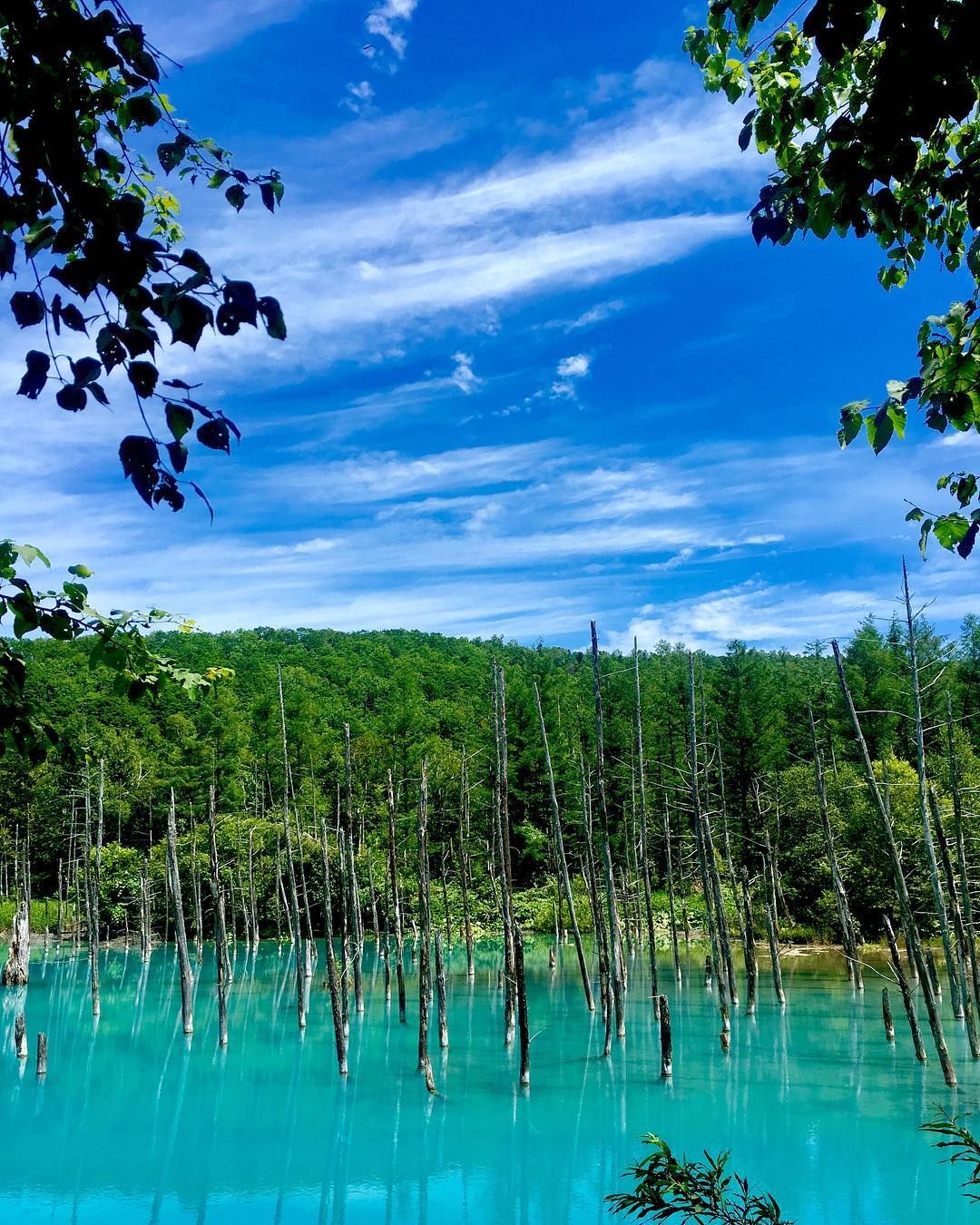

After the eruption of Mount Tokachidake in 1988, a dike was built to protect against volcanic damage. This construction inadvertently caused the river water to accumulate, creating this lake. Initially, it was off-limits and shrouded in mystery. However, after the ban was lifted in 2010, the sparkling beauty of Lake Biei quickly spread, making it famous and a popular tourist attraction. Especially after images of the blue lake were used as wallpapers for computer products, it became known not only within Japan but also worldwide.
The reason the lake water has a sparkling blue color is because it contains aluminum flowing in from nearby hot springs, reflecting the blue of the sky. The sulfur and lime components in the hot springs accumulate into rocks and white sand at the bottom of the lake, creating a contrasting beauty that enhances the blue color of the water.
Spring
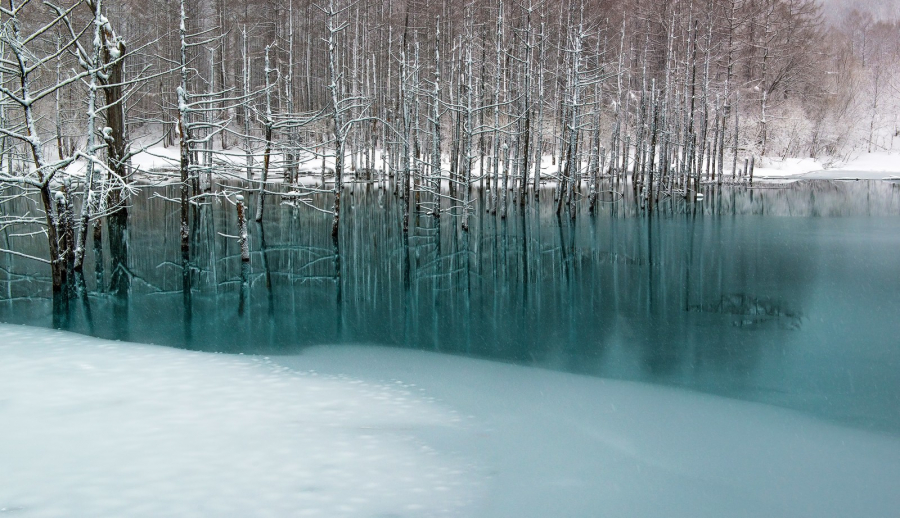
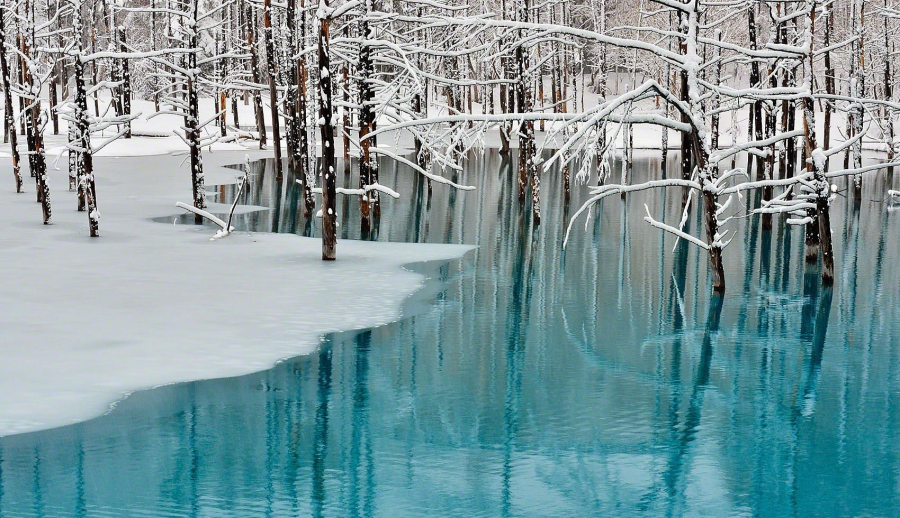
The weather is still cold, but Lake Biei's waters form a giant ice rink, and through the melting ice, visitors can see the emerald green color below. And amidst this icy landscape, the surrounding forest heralds the arrival of spring with its first vibrant green shoots beginning to emerge.

Summer
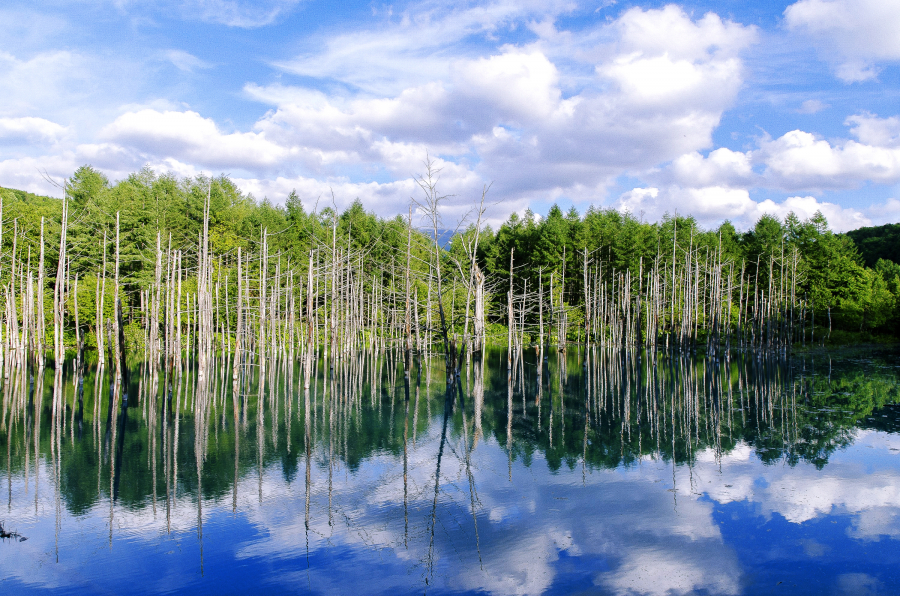
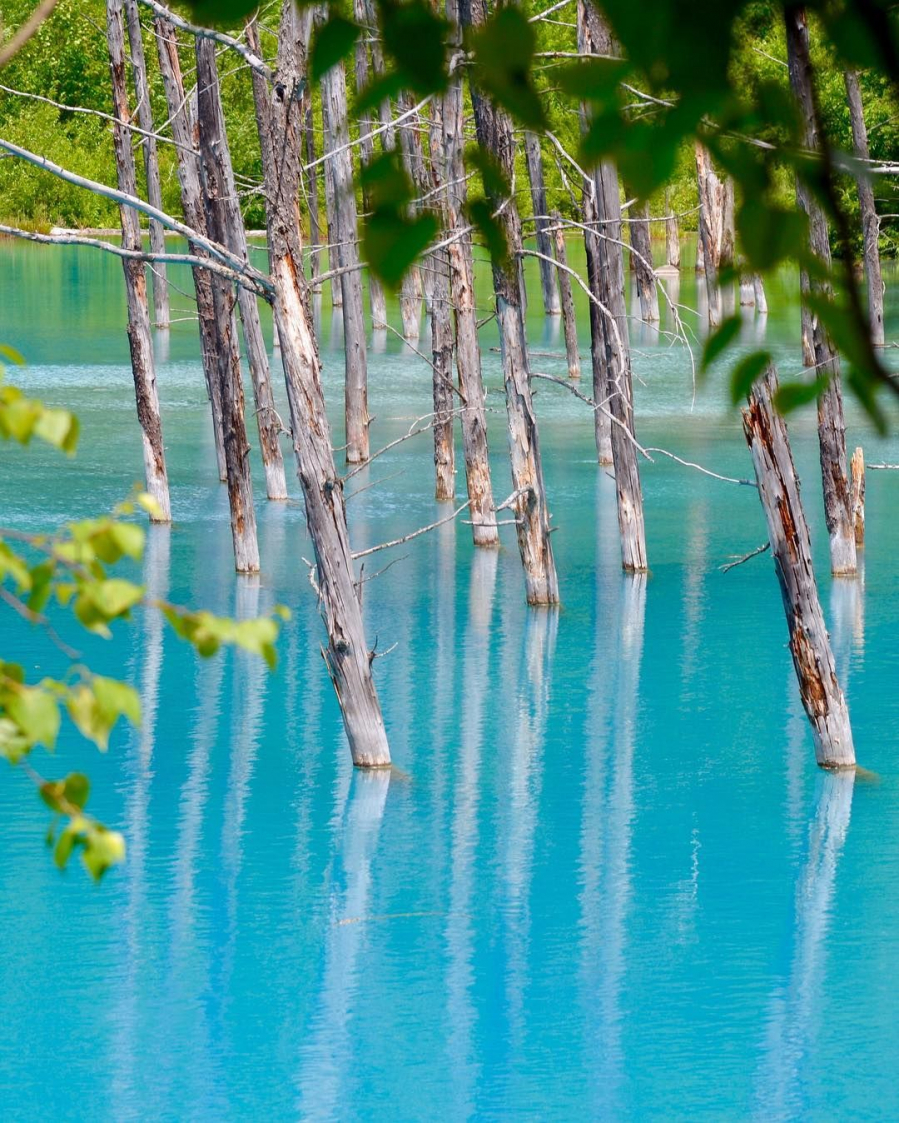
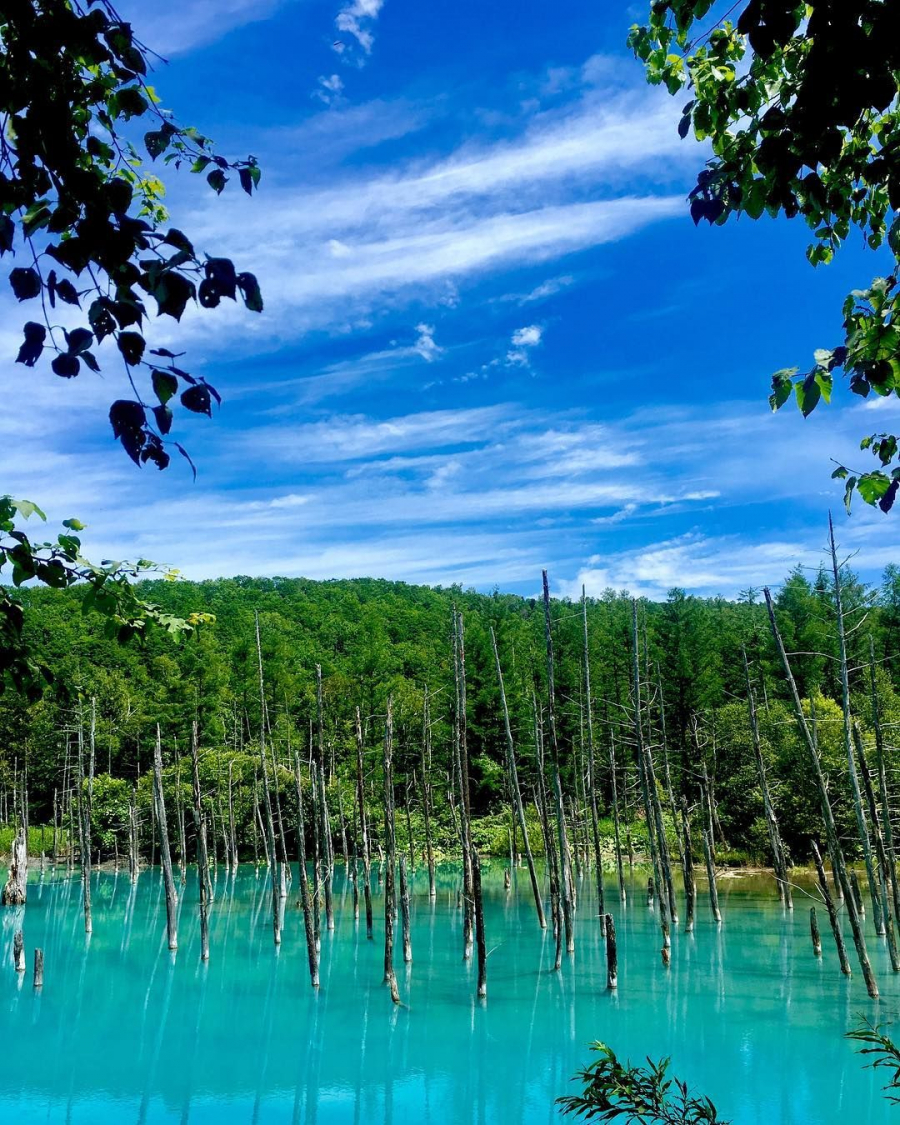
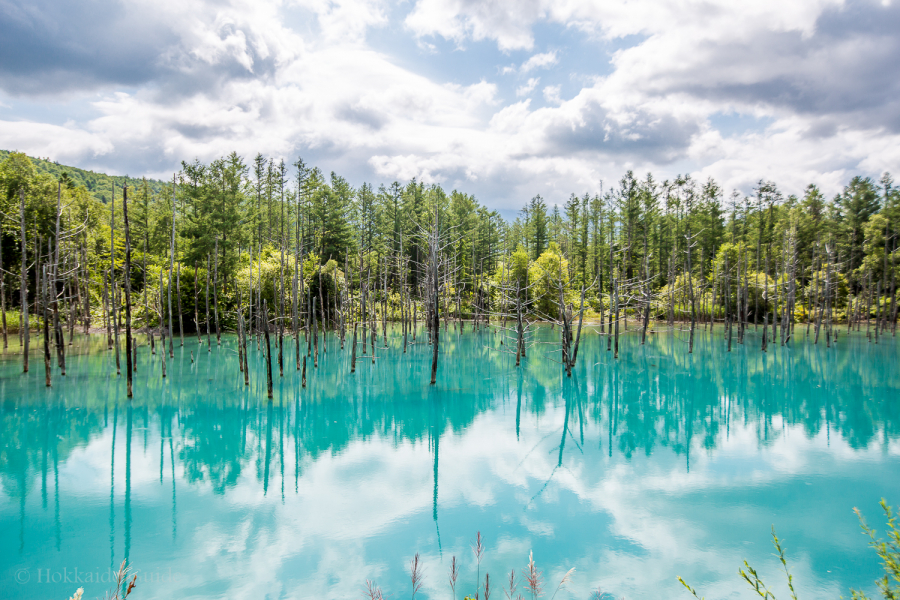
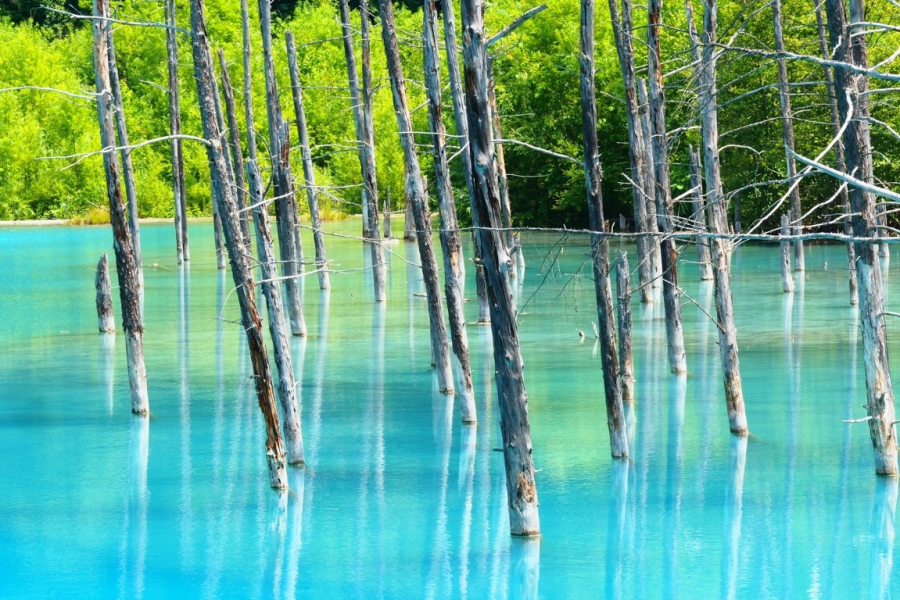
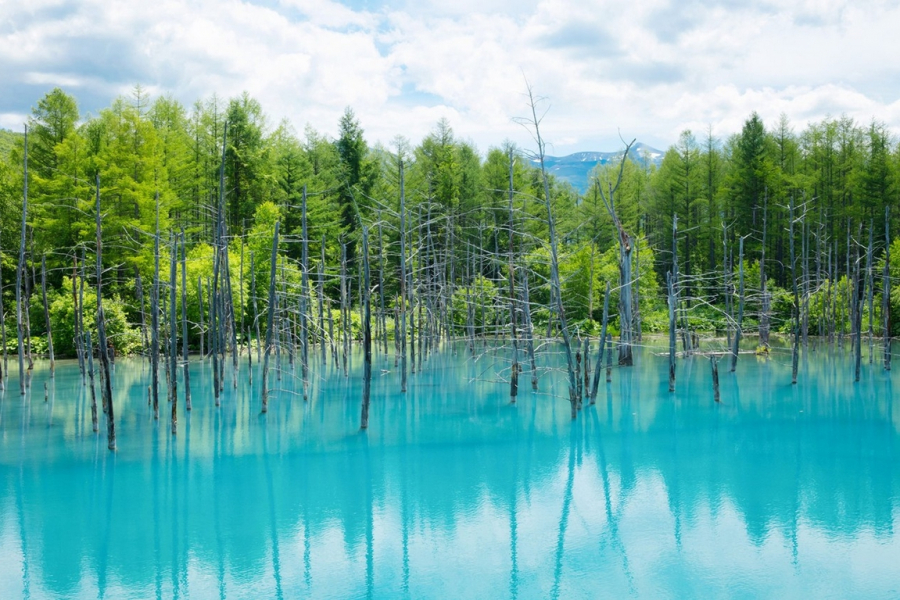
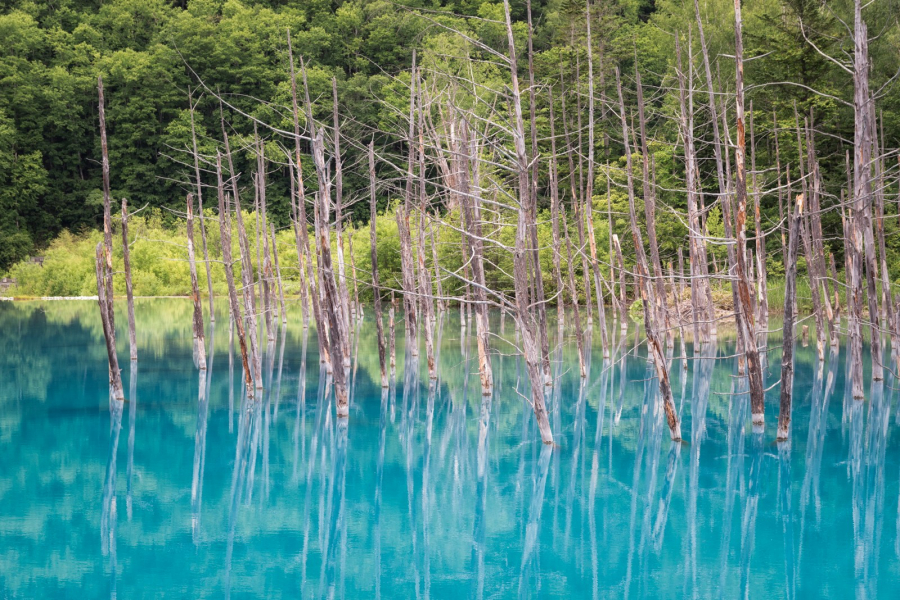
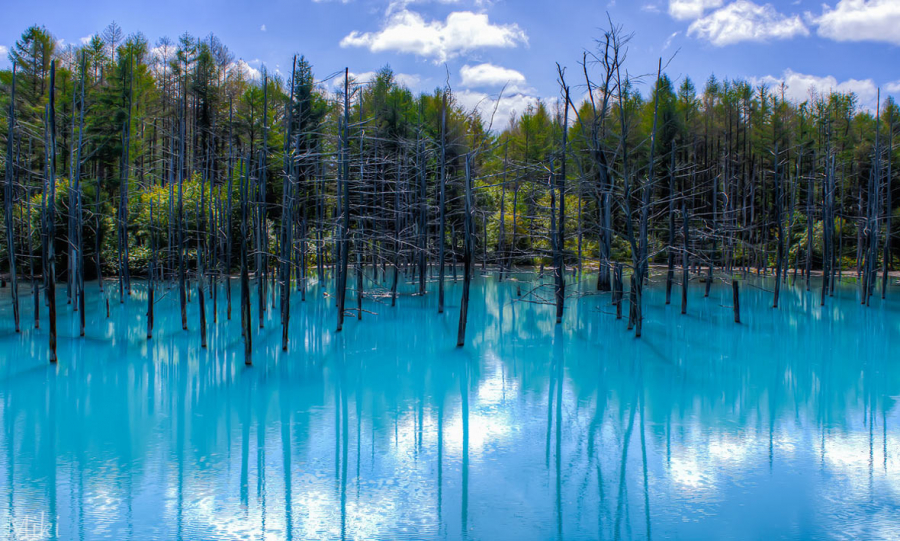
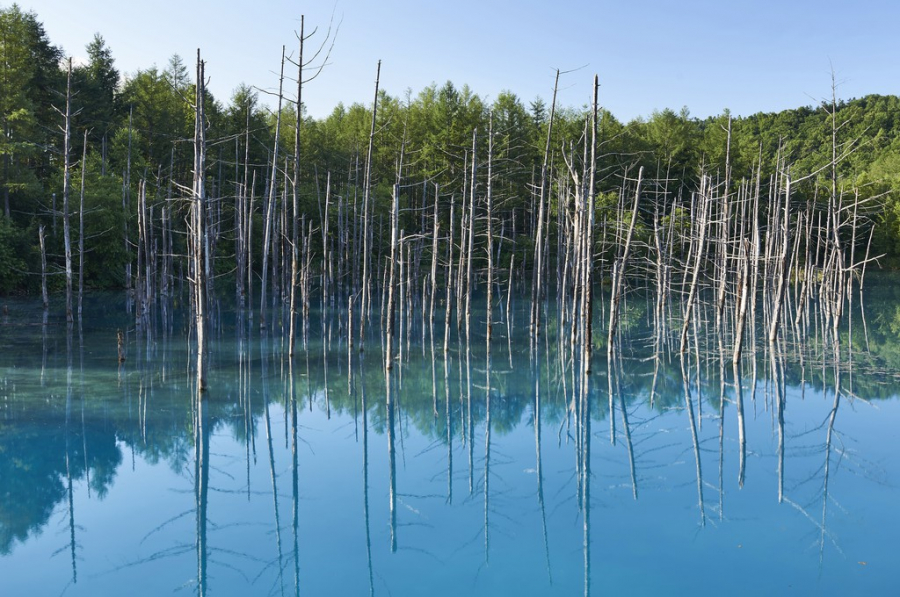
Lake Biei becomes even more vibrant in the summer, offering truly refreshing and cool days for visitors. As long as there is no rain, the lake is always a beautiful blue, making summer the most beautiful and also the peak season of the year. During this time, the area around the lake becomes crowded, and nearby parking lots have limited capacity, so choose a less crowded time to leisurely admire the shimmering beauty of the lake and the surrounding scenery!
Autumn
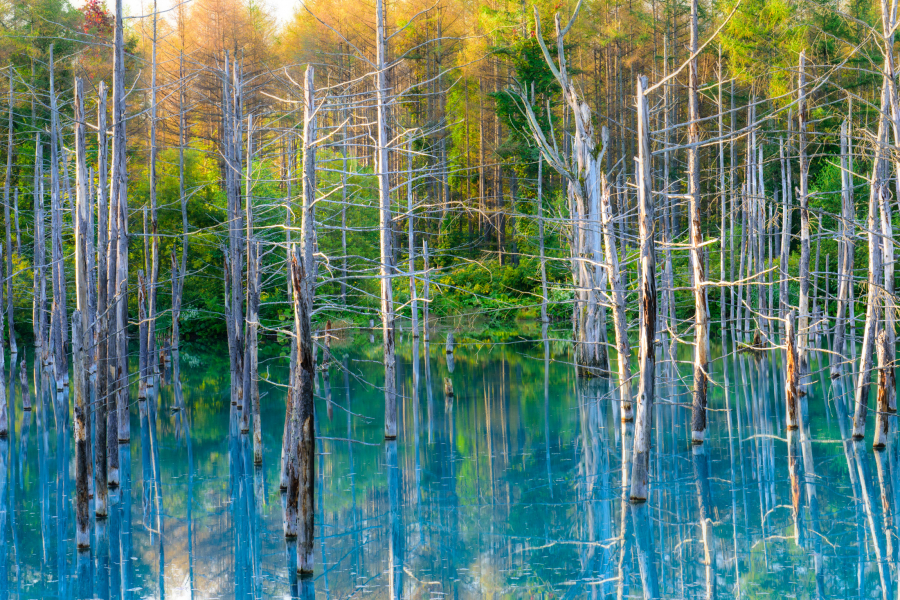
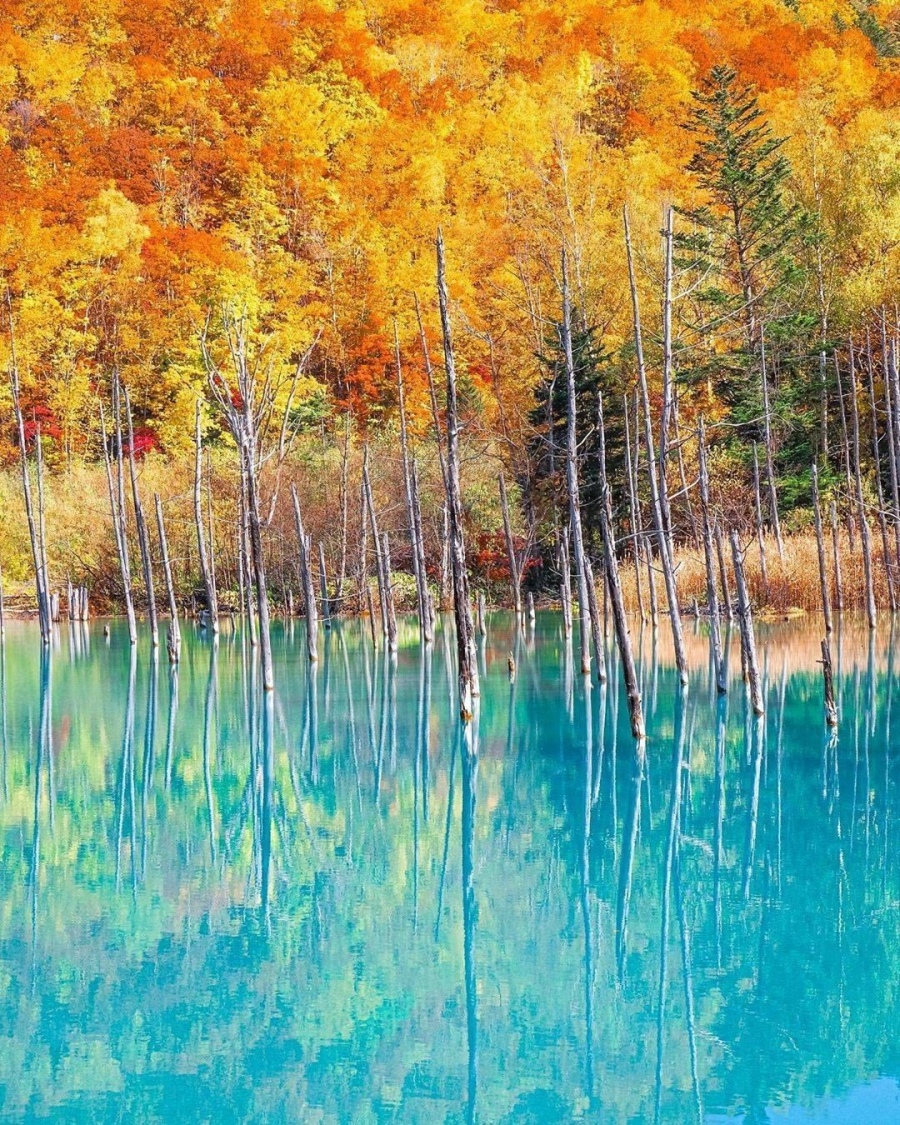
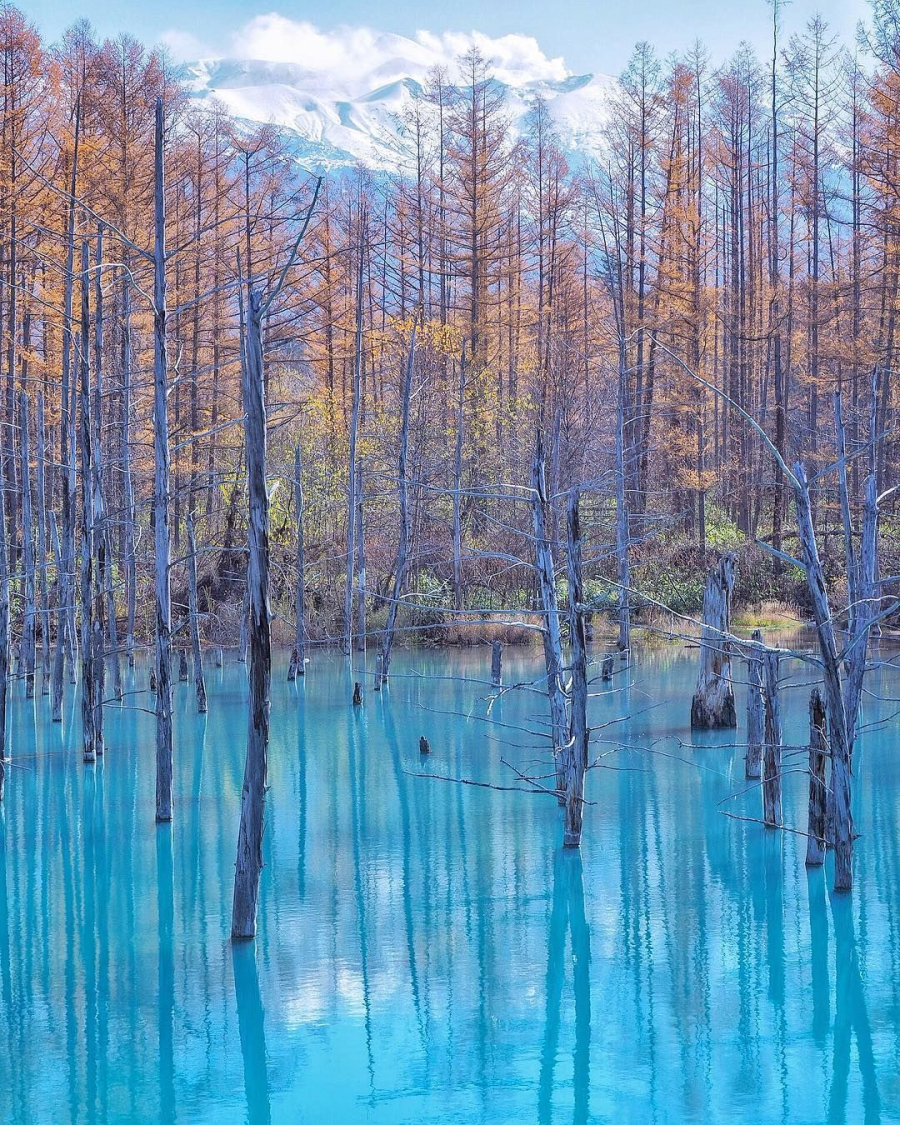
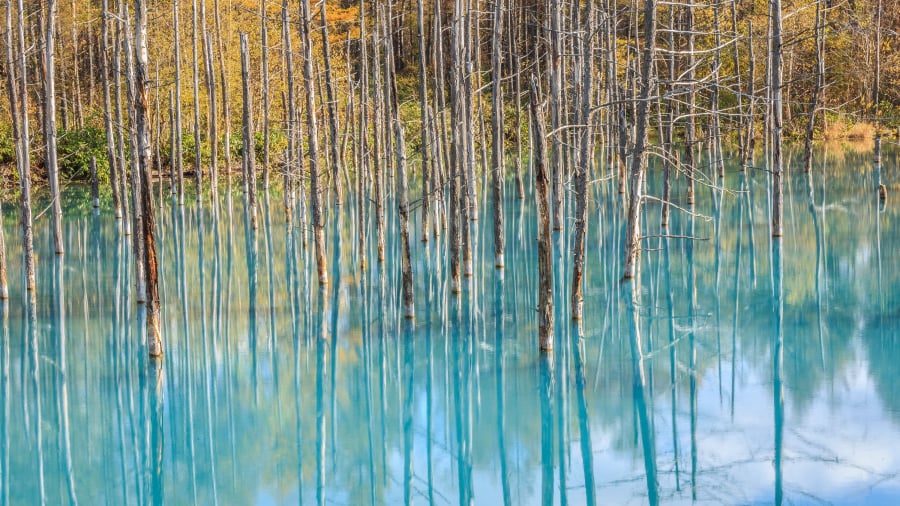
In early October, snow begins to fall on Mount Tokachi. Therefore, the time visitors can enjoy the autumn scenery on Lake Biel is quite short. But the surrounding forests of red and yellow leaves reflected on the surface of Lake Biel are truly a stunning sight, well worth admiring.
Winter
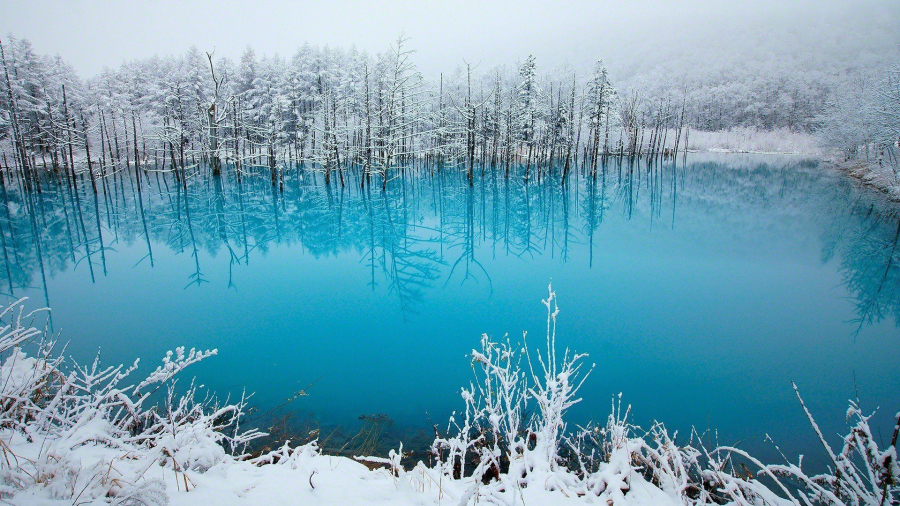
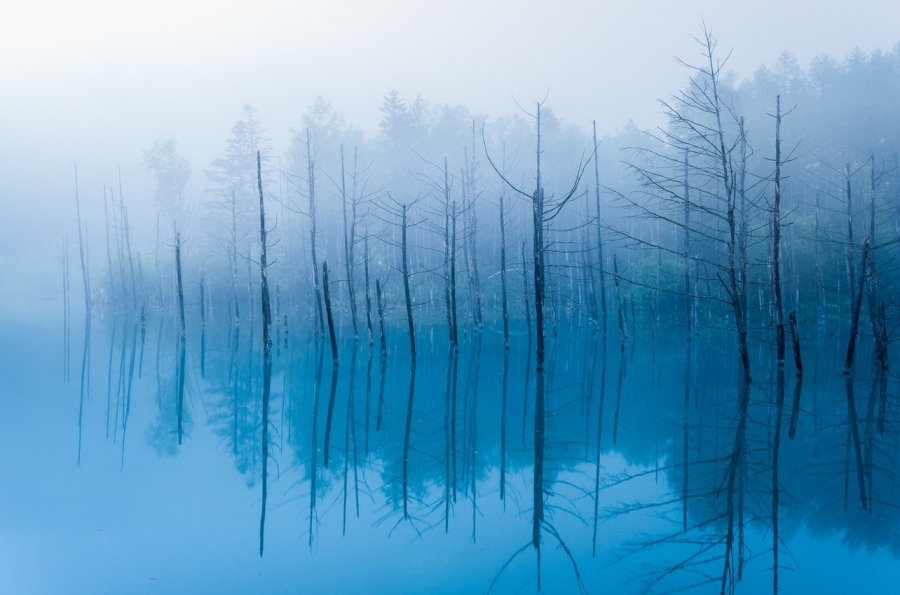
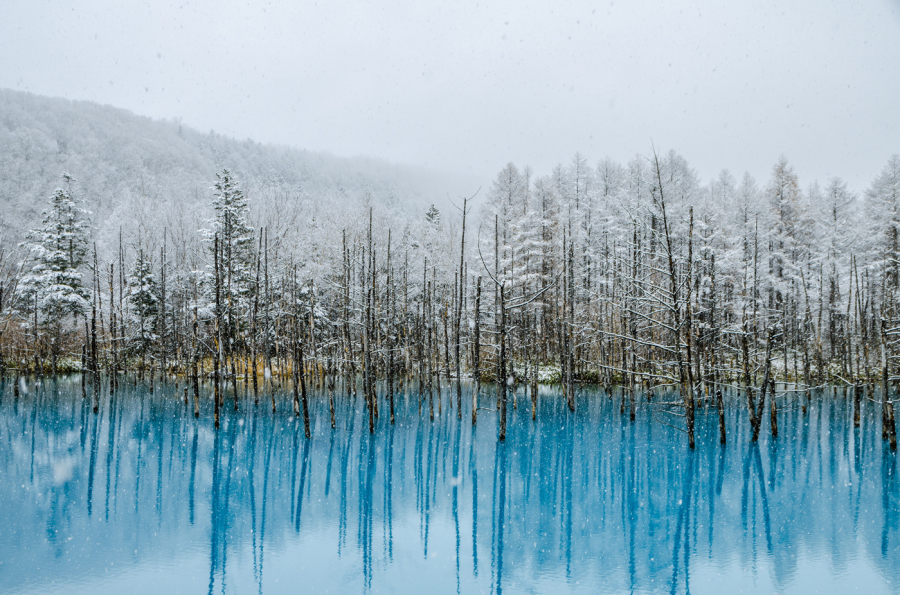
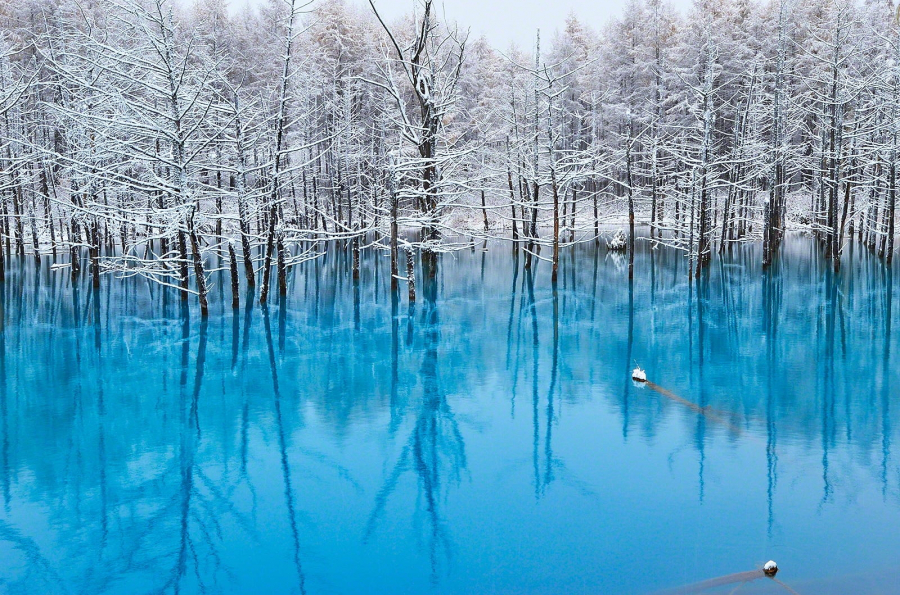
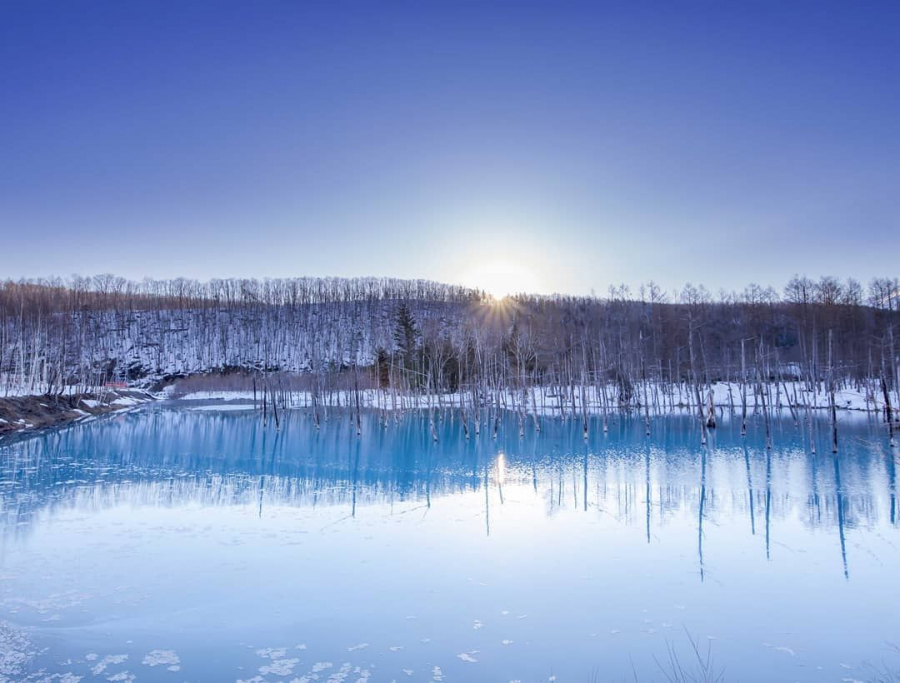
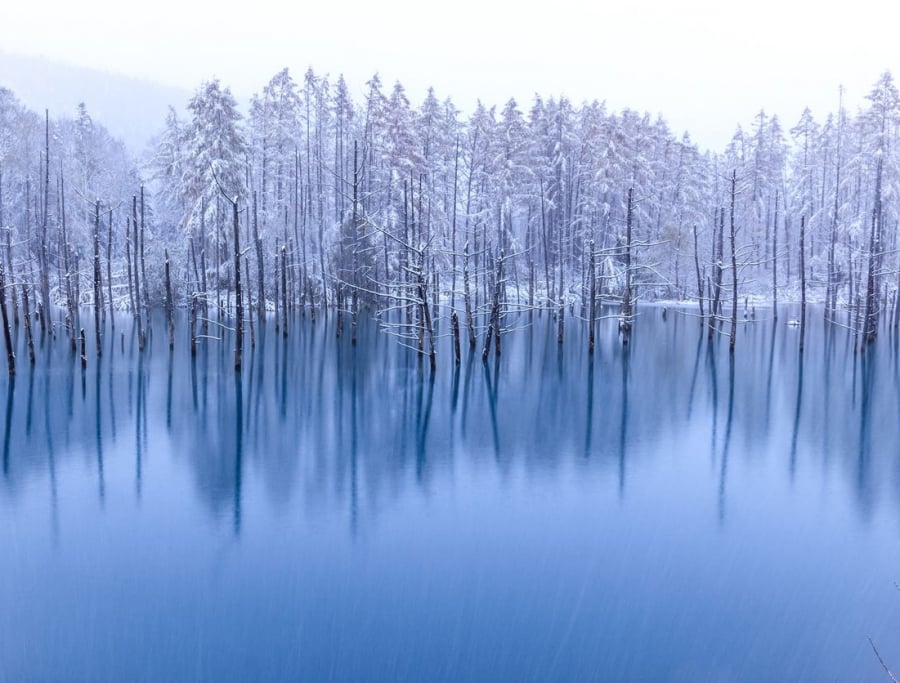
Although the Blue Lake Biel is restricted to visitors during the winter months, the image of the frozen surface completely covered in pristine white snow and bathed in soft sunlight adds to its charm, tempting photographers to visit during the harshest weather of the year.
There are many attractions around the lake, such as Shirahige Falls, with its crystal-clear water, Shirakaba Kaido Road, where visitors can enjoy scenic drives, or Tokachidake Tembodai Observatory, which offers panoramic views of the Tokachidake mountain range. Additionally, there is Shirogane Onsen, a hot spring nestled in pristine nature, where you can stay overnight or simply visit for a day trip.