VI
VI


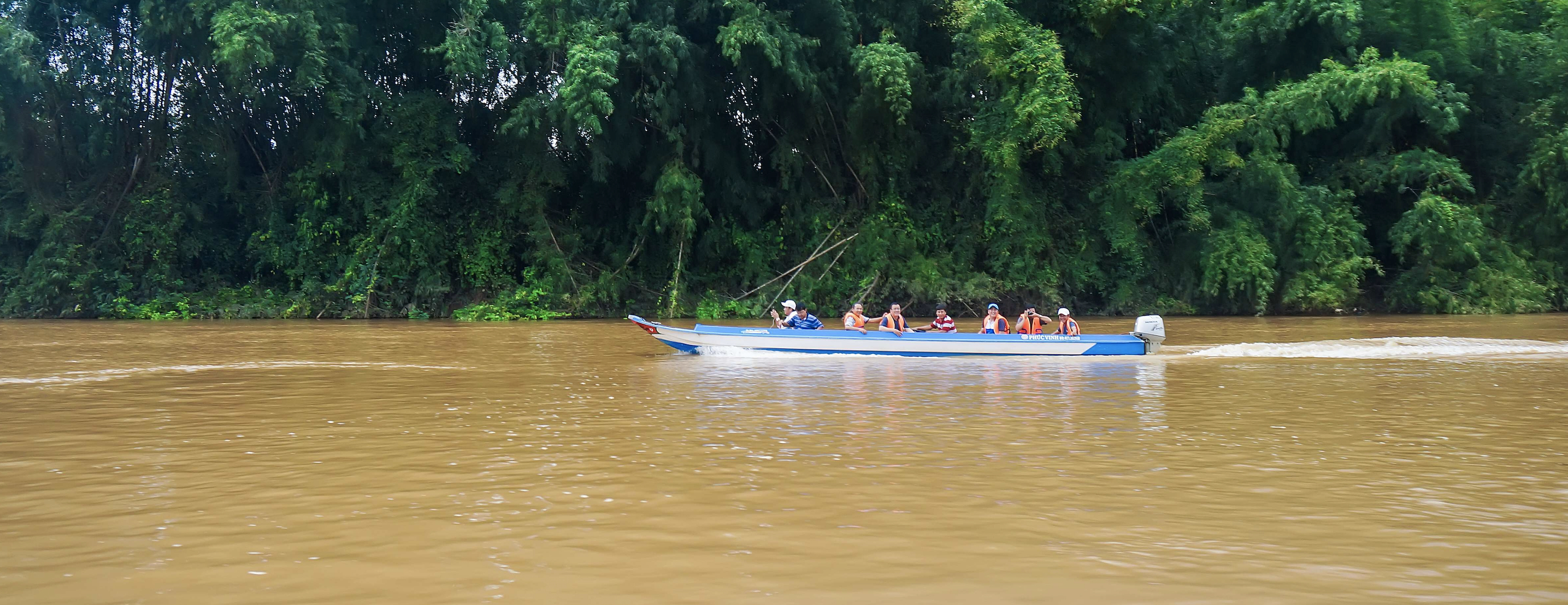
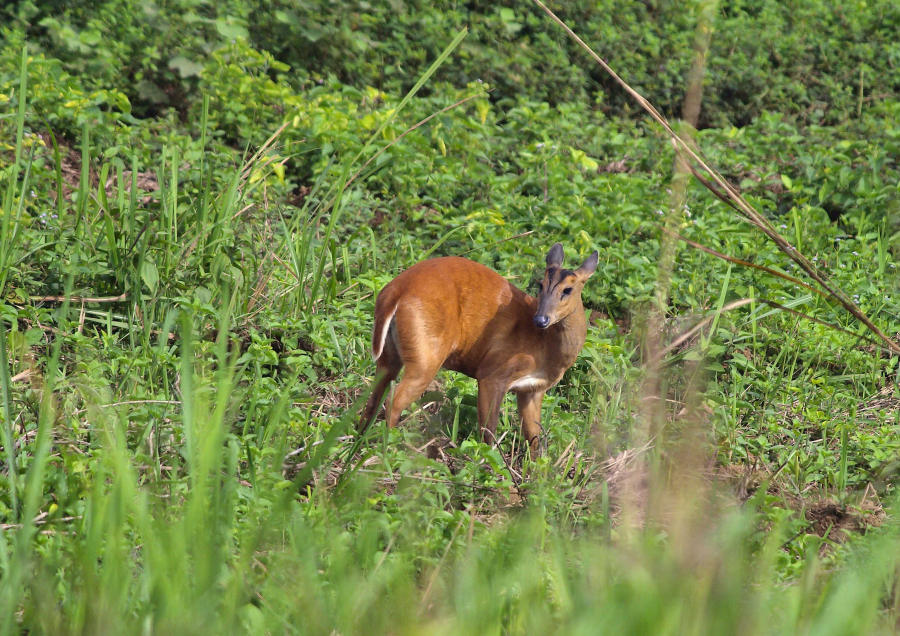
To briefly mention Cat Tien National Park, it's a nature reserve located across five districts: Tan Phu and Vinh Cuu (Dong Nai province), Cat Tien and Bao Lam (Lam Dong province), and Bu Dang (Binh Phuoc province). Approximately 50% of Cat Tien's area is evergreen forest, 40% is bamboo forest, and 10% is farmland. Characteristic animals include: the Javan one-horned rhinoceros, Asian elephant, gaur, sun bear, Malayan bear, wild buffalo, tiger, leopard, clouded leopard, deer, etc. The bird species here are also diverse and abundant: black eagle, white-winged mallard, great hornbill, etc. Besides its rich animal life, Cat Tien is also home to 62 species of orchids. Cat Tien has also been recognized by UNESCO as a "World Biosphere Reserve".
Cat Tien National Park has been recognized by UNESCO as a "World Biosphere Reserve".
On the occasion of the 2019 Cat Tien National Park Tourism Promotion Conference, our group traveled from Ho Chi Minh City to Cat Tien National Park. After a journey of about 4 hours by car, we took a ferry across the Dong Nai River, and then the organizers transported us to our accommodation at the Cat Tien National Park Ecotourism Area by electric vehicle.
The scenery here is truly impressive, with single-story bungalows spaced about 50 meters apart, named after rare plant and animal species in Cat Tien National Park, such as: Bear Villa, Elephant House, Sandalwood House, Orchid House...
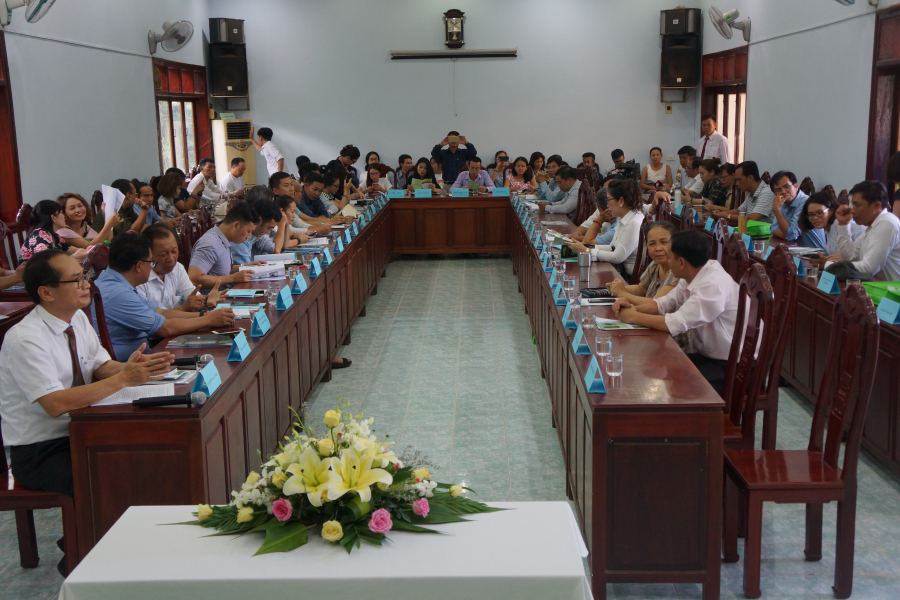
Cat Tien National Park Tourism Promotion Conference 2019
The 2019 Cat Tien National Park Tourism Promotion Conference seemed more like a seminar with very frank discussions aimed at developing tourism in Cat Tien National Park. Ecotourism is not like organizing a summer vacation in a seaside city. Solving problems such as how to exploit forest trails, increase the length of trekking routes, and build biking trails that preserve the wild (avoiding concrete development)... is not something that can be done overnight and requires the joint efforts of an entire system.

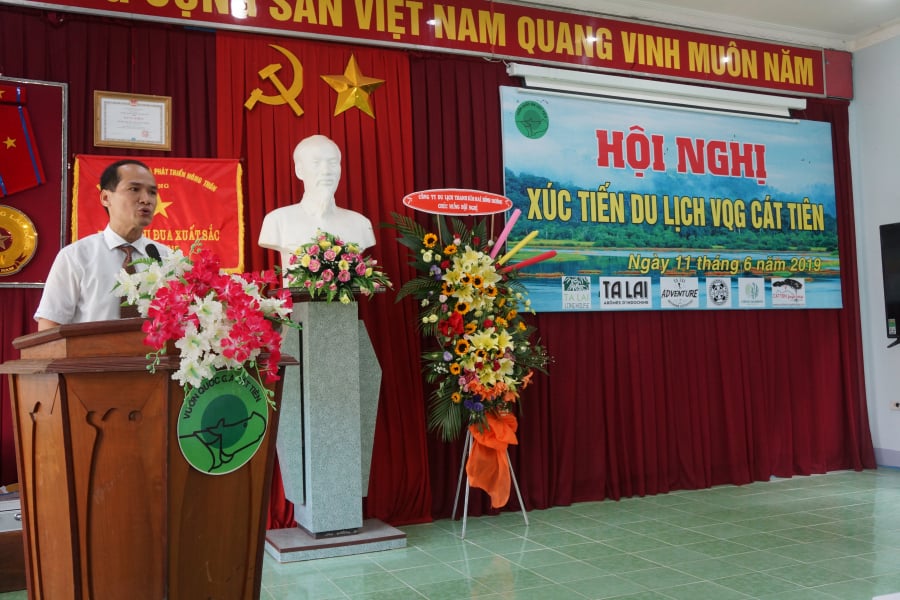
Mr. Pham Hong Luong, Director of Cat Tien National Park, delivered a speech at the conference.
Speaking to a reporter from Travellive magazine, Mr. Pham Hong Luong, Director of Cat Tien National Park, said: “Cat Tien National Park develops tourism in a way that emphasizes responsible cooperation and respect for nature, without causing harm to the environment. This is our consistent viewpoint. In the future, we will develop tourism in Cat Tien National Park in general and the Bau Sau area in particular in a rational manner. A model of collaboration with businesses, similar to what Son Doong Tourist Area is currently doing with Oxalis company, would also be a suggestion for us to consider.”
Bau Sau is located in the southern part of Cat Tien National Park. It is home to the freshwater crocodile, a species endemic to Vietnam. The Bau Sau area also contains many species of flora and fauna listed in the Red Book of Vietnam and the world. Like many other endemic areas of Cat Tien National Park, Bau Sau is under conservation and is therefore very strictly managed and monitored.
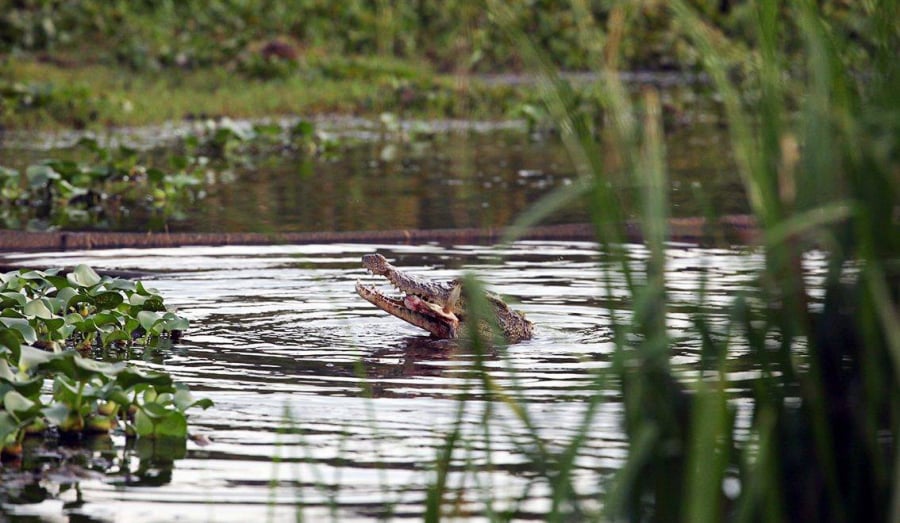
Crocodiles in the Bau Sau area
One of the most unforgettable experiences during our trip to Cat Tien National Park was watching the animals hunt at night. The feeling of sitting in a large, open-top truck driving through the forest in the fresh air was exhilarating. Occasionally, we could hear the faint footsteps of forest animals on the grass and bushes, as if they were fleeing from the car engine.
With the attentive guidance of our tour guide, we were able to admire gentle deer grazing with their heads bowed, wild boars moving silently in the night, and hear the melodious calls of black-footed langurs echoing through the mountains and forests... These were all vibrant images of animals living in their free, wild environment, not at all gloomy or listless like those we had seen in zoos in the city.
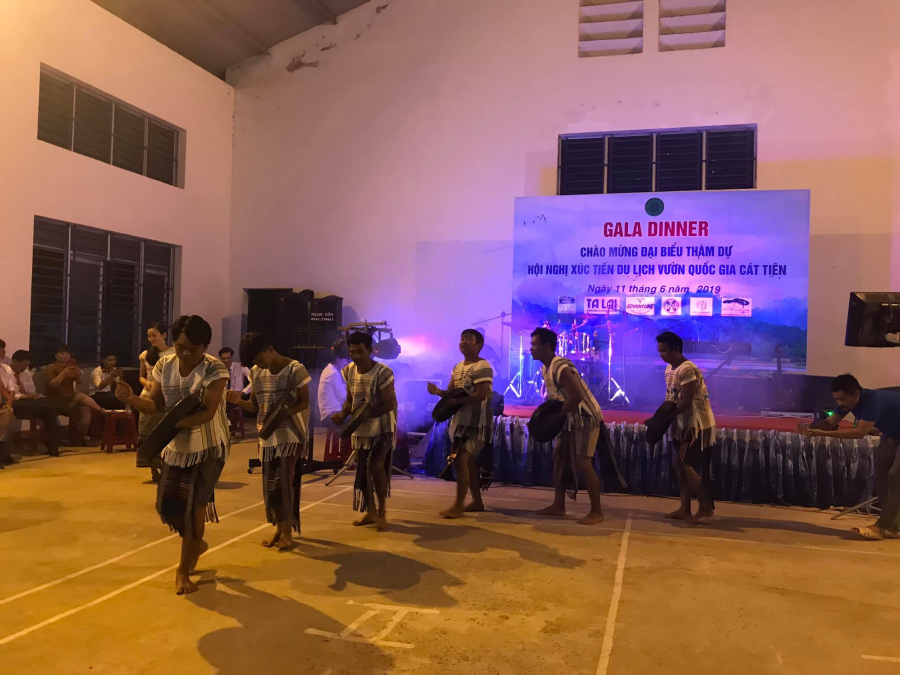
Gala dinner at Cat Tien National Park
The Gala Dinner at Cat Tien National Park also left an unforgettable impression on the delegates. We had the opportunity to experience the local culture, interact with the organizing unit (Cat Tien National Park), and the local community (those who participated in the performances). Everyone participated in the program, performing songs introducing Cat Tien, folk songs of the Ma people, gong dances of the Ma and Stieng people, and bamboo pole dances of the Thai people…
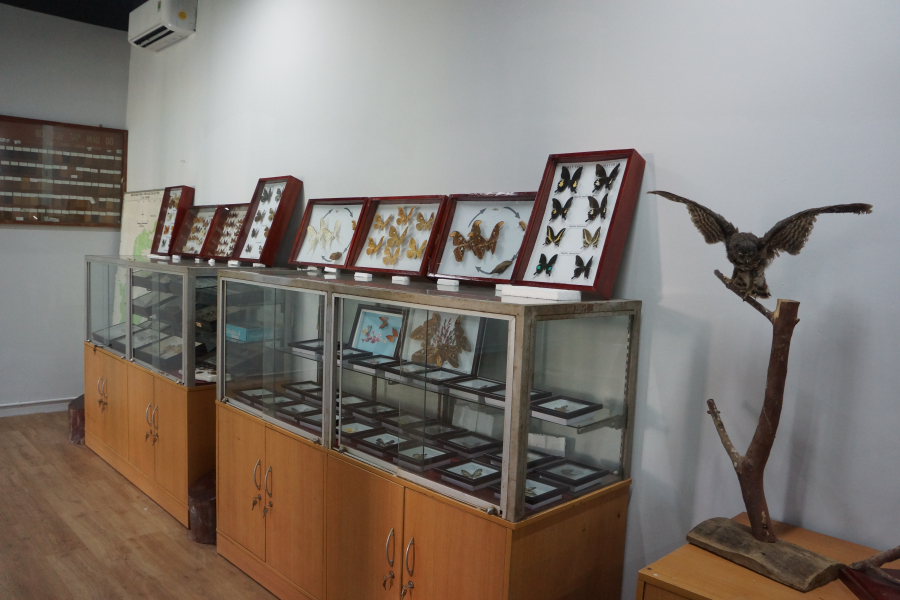
Museum of Biology in Cat Tien National Park
On the second day, we visited the Museum of Wildlife, which houses specimens of countless exotic and colorful butterfly species, as well as animals such as pangolins, civets, weasels, bears, rhinoceroses, birds (nightingales, kingfishers, hornbills), and primates… In addition, the organizers also took us to visit many other interesting places such as: the Tien Island Primate Rescue Center, the Bear Rescue Center, and tours of flora sites such as: the ancient Tung tree, the Gõ tree of Bac Dong, Ben Cu rapids, and the Bang Lang Da Co forest; and we also visited and learned about the FFL accommodation area…
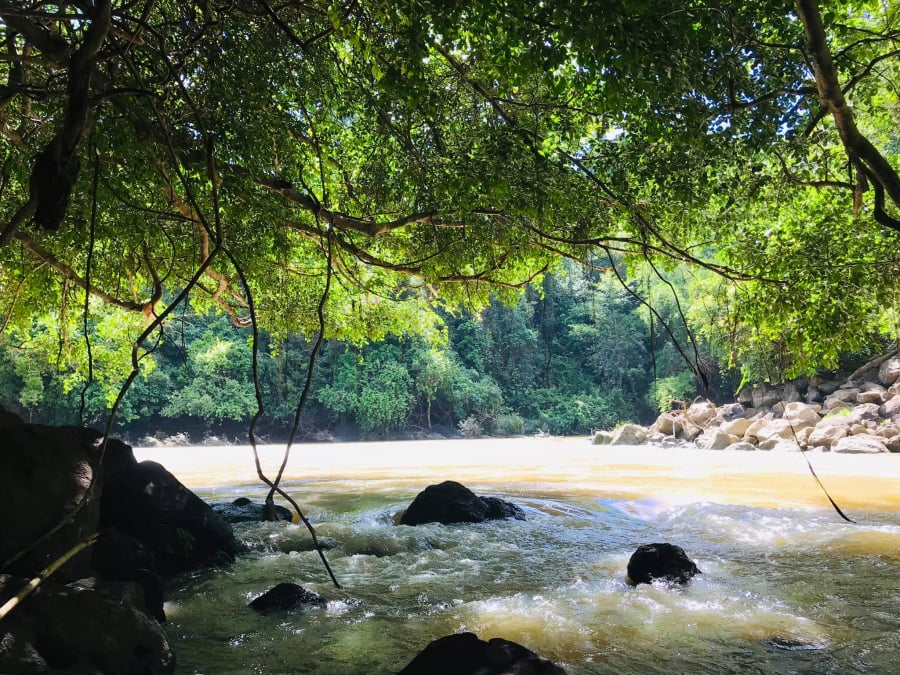
Cat Tien National Park, an attractive destination.
Throughout our time in Cat Tien National Park, we constantly encountered neatly dressed foreign visitors with cameras in hand, walking through the forest. They were likely scientists researching the diverse flora and fauna of Nam Cat Tien National Park. This is something the Cat Tien National Park management board needs to consider in its tourism development. They need to be selective in attracting tourists to meet the specific needs and target groups, managing the number of visitors at each time and location to ensure capacity is not exceeded, preventing harm to the environment and tourism resources, and thus avoiding negative impacts on the development of tourism in Cat Tien National Park.