VI
VI


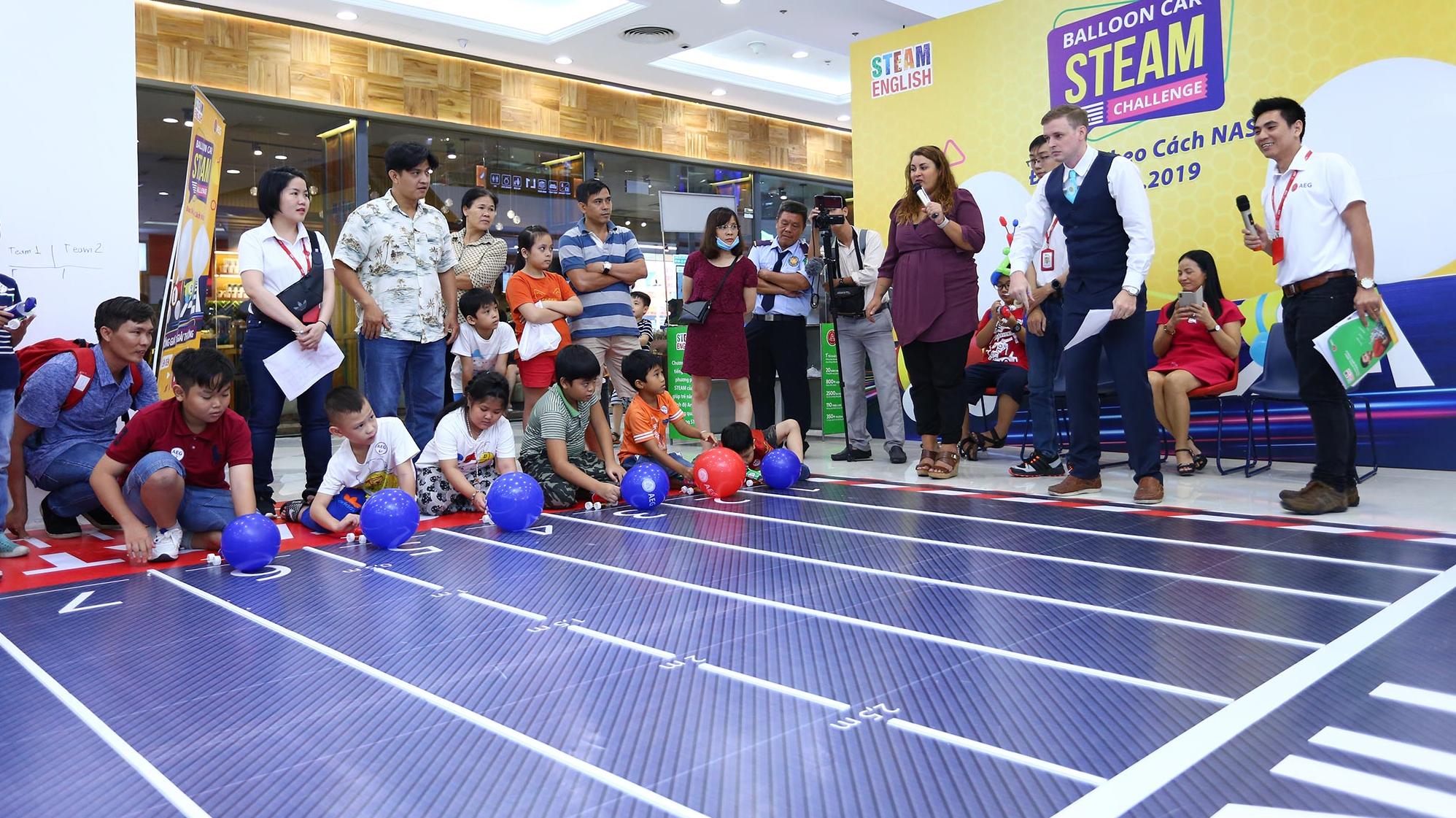
At the opening event, AEG organized the "Race Like NASA" – "Balloon Car – STEAM Challenge" competition for science-loving students, with total prize money reaching 700 million VND. This competition was originally organized by NASA more than 20 years ago (in 1998) at the Jet Propulsion Laboratory in California, USA, as a precursor to NASA's space exploration programs. Since then, NASA has often used the "balloon car" as an example of Newton's third law when teaching STEAM to develop children's thinking skills.

The children entered the challenge with determination and enthusiasm.
This competition attracted the attention and participation of both parents and children. Using simple materials such as paper, bottle caps, straws, and balloons, the children were able to build their own racing cars, applying them to real-world situations and transforming a complex scientific principle into something easy to understand and relatable.

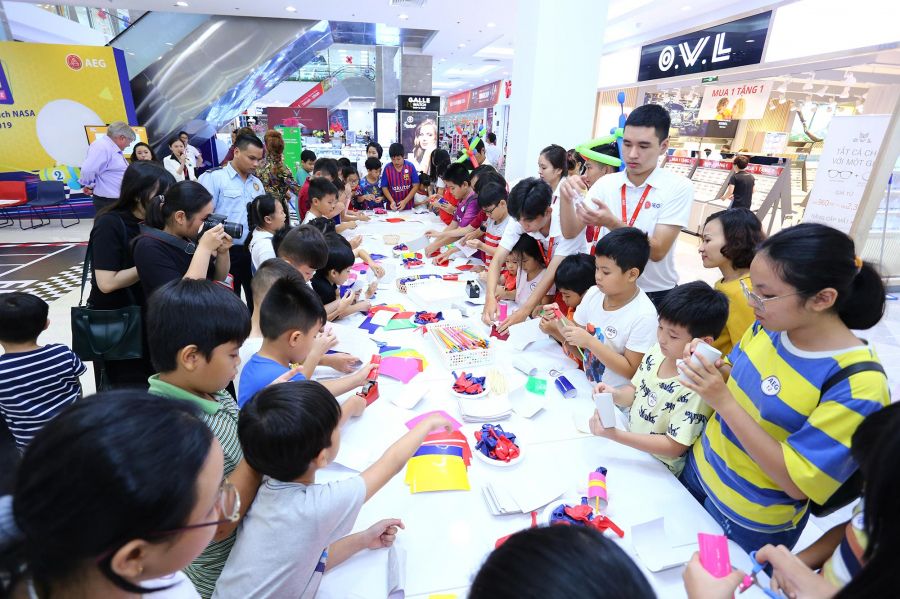
The children were guided in creating exciting racing car models using the STEAM English method.
Through this competition, AEG aims to convey a message about innovative and highly interactive English teaching and learning methods. Balloon cars and similar activities are always incorporated into AEG's STEAM English classes. Besides helping children acquire a foreign language naturally, this method helps them develop creativity, critical thinking, and discover their passions. The STEAM English program is the first and only curriculum in the world to combine the American STEAM method with English language learning. STEAM is an integrated teaching method that combines five subjects: Science, Technology, Engineering, Art, and Mathematics, aiming to help students approach these subjects in a fun and practical way.
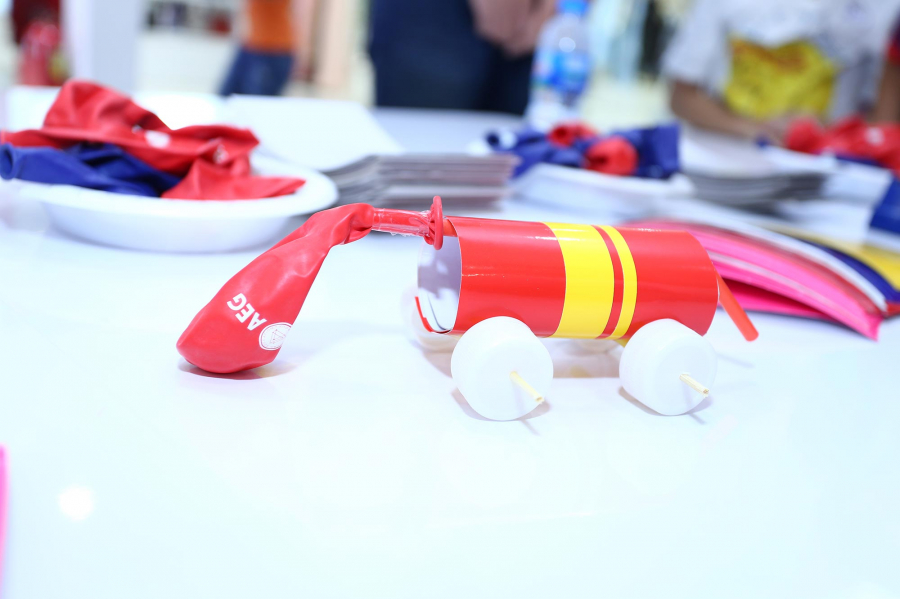
These balloon cars are creations made by the participating children themselves.
Sharing his thoughts on the development of the STEAM English program, Jorge Medrano, Academic Director at AEG, said, “STEAM English has proven effective in its innovative approach to teaching English. Beyond developing language skills and expanding knowledge, students also have the opportunity to cultivate personal abilities, critical thinking skills, and self-confidence – essential skills and qualities for future global citizens.”
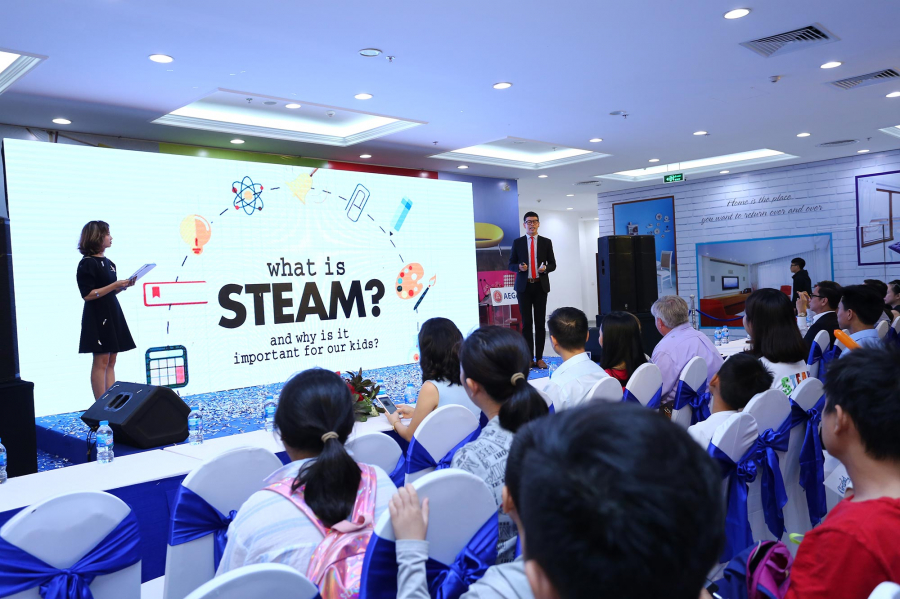
Mr. George Medrano, Academic Director of AEG, is introducing the STEAM English program.




.jpg.jpg)


.jpg.jpg)


.JPG.JPG)


.JPG.JPG)