VI
VI


5-hour flight from Hanoi to Ho Chi Minh City
When booking her flight from Hanoi to Ho Chi Minh City on Sunday, July 3rd, Ms. Khanh Ha (residing in District 4, Ho Chi Minh City) chose the 4:45 PM flight with Vietjet Air. Considering a comfortable flight time of approximately 2 hours, Ms. Ha planned to land at Tan Son Nhat Airport around 7 PM, not too late to avoid difficulties in finding a taxi from the airport to her home.
However, just as she was preparing to travel to Noi Bai Airport, Vietjet sent a notification to her phone stating that her flight had been rescheduled to 6:25 PM due to operational reasons. Upon arriving at the airport, after completing all procedures, the boarding gate opened on schedule. Although the plane began taxiing at 6:33 PM, 8 minutes late, Ms. Khanh Ha was confident she wouldn't have to wait any longer and arranged for her family to pick her up at Tan Son Nhat Airport at 8:30 PM. Unexpectedly, after taxiing, the plane continued to wait until around 6:50 PM before officially taking off. The flight time was also longer than usual, and her flight didn't land until exactly 8:50 PM.
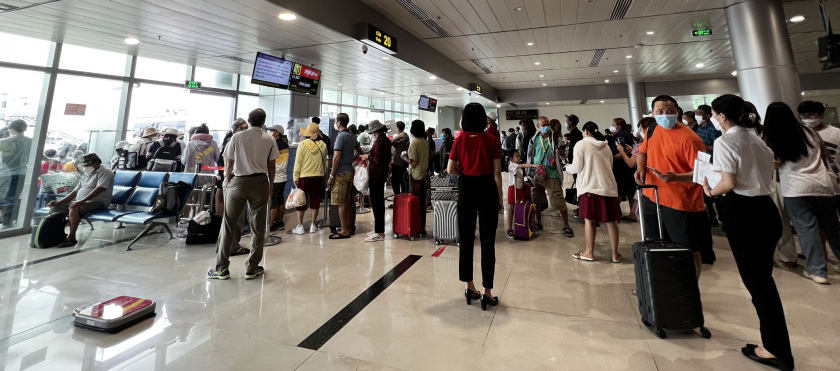
Tan Son Nhat Airport is packed with passengers.
After landing, Ms. Khanh Ha, along with hundreds of other passengers, still had to stand in line waiting for the plane's doors to open. It was exactly 9:28 PM when Ms. Ha finally reached the domestic terminal at Tan Son Nhat Airport. “From the moment the plane landed until I could disembark, it took almost 40 minutes. If you calculate based on the time I booked the ticket, I spent 5 hours flying from Noi Bai to Ho Chi Minh City. The takeoff was late, the flight was slow, and even after landing, there was still a delay. The plane was mostly filled with families on vacation, so there were many children, and they were shouting and crying because they were tired from waiting…,” Ms. Khanh Ha shook her head in frustration.
The peak summer travel season, when demand for tourism "booms," is also the time when flight delays "boom." Statistics from the Vietnam Civil Aviation Authority show that in June (from May 19th to June 18th), more than 5,602 flights of domestic airlines were delayed, accounting for 18.2% of the flights operated during this period, an increase of 9.4 points compared to May and a significant increase of 15.9 points compared to the same period last year.
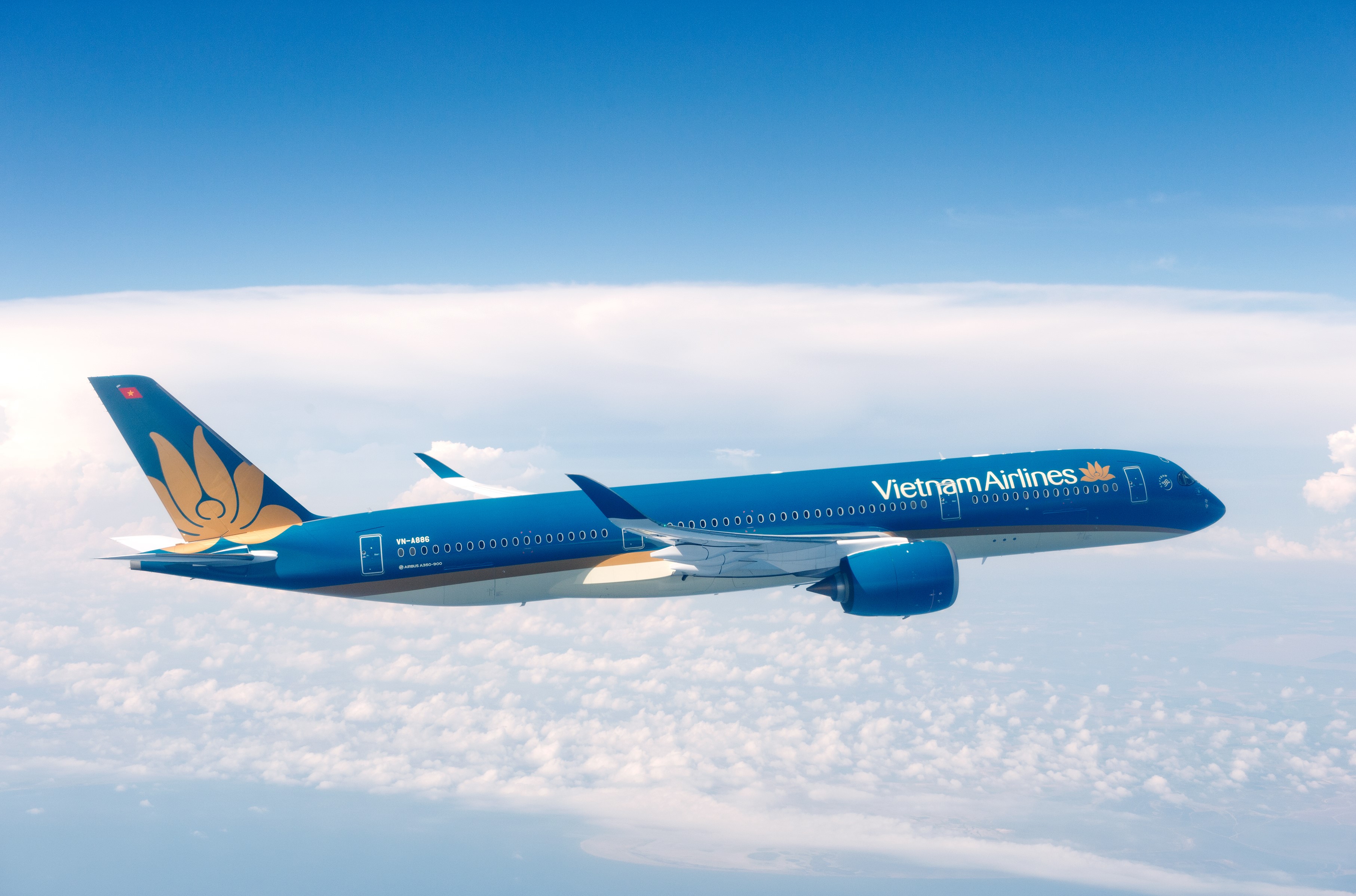
VietJet Air topped the list with 2,885 delayed flights, accounting for 24% of its total operations. Next, Vietnam Airlines had 2,230 delayed flights, representing 20.1%.

Airports complain of pressure, airlines are also struggling.
While waiting at airports during this period, the most common sound played over the loudspeakers is an apology to passengers, informing them of flight departure time changes due to aircraft delays.
Representatives from Tan Son Nhat International Airport stated that the numerous delayed takeoffs and landings have created a chain reaction, causing congestion not only inside the terminal but also outside the domestic terminal area. This exacerbates the already pressing shortage of drivers for passenger transportation at Tan Son Nhat Airport, as passengers crowd together waiting for rides during peak hours.
A representative from an airline shared that there are many reasons why planes cannot arrive at the airport on time to pick up passengers. Subjectively, planes are not always readily available at the airport waiting for passengers; they are constantly being rerouted to pick up and drop off passengers at different locations. This is especially true for budget airlines with high passenger volumes, where the turnaround time for a single aircraft is fast and continuous.
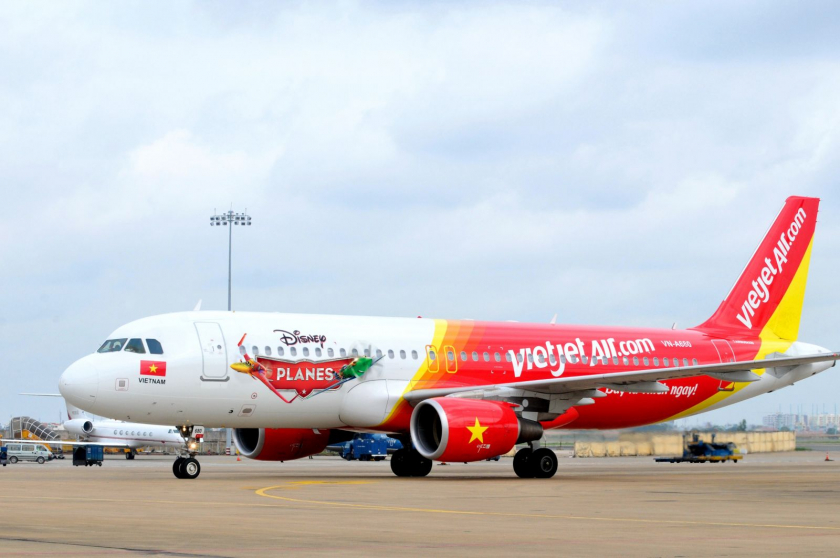
Vietjet Air
The turnaround time is approximately 25-30 minutes, provided all factors are accurate and on time. Therefore, a single factor causing a delay at one point will trigger a chain reaction of delays for flights at other points. However, this person acknowledges that aircraft delays are only partly due to subjective reasons on the part of the company, and mainly due to objective external factors.
Specifically, the unpredictable weather during the summer, with thunderstorms or strong winds, prevented aircraft from taking off and landing as planned. Most importantly, the surge in passenger numbers, surpassing pre-pandemic peaks, overloaded most airports. International flights now account for only 5% of total operations, with the remaining 95% concentrated on domestic flights, putting immense pressure on the infrastructure of domestic terminals, especially at Tan Son Nhat Airport.
Overcrowding, coupled with a shortage of security personnel during the early summer peak season, led to delays in security services and procedures. Furthermore, flight support equipment such as buses and passenger stairs were insufficient to meet demand, resulting in frequent delays in boarding and disembarking passengers. Not to mention, the organization and movement of buses and cargo vehicles often conflicted with aircraft movements, further prolonging delays.
Concurring with this view, a representative from Vietjet Air affirmed that aircraft delays not only harm passengers but also cause hardship for airlines. On average, for every minute an aircraft spends waiting to take off or circling, the airline incurs an additional cost of $100. For example, in the case of Ms. Khanh Ha, a flight from Noi Bai to Ho Chi Minh City would cost the aircraft approximately 50 minutes waiting on the runway, meaning Vietjet Air would lose an additional $5,000. This doesn't even include the fact that fuel costs have increased three to four times, further burdening businesses with cost pressures.
“No airline wants flight delays. The key issue is that airport infrastructure is severely overloaded, primarily Tan Son Nhat Airport, followed by Noi Bai. Airports like Da Nang and Phu Quoc experience congestion at various times. If the airport infrastructure problem isn't quickly resolved, the situation will certainly worsen when the international tourism market recovers,” a representative from Vietjet Air expressed concern.
A representative from an airline further analyzed: Although Tan Son Nhat Airport has put two new runways into operation, these runways are located next to each other, making it impossible to manage simultaneous takeoffs and landings. Coupled with the limited takeoff and landing capacity, Tan Son Nhat's capacity only reaches 40-42 flights per hour, much lower than the 65-70 flights per hour at airports in Thailand or other countries, contributing to congestion and flight delays.