VI
VI


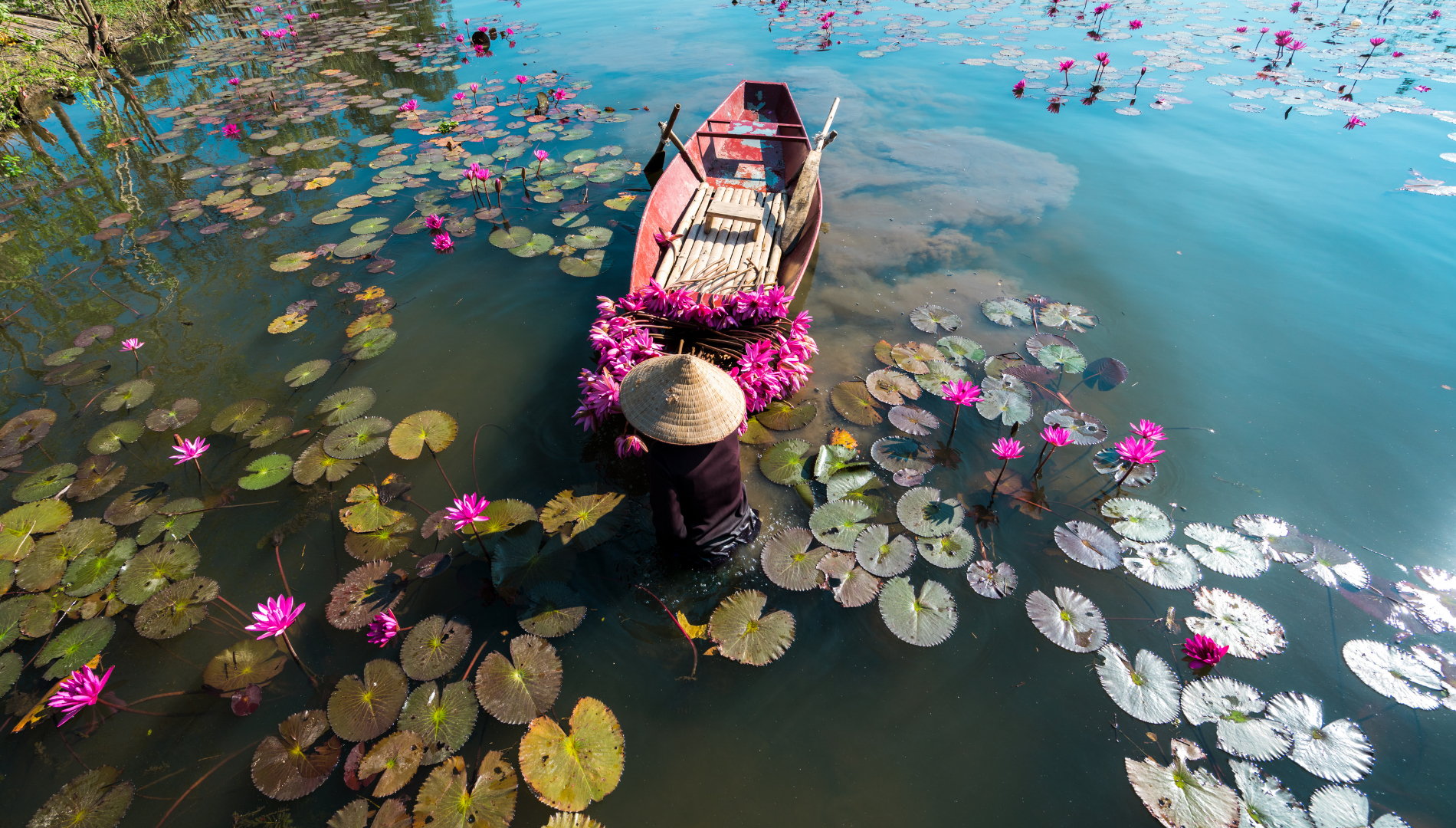
During a recent trip to Vietnam, Jess McHugh, an American tourist, had the opportunity to visit the Mekong Delta region to learn about the lives of the local people. This was also the first time the visitor witnessed the harvesting of water lilies in the riverine area.
A journalist from The New York Times remarked, "Nothing is more impressive than watching the water lily harvest in Vietnam." Indeed, witnessing the sight of small boats weaving through vast fields of water lilies, one truly appreciates the simple yet magical beauty of this riverine region.
"Nothing is more impressive than watching the water lily harvest in Vietnam," remarked Jess McHugh, a writer for The New York Times.
The image of women with their conical hats tilted, their hands nimbly picking water lilies under the morning sun, has become an unforgettable scene for tourists. It is not just a productive activity, but also a vibrant work of art.
The American daily newspaper described how local farmers (mostly women) living in the southernmost region of Vietnam would wade into shallow waters at dawn to harvest water lilies during a specific period (about a few weeks) from August to November.
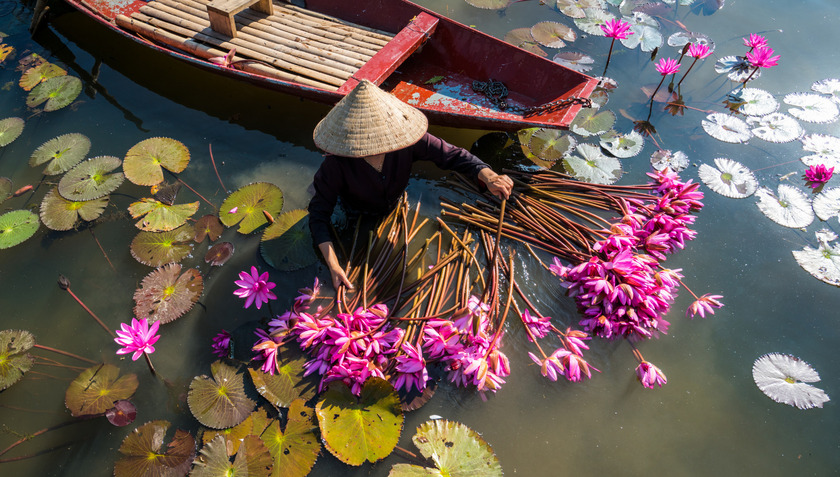
"Water lilies are quite similar to lotus flowers but smaller in size, and their leaves are more pointed. Their colors are more vibrant, with shades of purple and deep pink. Over the years, the scene of people waking up early to go to the river to pick water lilies, arranging them into bundles, washing off the mud right in the river, and then loading them onto small boats or canoes has been highly appreciated, especially in the field of photography," wrote The New York Times.

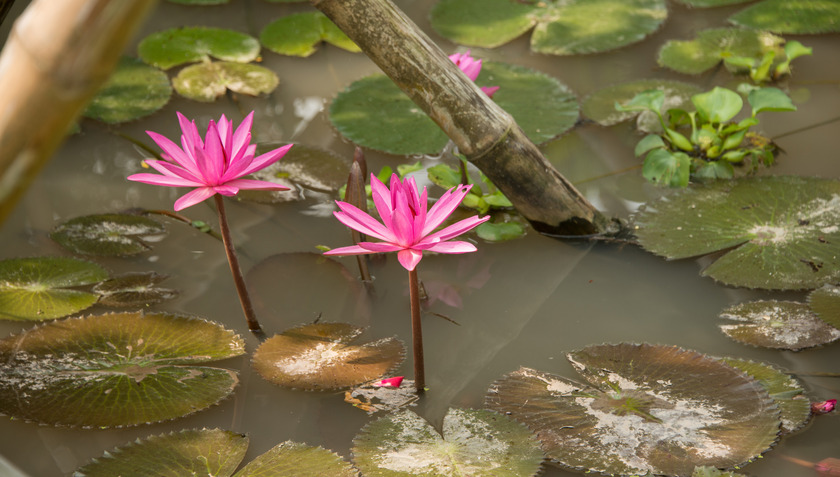
Water lilies are a part of the daily life of people living in riverside areas.
According to the New York Times, water lilies may be the oldest flowering plant on the planet, as blue water lilies were buried with the ancient Egyptian Pharaoh Tutankhamen (circa 1341 BC). Today, this flower, symbolizing immortality, is used for food and medicine. Marc Hachadourian, head of the greenhouse area at the New York Botanical Garden, describes water lilies as smelling like Juicy Fruit chewing gum.
Have you ever imagined a giant carpet of flowers stretching across the water's surface, with pristine water lilies displaying their beauty under the golden sunlight? The water lily stems, slender yet incredibly resilient, rise from the muddy bottom to reach the light. Their round, lush green leaves form a refreshing green carpet.
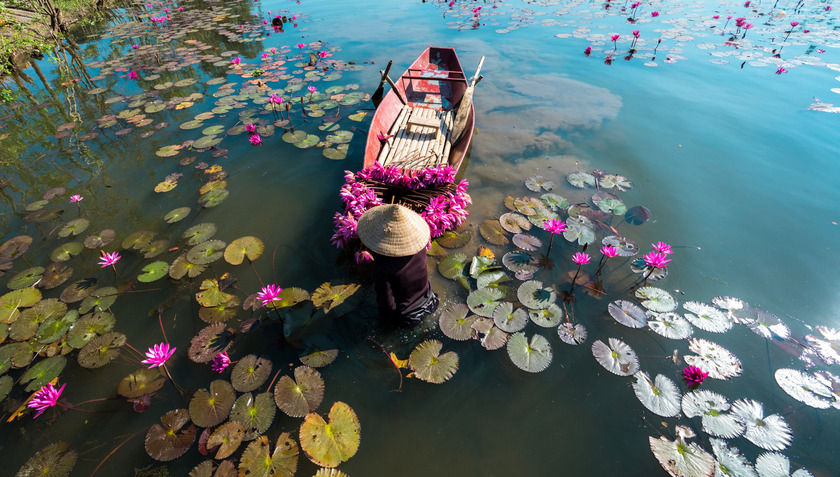
When the river delta floods, the water lily harvest becomes a popular photo spot for tourists.
Water lilies, symbols of peace and purity, have been intertwined with the lives of people in the Mekong Delta. During the flood season, when the Mekong Delta is submerged, the water lily fields become a breathtaking spectacle. Local people, in their small boats, navigate through the fields to harvest the flowers. This image has become a distinctive feature of the region, attracting countless tourists from near and far. Visitors not only admire the beauty of the water lilies but also experience the simple life of the local people.
Between September and November, women in the Mekong Delta wake up at dawn to harvest water lilies during a specific period. These plants are known for their remarkable resilience in this region. Water lilies grow wild, requiring no special care, yet they thrive.
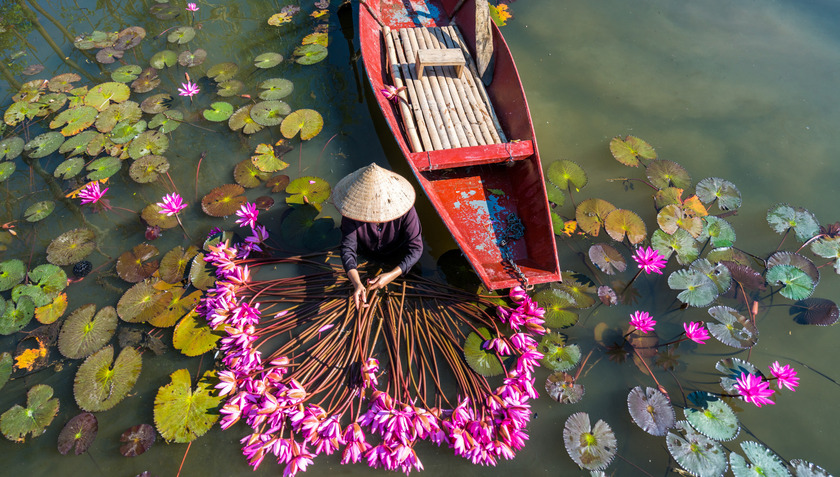
The American daily newspaper described how local farmers (mostly women) living in the southernmost region of Vietnam would wade into shallow waters at dawn to harvest water lilies.
Every time the water lilies bloom, the locals excitedly gather to harvest them. Along with aquatic resources, during the flood season, water lilies are a product that helps people improve their lives.
With skillful hands, the women roll up each bunch of water lilies, wash away the mud, arrange them into bundles, and load them onto small boats or canoes. Although water lilies can be grown year-round, their peak blooming season is in the autumn. Each flower only blooms for a few hours each day for 3 to 5 days before wilting.
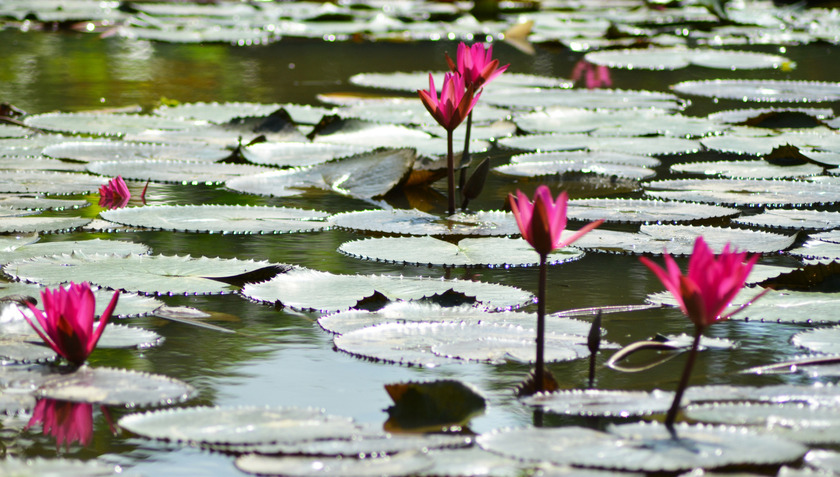
Water lilies are a symbol representing the character of the Vietnamese people.
The scene of harvesting water lilies not only attracts tourists and photographers, but this flower is also an important part of the daily life of people in the riverine areas. They can be used to decorate homes or processed into everyday dishes.
Water lilies are not only beautiful flowers, but also symbols of life and rebirth. Despite enduring harsh flood seasons, water lilies thrive and then bloom brilliantly again.