VI
VI


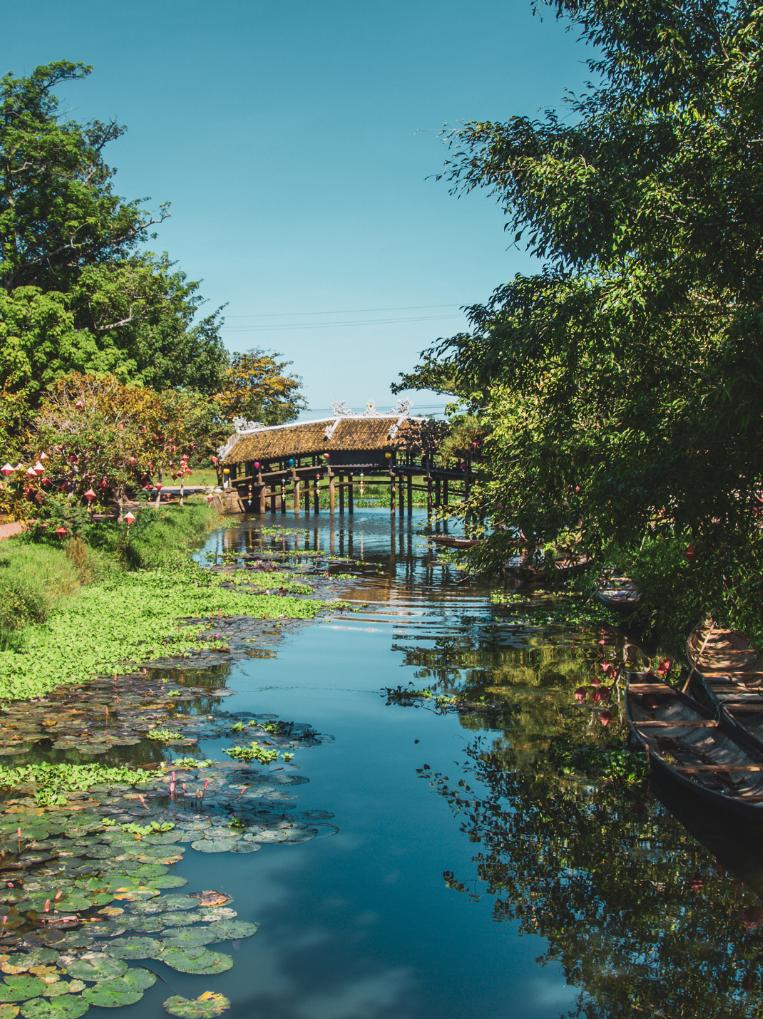
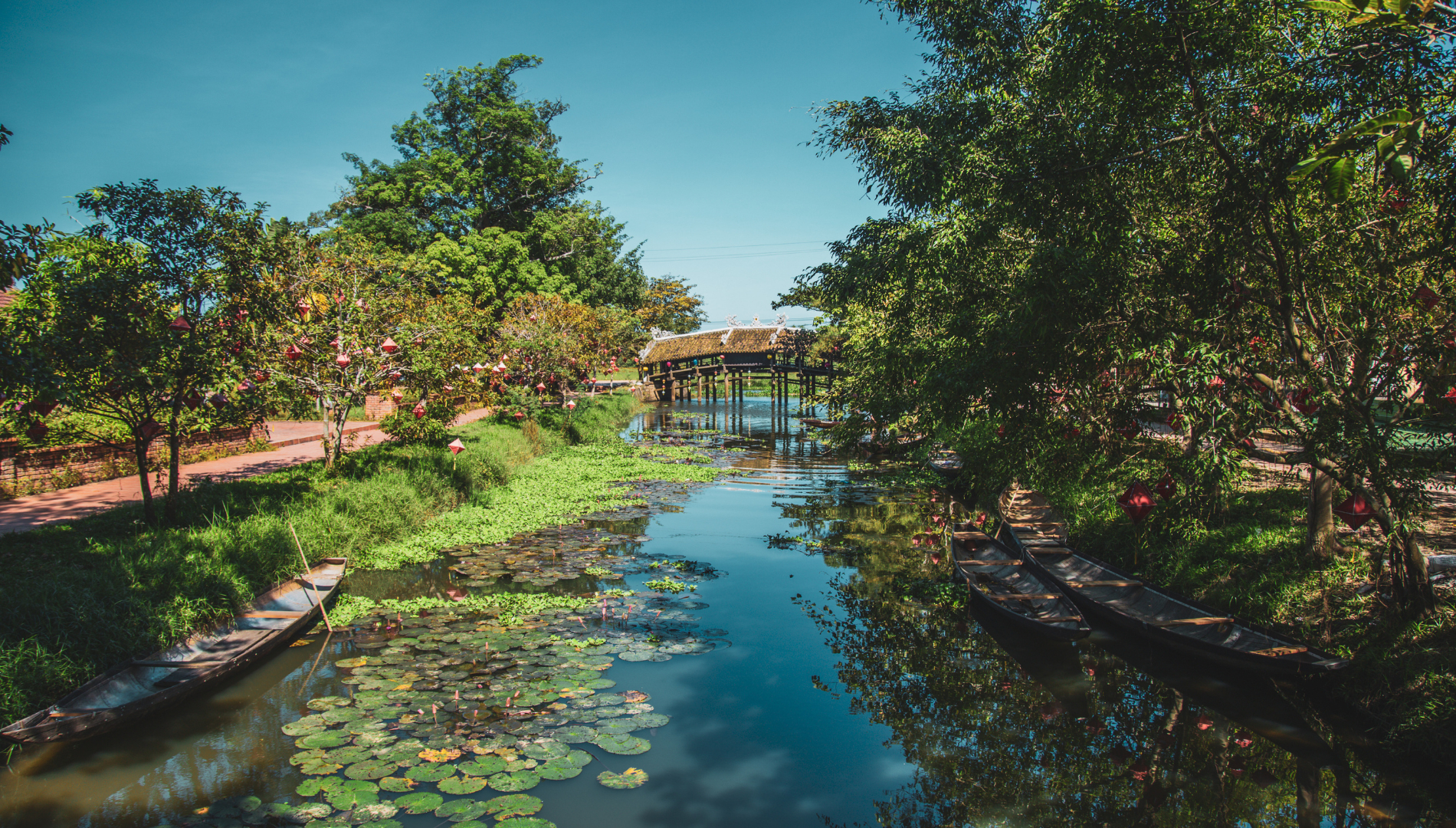
Thanh Toan tiled-roof bridge is one of the most popular tourist attractions in Hue. Not only does it possess unique architecture, but this bridge is also considered a "historical witness" to the transformation of the ancient capital city.
240 years of close association with Hue
"Who's going to Thanh Toan tiled bridge?"
"Let me join a group so it'll be more fun."
Located about 8 km east of Hue city by road, along winding village roads through vast, fragrant rice paddies, lies the famous Thanh Toan tiled bridge in Thanh Thuy village, Thuy Thanh commune, Huong Thuy town.
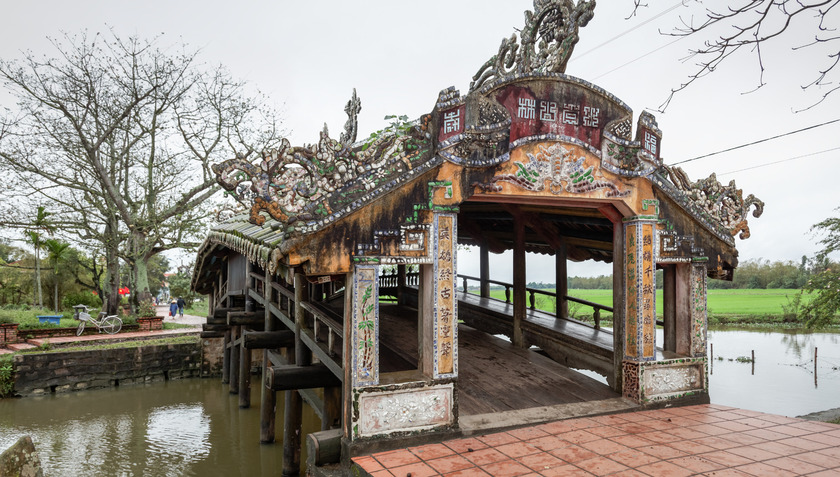
This bridge has been renovated many times, but it has not lost its original, ancient beauty.
In the 18th century, this place was still very wild and undeveloped, requiring people to travel by boat with great difficulty. Out of compassion, Mrs. Tran Thi Dao, the wife of a high-ranking official in the Le Dynasty and a sixth-generation granddaughter of the wife of a high-ranking official under King Le Hien Tong, used her personal funds to build the bridge. She was praised by King Le Hien Tong and bestowed the title "Duc Bao Trung Hung Linh Phu" in 1925. In 1776, the Thanh Toan tiled bridge was completed.
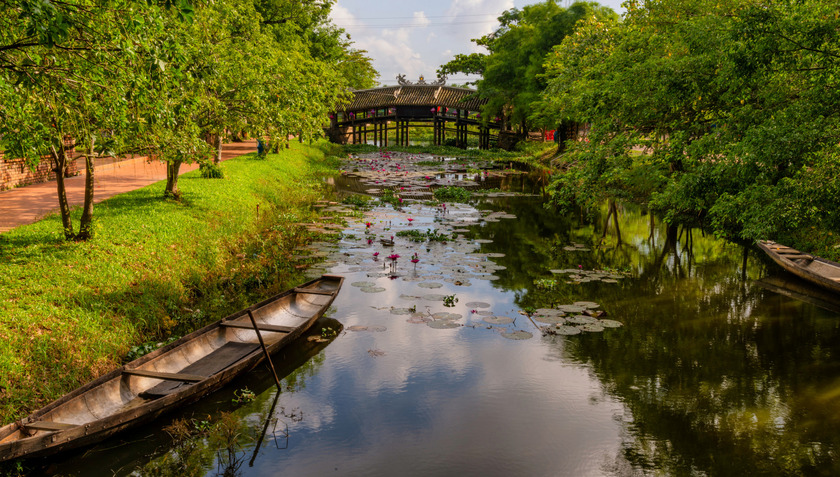
Thanh Toan Bridge not only has artistic value but also spiritual value and is a "witness to history".
In 1990, the bridge was recognized as a National Architectural and Artistic Monument according to Decision No. 575/QD dated July 14, 1990, of the Ministry of Culture and Information.

To date, there are very few structures from the same period, especially bridges with the "house above, bridge below" design, left in Vietnam. The fact that the Thanh Toan tiled bridge has remained in its original state, with sturdy construction and minimal decay after more than two centuries, makes it even more special.
The ancient architectural beauty of the former imperial capital.
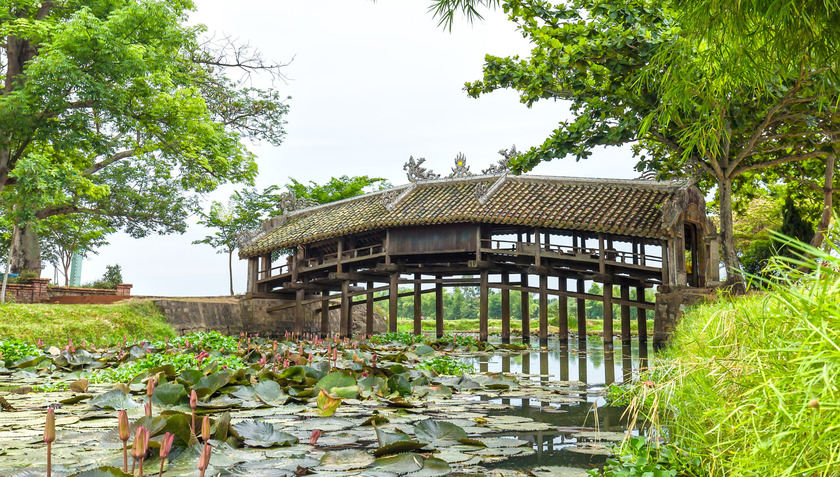
The Thanh Toan tiled bridge is built over a canal – a small branch of the Nhu Y River. It is a wooden bridge, 17 meters long and 4 meters wide, with two rows of wooden platforms and railings on either side. The bridge has a roof covered with glazed tiles, with the central section being the widest and also housing an altar dedicated to Lady Tran Thi Dao. The bridge's architectural elements are decorated with both round and square cross-sections. The bridge rests on a support system of six rows, each with three stone pillars.
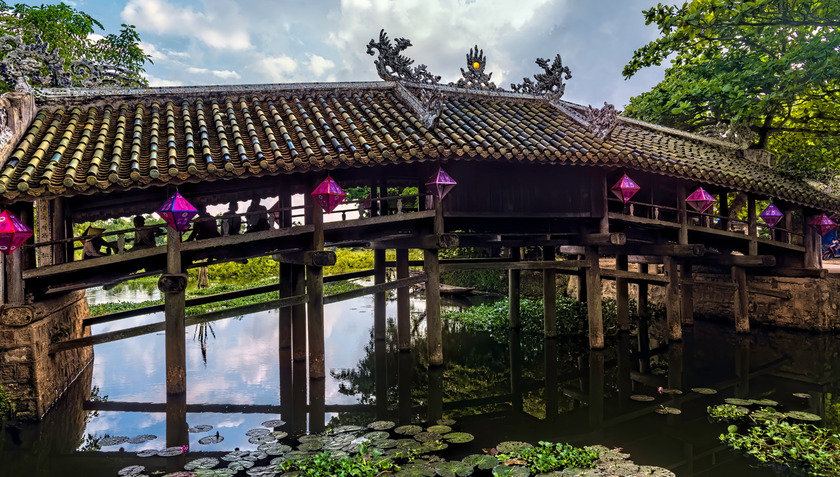
This is one of the few bridges in Vietnam built with a unique architectural style: houses built on top of the bridge itself.
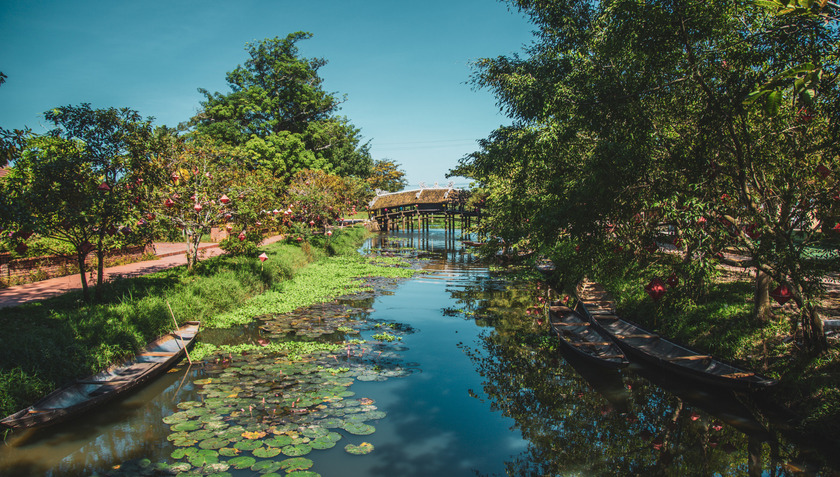
The bridge is a favorite resting place for the villagers.
The bridge is primarily constructed from very sturdy wood, surrounded by lush, shady trees. Its architecture is quite simple; standing on it, visitors will feel a cool atmosphere thanks to the moisture rising from the canal and the heat-insulating properties of the glazed tiles.
The bridge is built in the "upper house, lower bridge" style, divided into seven main sections. The roof is entirely covered with glazed ceramic tiles. Along the length of the bridge are two platforms, each with a railing, where visitors can sit and enjoy the cool breeze. The main material used to construct this bridge is wood, ensuring its sturdiness and coolness.
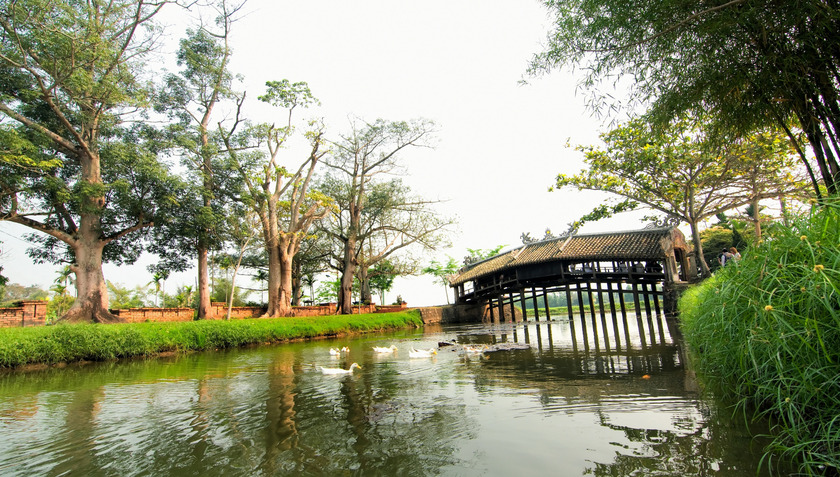
The peaceful charm of the ancient capital region.
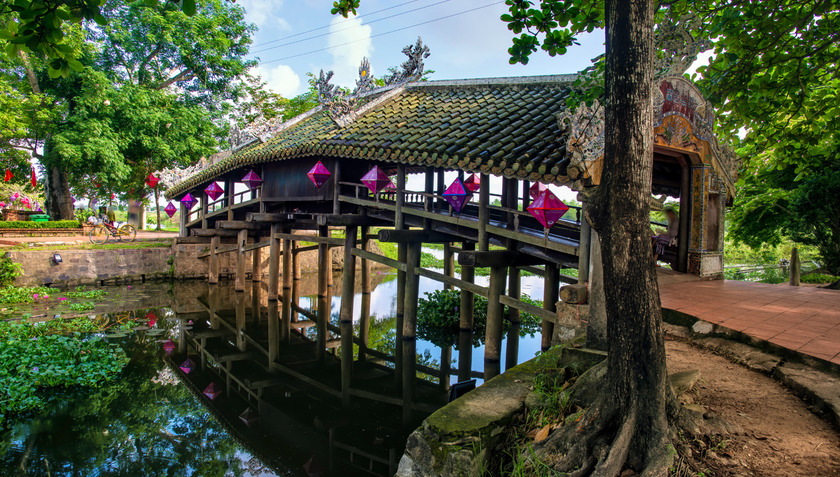
Here, visitors will hear about the history of Thanh Toan tiled bridge and the interesting stories behind it.
The pillars and beams are mostly very simple, and if there are any carvings, the motifs are quite basic. The most meticulously crafted and elaborately decorated part of the Thanh Toan tiled bridge is the roof. The details here are intricately inlaid with porcelain and shimmer beautifully when light shines on them.
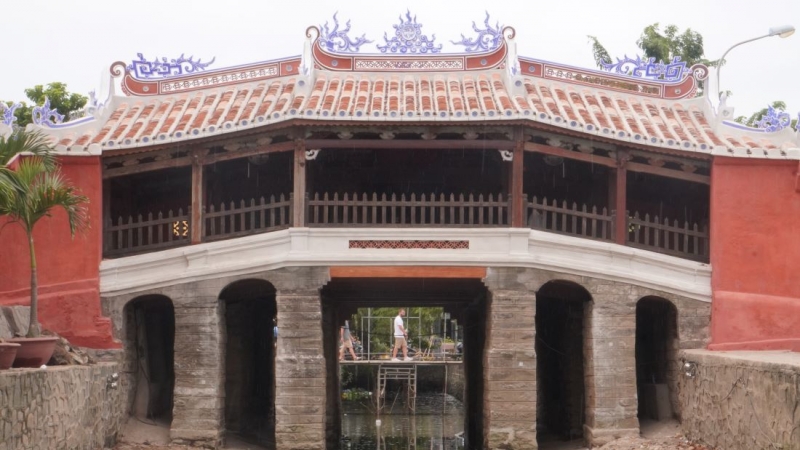
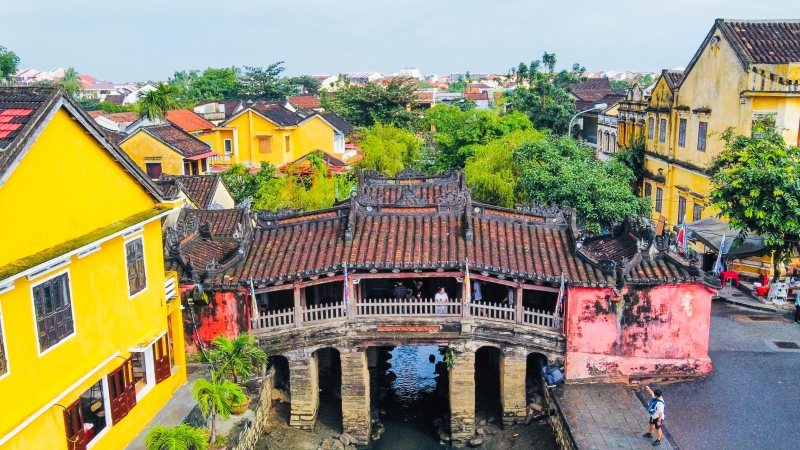
In Vietnam today, besides the Thanh Toan tiled bridge, there are several other bridges with similar architecture, including the Japanese Bridge (Hoi An), the tiled bridge in Hai Anh commune (Hai Hau, Nam Dinh), the Phat Diem tiled bridge (Kim Son, Ninh Binh), and two tiled bridges at Thuy Pagoda (Hanoi).
Although there are many similarities in architecture, while the Japanese Bridge (Hoi An) uses dogs and monkeys as mascots for decoration, the Thanh Toan tiled bridge uses dragons and phoenixes to decorate the ridges of the tiled roof; the gables are decorated with enamelware, and the patterns all share the same theme of "transforming into dragons."
After listening to the introduction about Thanh Toan tiled bridge, visitors understand that this bridge was built not only to facilitate convenient travel for the local people.
The Thanh Toan tiled bridge is integrated into the overall landscape of Thanh Thuy Chanh village, possessing the beauty of a typical Vietnamese village. Surrounded by lush green rice fields, the village boasts a communal house, temples, shrines, ancestral halls, a market, village roads, alleyways, gardens, bridges, ancient trees, and green bamboo groves reflected in the water. Next to the tiled bridge is an exhibition hall showcasing agricultural tools, recreating all aspects of agricultural and fishing production. There is also an area displaying and introducing handicrafts and local specialties such as woven fabrics, baskets, and banh tet (traditional Vietnamese rice cakes).
Beyond the bridge lies a spacious courtyard, often used for local markets during festivals, commemorations of Mrs. Tran Thi Dao, and the Hue Festival. Next to it is an exhibition hall showcasing agricultural tools and recreating local farming and production activities. There is also a section displaying local handicrafts.
The Thanh Toan tiled-roof bridge was recognized as a national historical monument in 1990. Furthermore, thanks to its distinctive traditional design, the bridge's image was also printed on postage stamps and issued in 2012 as a recognition of its long-standing historical and cultural value.
Along with the development of tourism nationwide in general and in Hue in particular, Thanh Toan tiled bridge is increasingly attracting the attention of many tourists. This Hue landmark embodies typical and distinctive cultural characteristics; crossing the bridge will lead you to the peaceful countryside of Hue, where people still live simple, tranquil lives, and where ancient culture is preserved in its most complete form.