VI
VI


Tam Chuc Pagoda
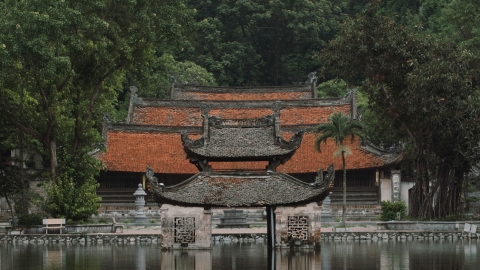
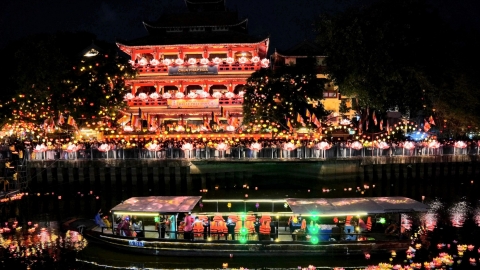
Tam Chuc Pagoda, currently known as "the largest pagoda in Vietnam," is located within the Tam Chuc tourist complex in Ba Sao town, Kim Bang district, Ha Nam province. Blessed by nature, the pagoda possesses an ancient, poetic beauty intertwined with majestic grandeur, considered a heavenly paradise on earth.
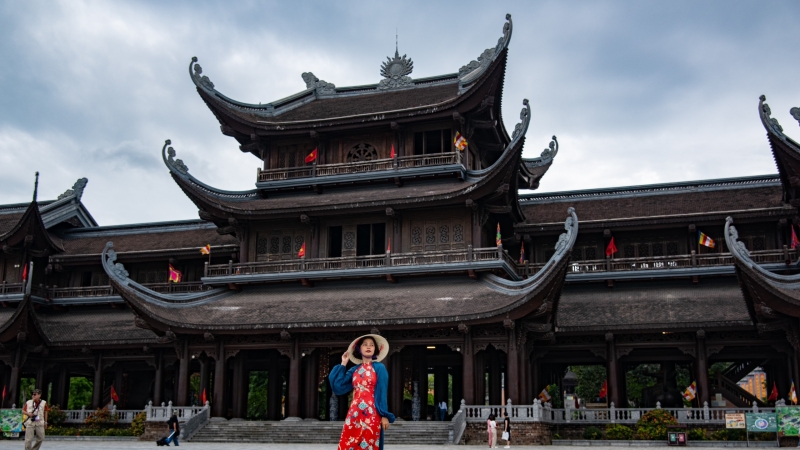
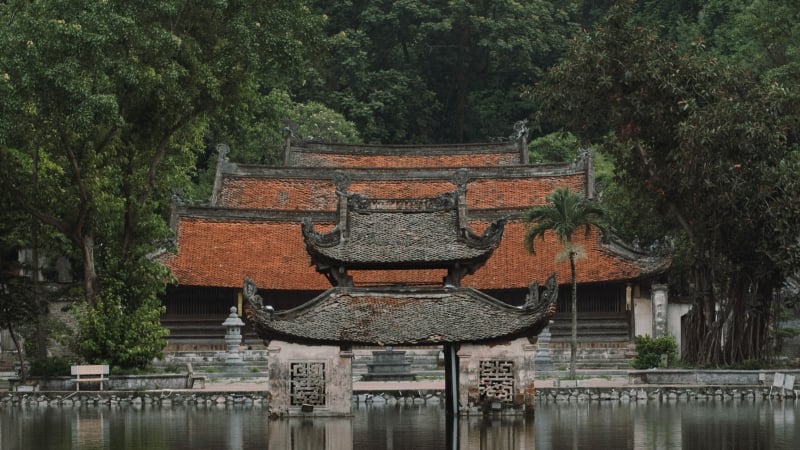
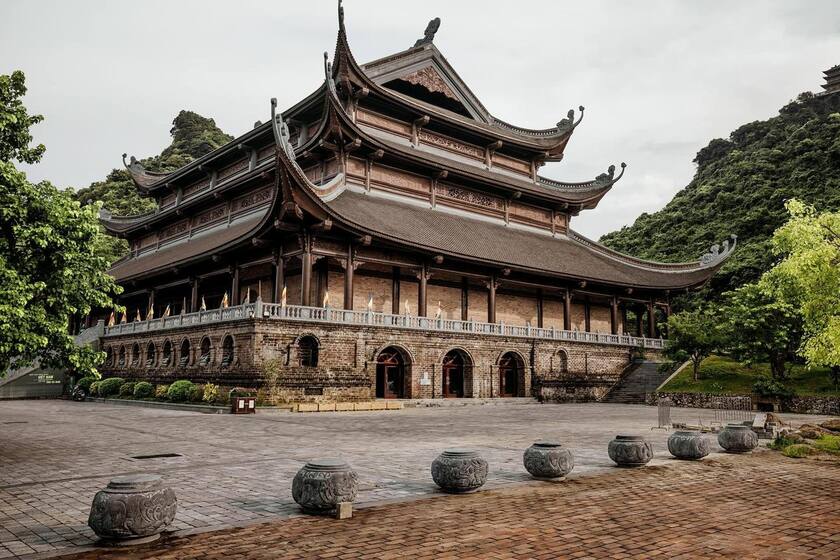
The impressive Buddhist architecture of Tam Chuc Pagoda.
Built on a grand and magnificent scale, the temple boasts many impressive and unique Buddhist architectural structures such as the Three Worlds Hall, the Jade Emperor Hall, the Enlightenment Pagoda, and the Sutra Garden... This has become one of the most attractive spiritual tourist destinations, offering visitors a clear sense of the sacredness of Buddhism.
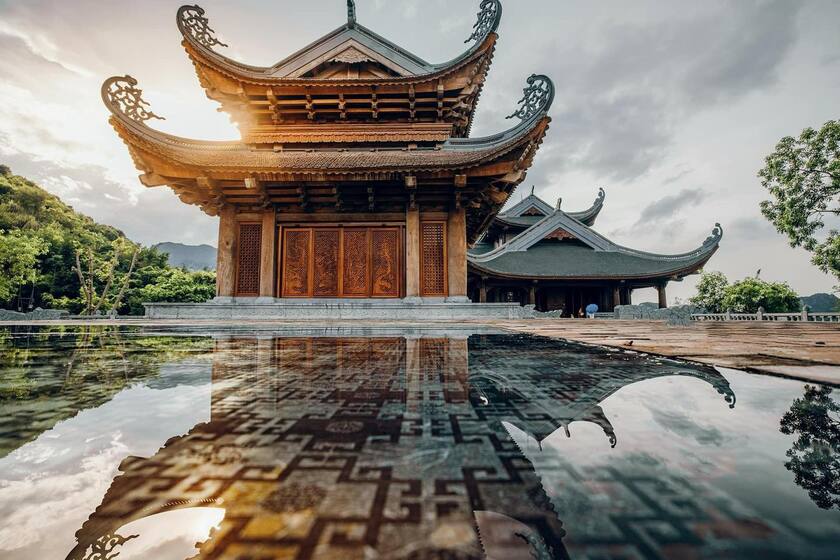
A picture of a corner of the temple bathed in golden sunlight.
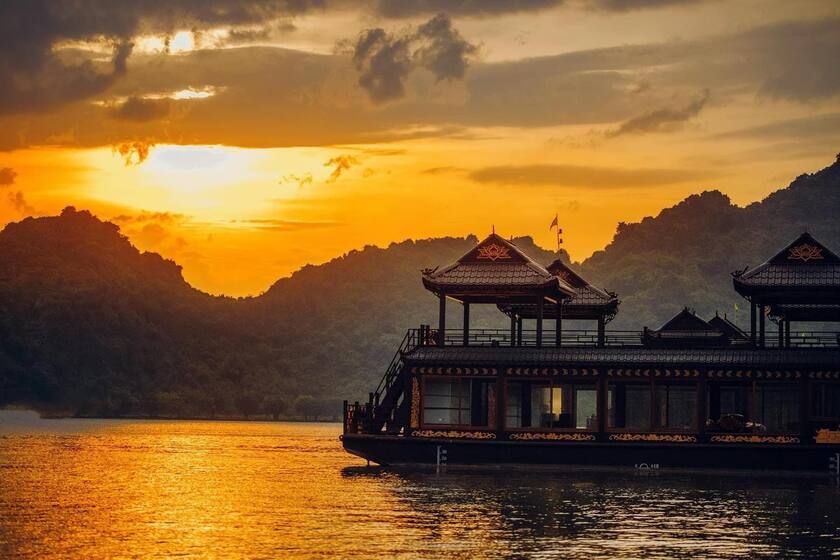
The landscape surrounding the Tam Chúc tourist area is beautiful, with mountains and rivers.
Dia Tang Phi Lai Pagoda
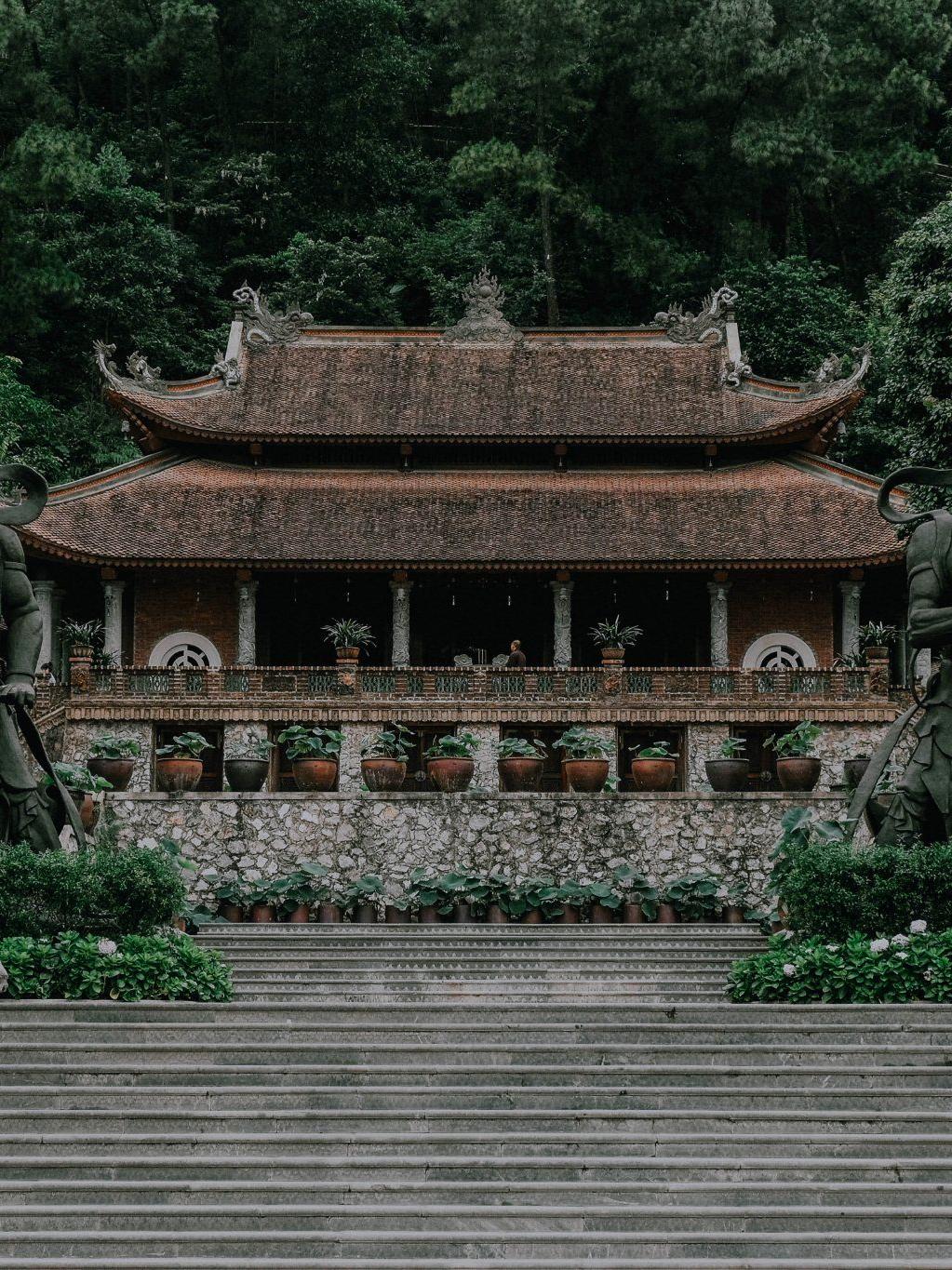
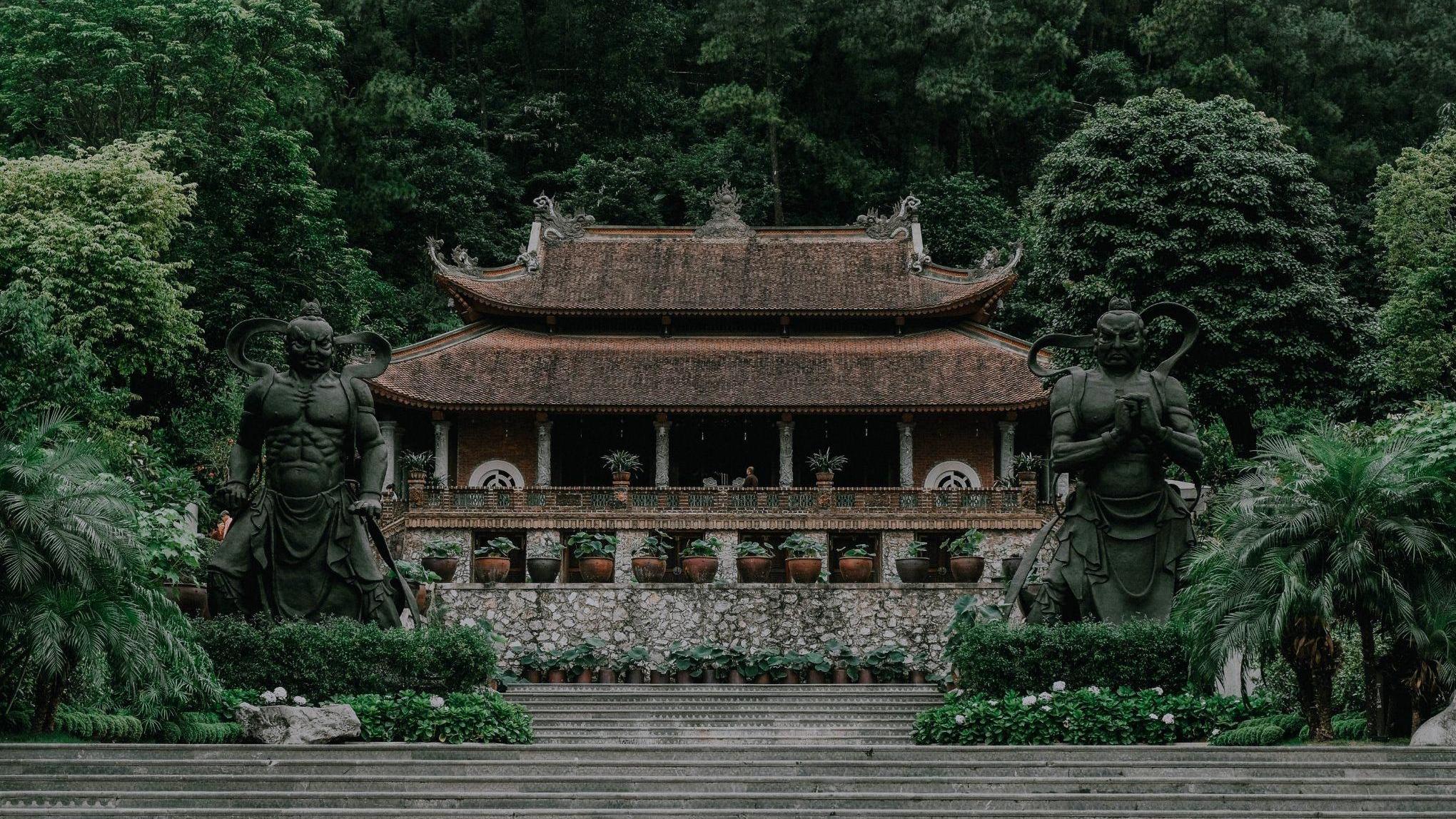
Besides Tam Chuc Pagoda, another well-known temple with a serene atmosphere is Dia Tang Phi Lai Tu (ancient name: Dung Pagoda). Located 70 km from Hanoi, in Ninh Trung village, Liem Son commune, Thanh Liem district, Ha Nam province, it is considered a haven of peace on earth, possessing ancient and tranquil beauty, making it a suitable place for Buddhist practitioners to practice meditation.
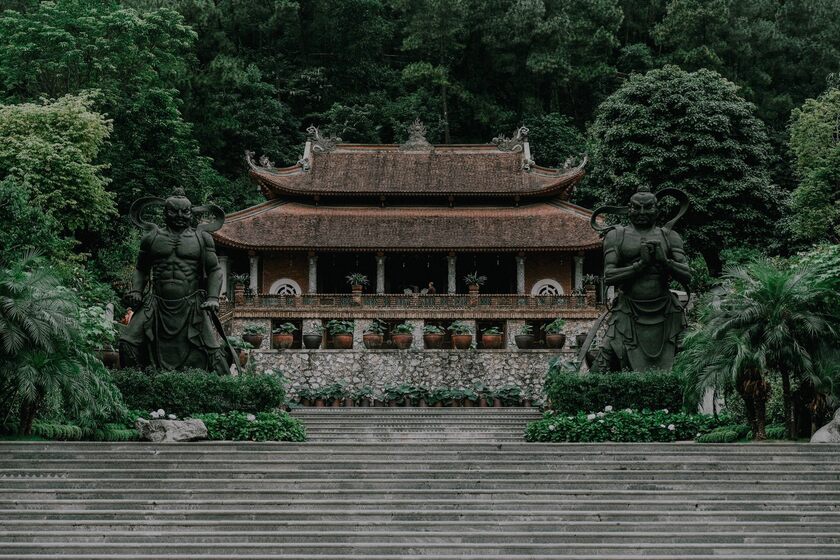
Địa Tạng Pagoda stands serenely amidst the mountains and forests. Photo: Trương Đình Minh
The pagoda, built in the 11th century, has weathered many ups and downs and possesses a beauty deeply marked by history, containing many cultural values.

Nestled amidst the mountains and forests, surrounded by shady trees and lush green pine forests, the temple offers visitors a refreshing and pleasant atmosphere. Many seek refuge here, a haven for the soul, to forget worries and anxieties, and to pray for good fortune in life. Therefore, it remains a renowned spiritual destination, attracting pilgrims from near and far seeking spiritual values.
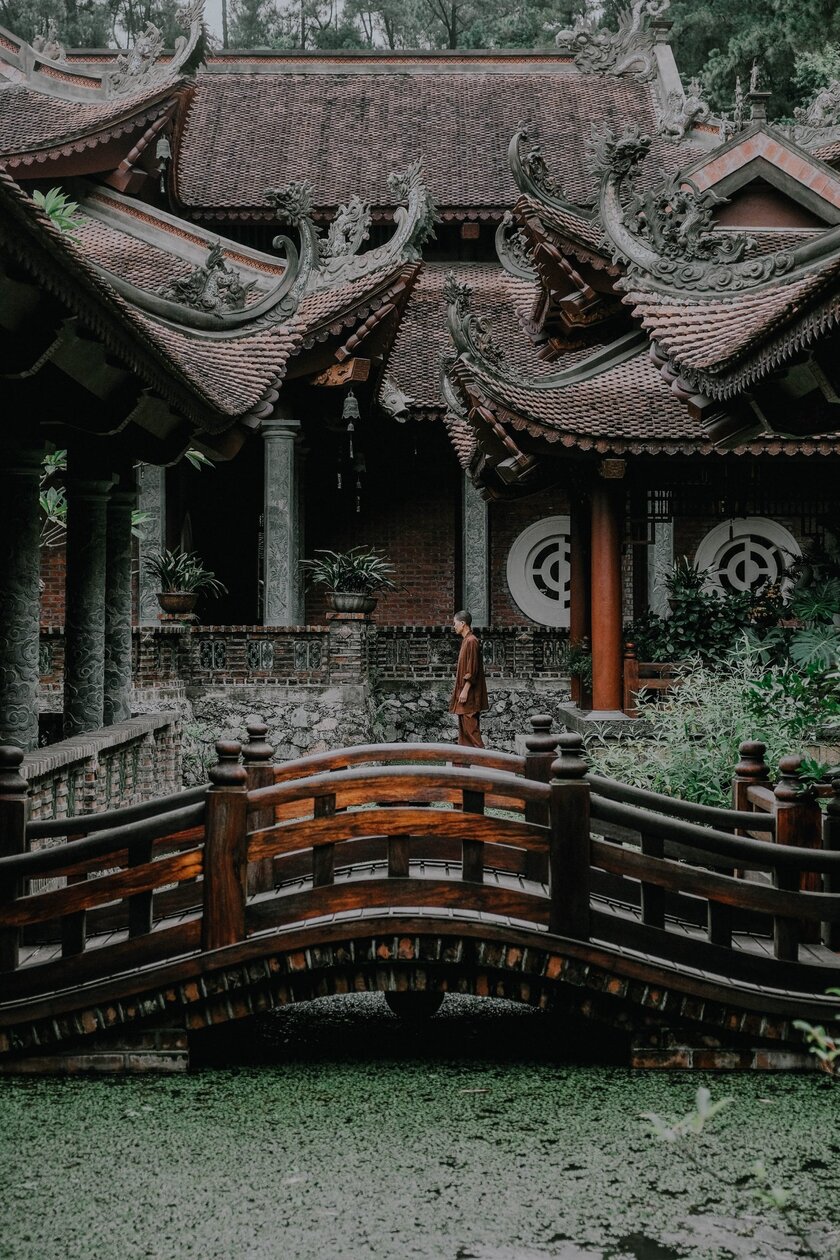
The temple's architecture bears the mark of time. Photo: Truong Dinh Minh
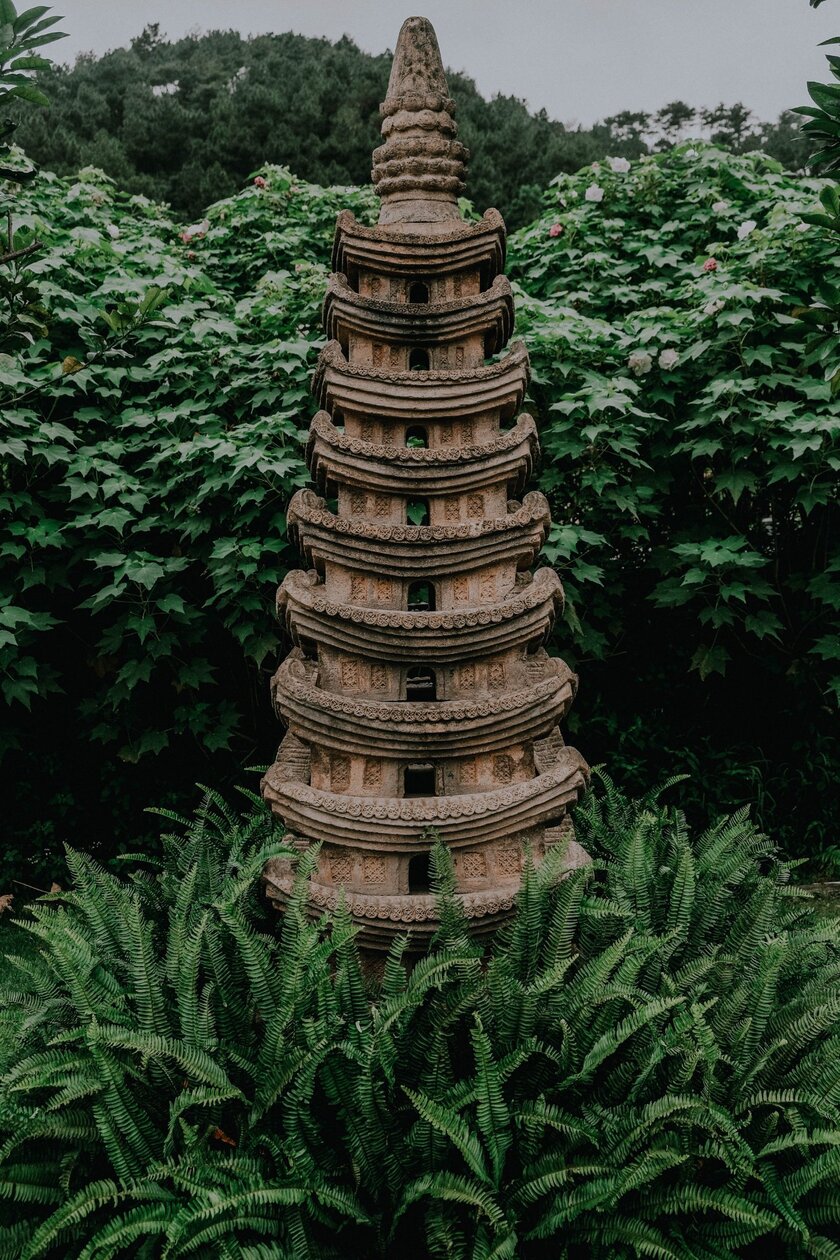
The distinctive domes are a hallmark of ancient temple architecture in Northern Vietnam. Photo: Truong Dinh Minh
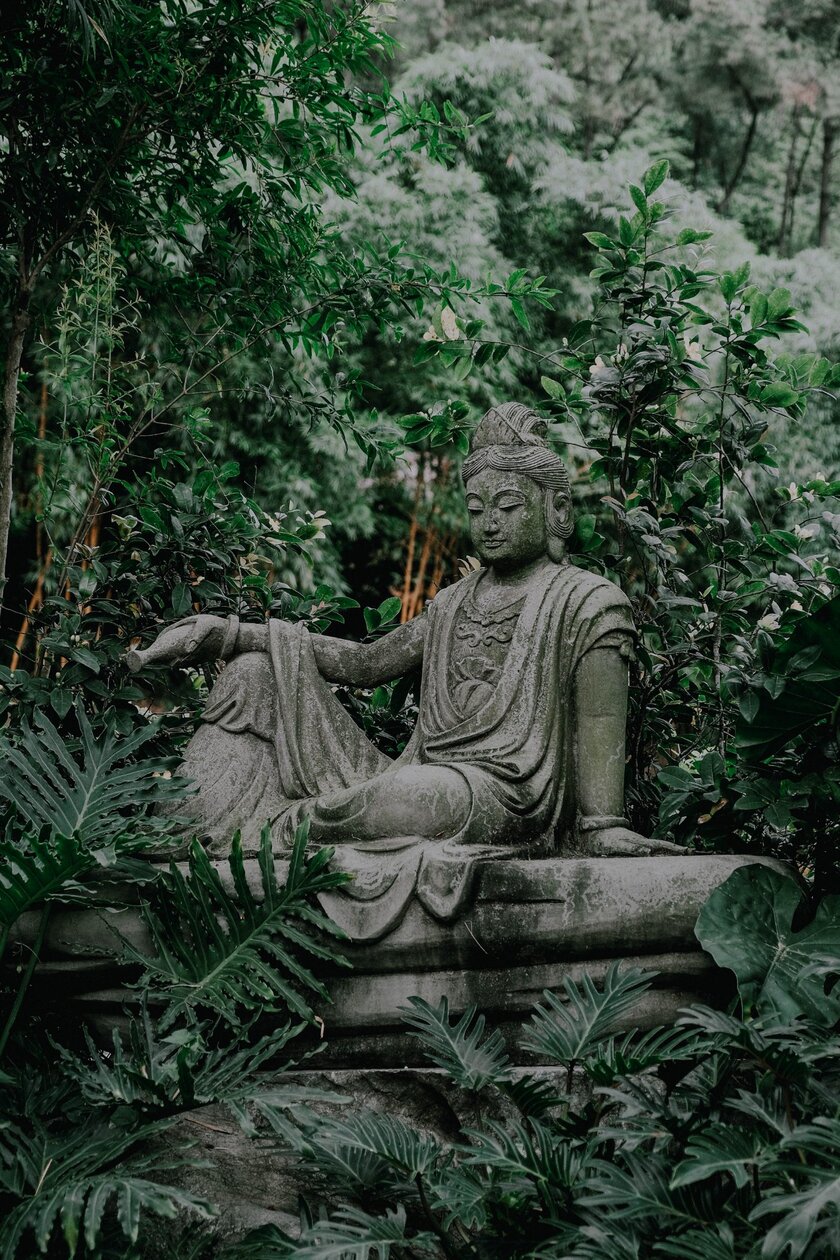
Every detail embodies cultural and spiritual values. Photo: Truong Dinh Minh
Phật Quang Temple
Another sacred pilgrimage site for Buddhists from all over the world is Phat Quang Pagoda, located in Du Nhan village, Thanh Phong commune, Thanh Liem district. Phat Quang means the light of the Buddha and of Buddhism - the religion that has sheltered the soul of the nation for generations.
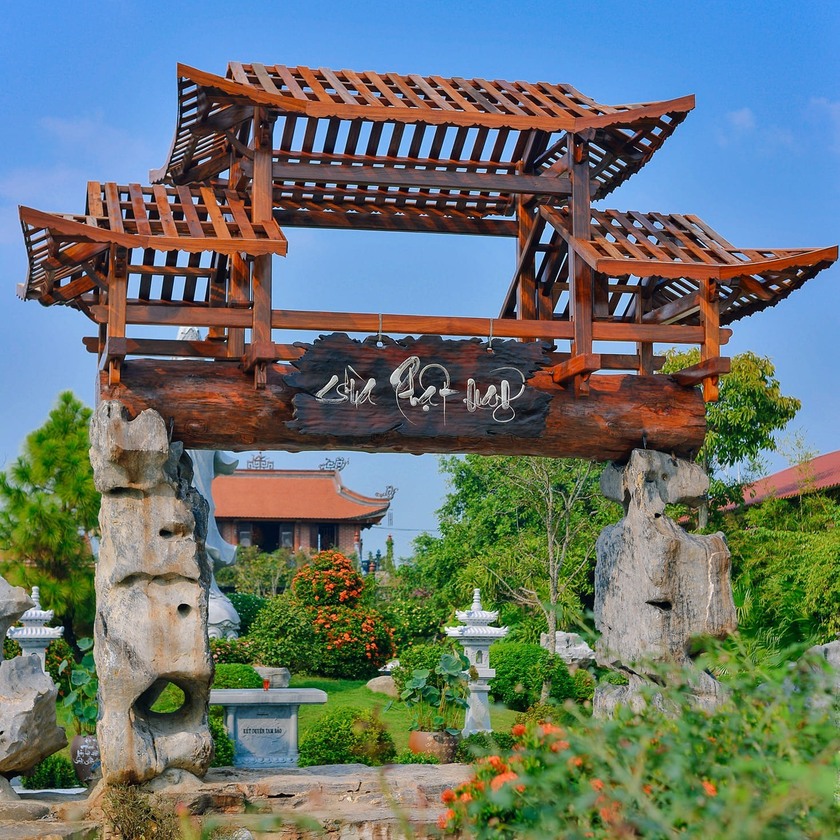
"Phật Quang" means the light of the Buddha (Photo: Phật Quang Temple Fanpage).
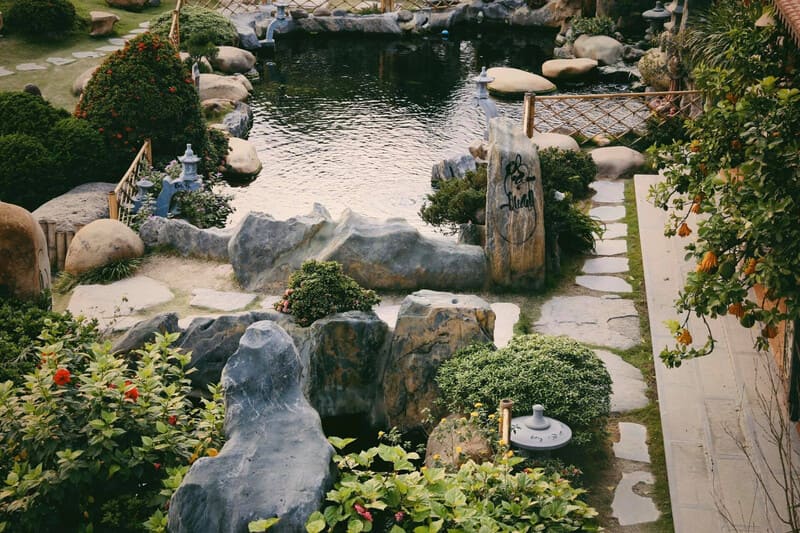
The temple grounds are lush and green, with many trees, rock gardens, and ponds.
The temple boasts impressive architecture; you'll be surprised by the exquisitely and meticulously arranged interior. According to accounts, the decorative details within the temple were designed by the abbot, Venerable Thich Thien An.
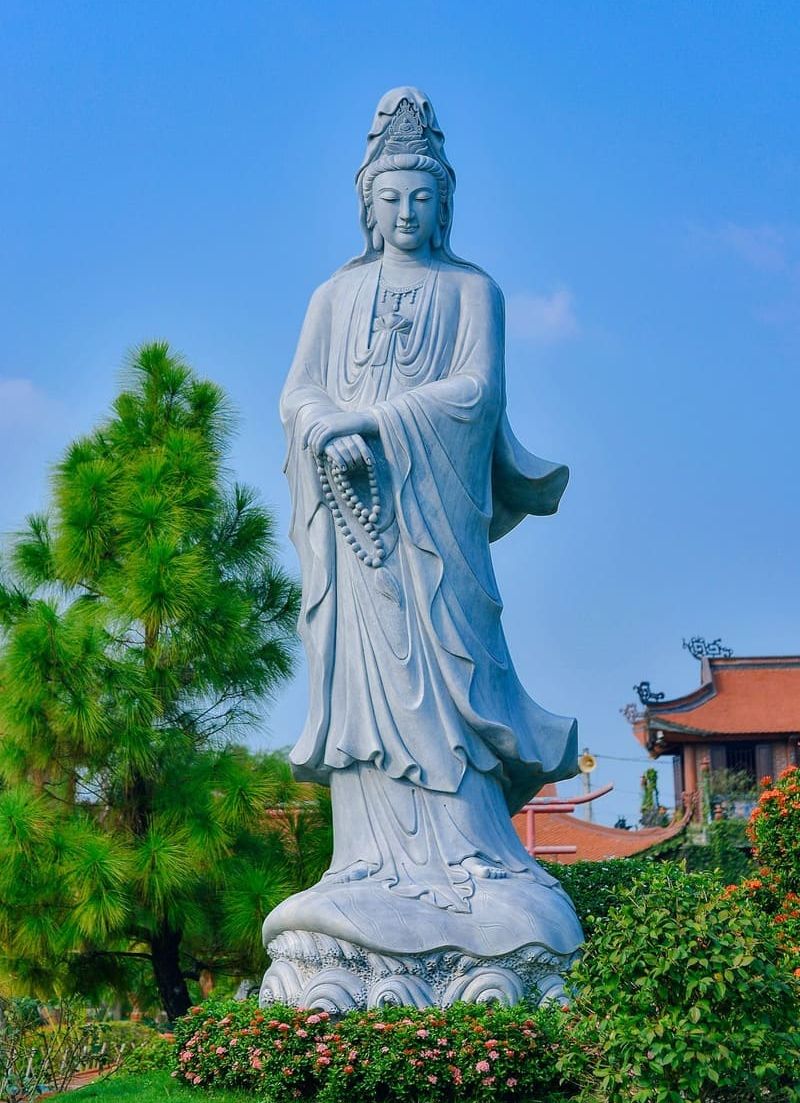
The statue of Avalokiteshvara Bodhisattva is displayed in the temple.
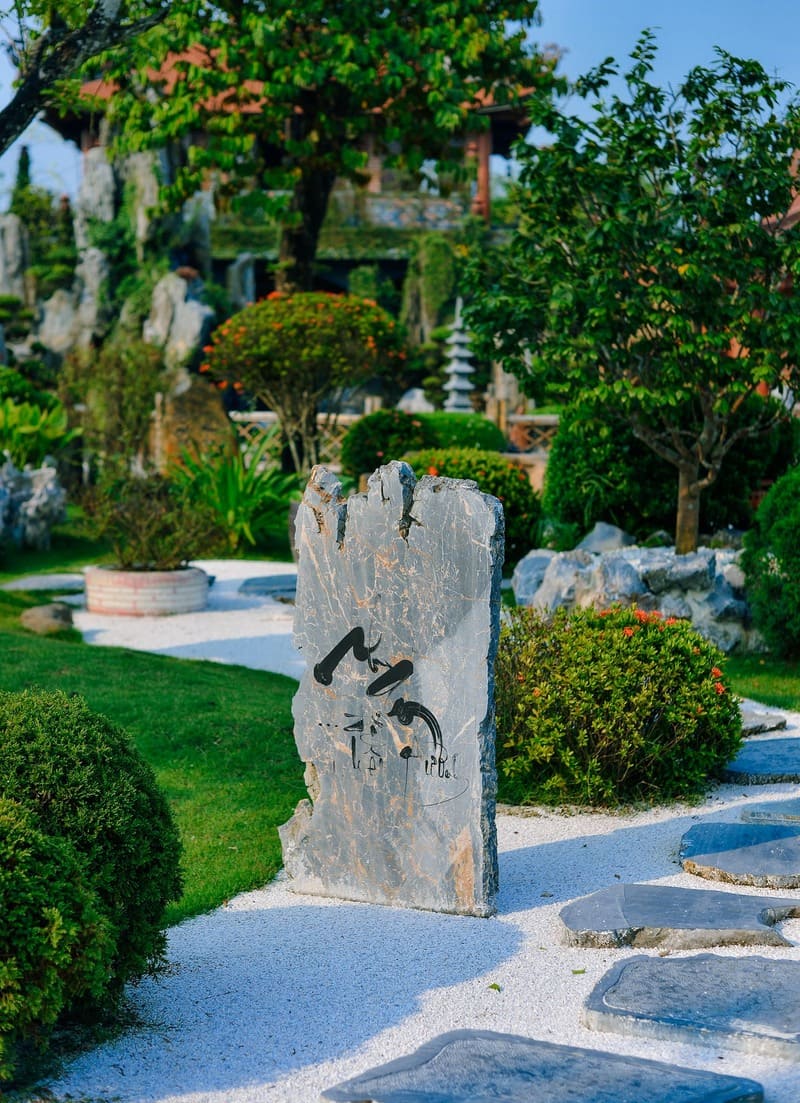
The stone slabs in the temple are decorated with calligraphy by Venerable Thich Thien An.
Cay Thi Pagoda
Cay Thi Pagoda (also known as Amitabha Meditation Center) in Che Trinh village, Thanh Tam commune, Thanh Liem district is also an ancient pagoda, but it was only recently restored and renovated in 2017. Every small detail at the pagoda has been carefully recreated, from the white pebble-strewn courtyard and green stone-paved pathways to the architecture of the temples and the Tam Quan gate, all reflecting a strong Japanese architectural style.
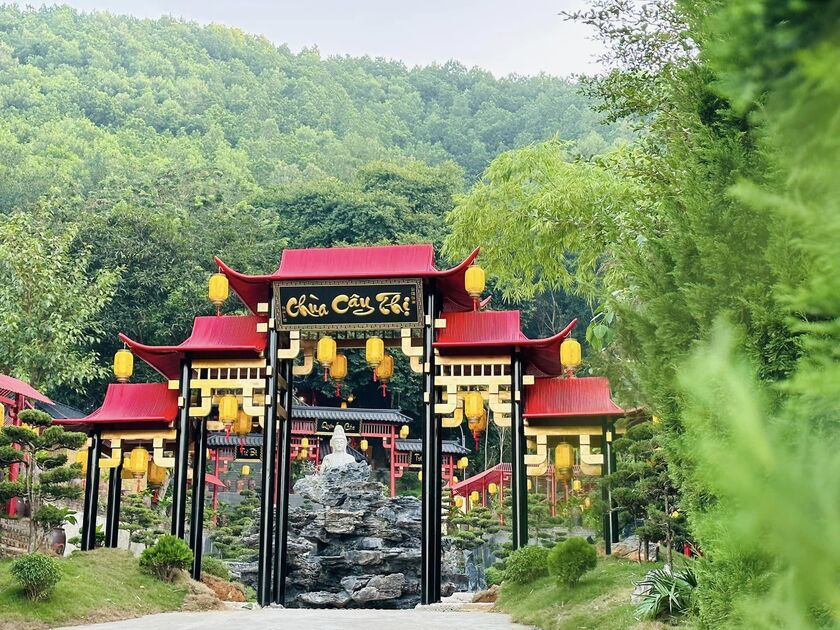
The Cay Thi Pagoda is nestled peacefully against the mountainside.
The pagoda is situated in a unique location, halfway up the mountain, next to the tomb of Minister Truong Cong Giai and the Martyrs' Shrine at Nui Chua. According to the abbot, Venerable Thich Hue Hanh, the name Cay Thi Pagoda originates from the centuries-old persimmon tree next to it. The pagoda is not only a place of worship for Buddhists but also a popular tourist destination for taking photos with its impressive setting.
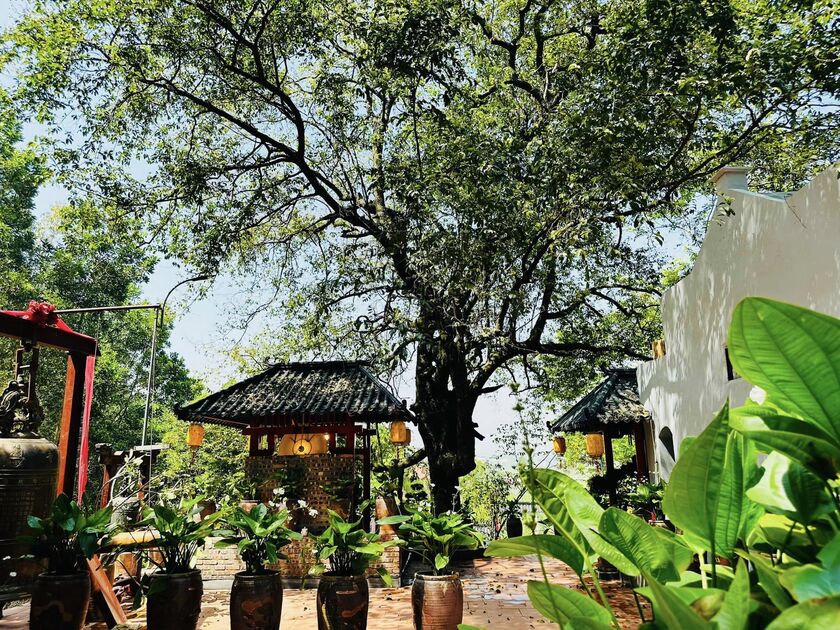
The area around Cay Thi Pagoda is filled with the shade of trees.
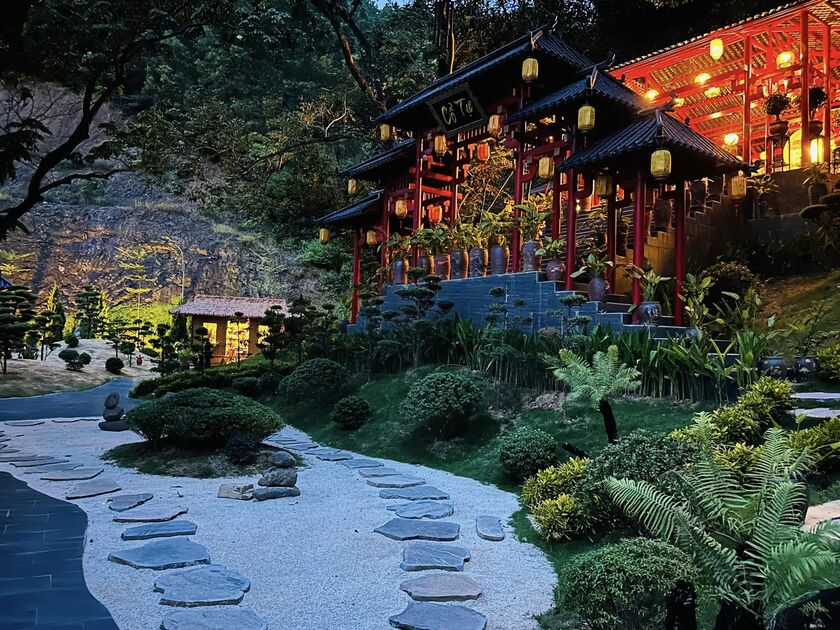
The scene at Cay Thi Pagoda at dusk.
Above are some famous and sacred temples in Ha Nam. When visiting these spiritual sites, tourists should remember to dress respectfully and modestly, maintain the shared space within the temple, and respect Buddhist culture. When entering the temple, bring a calm state of mind, letting go of all worries and anxieties. Show respect and courtesy to the monks, nuns, and other Buddhist followers.