VI
VI


Located southeast of Phu Quy Island, Lam Dong Province (formerly Binh Thuan Province), Hon Tranh is the second largest island in the offshore cluster, situated approximately 800 meters to 1.5 kilometers from the main island. The island curves like an S-shaped strip of land, with a total area of only about 2.8 square kilometers.

Hon Tranh is a military island off the coast, open only to Vietnamese tourists.
Pristine landscapes and unique topographical features.
Compared to the main island of Phu Quy, Hon Tranh has a completely different appearance: smaller, more isolated, and almost entirely preserved in its natural state. The island boasts two distinct topographical features: one side is a long stretch of fine white sand beach, while the other is a system of jagged rocks formed by ancient volcanic activity.


The most striking feature of Hon Tranh is its crystal-clear water. Unlike the deep blue of the ocean or the familiar turquoise of crowded beaches, the water here is so clear that you can see the bottom from the shore. On sunny days, the sea surface reflects the sunlight, creating a shimmering silver layer, while the coral reefs, rocks, and sand beneath are clearly visible.


This island is famous for its pristine scenery and crystal-clear waters.
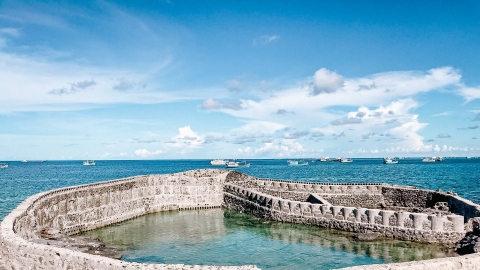
The rocky terrain of Hon Tranh is also a key element contributing to its unique character. Large and small rocks are stacked and eroded over time, forming natural arches, small caves, and water channels. In some areas, small "lakes" are formed amidst the rocks. When the tide recedes, the water collects, becoming crystal clear and creating distinctive photo spots.
The island's landscape is almost devoid of construction, with only a few scattered administrative posts and small spiritual sites. This allows Hon Tranh to retain its pristine, rustic feel, untouched by excessive commercialization.
Typical check-in locations
With its relatively small area, the stops on Hon Tranh are quite close together, making it convenient to explore in a single day.
Vung Phat is the most famous area, often considered the "heart" of the island. It's a calm area surrounded by rocky outcrops, resulting in very gentle waves. The water color here ranges from pale blue to turquoise, so clear that you can see the coral reefs beneath your feet. This is also a popular spot for swimming and snorkeling.


Vung Phat is a popular spot on Hon Tranh Island for snorkeling and coral viewing.
Tò Vò Arch is a natural rock arch facing the sea, formed by a long weathering process on volcanic rock. Two large rock formations create a relatively clear opening, from which one can directly observe the sea and the horizon. This area is popular with tourists who come to take photos not only because of its easily recognizable shape but also because of its open location with minimal obstructions to the view.


The To Vo Arch is a popular check-in spot for tourists due to its unique shape.
In addition, the Bai Nho area has a smooth, gently sloping sandy beach, also suitable for swimming or relaxing and sightseeing. Khe Sung Suong is a narrow rocky gorge where water seeps between the rocks. This spot has no signposts or fixed name, mainly appearing as a short stop on the tour itinerary.

Khe Sung Suong

Cliffs overlooking the city on the mainland.

Sedimentary rock formations
Experiential activities ranging from relaxation to exploration.
Hon Tranh Island isn't distinguished by its services or amenities, but by its minimalist experience. With minimal noise and interference, almost all activities here revolve around the sea and the natural landscape – elements that create the island's unique appeal.
Snorkeling is the most popular activity. Thanks to the clear water and moderate depth, only basic snorkeling gear is needed to clearly observe the underwater ecosystem. The coral here has not been heavily exploited, retaining a fairly diverse range of colors and shapes, along with various small fish species.

Beneath the crystal-clear water, visitors can clearly observe numerous coral reefs and small marine creatures.
Swimming or paddleboarding are also accessible activities. Areas like Vung Phat have calm waves, suitable even for those with basic swimming skills.
For those who enjoy exploring, hiking around the island is a worthwhile option. The journey isn't too long, but it's enough to traverse various terrains: from sand and rocks to gentle slopes. Along the way, you can stop at high points to observe panoramic views of the sea and the main island from afar.

The pace of the experience on Hon Tranh is quite slow. There aren't many places to constantly move around; most of the time is spent stopping on a rocky beach, in front of the changing water, or simply listening to the sound of the waves.
Transportation and things to note when visiting.
The only way to reach Hon Tranh Island is by speedboat or small boat, departing from Phu Quy Island. The journey takes only about 10 minutes, but the schedule is heavily dependent on sea conditions. Currently, most tourists access Hon Tranh through day tours departing from the main island. Tour prices are around 250,000 VND per person and the tour lasts for half a day, about 4-5 hours.
The ideal time to visit Hon Tranh Island is from December to around June, when the sea is calm, the water is clear, and the weather is stable. The windy season (usually from September to November) may restrict access to the island.


When visiting Hon Tranh in the afternoon, tourists can admire the sunset as the golden afternoon sun casts its light upon the sea.
An important note is that some areas on the island are still under the jurisdiction of the authorities, so you should not enter areas marked with warning signs. Following the instructions of your tour guide is essential for safety.
Hon Tranh is a destination focused on the sea, its clear waters, and easily accessible natural landscape. It's a secluded, easily accessible destination that can be completed in a short amount of time, often chosen as an extension of an itinerary on Phu Quy Island.