VI
VI


A long-standing cultural tradition.
The Fishing Festival, a unique traditional custom, has for generations been an indispensable part of the cultural life of the people in Vietnam's coastal regions. The origins of this festival are perhaps deeply rooted in the past, passed down from generation to generation, becoming an integral part of the consciousness of those who live by the sea.
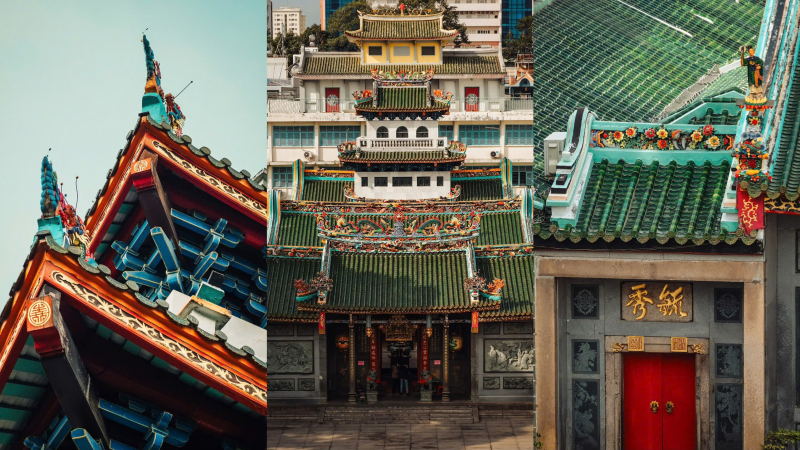
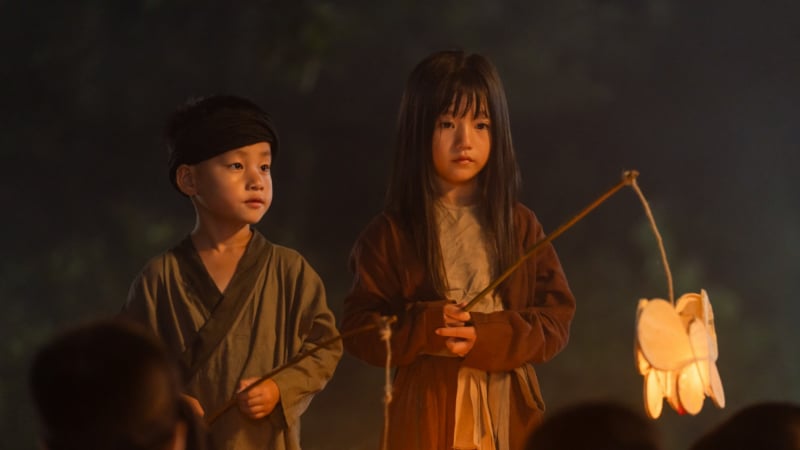
This festival is rich in folk culture and is an indispensable "spiritual nourishment" in the cultural and religious life of fishermen – those whose lives are closely tied to the vast ocean, spending their days at sea, relying on abundant fish and shrimp resources for their livelihood.
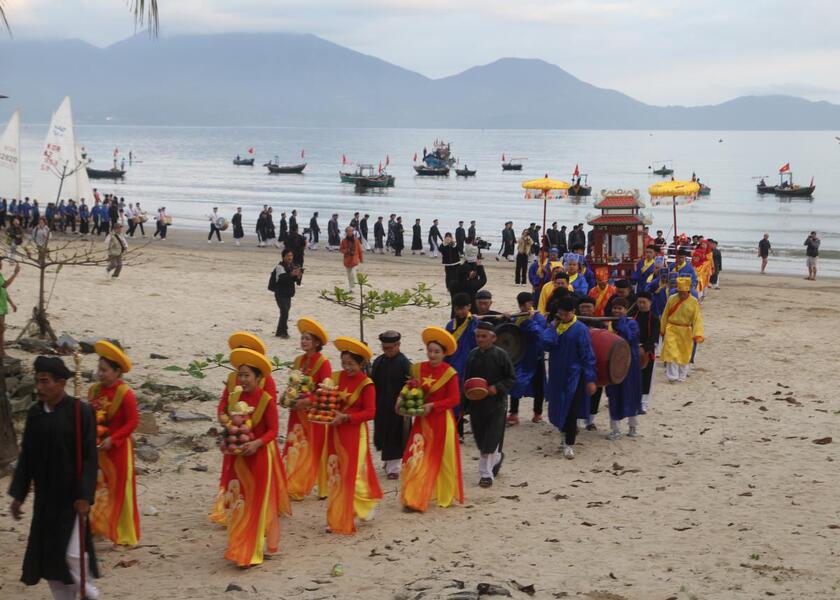
The Fishing Festival is rich in folk cultural traditions.
In fact, the Fishing Festival has existed since ancient times, alongside the religious and cultural practices in the spiritual life of the ancient Vietnamese people, especially fishermen who depended on the abundant fish and shrimp resources of the vast ocean.
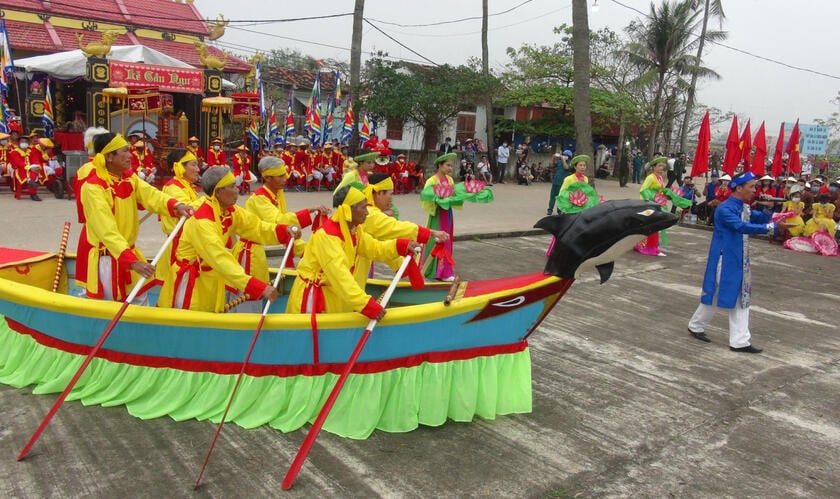
For fishermen, the Whale God always holds a particularly important place in their spiritual lives.
For fishermen, the Whale God (Cá Ông) always holds a particularly important place in their spiritual lives. Originally, this was a respectful and reverent name that fishermen used to refer to whales – creatures that often appear to help people in dire straits at sea, especially those whose lives are closely tied to the ever-present dangers of fishing.
Fishing Festival in Da Nang
On February 17th (the 20th day of the first lunar month), the people of Thanh Khe district, Da Nang, enthusiastically celebrated this festival, with the aspiration for a year of "calm seas, smooth sailing, and abundant catches of shrimp and fish."
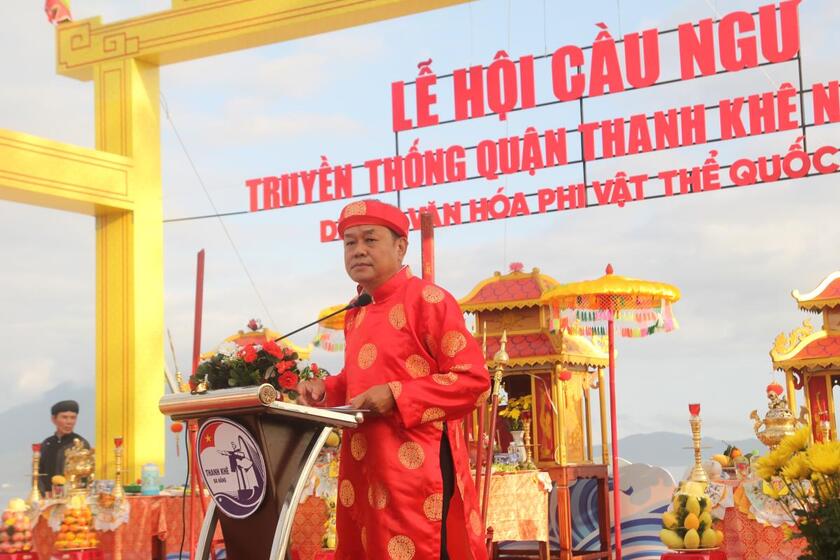
The Fishing Festival is an annual event organized by the District People's Committee to contribute to the preservation of the religious and traditional values of the people in the coastal region.
The Fishing Festival – a national intangible cultural heritage – is organized by fishermen in Da Nang with many rich activities, lasting from February 14th. This is one of the unique and long-standing festivals of the people in the central coastal region, deeply rooted in traditional culture and beliefs, closely associated with the worship of the Whale God – the guardian deity of fishermen.

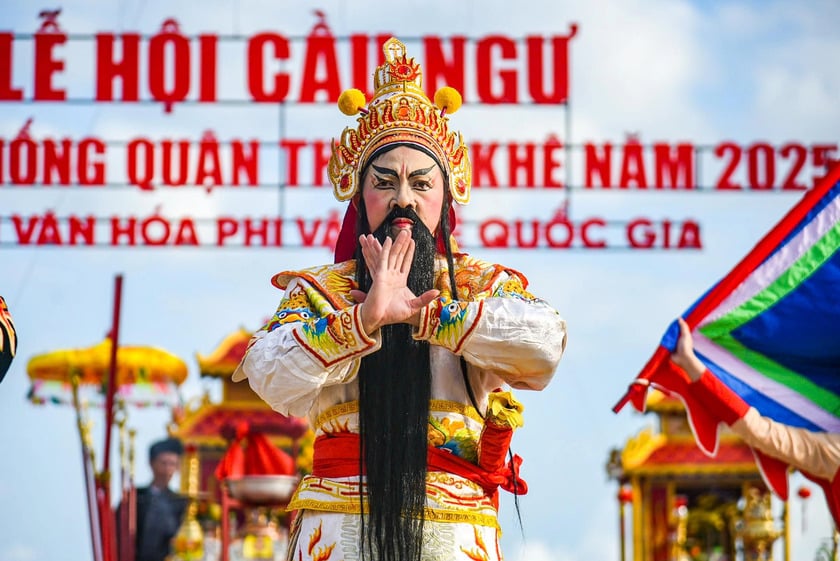
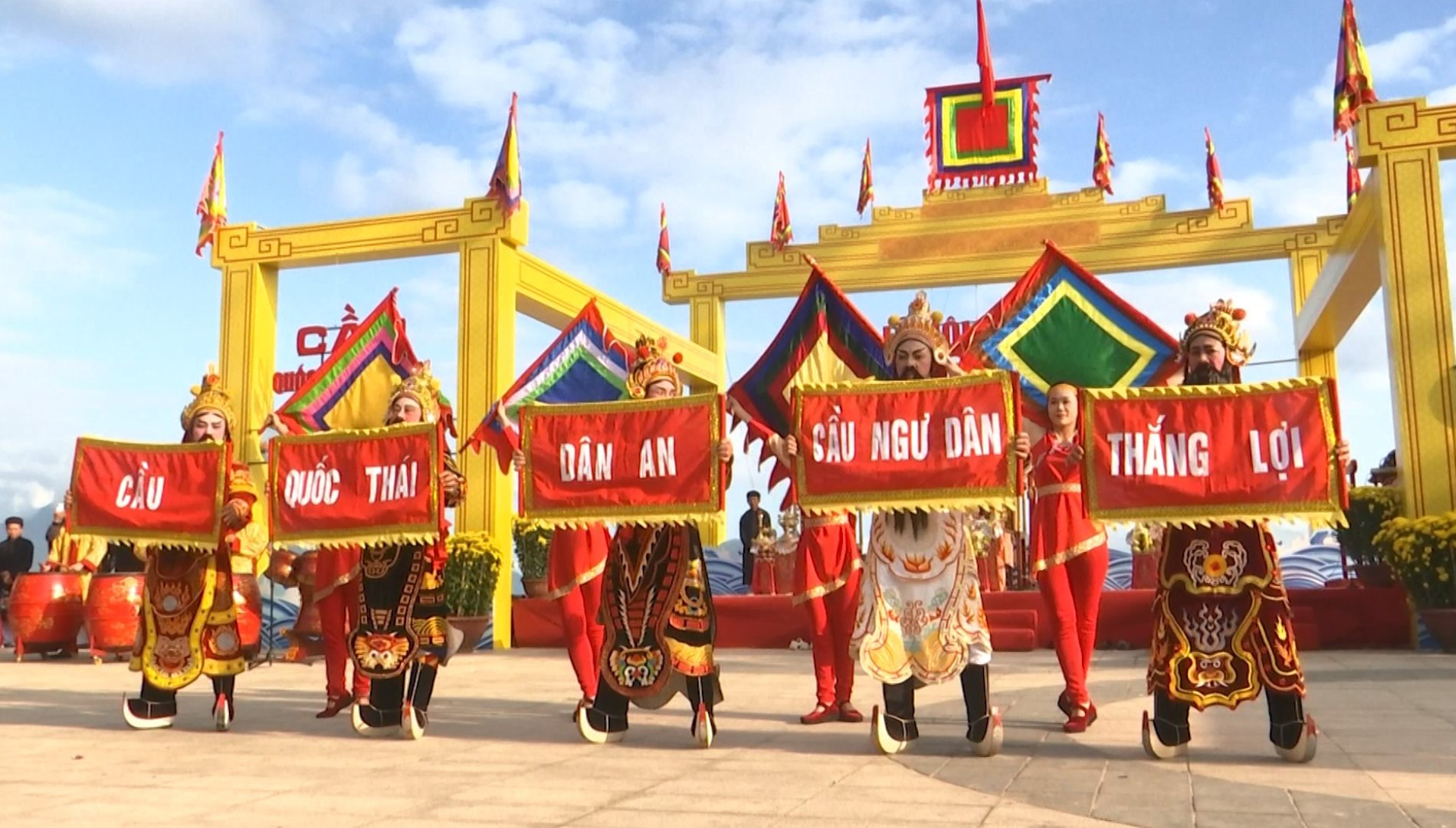
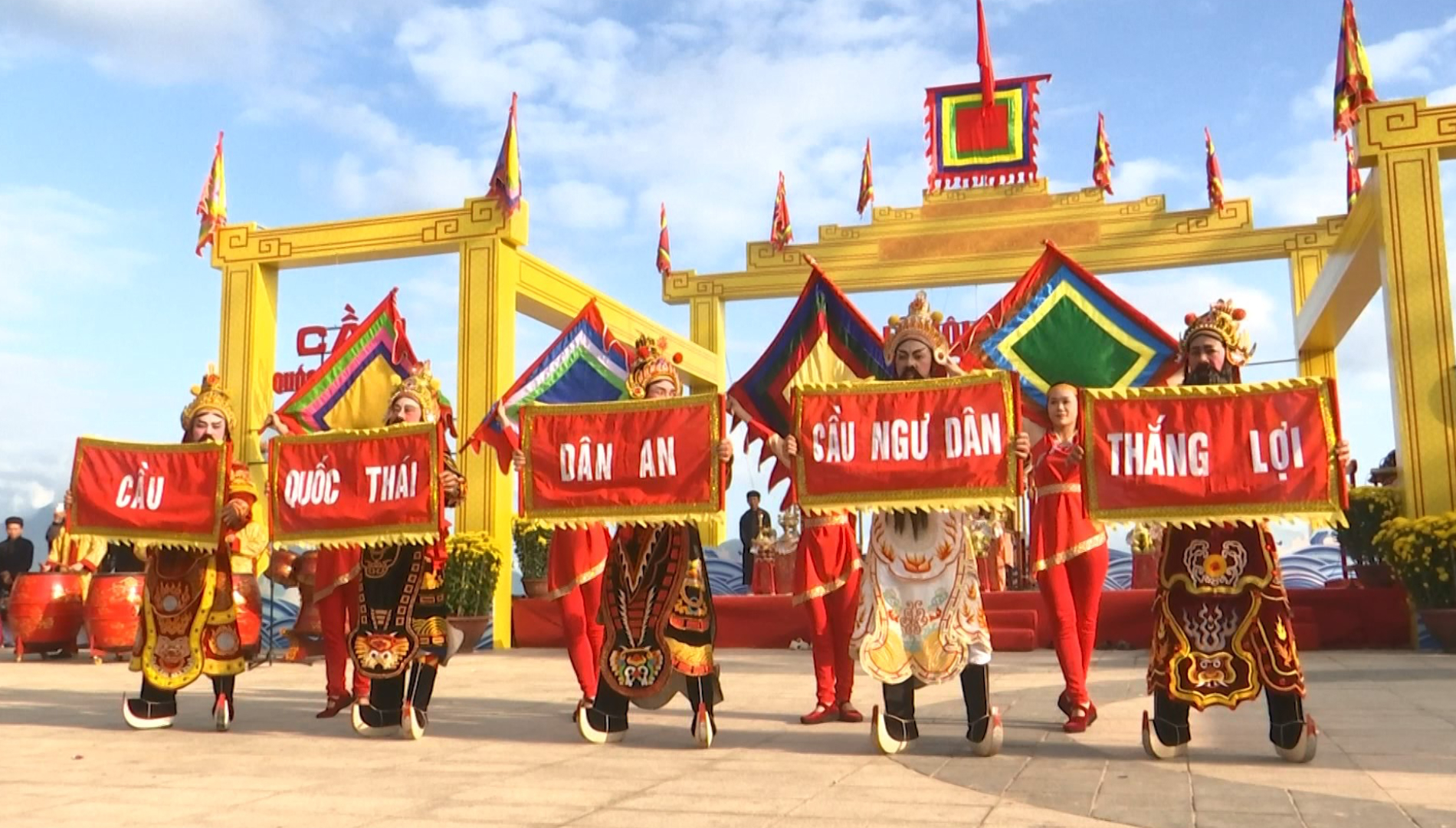
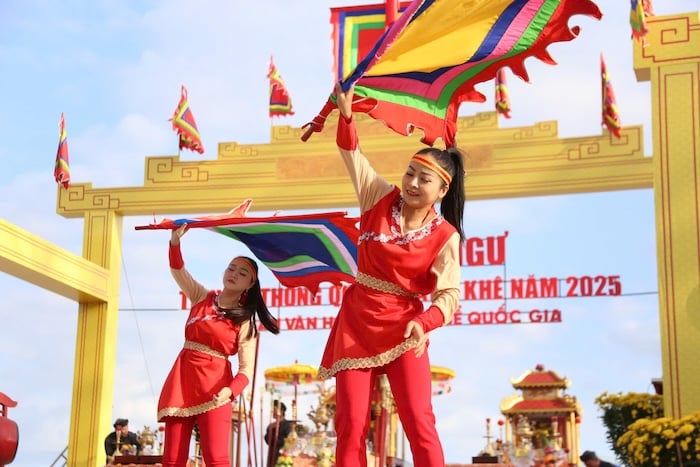
The flag-waving ritual at the fishing festival.
The origin and development of the Cau Ngu Festival are deeply influenced by the natural, economic, social, and culturally and spiritually rich conditions of the region. The Thanh Khe coastal area, with its long coastline and abundant marine resources, has created a unique maritime culture. Fishing is not only a source of livelihood for the local people but also an indispensable part of their spiritual lives. The Cau Ngu Festival vividly reflects the daily life of the fishermen, from their fishing activities at sea to their prayer rituals and recreational activities.
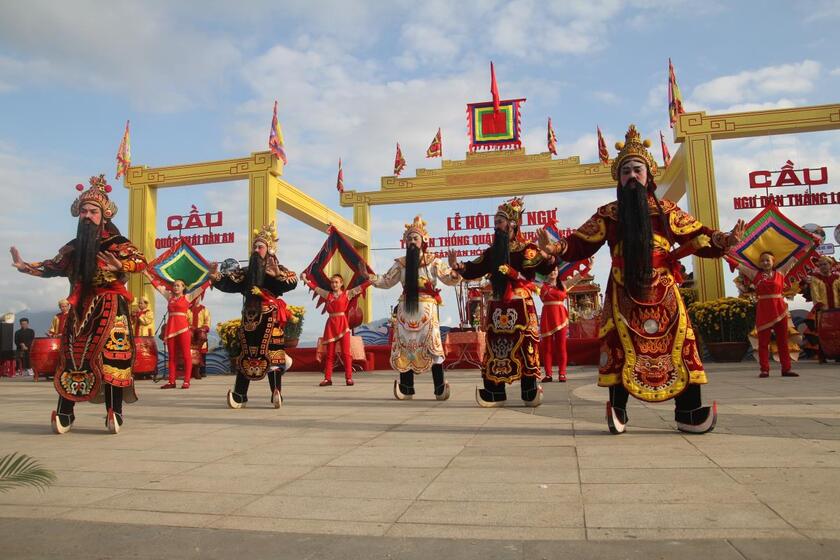
Through activities that strengthen community bonds, the event also helps people gain a deeper understanding of the cultural and spiritual values and the lives of fishermen in coastal fishing villages.
Today, although fishing in Thanh Khe coastal village still faces many difficulties, the traditional fishing activities of the fishermen and their spiritual and religious life are still maintained and promoted. This is the solid foundation for the annual Thanh Khe Fishing Festival to be held in this land at the forefront of the waves. The festival is not only an opportunity for people to remember their origins, but also a time for them to pray for a new year of favorable weather, calm seas, and abundant catches of shrimp and fish.
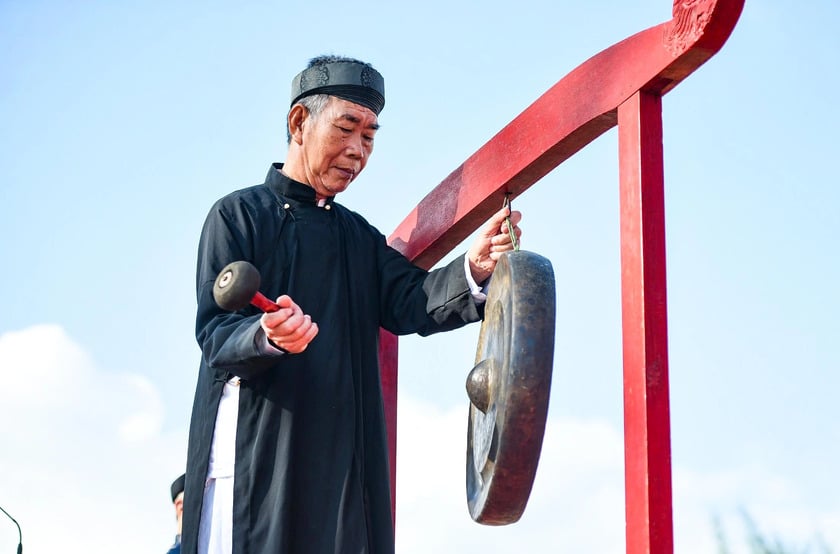
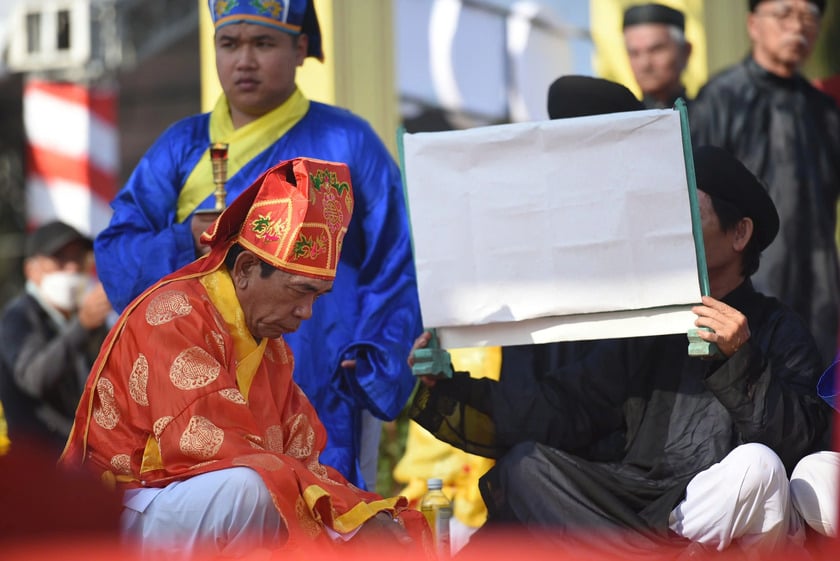
The Thanh Khe District Fishing Festival has been held since 1923 and continues to this day. According to ancient tradition, the festival is celebrated with the utmost solemnity every three years.
This year's Fishing Festival was incredibly solemn and lively, attracting a large number of local people and tourists from all over. From the early morning, the festive atmosphere permeated everywhere, with colorful flags and flowers, and the resounding sounds of drums and gongs.
The Fishing Festival is the most important festival of the year, serving both as a prayer for a good harvest and a bountiful fishing season, and as an offering to the fish god.
The Nghinh Than ceremony was conducted solemnly, with the participation of village elders, dignitaries, and a large number of people. The Nghinh Than procession moved on beautifully decorated boats, carrying the deities to the main stage for the ceremony. In the solemn and respectful atmosphere of the Cau Ngu festival, the chief priest, with deep reverence, performed the traditional rituals. The prayers resonated, heartfelt, conveying the wish for a year of calm seas and peaceful weather, so that the fishermen of Da Nang could have successful voyages, with bountiful catches of shrimp and fish, bringing back a life of prosperity and happiness.
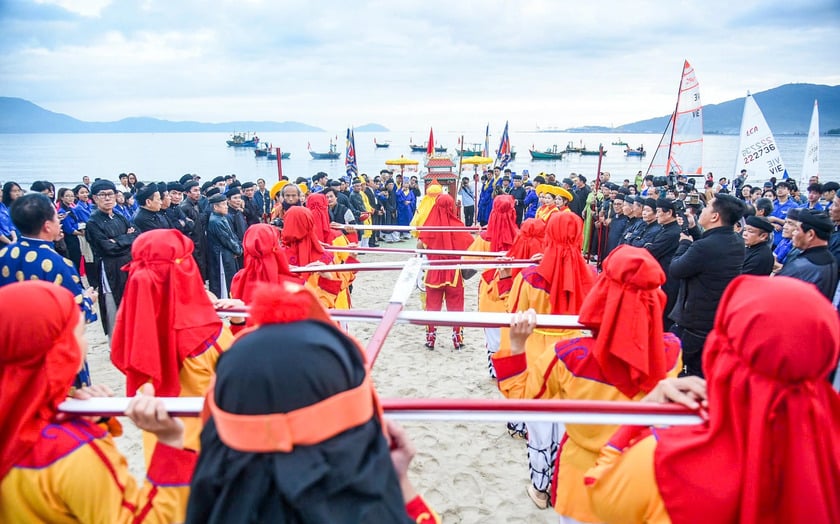
This is a traditional festival of coastal residents, expressing their wish for a year of "calm seas, smooth sailing, and abundant catches of shrimp and fish."
Immediately after the main ceremony, the ship's horn sounded, signaling the departure of the offshore fishing fleet. The sturdy vessels, with the red flag with a yellow star fluttering on their masts, proudly set sail. The fishermen performed the ritual of setting sail, with faith and hope for a year of favorable weather and bountiful seas.
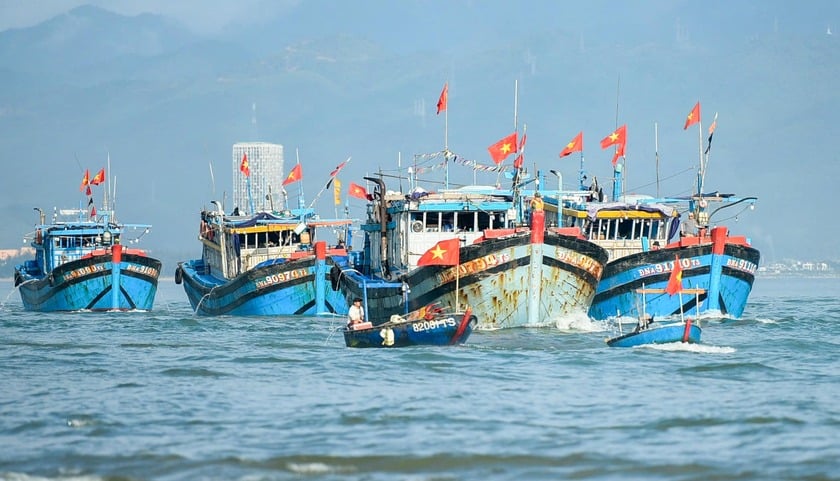
The first boats set sail, symbolizing the fishermen's aspirations for the open sea.
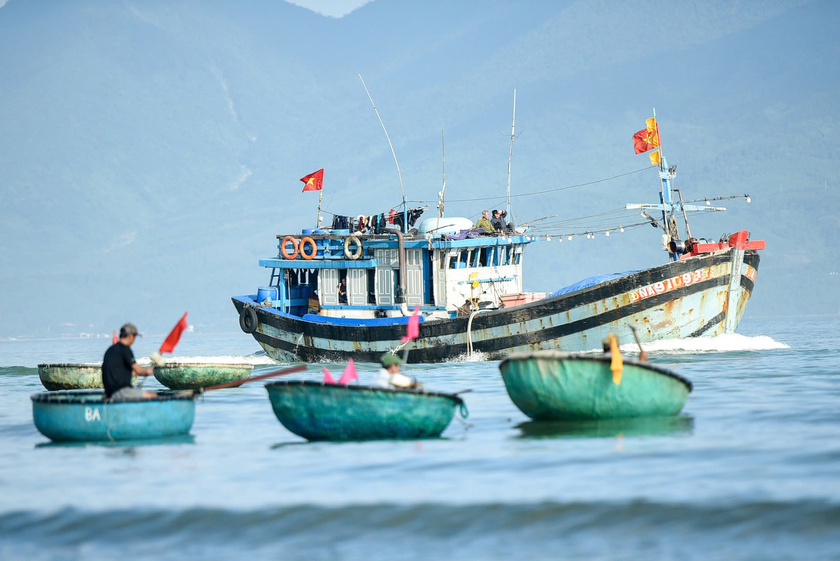
Besides the ceremonial part, the festival of Cau Ngu is also extremely vibrant with many cultural and sporting activities that reflect the folk traditions of the fishing village. Visitors can immerse themselves in the joyful and lively atmosphere with folk games and unique artistic performances, showcasing the distinct cultural identity of the coastal region.
Not only the elderly, but also the children immersed themselves in the sacred atmosphere of the festival. Colorful paintings with whimsical and adorable drawings expressed the children's hopes for a bright future for the fishermen of Da Nang. They wished for their fathers and brothers to always be safe at sea, to catch abundant seafood, and to contribute to protecting the sacred sovereignty of the nation's maritime territories.
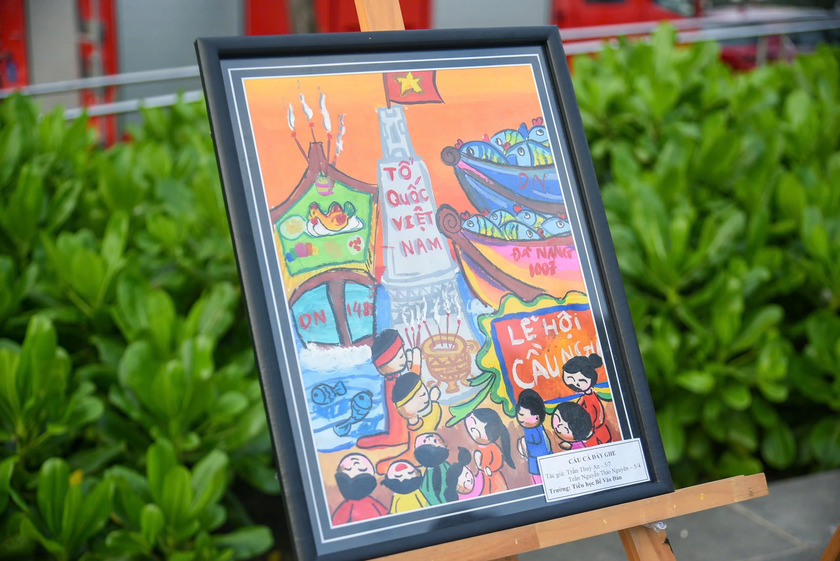
The aspirations of children from the coastal region.
The Da Nang fishermen's fishing festival was recognized as a national intangible cultural heritage in 2016. Since then, the People's Committee of Thanh Khe District has elevated the organization of the fishing festival to the district level, with a diverse scale and forms, becoming a typical cultural activity and an indispensable part of the spiritual life of the people.
The Cau Ngu Festival embodies many profound cultural values that need to be preserved and promoted. These include spiritual and religious values, expressing gratitude to the sea and the deities, and praying for a prosperous and happy life. They also represent historical and traditional values, marking the ups and downs of history and the tireless efforts of the fishing community in conquering the sea and building their lives. Furthermore, they encompass cultural and artistic values, expressed through solemn rituals and recreational activities deeply rooted in folk culture.