VI
VI


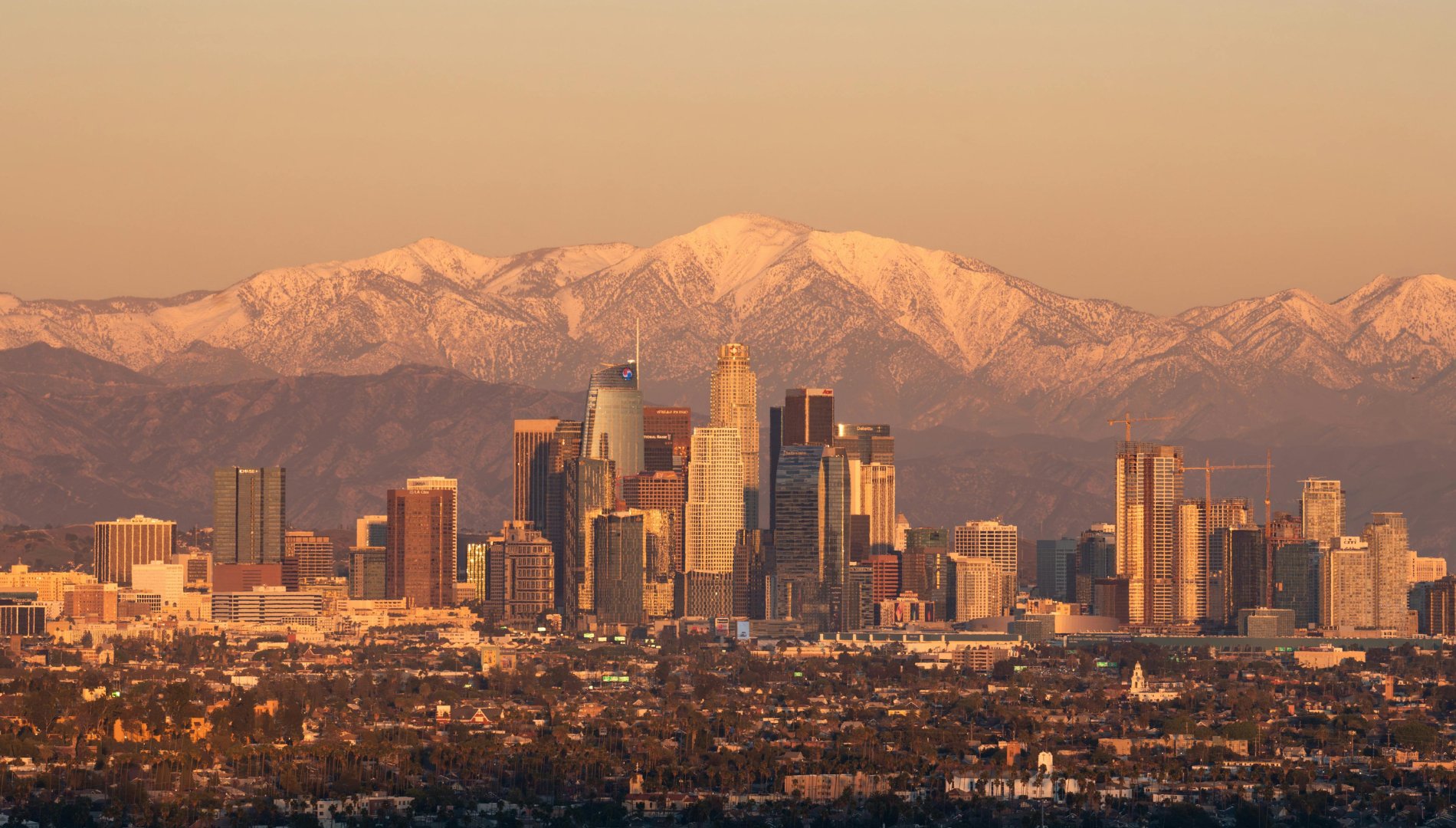
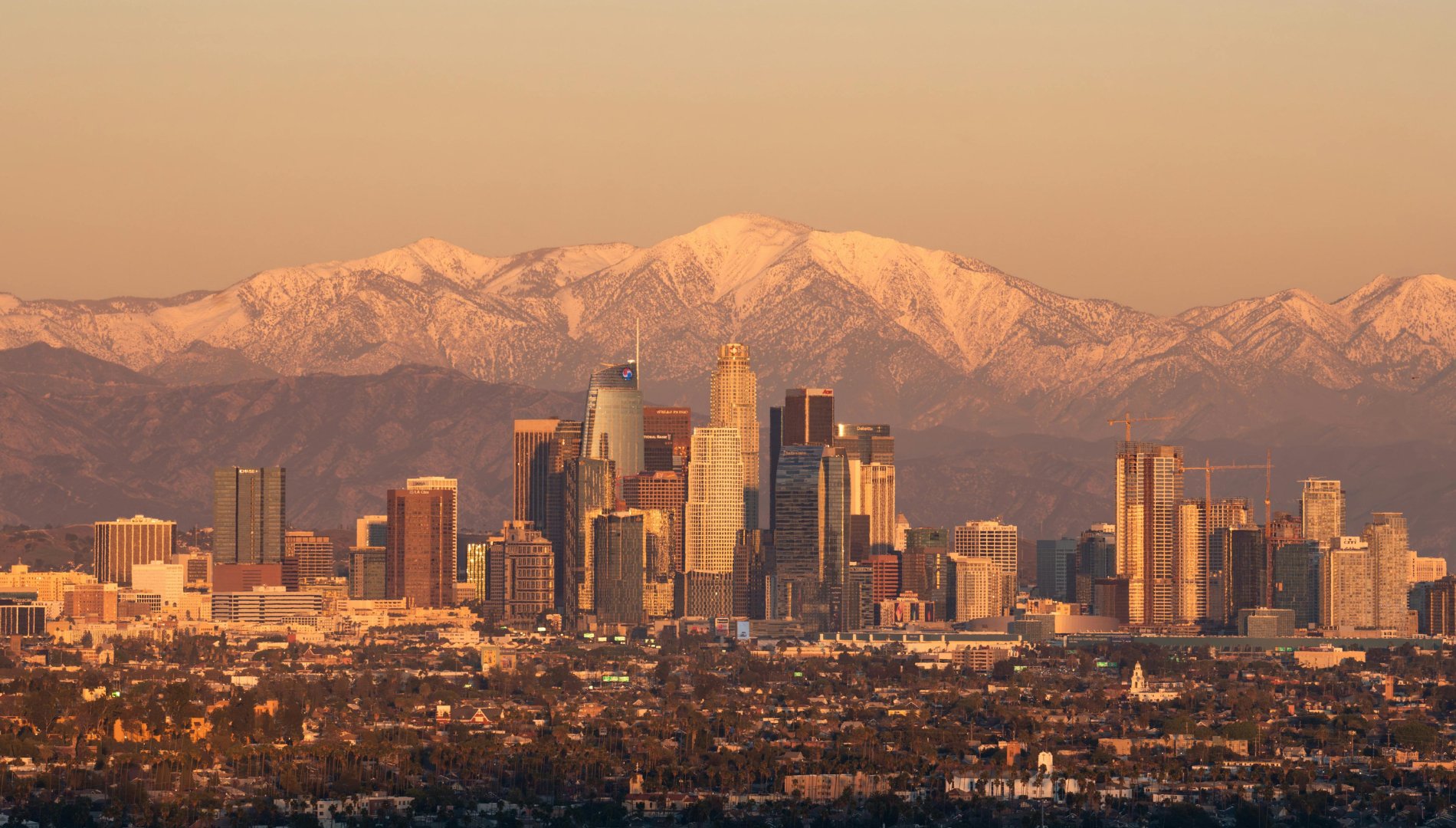
According to CNN on June 11th (Vietnam time), Los Angeles Mayor Karen Bass announced a curfew in certain areas of the city. This decision comes amid a wave of protests in Los Angeles that have lasted four days and are showing signs of becoming more violent.
Mayor Bass announced that the curfew will be in effect in downtown Los Angeles, specifically one square mile (approximately 2.59 square kilometers). The curfew will be in effect from 8 p.m. (starting the night of June 10th local time) to 6 a.m. each day. She added that she is consulting with relevant officials regarding the exact duration of the curfew, but anticipates it will take effect within the next few days.
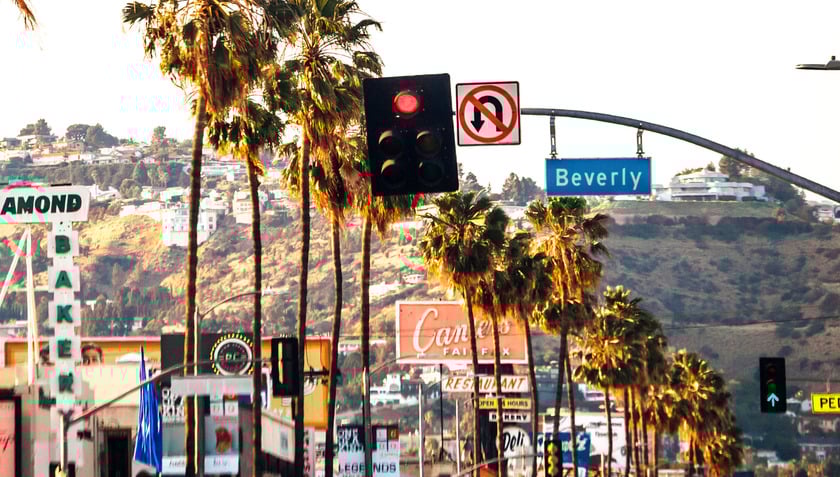
Mayor Karen Bass imposed a nighttime curfew in downtown Los Angeles, America's second-largest city, following nights of unrest.
Explaining the decision to impose a localized curfew instead of a citywide one, the Mayor of Los Angeles emphasized that the protests were primarily concentrated and causing instability in the downtown area. Mayor Bass stated that approximately 23 businesses in the area had been looted in recent days due to violent acts during the protests. "Clearly, after the violence that occurred last night, 23 businesses were looted, and given the widespread nature of the vandalism, we have reached a breaking point," Bass said, making violence the primary reason for the curfew.

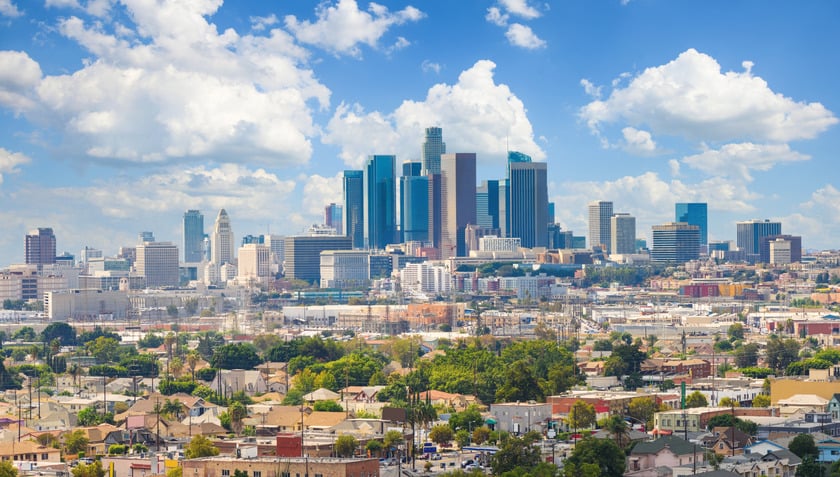
The curfew will be in effect from 8 PM on June 10th to 6 AM on June 11th, applying to an area of 2.59 square kilometers in the city center.
On the law enforcement side, Los Angeles Police Department Commissioner Jim McDonnell announced a significant increase in arrests related to the protests. Police said looters targeted numerous businesses, including an Adidas store, an Apple Store, two medical clinics, a pharmacy, and a jewelry store. On June 10th alone (US time), authorities arrested 197 people in connection with the protests, a significant increase from the 27 arrested on June 7th.
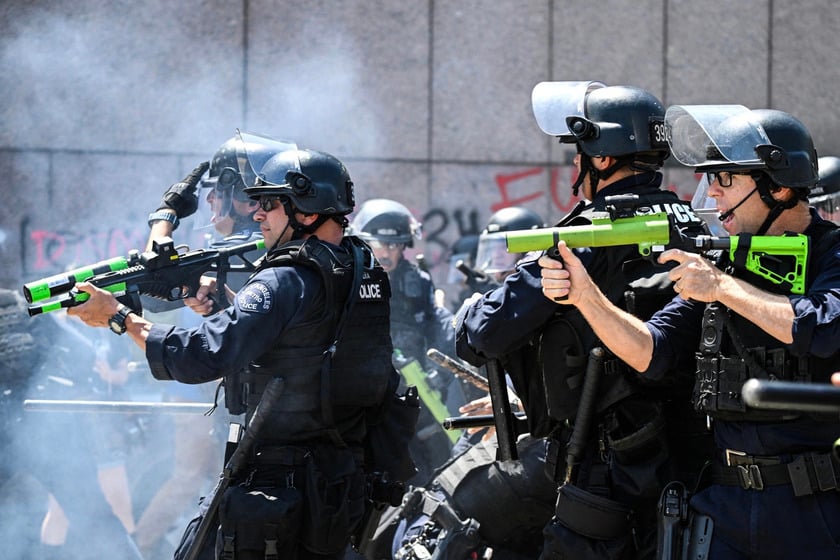
Los Angeles police respond to protesters outside a federal building on June 10.
To control the protests, in addition to members of local law enforcement, President Donald Trump also deployed 700 Marines and thousands of National Guard troops to Los Angeles.
Also on June 10, Senior Judge Charles R. Breyer of the federal court in San Francisco rejected California's request to immediately block the Trump administration's use of the military to enforce laws in the state, including assisting federal officials in enforcing immigration laws. Instead, Judge Breyer scheduled a hearing for the afternoon of June 12, and requested that both sides submit additional written arguments for the case before the hearing. In response, the U.S. Department of Justice called California's request "legally unfounded" and argued that if approved, it "would endanger the safety of Department of Homeland Security personnel and impede the Federal Government's ability to conduct operations."

Mayor Bass affirmed that violence, crime, and vandalism would not be tolerated, stating that police would hunt down those responsible for wrongdoing.
According to CBS News, for five consecutive days, protesters and law enforcement clashed in numerous downtown streets, resulting in nearly 200 arrests. Some encounters between protesters and police escalated into violent brawls.
Los Angeles remains a hotbed of protests against the Trump administration's immigration policies. According to the Los Angeles Times, clashes on June 8th between police and protesters in the city center escalated, with the arrival of riot police and crowd control equipment.