VI
VI


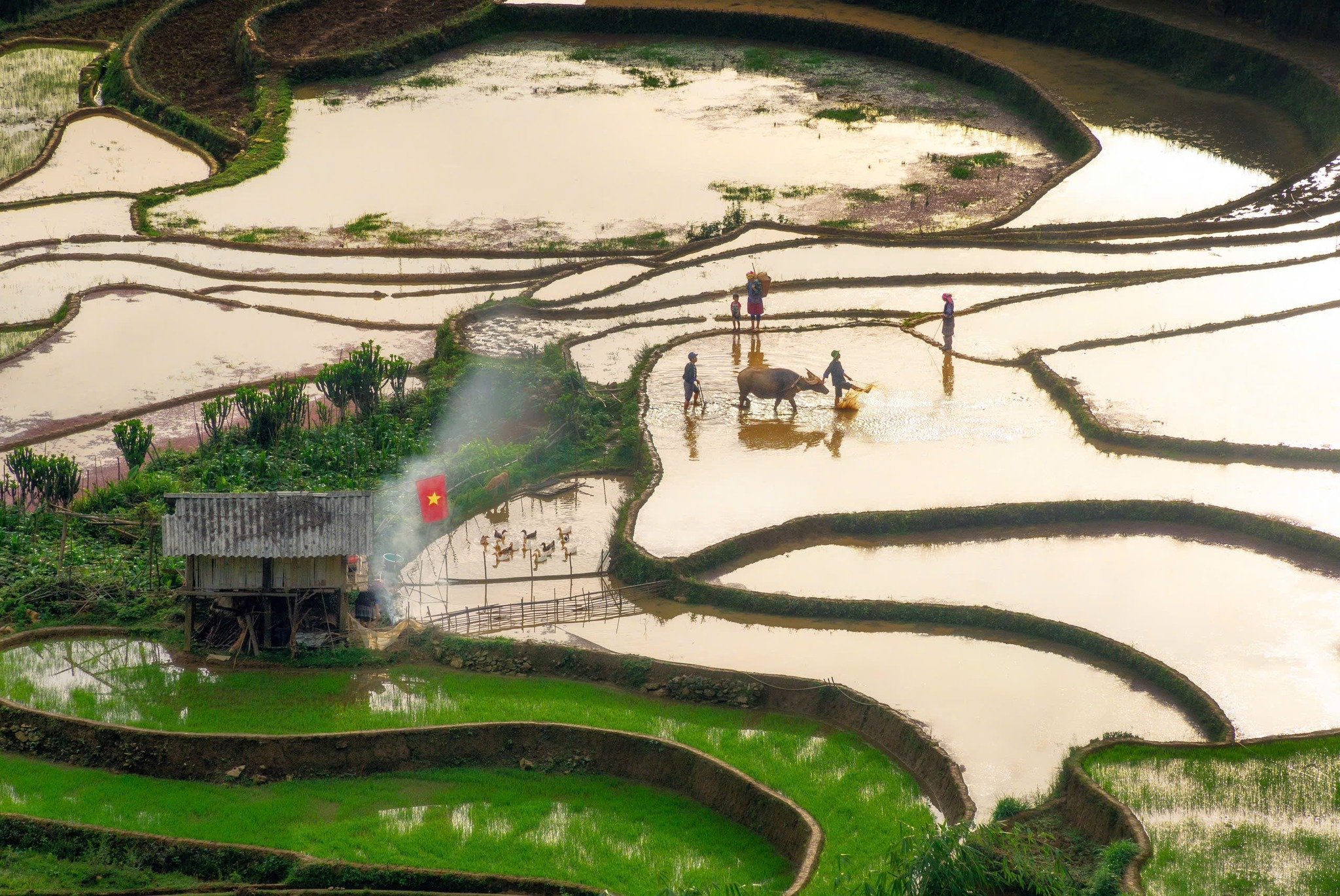
The Mu Cang Chai terraced rice fields cover an area of approximately 2,200 hectares in Mu Cang Chai district, Yen Bai province. In 2007, 330 hectares of terraced rice fields in the three communes of La Pan Tan, Che Cu Nha, and De Xu Phinh were classified as a National Monument by the Ministry of Culture, Sports and Tourism, and in 2019, the Mu Cang Chai terraced rice fields were classified as a Special National Monument by the Prime Minister.
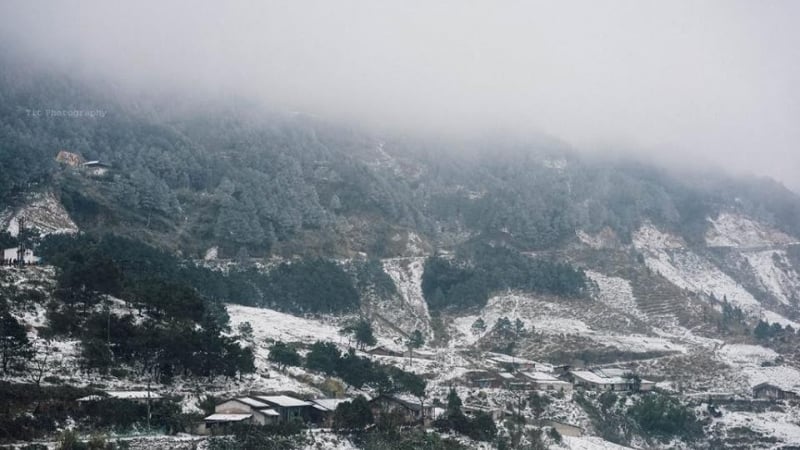
In 2018, the majestic beauty of the Mu Cang Chai terraced rice fields gained international recognition when it was honored by the prestigious British newspaper Telegraph in its list of the 12 most beautiful terraced rice fields in the world. It was one of only two Vietnamese representatives included in this prestigious ranking, affirming the unique landscape and cultural value of the Northwest region.
A masterpiece of Hmong art amidst the vast forest.
The terraced rice fields of Mu Cang Chai are not just ordinary rice paddies, but an inseparable part of the life and customs of the Mong people here. With the rugged terrain and lack of flat land for cultivation, the Mong people have painstakingly cleared small plots of land on mountain slopes at altitudes ranging from 800 to 1,700 meters. Through diligence, intelligence, and a love of nature, they have transformed these steep mountain slopes into gracefully winding terraced rice fields, creating a colossal, majestic "work of art" amidst the vast wilderness, defying the harshness of nature to survive.

The Mu Cang Chai terraced rice fields cover an area of approximately 2,200 hectares in Mu Cang Chai district, Yen Bai province.
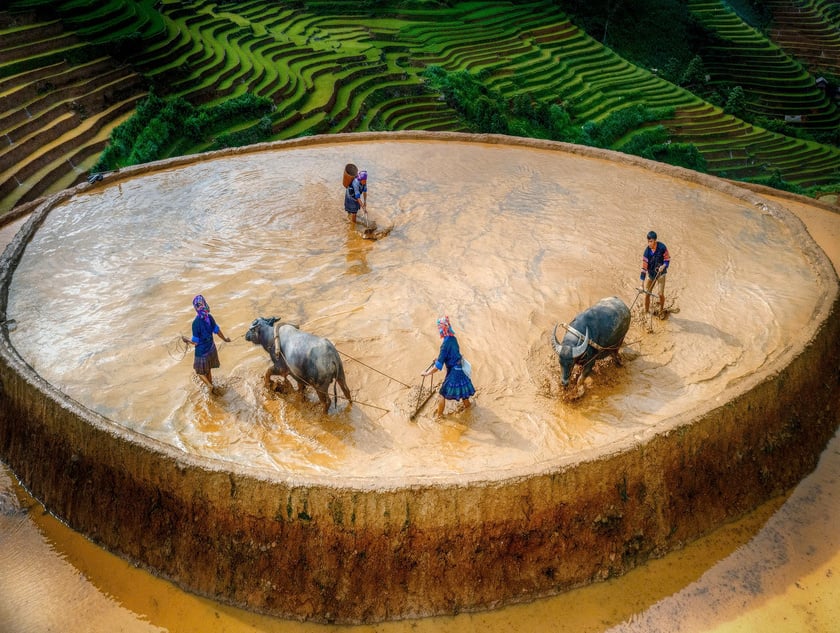
This is also the time when farmers are busy heading to the fields, taking advantage of every sunny day to sow rice seedlings, covering the terraced fields with green, marking the beginning of the main rice crop of the year.
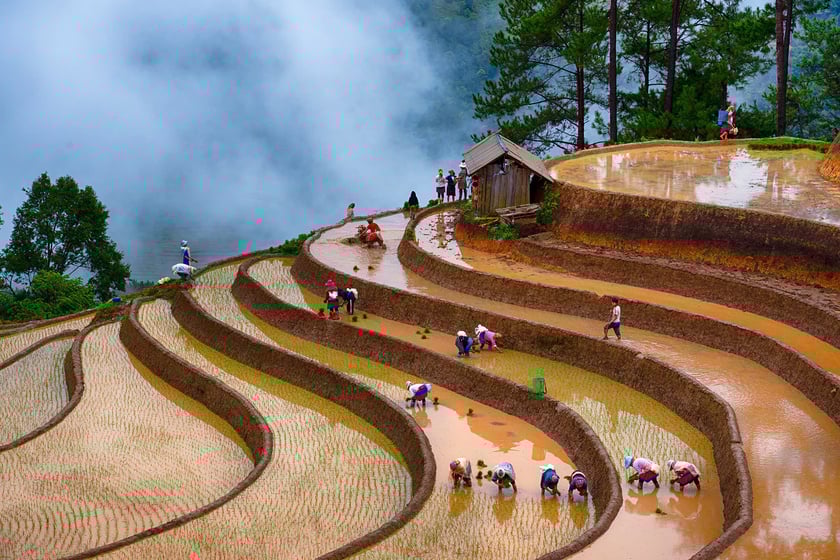
Due to the unique climate and mountainous terrain, the Hmong people in Mu Cang Chai only cultivate one rice crop per year. From May to June is the "water-filling season," when the first summer rains and headwater streams bring water, flooding the fields for plowing, sowing seedlings, and transplanting rice. Then, in September and October, the entire Mu Cang Chai region transforms brilliantly during the "rice harvest season." Therefore, these two periods are considered the most beautiful times, attracting a large number of tourists.
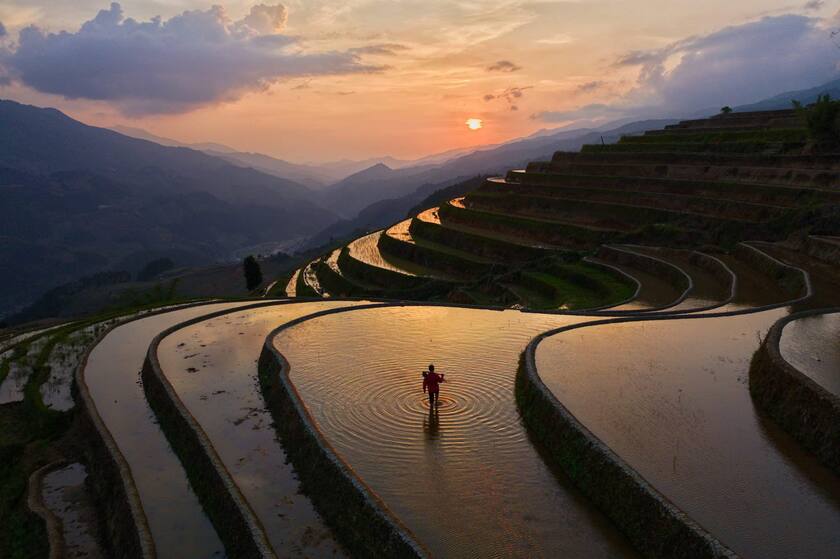
In 2007, 330 hectares of terraced rice fields in the three communes of La Pán Tẩn, Chế Cu Nha, and Dế Xu Phình were classified as a National Monument by the Ministry of Culture, Sports and Tourism.
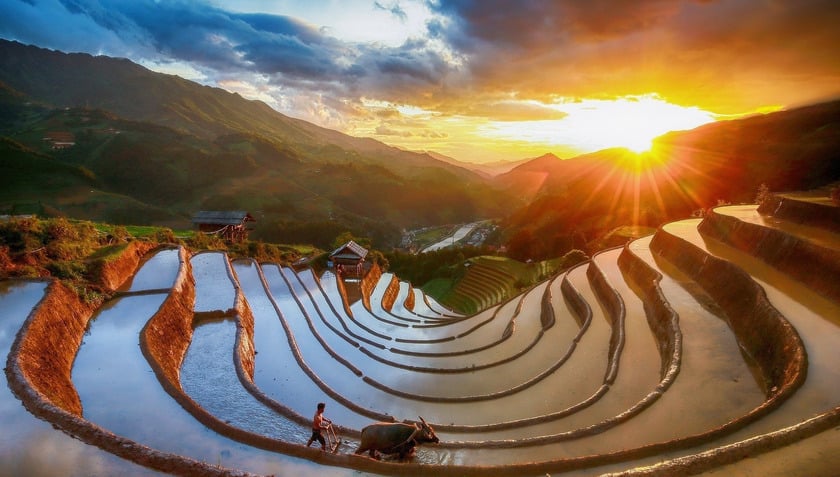
Visitors to this area not only get to admire the majestic natural scenery, but also have the opportunity to experience rice planting with the locals, participate in cultural activities, and light bonfires in the village.
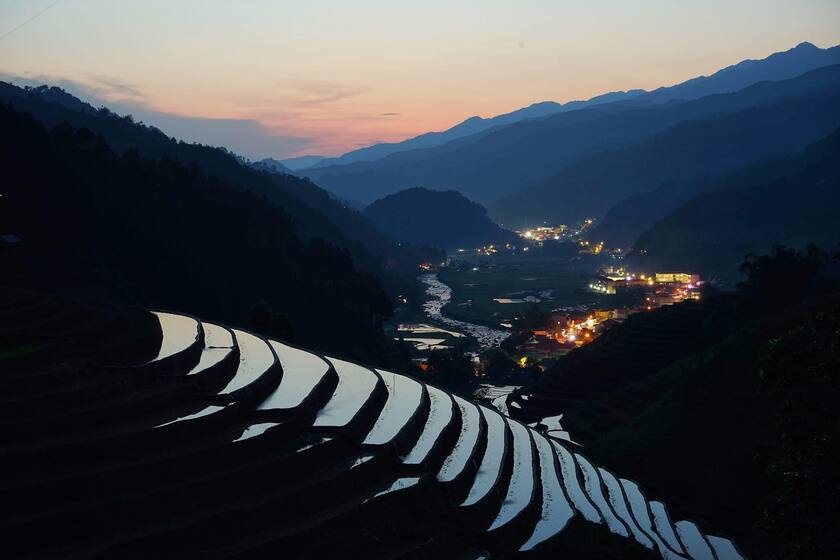
During the rainy season (May - June), Mu Cang Chai is adorned with a pure, pristine beauty that is both wild and captivating. The terraced rice fields at this time take on the muted tones of the earth, blending with the blue of the sky and the clear, sparkling water, reflecting light like giant mirrors. By day, the fields shimmer under the bright sunlight; at night, they become magical under the silvery moonlight, creating enchanting interplay of light and shadow, transforming the area into a vibrant and unique ink painting unlike anywhere else.
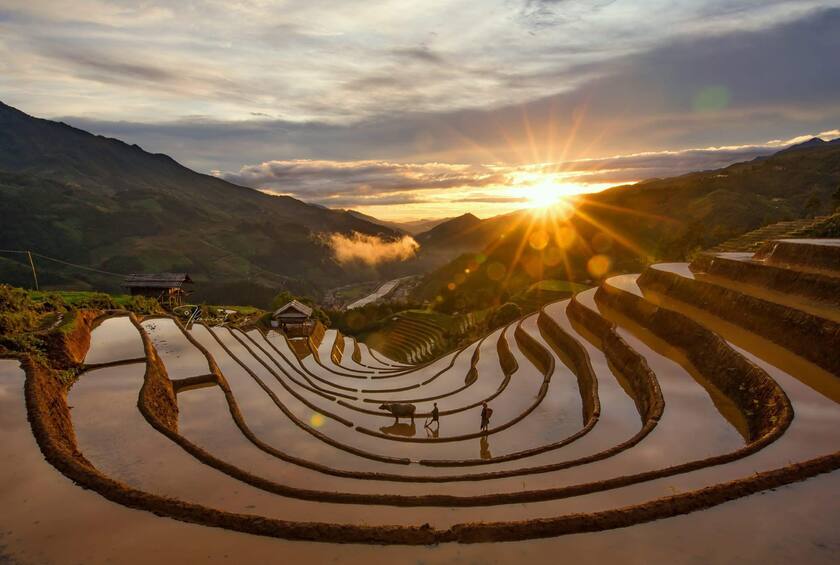
These days, the first rains of the season are pouring water onto the terraced rice fields in Mu Cang Chai. The water spreads gradually down each terrace, reflecting the sunlight and creating a sparkling natural landscape amidst the mountains and forests of Northwest Vietnam.
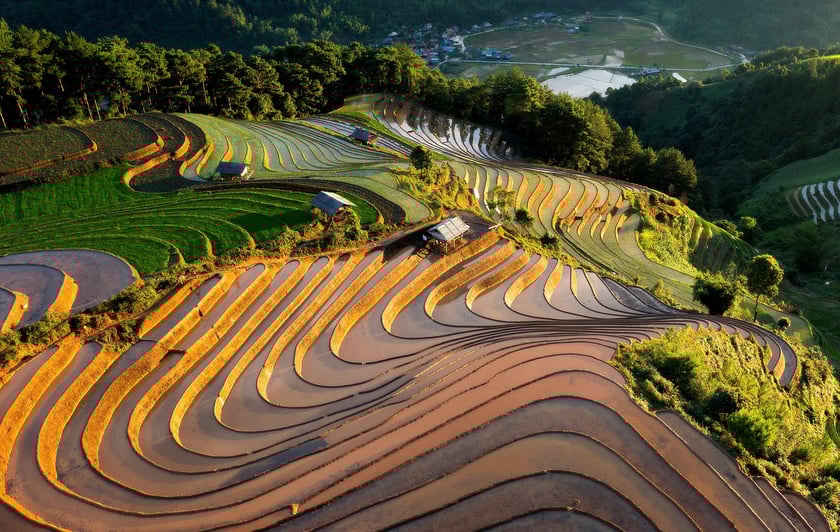
Thus, the colorful fields of Mu Cang Chai stretch across the majestic mountain slopes, creating a moment as beautiful as a giant autumn painting, capturing the hearts of tourists fortunate enough to witness it.
When autumn arrives, during the rice harvest season (September - October), Mu Cang Chai transforms into shimmering "golden terraces," beckoning crowds of tourists to admire its beauty. Across the hills, terraced rice fields stretch out in layers, reaching towards the sky. Because they are planted at different times, each field has its own unique hue; some shimmer with golden light, others are a vibrant green interspersed with golden hues. All of this creates a colossal, multicolored autumn landscape stretching across the majestic mountain slopes, leaving a lasting impression on those fortunate enough to witness it.
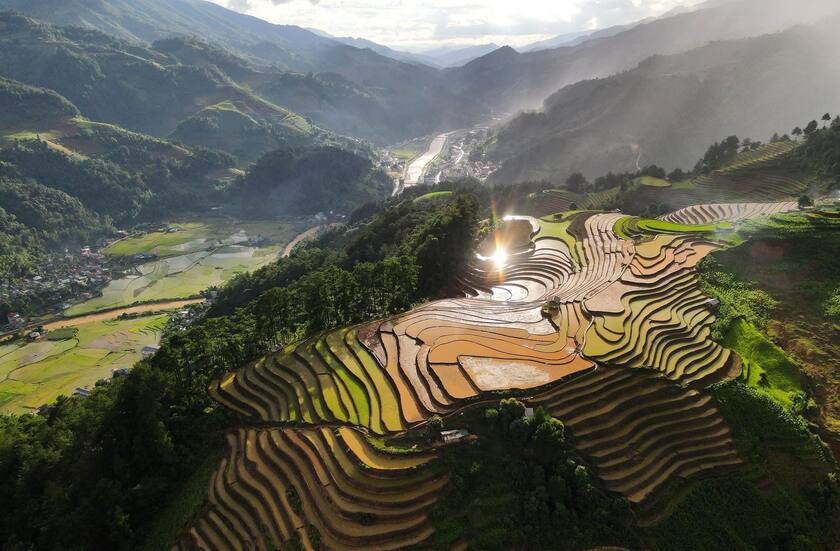
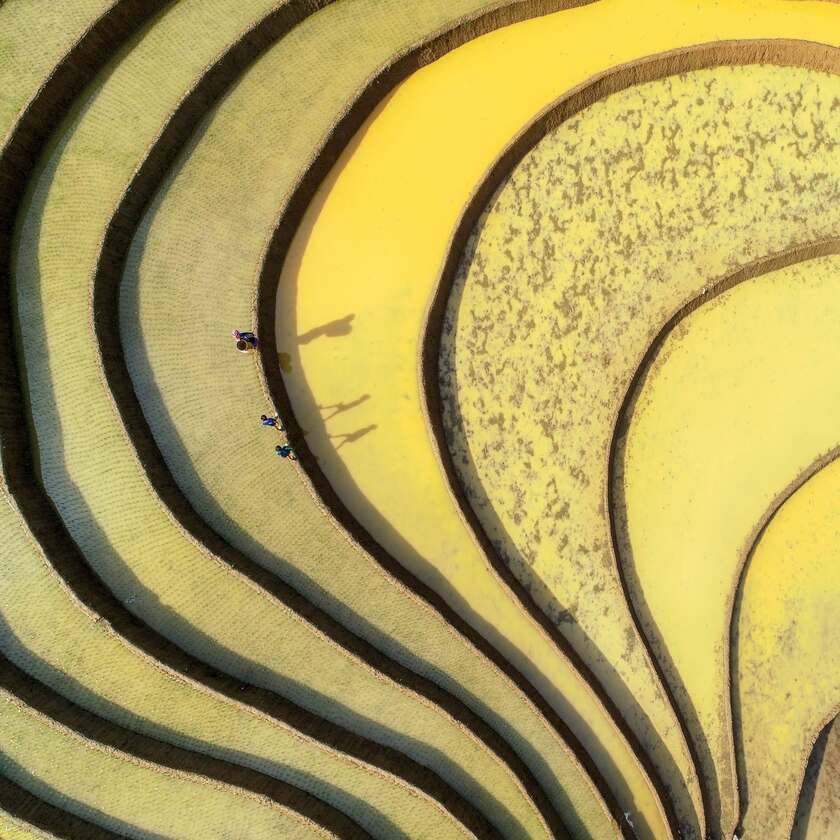
Viewed from above, the terraced rice fields during the rainy season appear like a vibrant mosaic with interwoven patches of color: some areas shimmering with water like mirrors, others covered in damp brown soil, and still others blanketed in the green of young rice seedlings. The blend of sky, earth, and vegetation creates a captivating beauty that leaves visitors in awe.
Celebrating heritage and developing sustainable tourism.
To honor the scenic terraced rice fields of Mu Cang Chai, promote the unique cultural values of the Mong ethnic group, raise awareness of heritage preservation, and attract tourists, since 2015, Yen Bai province has organized many distinctive cultural and tourism activities. Notable events such as the goat fighting festival, the rice pounding festival, the food fair, along with spectacular paragliding performances "Flying over the Golden Season" and "Flying over the Waterfalls Season" at Khau Pha peak or Mam Xoi hill, have become trademarks, providing unforgettable experiences for visitors.
Not only famous domestically, Mu Cang Chai has also been voted one of the 10 most beautiful terraced rice fields in the world.
The Mu Cang Chai terraced rice fields, a National Scenic Area, and the Northwest region in general, are not just a fertile rice granary or a magnificent natural landscape. They are also a symbol of the strength of unity, the indomitable spirit, and the unique creativity of the highlanders in their journey of transforming nature and building a better life for generations, becoming an immortal epic amidst the mountains and forests of the Northwest.