VI
VI


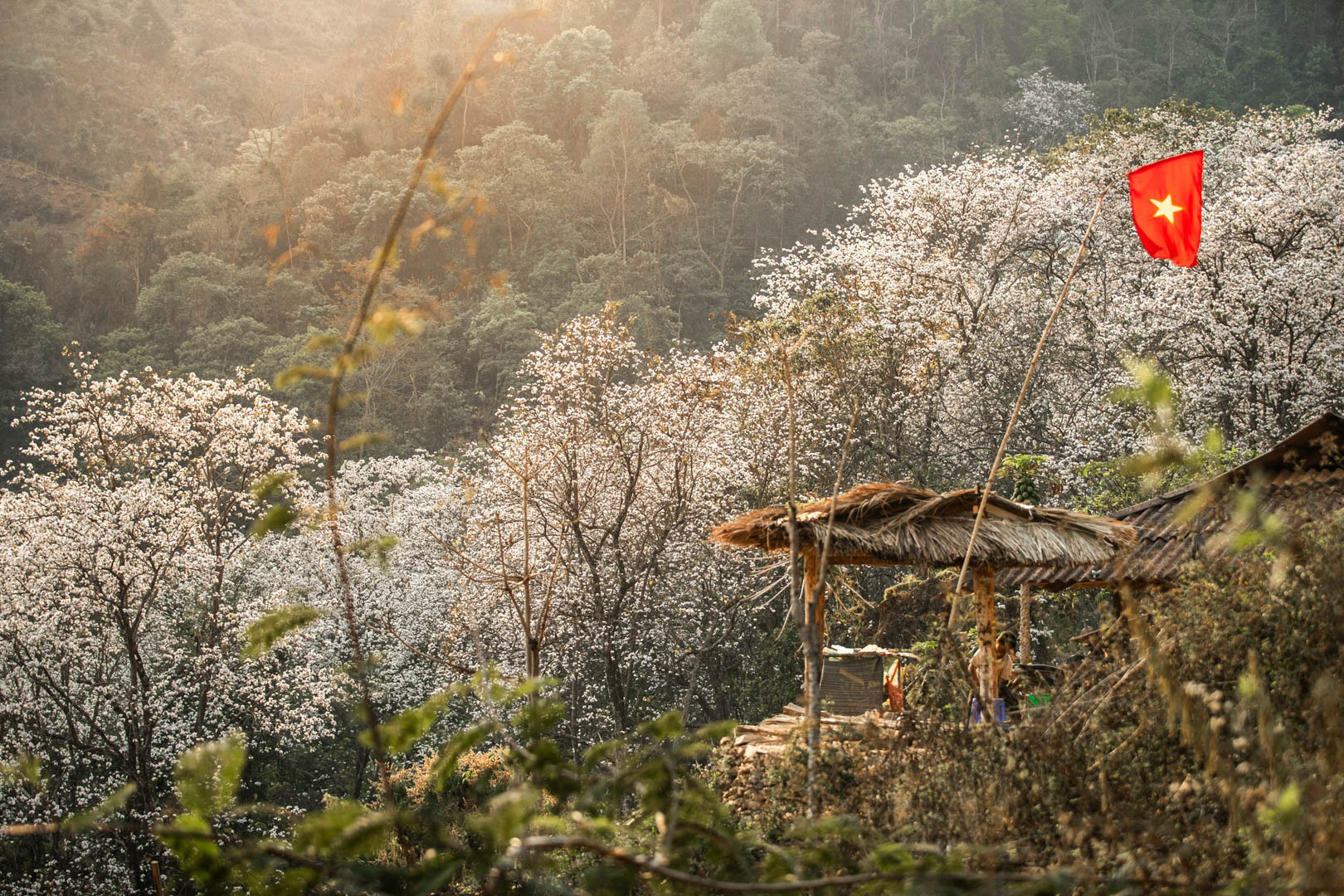
"White snow blankets the mountains and forests in white mist.
Like a blanket of white snow shimmering in the sunlight..."
(The Love Story of the White Bauhinia Flower - Van Lang Land)
As the end of March approaches, the early spring chill gradually fades, giving way to warm golden rays of sunshine filtering through the high hills. Dien Bien, the "treasure" of the Northwest highlands, a place preserving glorious and heroic history, is "rising" radiantly, donning a pristine, pure, and dreamy white cloak.
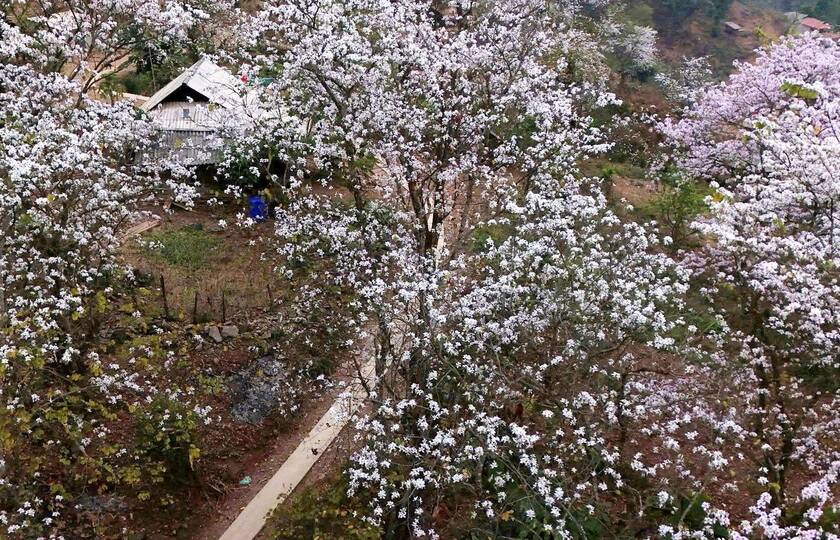
The entire sky over Dien Bien is bathed in the white blossoms of the bauhinia tree, creating a picturesque scene that signals the arrival of the bauhinia season in every corner and on every hill of this land. Although the blossoms only bloom for a short period of 2-3 weeks, the beauty of the bauhinia flower still attracts many tourists who travel long distances to admire it.
Located about 40km from the center of Dien Bien city, Nam Cum village, Ngoi Cay commune, Muong Ang district, still retains its pristine and tranquil beauty. The ancient bauhinia trees here, with their tall trunks and wide canopies, stand majestically amidst the mountains and forests for generations, like historical witnesses, observing the changes of the land and sky.
Each petal is connected to the lives of the people of Northwest Vietnam.
The bauhinia flower is a "gift" from nature, making Northwest Vietnam so attractive that travelers hesitate to visit when the season arrives. The pristine beauty of the bauhinia flower is like the soul of a Thai girl, carrying within it the enchanting legend of their love. The legend tells that: Long ago, in Northwest Vietnam, there was a young man named Khum who fell in love with a girl named Ban. Khum was skilled at farming and hunting. Ban was adept at weaving and had a captivating singing voice that charmed many young men. However, Ban's father, driven by greed, married her off to the son of the village chief, a lazy young man with a hunchback.

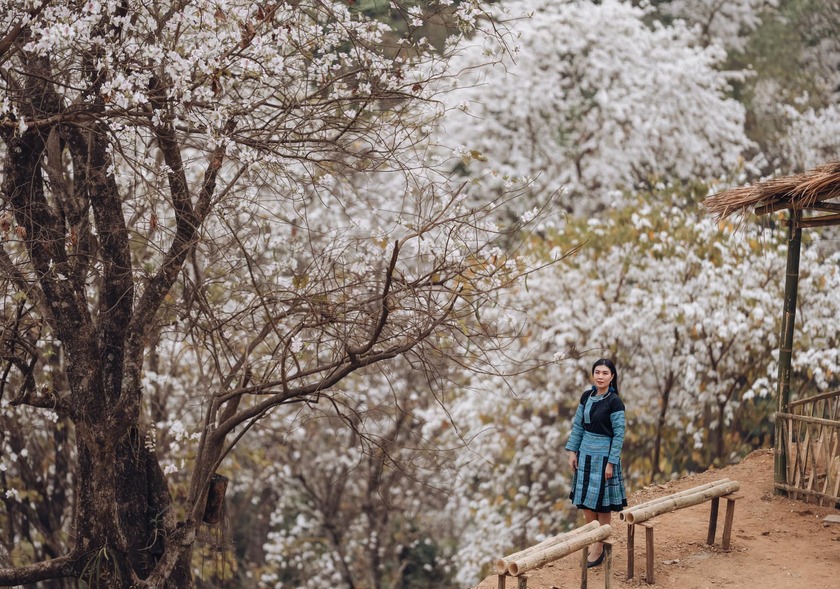
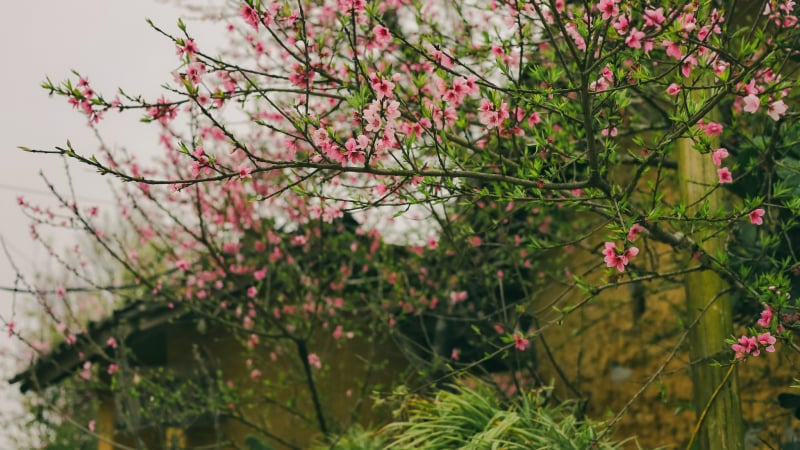
In March, when the peach blossoms have faded and the last remnants of spring rains fall, the season of the Bauhinia flower begins, a season that lasts until April.
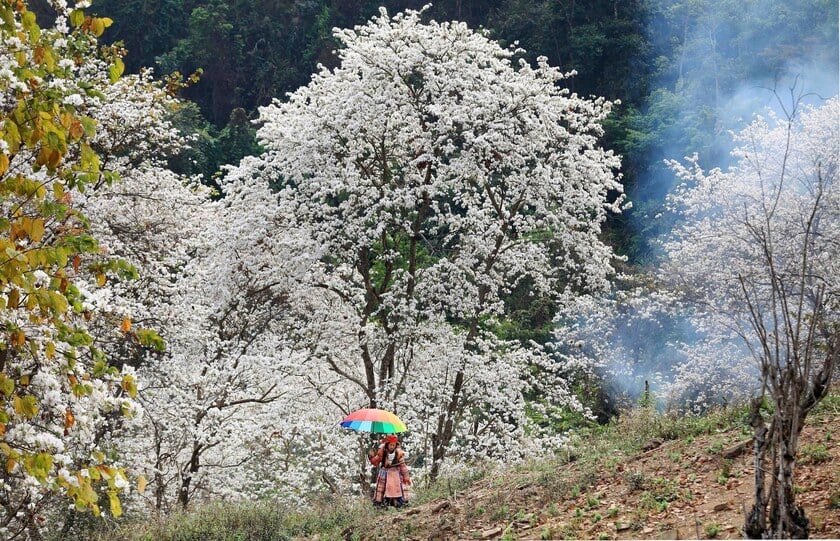
The bauhinia flower is a "gift" from nature, making Northwest Vietnam even more attractive.
Despite the girl's desperate pleas, her father refused to give up his intention. He consulted with the village chief and prepared for their wedding. In desperation, Ban fled to Khum's village to seek his help. Unfortunately, upon arriving at Khum's house, she learned that he had gone with his father to buy buffaloes in a distant place. She then tied her embroidered scarf to the steps of his house and set off to find him. She searched through mountains and forests, calling out her lover's name until her voice was hoarse, but he was far away and could not hear her.
Finally exhausted, she collapsed after crossing a high mountain range. Where she fell, a flower with white buds, like a young girl's hand, sprouted. Before long, this flower spread throughout the mountains and forests of Northwest Vietnam. And every year, when spring arrives, the flowers bloom white like cotton. People named this flower the bauhinia flower.
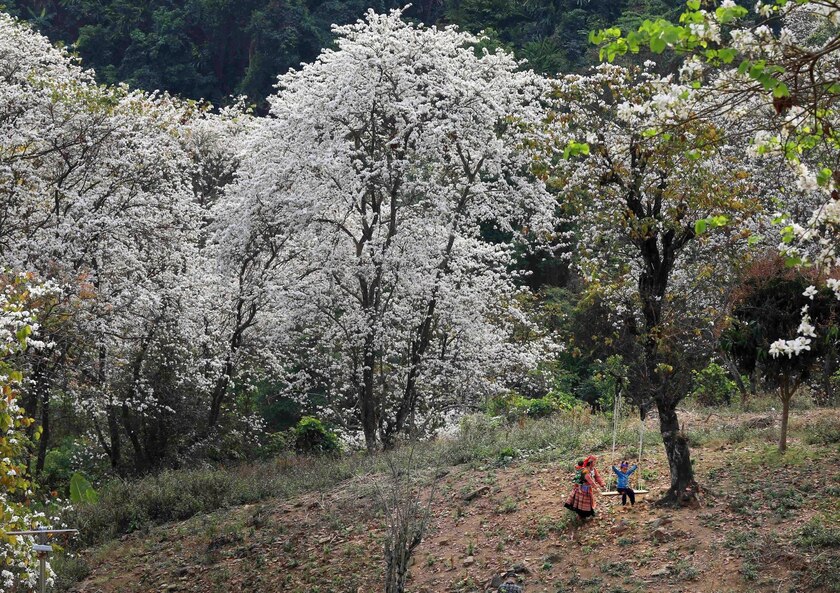
During the bauhinia flowering season, the entire Northwest region is covered in a sea of blossoms, as beautiful as a painting.
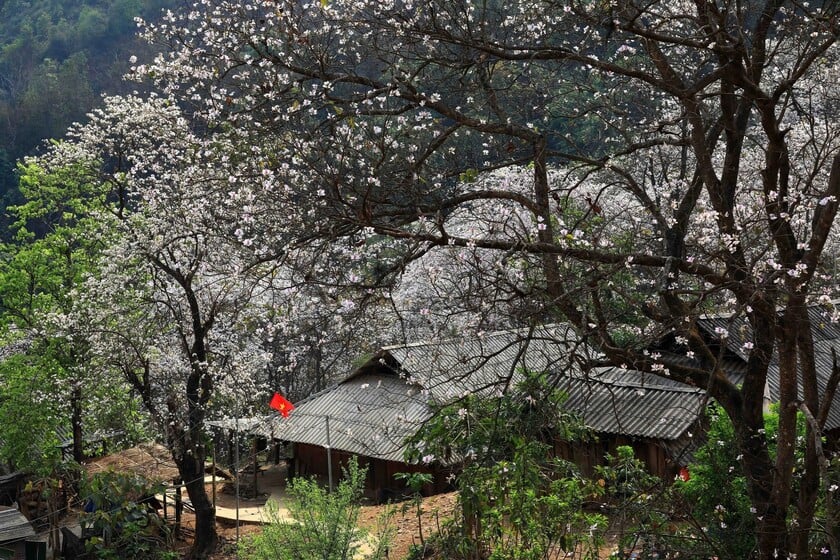
For the people of Northwest Vietnam, the pristine bauhinia flowers symbolize the unwavering fidelity of love between couples.
Traveling to Northwest Vietnam, you'll encounter vast fields of bauhinia flowers, but the sacred land of the Thai people – the sacred land of bauhinia – is Dien Bien. Throughout Dien Bien, you'll see bauhinia everywhere. Walking along the mountains and forests, through the roads leading to Dien Bien Phu city, or along the small paths to the villages, you'll find rows of bauhinia flowers in full bloom, basking in the crisp sunlight of Northwest Vietnam. Bauhinia blankets the distant valleys, their petals spreading out, dotting the deep blue sky with their pure white blossoms…
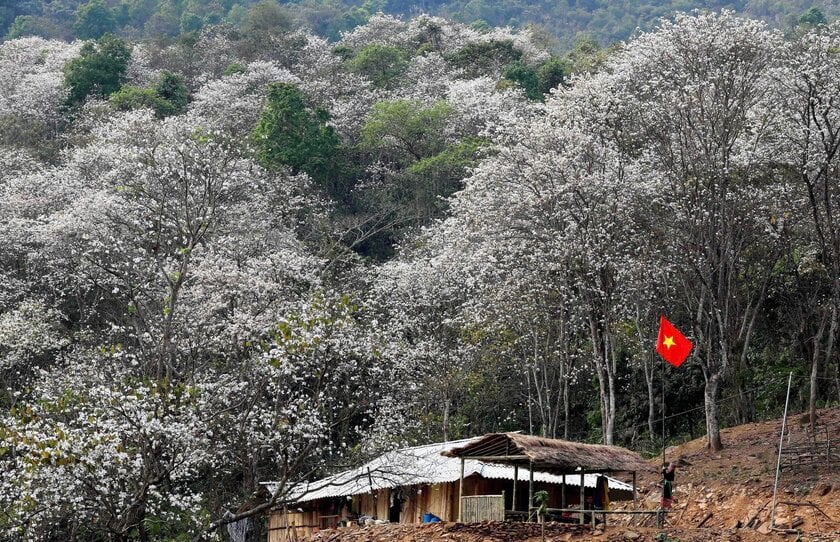
For centuries, the bauhinia flower has been closely associated with the lives of the people of Northwest Vietnam, contributing to the unique cultural characteristics of this region that cannot be found anywhere else.
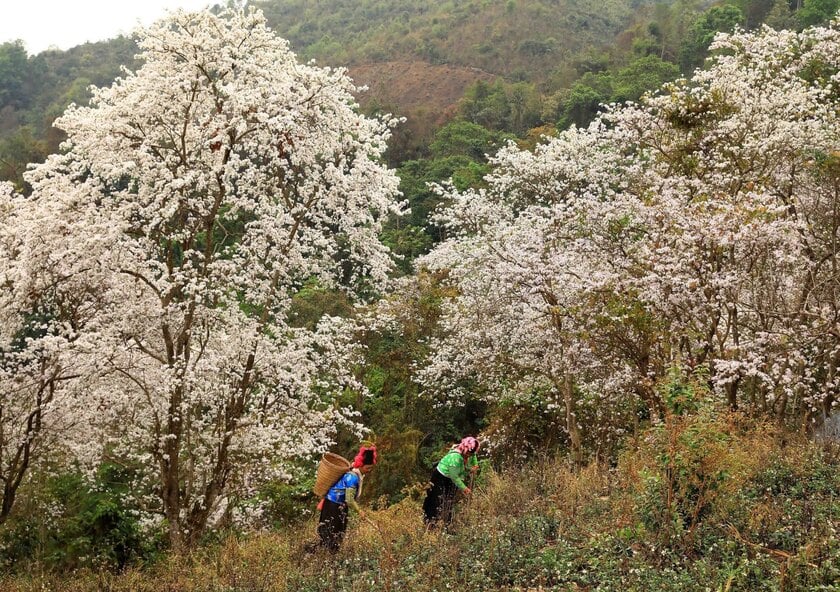
Nevertheless, when exploring the ancient bauhinia forest, even those born and raised in Dien Bien are overwhelmed by the beauty of Nam Cum village during the bauhinia blooming season.
A village nestled amidst a sea of white bauhinia flowers in Dien Bien
On the road from Dien Bien city center towards Nam Cum village, a breathtaking natural landscape gradually unfolds before the eyes of visitors. The pristine white of bauhinia flowers stretches along every path, blending with the lush green of terraced rice fields and the babbling streams flowing along the roadside. The scenery changes constantly along the way, making it more than just a trip to a tourist destination; it's a journey of discovery and enjoyment of the full beauty of Northwest Vietnam's nature.
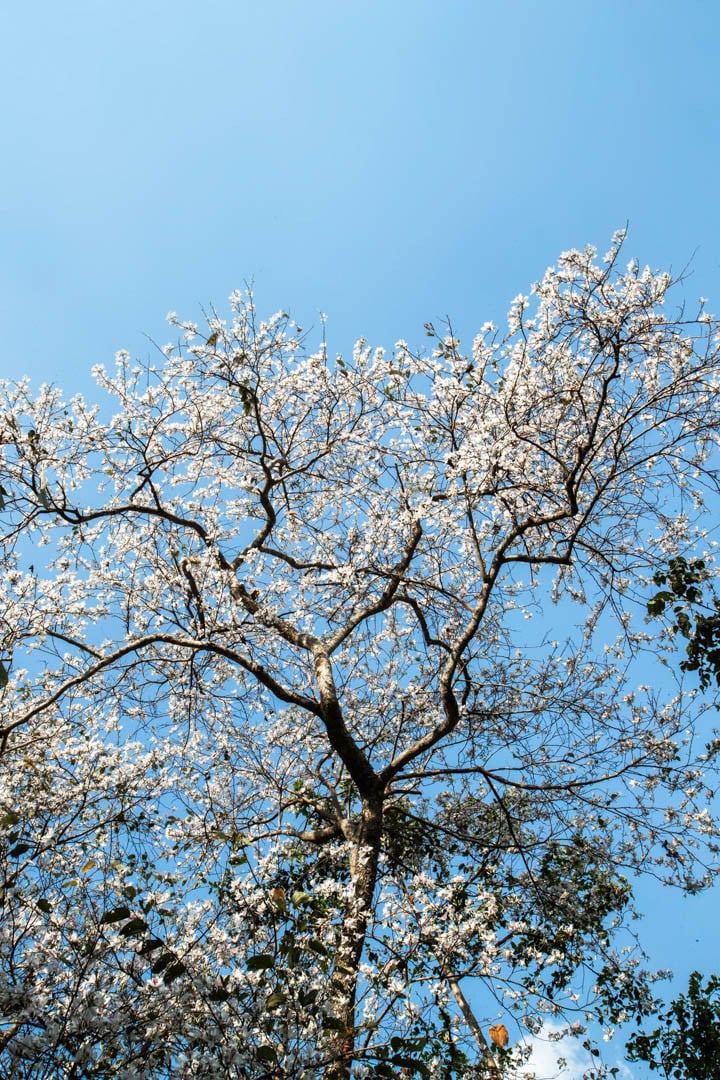
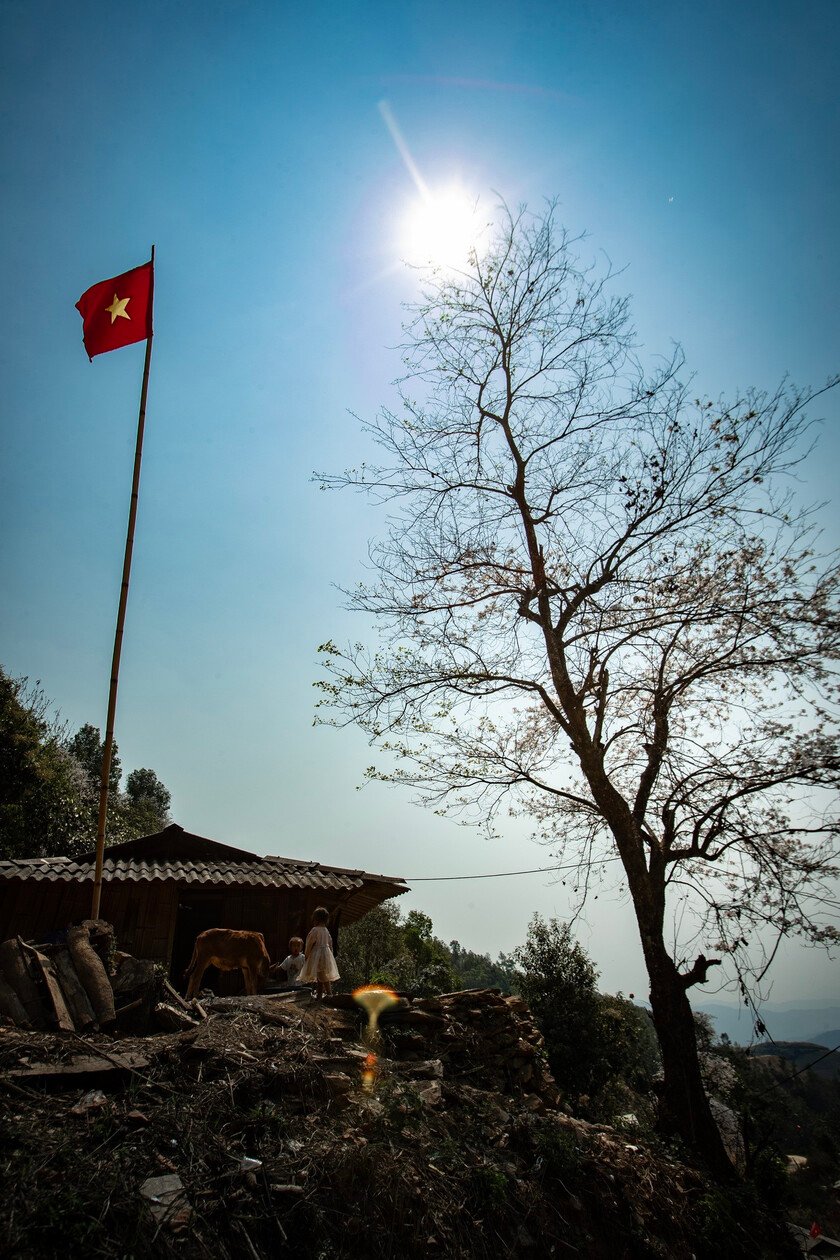
At every moment of the day, the Nam Cum bauhinia forest possesses a unique beauty, touching the deepest emotions of travelers. As twilight descends, the sunset bathes the landscape in golden hues, and the ancient bauhinia forest dons a cloak of solemn tranquility. At dawn, when the first rays of sunlight appear, the forest bursts with vibrant, pure, and energetic life.
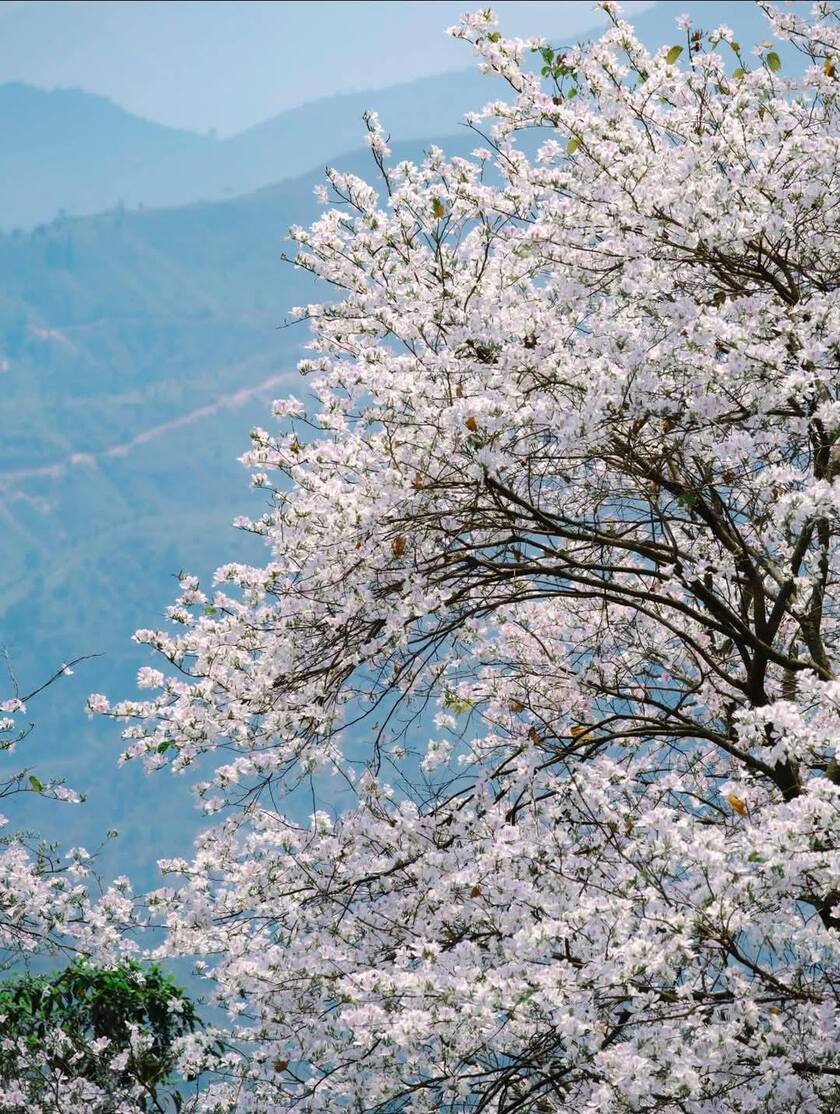
Most bauhinia trees are about 5 meters tall, shedding their leaves and leaving only white flowers.
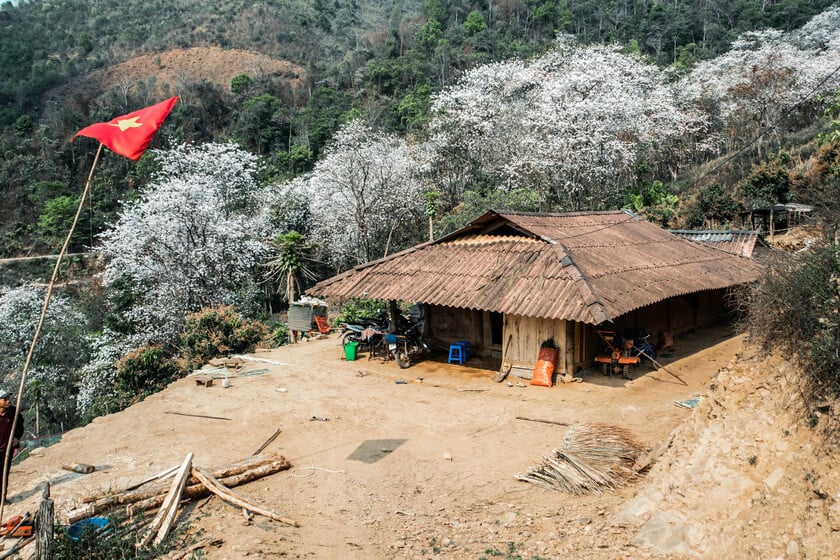
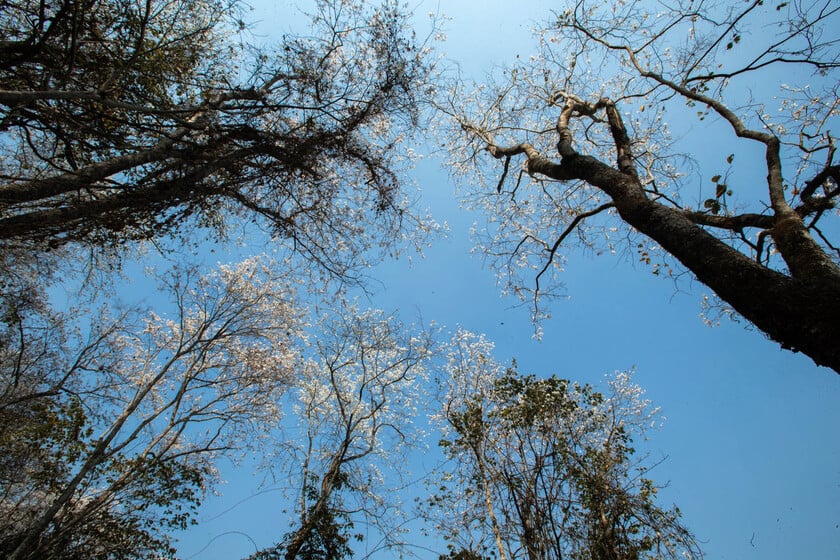
Stepping amidst the vibrant bauhinia blossoms, visitors feel as if they have entered another world, where time seems to stand still. A feeling of youthfulness, joy, and exhilaration wells up inside, dispelling all the fatigue and anxieties of daily life. The gentle fragrance of the bauhinia flowers permeates the air, combined with the chirping of birds, creating a melodious and peaceful symphony of nature.
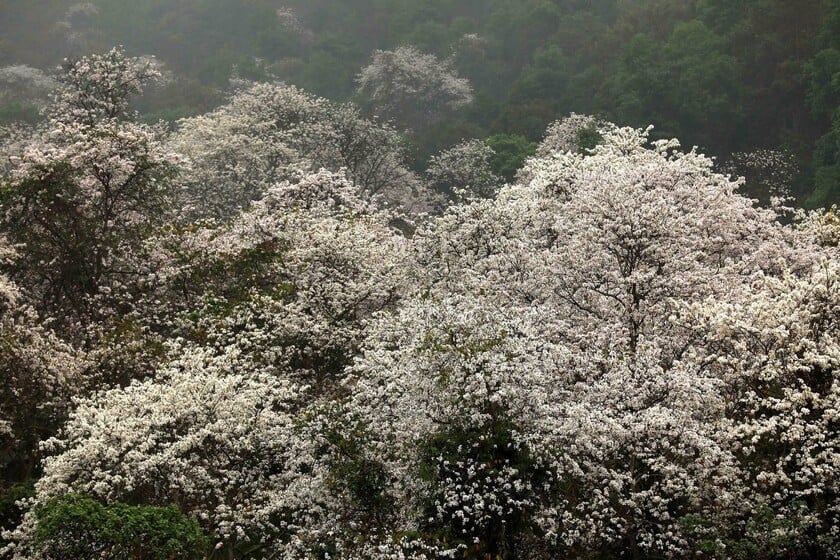
According to the locals, the bauhinia season usually lasts for more than a month (March - April).
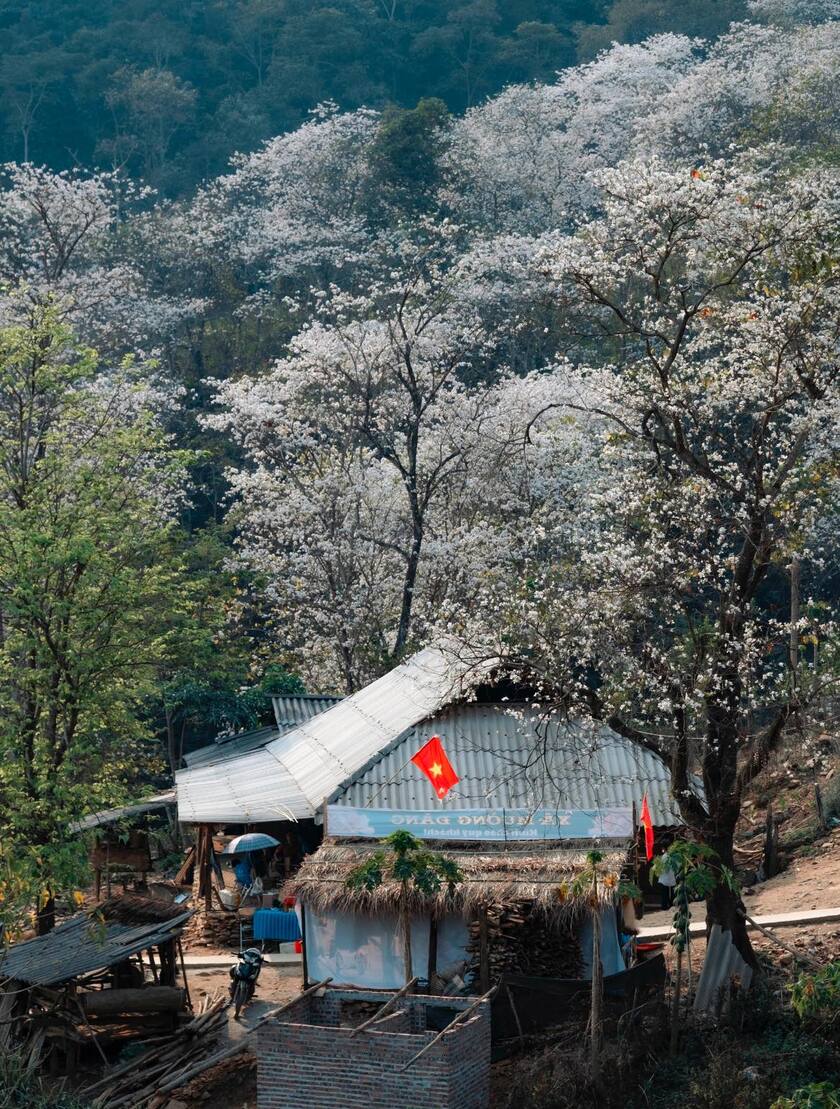
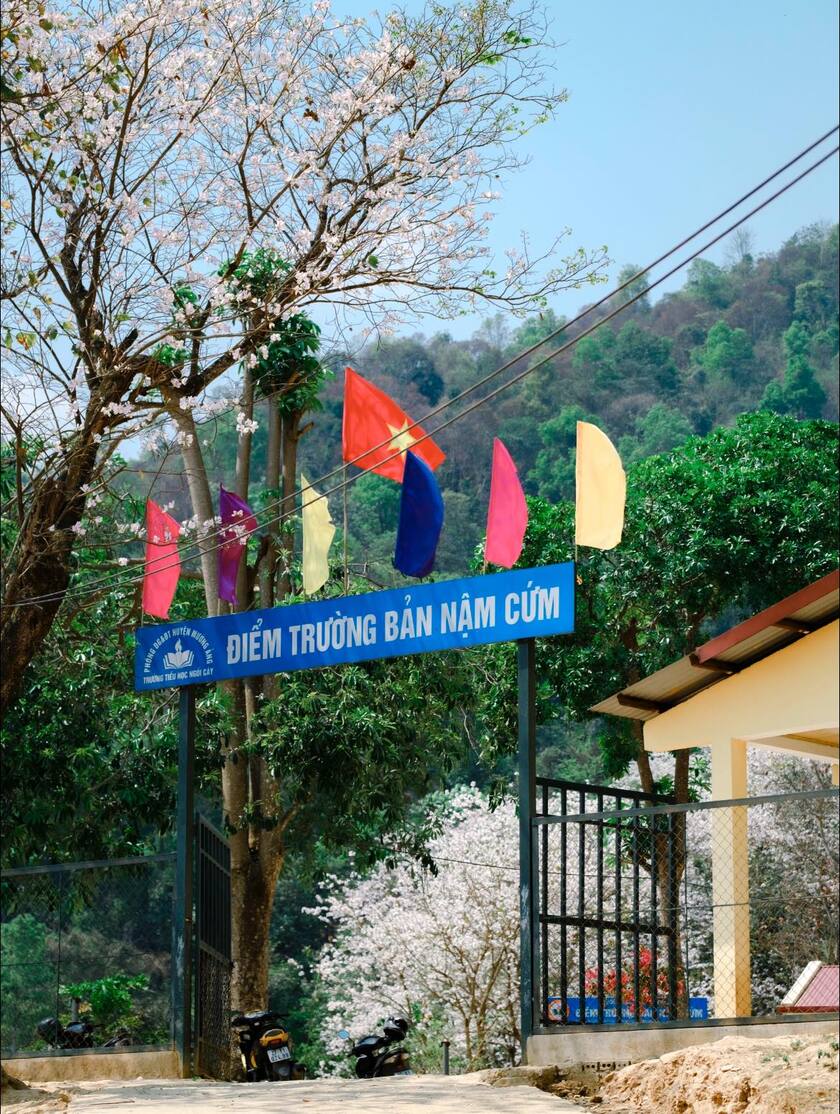
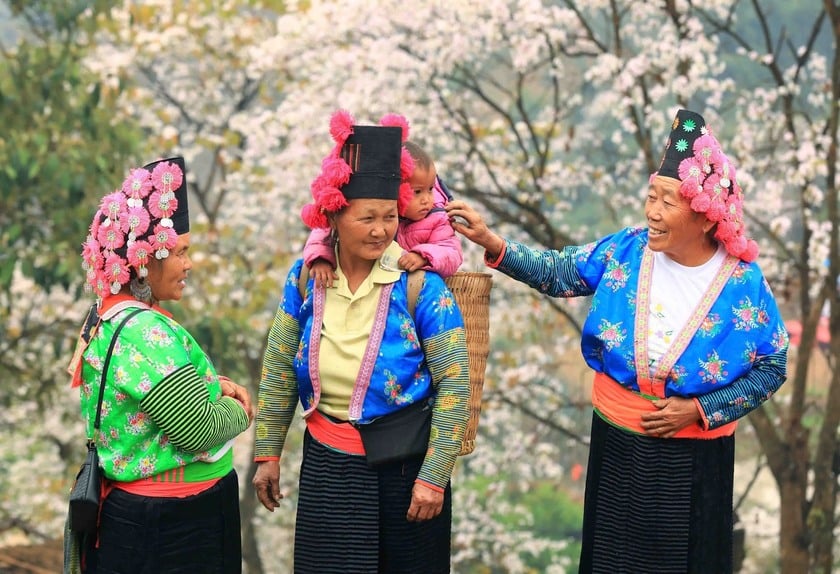
More than just a flower-viewing destination, Nam Cum is also a place for tourists to learn about the culture and people of the Mong ethnic group. Traditional stilt houses, winding dirt roads, and the friendly smiles of the locals all blend together to create a picture of simple and intimate life.
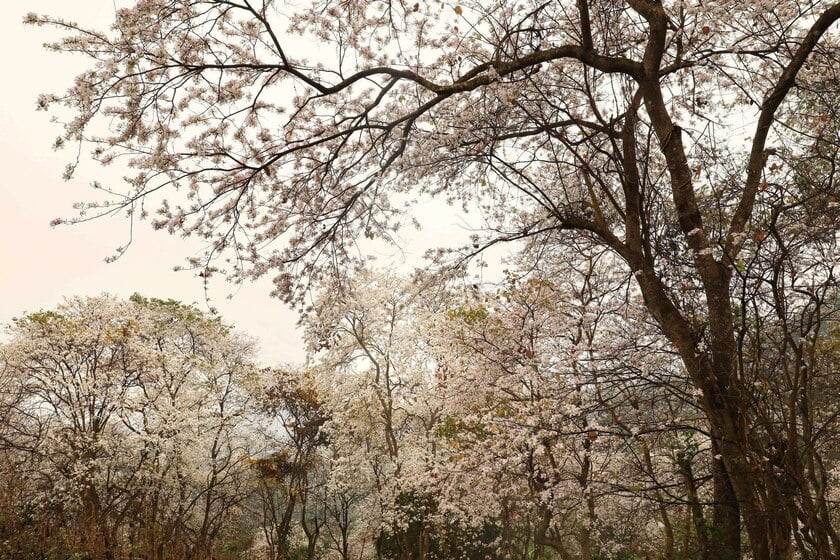
The time when the bauhinia flowers are in full bloom is also the time when the bauhinia flower festival is held.
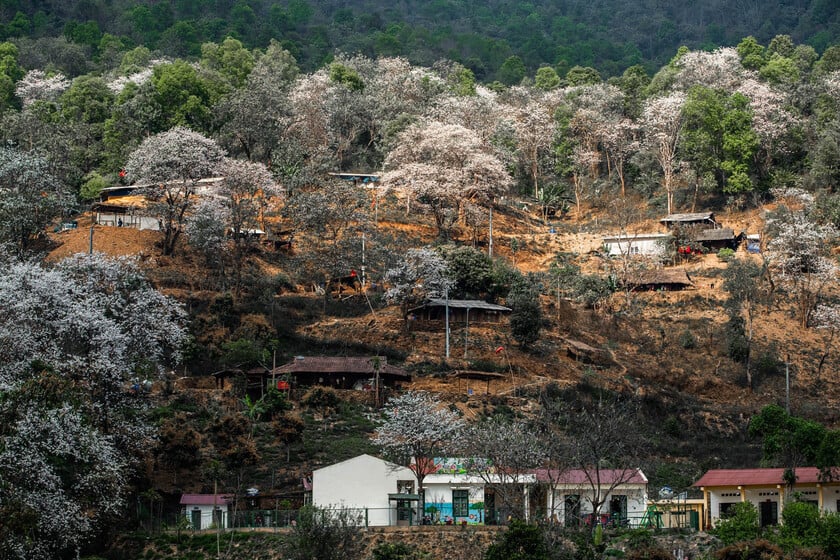
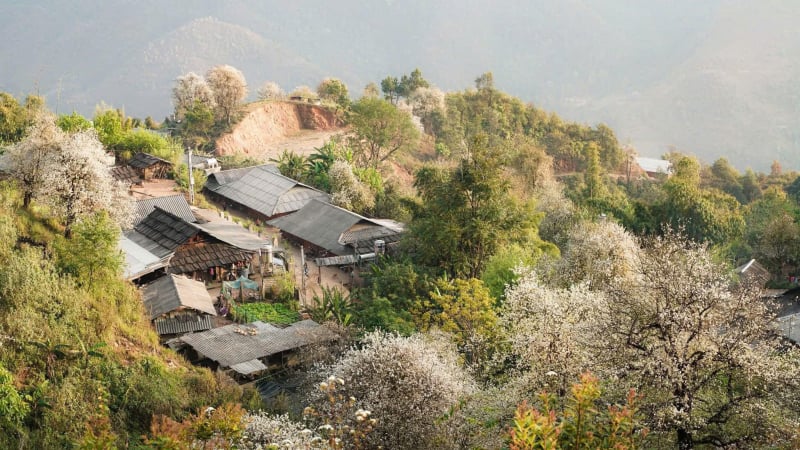
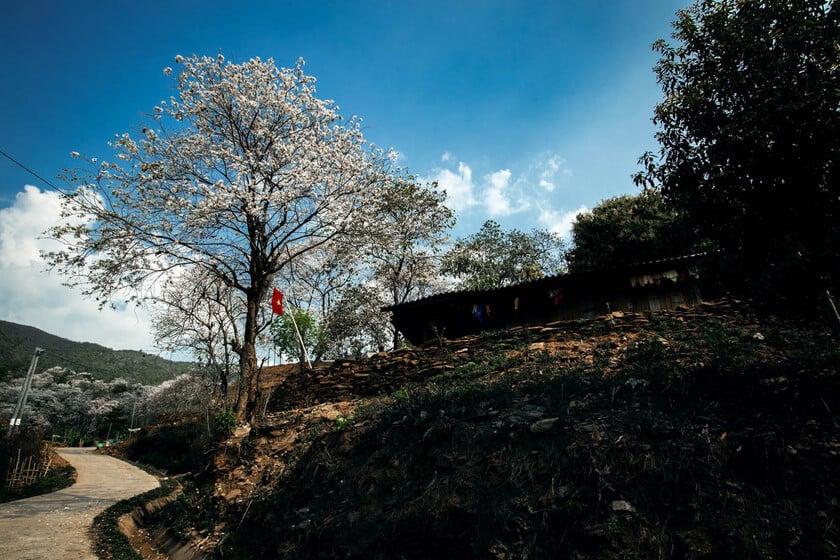
The traditional stilt houses in Nam Cum, with their jet-black tiled roofs and rustic wooden walls, nestled amidst the pristine white blossoms of the Bauhinia tree, create a scene that is both tranquil and romantic. The morning sunlight, filtering through the blossoms, creates shimmering, ethereal streaks of light, further enhancing the fairytale beauty of the place. Moreover, the fresh, peaceful atmosphere of the village is a major draw for tourists. The familiar sounds of daily life, such as birdsong, the babbling of streams, and the laughter of the locals, all blend together to create a vibrant symphony of the countryside.
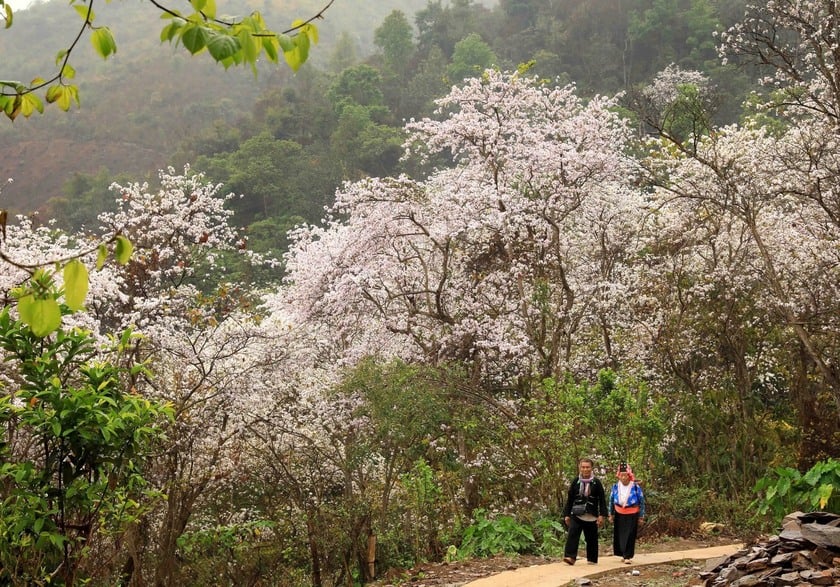
Previously, few people knew about the ancient ban forest, so not many people came to the village to visit and explore it.
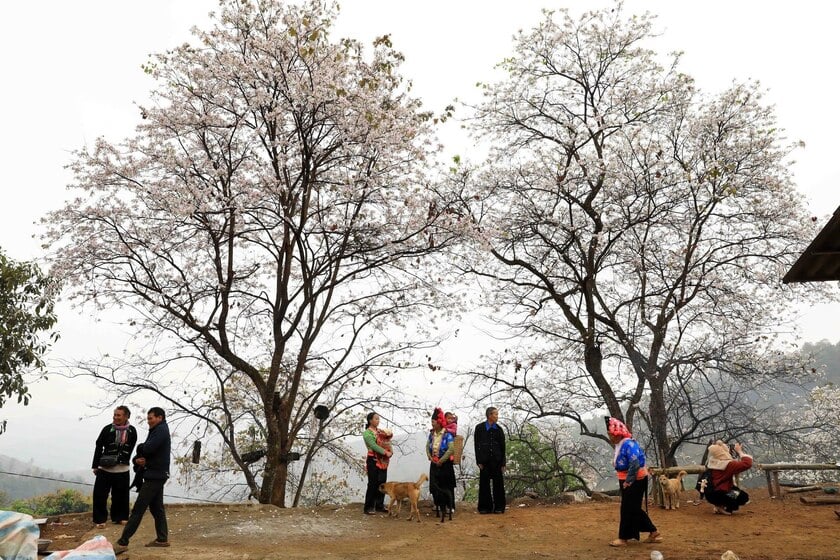
Recently, the bauhinia forest has become more widely known, and the number of people coming to admire it is increasing.
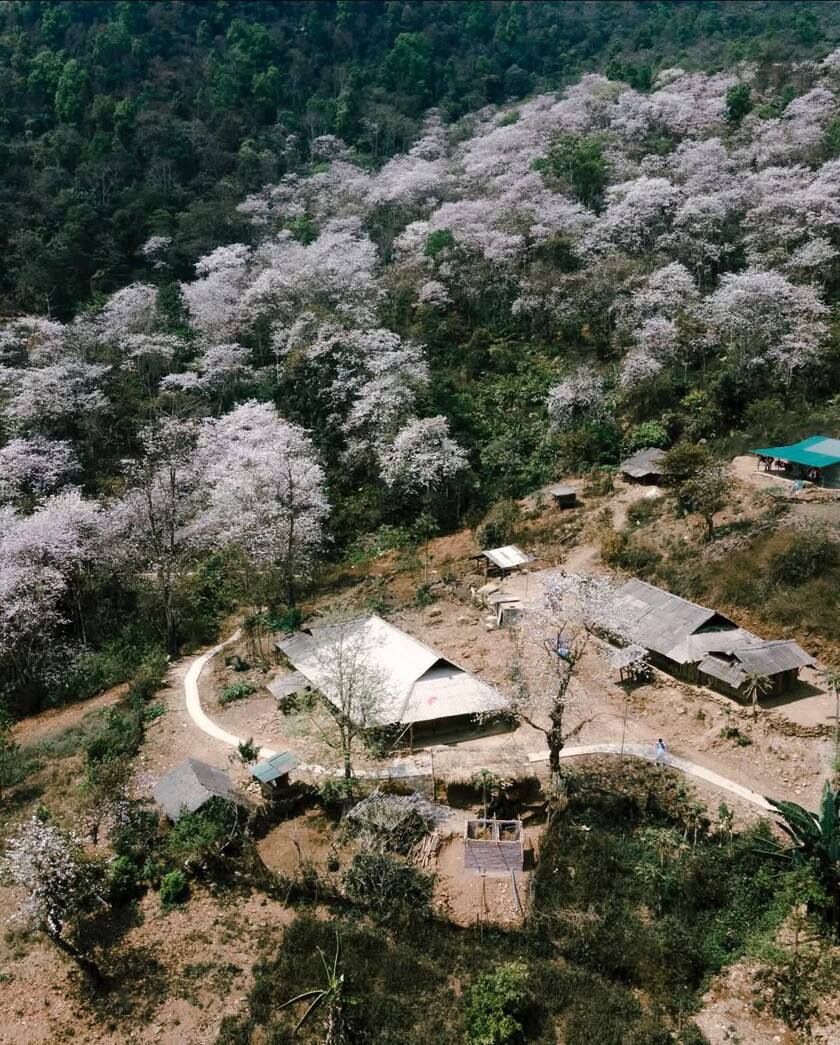
This area boasts approximately 1,200 bauhinia trees, ranging in age from decades to centuries, creating a majestic and magnificent natural landscape. These ancient bauhinia trees, with their gnarled, silver-gray trunks and diameters of 50-60cm, grow naturally on the steep mountain slopes. The houses of the Hmong people, built on these slopes, create a vibrant picture of life harmoniously integrated with nature.
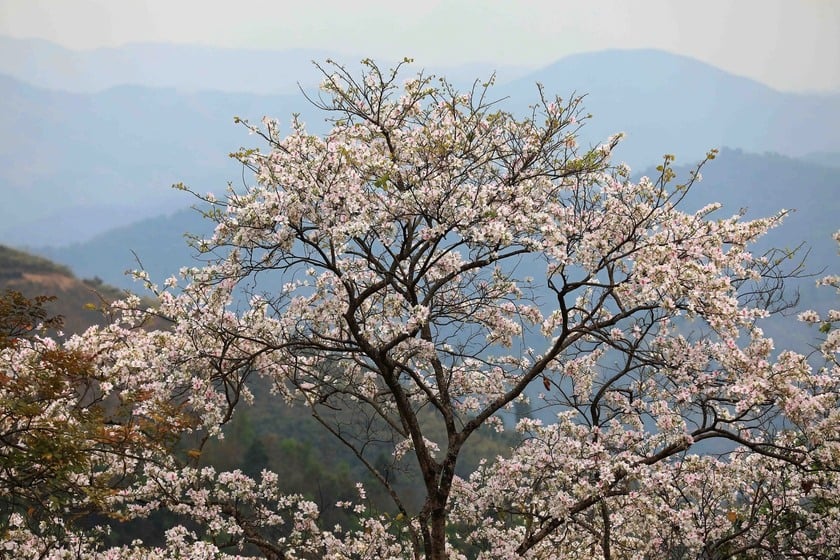
Seeing the patches of pure white blossoms and the gentle smoke rising from the kitchen chimneys made all fatigue disappear.
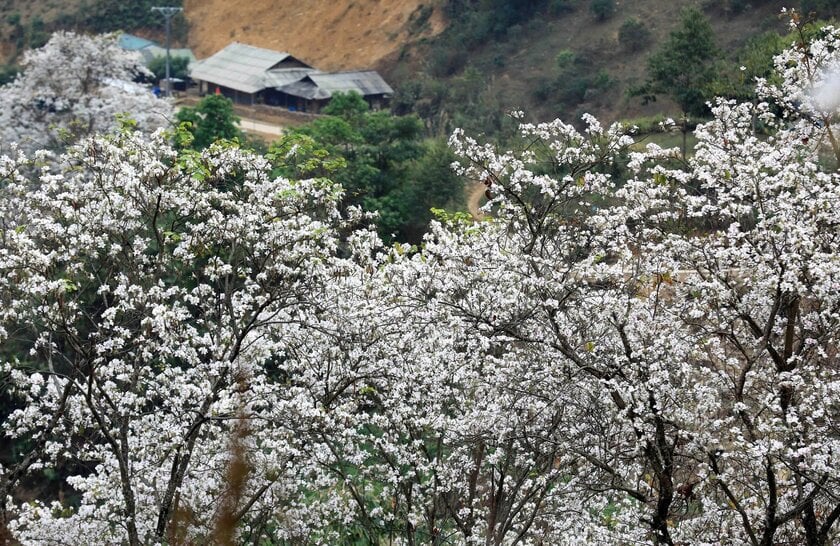
The scenery here is very beautiful and picturesque, and the people are incredibly friendly and hospitable.
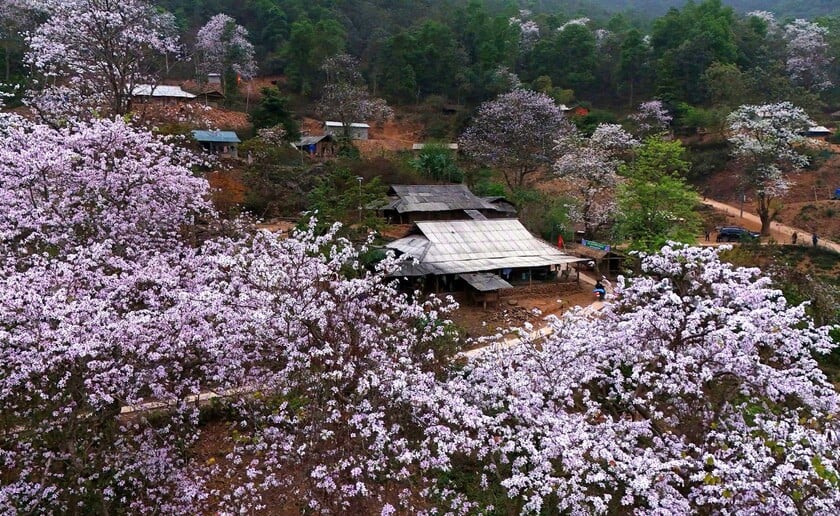
The winding concrete road, resembling a fishbone, meanders between houses and forests of bauhinia flowers, creating a unique and impressive scene. During the bauhinia flowering season, from March to April, the entire village seems to be immersed in a sea of pure white blossoms. Previously, few people knew about the beauty of the ancient bauhinia forest in Nam Cum. However, in the last two years, photos of this place have spread widely on social media, attracting many tourists to visit and admire it.
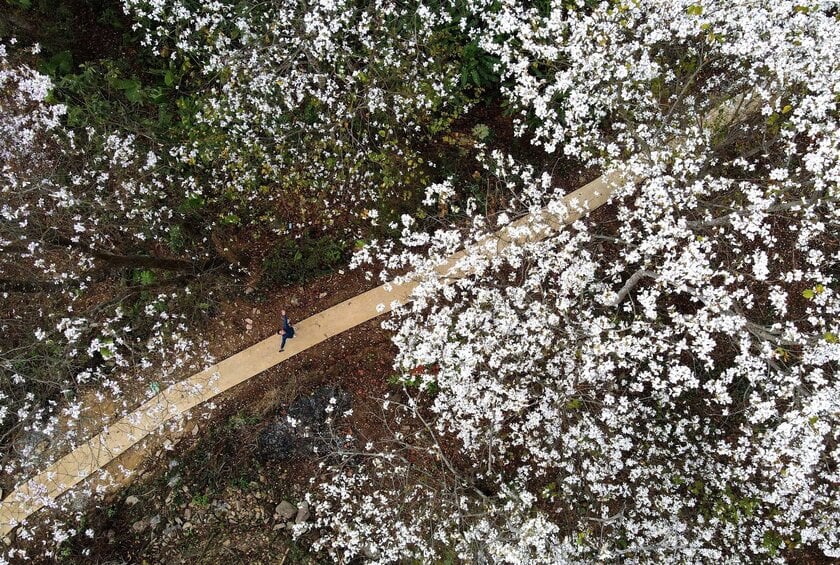
Nam Cum village is one of the areas that Muong Ang district is focusing on and investing in for community tourism development.
Building and promoting the image of the people and the beauty of the bauhinia flowers in Nam Cum village will help tourists learn about and explore it more.
To cater to the needs of tourists, locals have erected temporary shelters under the bauhinia trees. This is an ideal place for visitors to rest, admire the scenery, and take souvenir photos. With its pristine, rustic, and unique beauty, Nam Cum village is gradually becoming an attractive tourist destination, offering visitors unforgettable experiences.