VI
VI


The charm of Hanoi cuisine
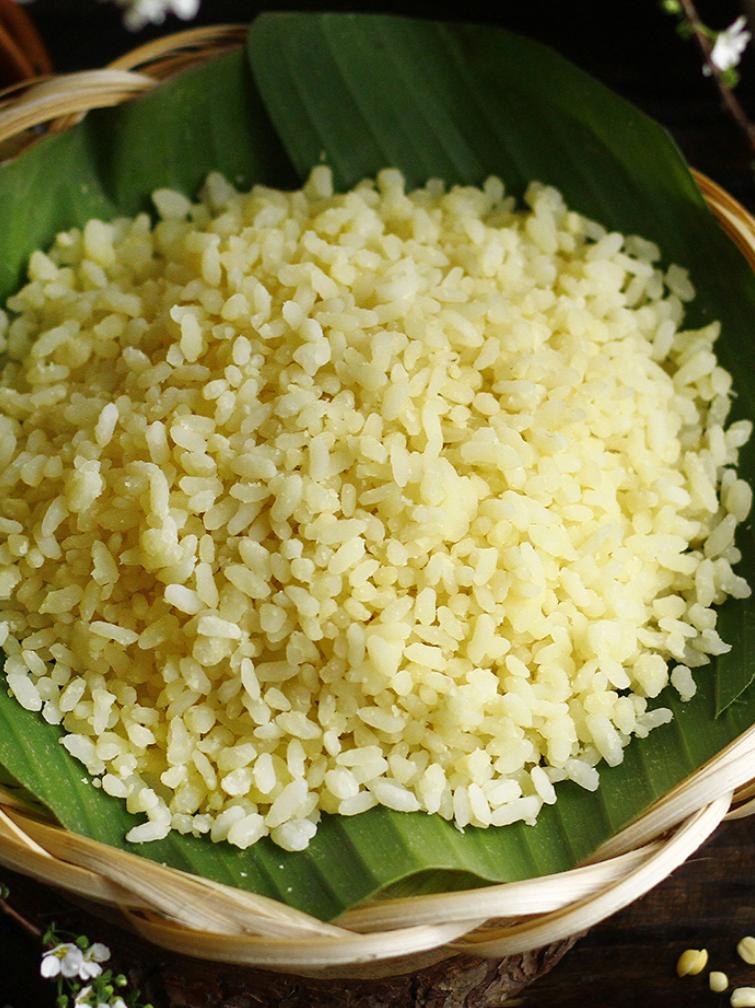
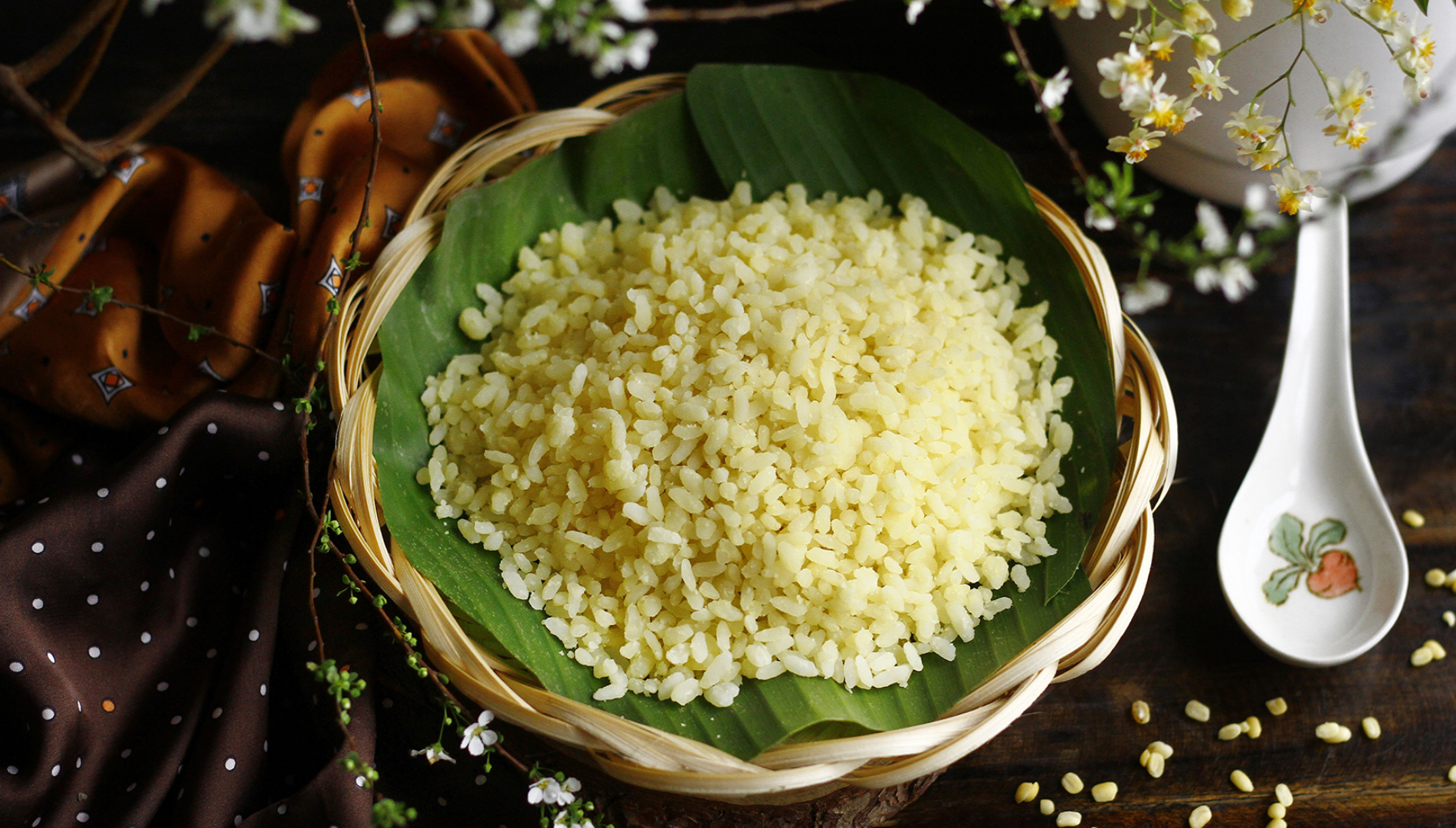
Sticky rice with sweet soup has always been a refined dish, deeply rooted in the spirit of Hanoi. Appearing only on important occasions, sticky rice with sweet soup is considered a noble dish, reflecting Hanoians' respect for their culinary traditions. To achieve a pot of fragrant, perfectly cooked sticky rice, one must possess extensive experience and skillful hands. Each grain of rice is a small work of art, carrying the soul of the cook.
This dish is a combination of sticky rice and sweet soup. There are many types of sweet soup served with sticky rice, but perhaps the most popular is mung bean sweet soup. The ingredients for sticky rice with mung bean sweet soup are readily available, but the preparation is quite elaborate and meticulous. According to some owners of traditional sticky rice and sweet soup stalls in Hanoi, to create delicious bowls of sticky rice with sweet soup, every step, from selecting the ingredients to preparing the dish, is done carefully and meticulously.
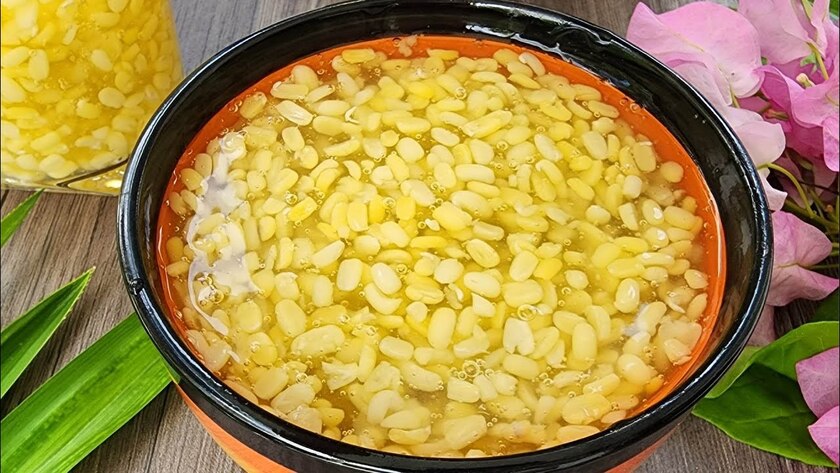
Sticky rice with sweet soup, a simple yet captivating dish, has become an icon of Vietnamese cuisine.
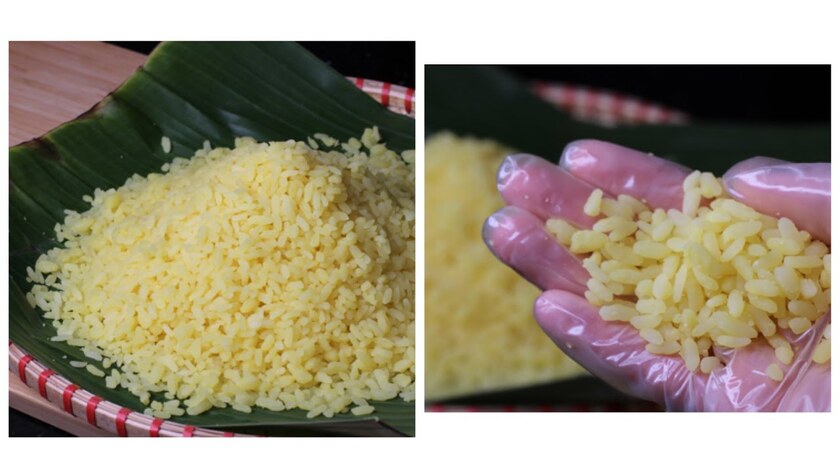
Sticky rice used for making sticky rice is the "golden flower" variety, with evenly sized, round, plump grains. The "golden flower" sticky rice is soaked overnight, rinsed thoroughly, drained, and then buried in a clean, dry cloth until completely dry before being mixed with a little salt for added flavor. The mung beans are small, yellow-hearted, and fragrant, with all shriveled beans removed. The beans are crushed and, along with the rice, soaked in salt water for 4-6 hours, rinsed thoroughly, and drained. The mung beans are then peeled, steamed until cooked, and a small portion is set aside for the dessert, while the rest is mashed until smooth.
There are many types of sweet soups served with sticky rice, but the most popular is probably mung bean sweet soup.
Mix half of the ground mung beans with the glutinous rice and steam until the rice is soft and cooked through. Once cooked, scoop the sticky rice onto a tray, let it cool, then add the remaining ground mung beans and mix well to loosen the grains. Steam the rice a second time until it becomes thick and sticky.
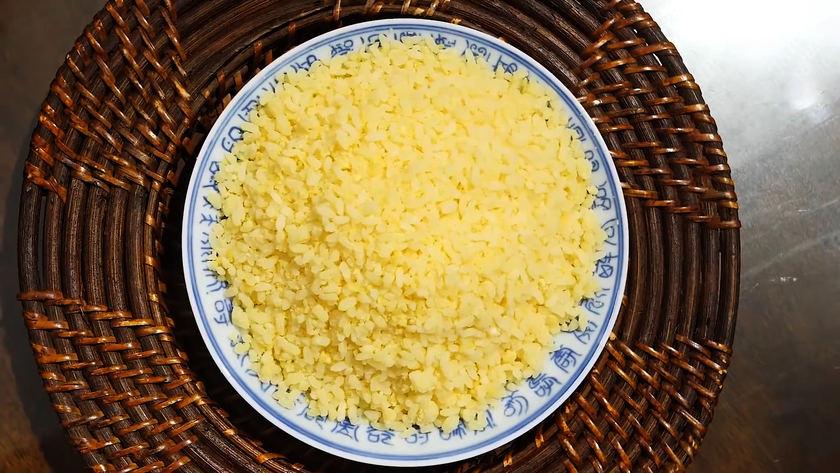
The beans are ground, and together with the rice, they are soaked in salt water for 4-6 hours, rinsed thoroughly, and drained.
When the sticky rice is evenly cooked, remove it from the pan and rub it a third time so that the mung beans coat each grain of rice evenly. Mixing the mung beans with the sticky rice requires skill to ensure that each grain is evenly coated with a smooth, golden layer of mung beans. This prevents the sticky rice from clumping together after cooking. Once cooked, remove the sticky rice from the heat, scoop it onto a tray, and continuously fan it while stirring to cool and loosen the grains. Each cooked grain should be plump and separate, with a smooth, chewy texture and a fragrant aroma of sticky rice mixed with mung beans.

To make sweet soup, one can use tapioca starch, cornstarch, or arrowroot starch (the kind used for vermicelli). The starch is dissolved in cold water. Bring the sugar water to a boil, then slowly pour in the starch mixture while stirring until the starch changes from opaque white to translucent and thick. Turn off the heat and add the steamed whole mung beans to the pot and stir well.
The sweetness of the Vu Lan festival, a time for showing filial piety.
As the Vu Lan season arrives, the fragrant aroma of sticky rice mixed with the sweet taste of areca flower tea fills the streets of Hanoi, transporting us back to our childhood. The steaming trays of sticky rice and the cool, refreshing bowls of areca flower tea evoke countless childhood memories in the hearts of Hanoians.
Sticky rice with sweet bean paste, a simple yet refined dish, is made from familiar ingredients. Through the skillful hands and refined souls of the people of Hanoi, this dish has become a unique culinary art. Each grain of sticky rice tells a small story about the sophistication of Hanoi. The refreshing taste of the sweet bean paste blends with the nutty flavor of the beans, creating a unique culinary symphony.
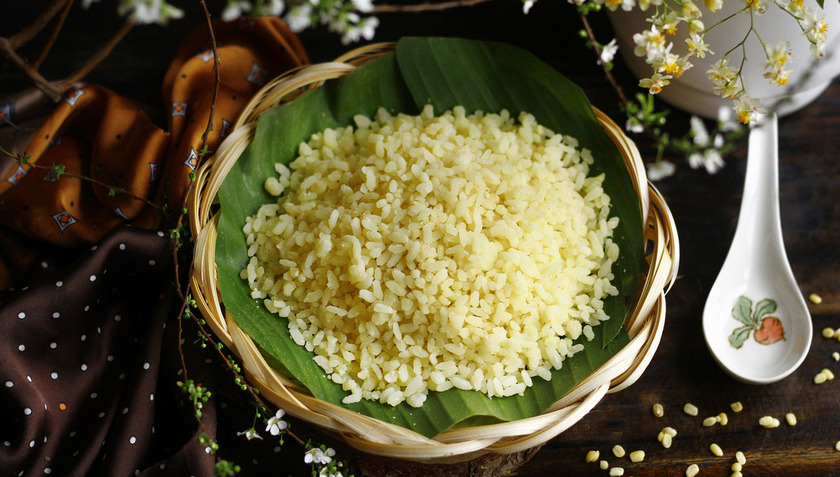
Savoring the soft, chewy, and rich sticky rice, so alluring to the palate, along with a bowl of delicate sweet soup—sweet and savory, yet each flavor fleeting and subtle; stories about sticky rice and sweet soup, memories filled with affection for these two special treats, are shared, mingled with the nods and attentive gazes of those present.
For Buddhist temples, in addition to elaborate vegetarian feasts, people traditionally offered simple sticky rice and sweet soup as offerings, expressing their heartfelt respect to the monks and ancestors. Therefore, the combination of sticky rice and sweet soup was often associated with the offerings for the 7th lunar month's full moon ceremony and the Vu Lan festival in old Hanoi.
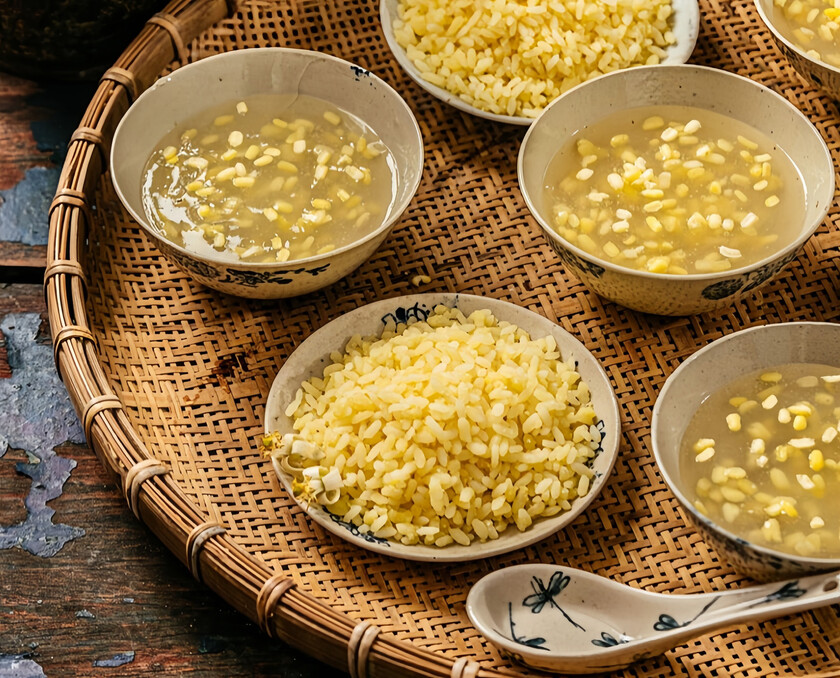
The fragrant sticky rice balls and refreshing bowls of sweet rice pudding are laid out, evoking countless childhood memories.
The aroma of sticky rice and areca flower tea is like a greeting to the Vu Lan season, evoking traditional values. Despite the changes in modern life, the Vu Lan and Mid-Autumn Festival feasts are incomplete without the presence of sticky rice and areca flower tea. Street vendors and sidewalk stalls become even more bustling with fragrant bowls of sticky rice and refreshing cups of areca flower tea. At affordable prices, ranging from 15,000 to 20,000 VND, everyone can enjoy this simple yet meaningful dish.
The Ghost Month, inherently melancholic, becomes unusually warm thanks to two sacred ceremonies. Besides the reverence offered to ancestors, the seventh lunar month also reveals the benevolent heart and warm human feelings of the Vietnamese people. These simple yet profound rituals connect the present generation with their ancestors. Interpreted subtly, without grand pronouncements, and passed down from generation to generation, the essence of Vietnamese culture remains captivating. This is why the seventh lunar month is all the more beautiful.