VI
VI


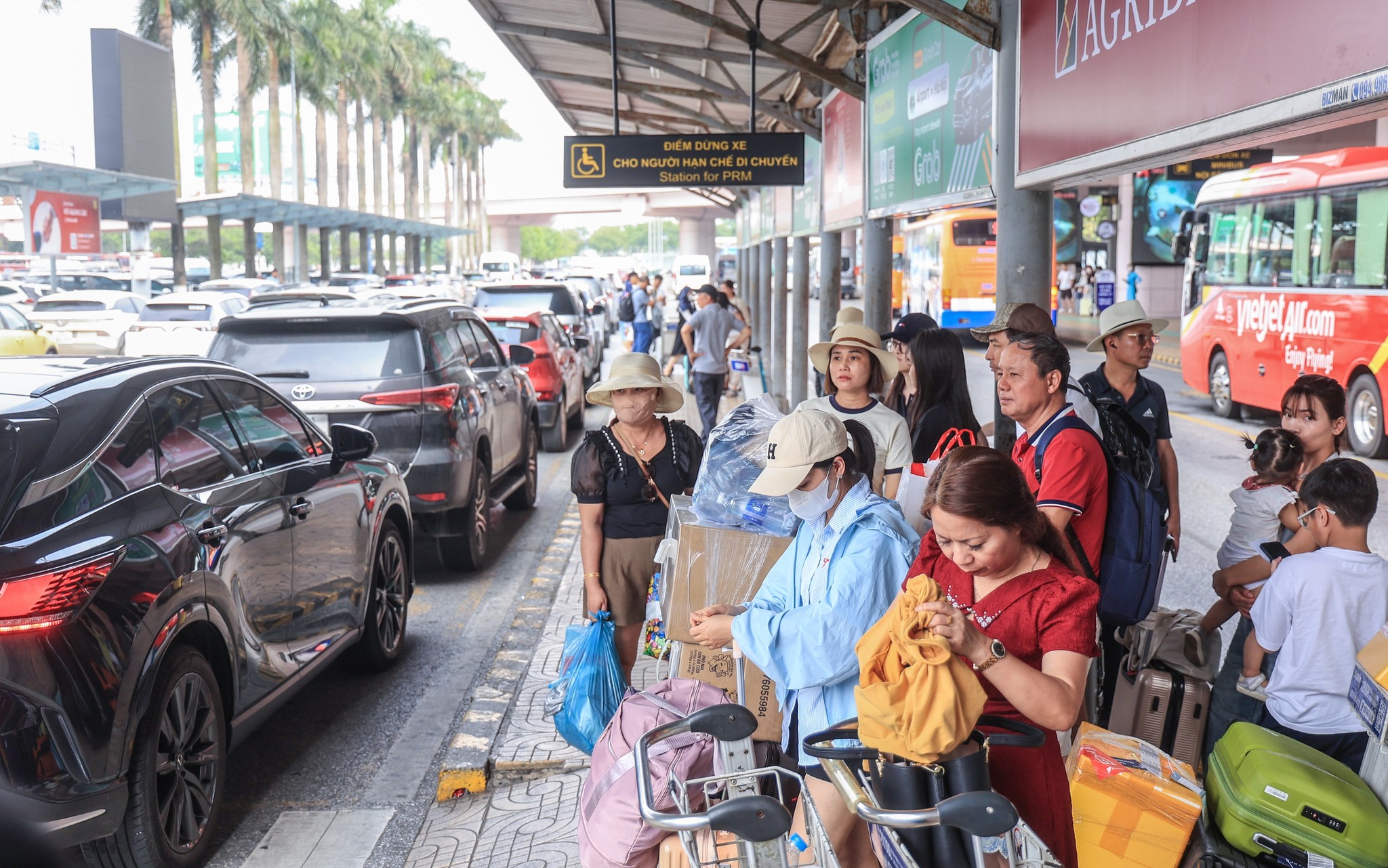
In Ho Chi Minh City, early in the morning of May 5th, starting around 8 a.m., traffic began to increase on important gateways such as Nguyen Van Cu Bridge (District 5), Duong Ba Trac Street (District 8), and the direction of travel from suburban areas like Binh Chanh and District 8 towards the city center also became busier than ever.
Despite the increased traffic density on the city's gateway routes, it is noteworthy that traffic conditions generally remained relatively stable, with no prolonged localized bottlenecks or serious congestion affecting people's movement. In particular, on the East-West Boulevard, a modern and important transportation artery of the city, vehicles were able to move smoothly without any signs of prolonged traffic jams, providing considerable convenience for commuters.
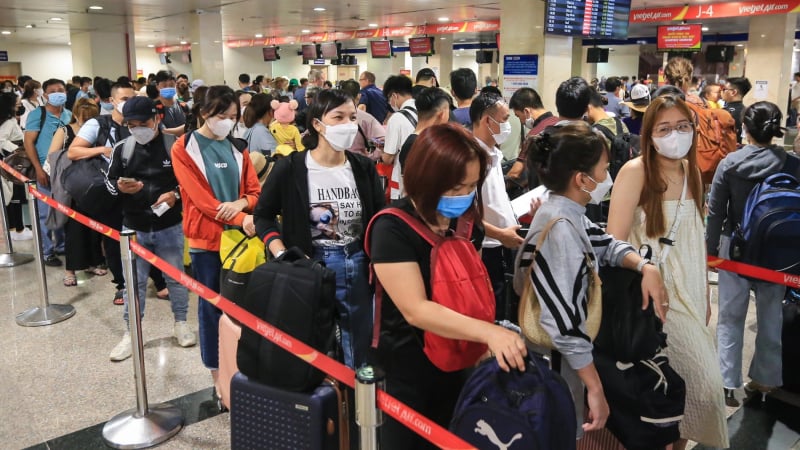
Meanwhile, at Tan Son Nhat International Airport, a vibrant and bustling atmosphere prevailed. According to statistics, the total number of passengers passing through the airport from the evening of May 4th to the morning of May 5th reached an impressive 131,000. This sudden surge clearly shows the trend of people from all over the country returning to Ho Chi Minh City after the extended holiday. Notably, the number of passengers arriving at domestic terminals T1 and T3 significantly exceeded the number of departing passengers. These two domestic terminals alone saw over 41,000 arrivals.

Tan Son Nhat International Airport anticipates approximately 729 flights arriving at and departing from terminals T1 and T2, while terminal T3 will handle about 51 flights.
On May 5th alone, Tan Son Nhat Airport is expected to handle a total of 780 flights across all three terminals, with an estimated 131,000 passengers, an increase of approximately 30% compared to normal days. Despite the large influx of people, the airport maintained a bustling yet orderly atmosphere, with smooth and efficient operations, showing no signs of chaos or congestion.


Anticipating a large number of passengers, Tan Son Nhat Airport has prepared various plans to cope with this situation.
To ensure smooth operations during this peak period, Tan Son Nhat Airport has proactively coordinated closely with relevant units, developed detailed and flexible operational scenarios for each day, and anticipated and responded to all possible situations.
Notably, the airport management unit also specifically requires representatives from all airlines to be present at check-in counters at all times to promptly handle any situations arising related to flights, such as delays and cancellations, ensuring passenger rights and preventing customer dissatisfaction that could affect security and order at the airport.
Due to high travel demand, on the last day of the holiday, airlines are selling air tickets at prices comparable to those during the recent Lunar New Year. For the Hanoi – Ho Chi Minh City route, if purchased today, the common price is around 3.2 million VND per passenger with Vietjet or Bamboo Airways; and around 3.5 million VND per passenger with Vietnam Airlines. Some airlines are selling connecting flights from Hanoi to Da Nang, then onward to Ho Chi Minh City, for around 4.3 million VND per passenger.
If you return to Ho Chi Minh City later, around May 5th, the price of a Hanoi – Ho Chi Minh City flight will drop significantly to around 2 million VND per passenger, much lower than flying on peak days.

Airfares have also increased due to high demand for travel during this period.
During this year's holiday season, Ho Chi Minh City organized many major cultural and entertainment events, attracting a large number of tourists from all over. However, the commissioning of Terminal 3, along with the implementation of facial recognition technology through the VNeID application, has yielded positive results, helping passengers complete airline procedures quickly and conveniently without having to present traditional identification documents, significantly reducing pressure on existing terminals.
Similar to the bustling atmosphere in Ho Chi Minh City, traffic volume in Hanoi also saw a significant increase on the morning of May 5th. On inner-city roads, the high number of people returning to offices, workplaces, and schools, along with the high density of vehicles, caused minor traffic congestion in some areas, especially during rush hour; however, this situation usually did not last long.

Similarly in Hanoi, traffic volume also increased sharply in the morning, with inner-city roads crowded with people returning to work and school.

The high density of vehicles caused minor traffic congestion in some areas, but it did not last long.