VI
VI


One chilly morning in Quan Ba, Ha Giang, we stopped at a small, simple eatery next to the local market. The place had only a few wooden tables; the smell of wood smoke wafted through the cracks in the windows, carrying the faint aroma of broth simmering in a large pot. The owner didn't advertise or greet customers; he simply bowed his head, intently preparing the rice noodles, slicing the pho, and arranging the chicken pieces in the bowls. Yet, there was a constant stream of customers—locals and strangers alike—all patiently waiting.
That was the first time I encountered Trang Kim pho – a dish named after a small village, yet it embodies the flavors of the highlands in every steaming bowl of pho.

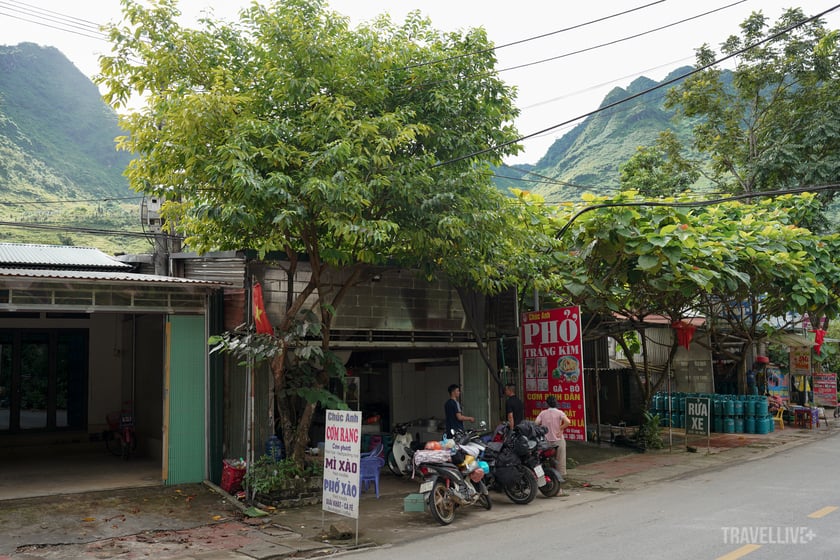
Small eateries along National Highway 4C, in the section passing through Quyet Tien commune, sell Trang Kim pho.
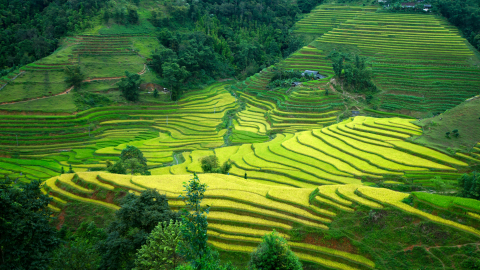
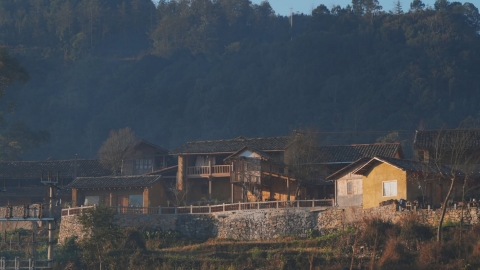
Pho Trang Kim originates from San Phang village, a small hamlet located along National Highway 4C in Quyet Tien commune, Quan Ba district. This is not only the birthplace of the dish, but also the only place that has preserved the traditional method of preparation for over half a century. Small roadside pho stalls, in the early morning or on market days, still emit fragrant smoke, spreading the flavors of the highlands throughout the village.
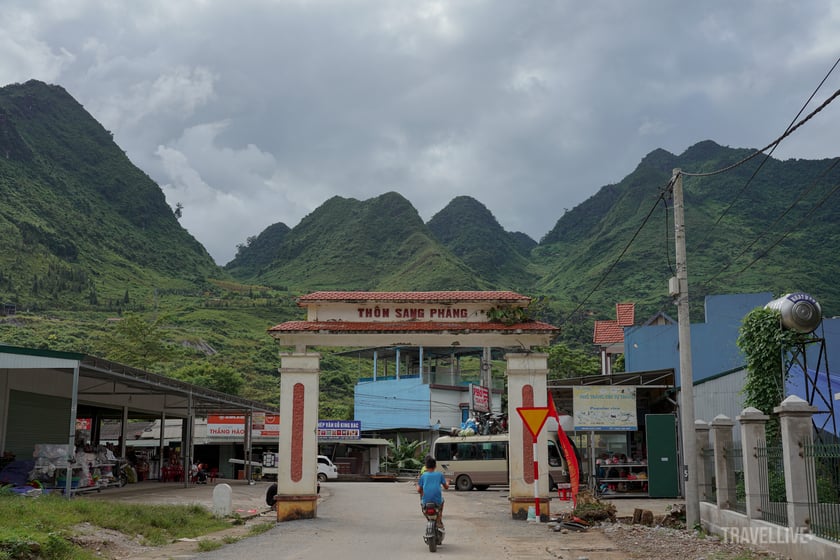
San Phang village - the birthplace of Trang Kim pho.
These rice noodles are air-dried in the mountain breeze.
Unlike the flat, machine-cut pho noodles found in the lowlands, Trang Kim pho noodles are handcrafted, each sheet individually made to achieve a soft, chewy texture while retaining the characteristic firmness of pho noodles. The locals don't use machinery. They soak upland rice, a type of rice found only in the rocky regions of Ha Giang, then grind it finely with a little leftover cooked rice to create a sticky consistency. Finally, they spread the mixture into thin sheets, cooking them using the steam from a large pot of water.
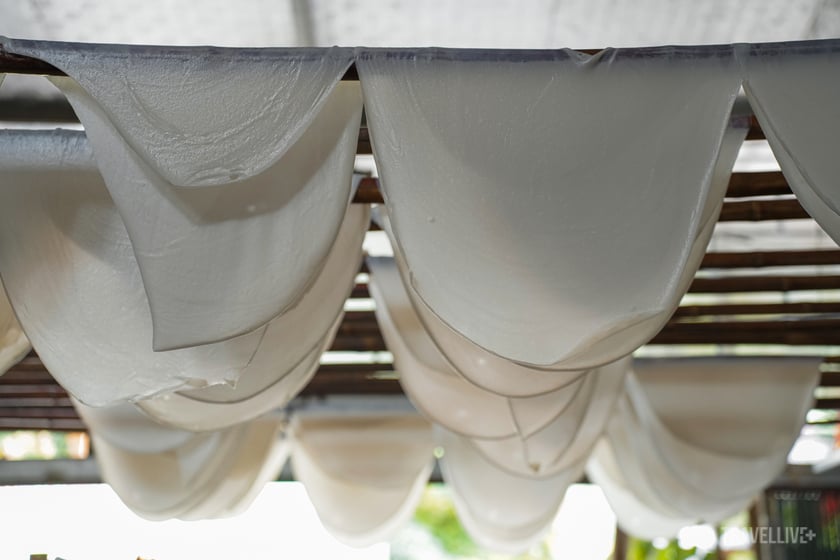
Trang Kim pho noodles are dried by the sun and wind of the Quan Ba mountain forest.
But what's even more special is that after being steamed, the rice paper isn't sliced immediately but hung on a bamboo rack above the kitchen, where the wood smoke and cold wind intertwine, drying the rice paper naturally. This process prevents the rice paper from sticking, ensuring it's neither too soft nor too dry, maintaining its ideal chewy texture. The strips of rice paper resemble thick, wide sheets of silk, absorbing the aroma of smoke, the cold of the highlands, and the patience of the maker.

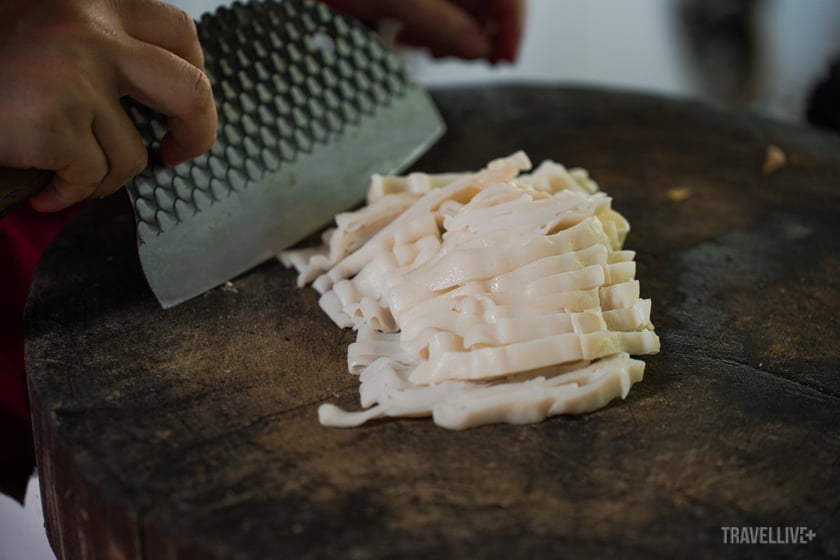
The dried rice noodles are hand-sliced and processed immediately.
During preparation, the noodles are sliced into strands. These noodles seem to carry the soul of the mountains and forests, strong and resilient, quite different from the mass-produced noodles commonly seen.
A delicate sweetness distilled from the earth and sky.
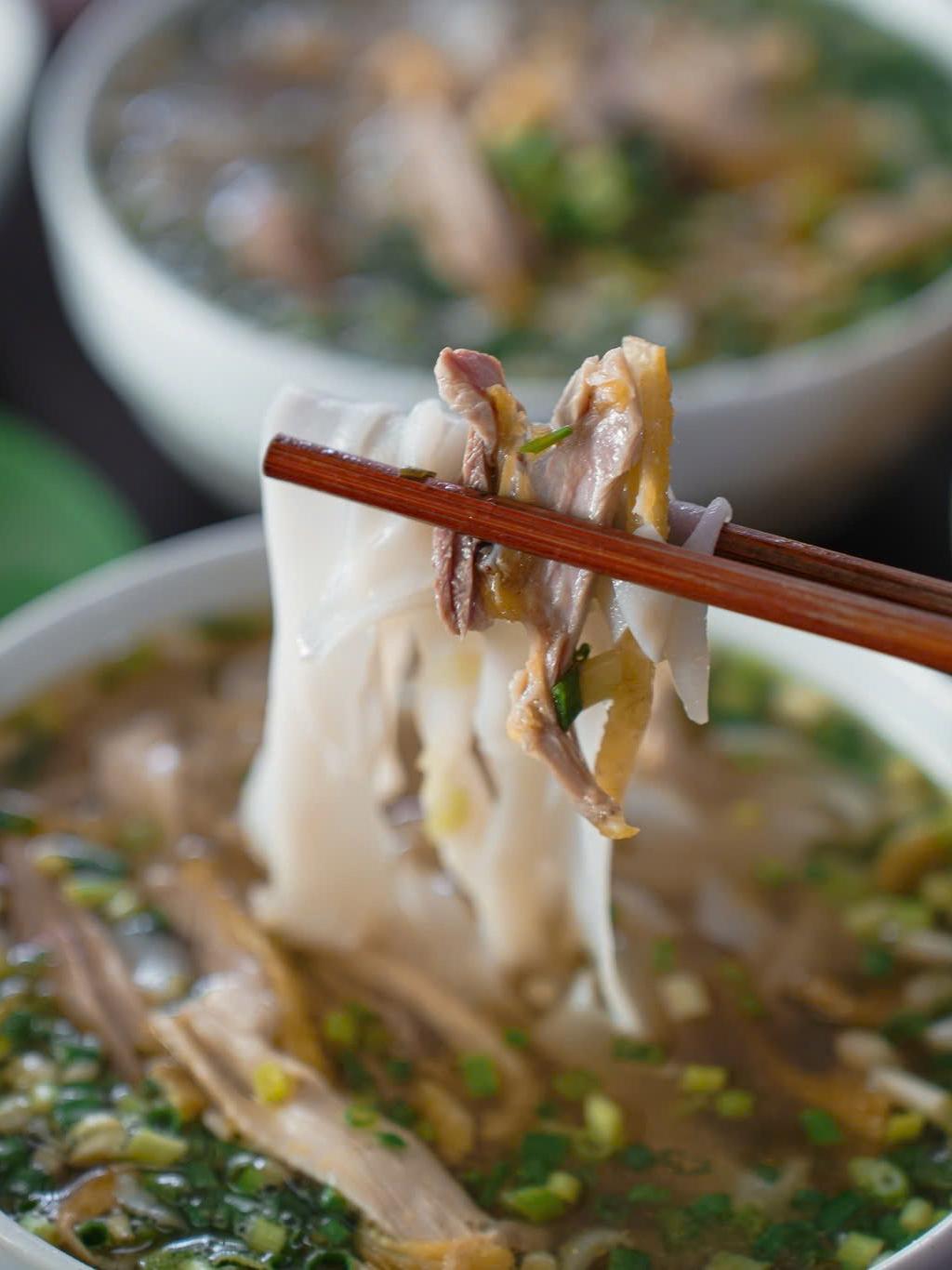
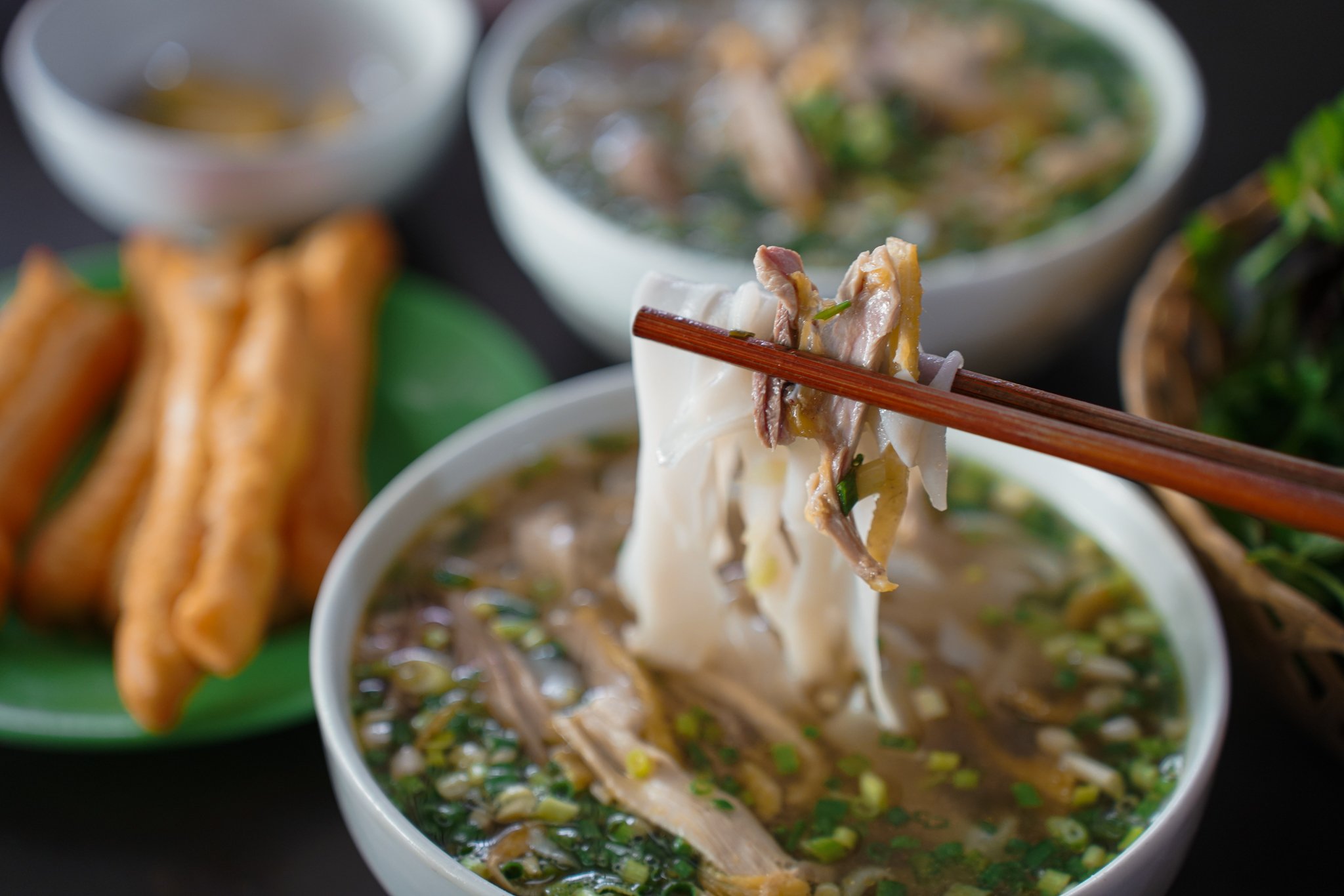
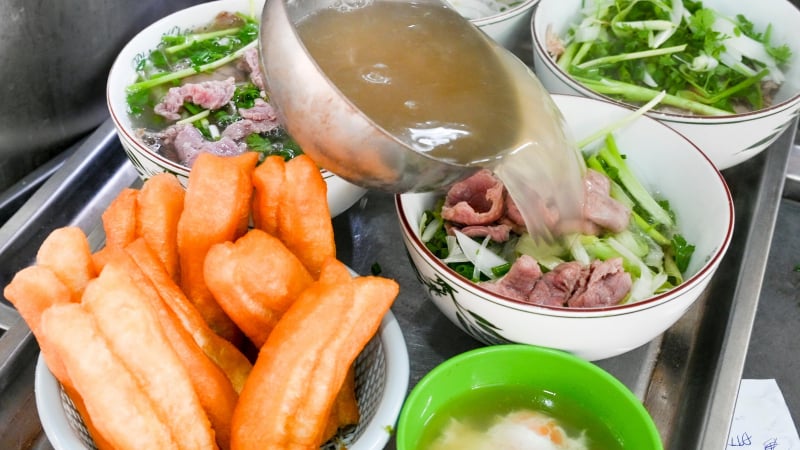
As the broth was poured over the bowl, a thin wisp of steam, like mountain mist, rose from it. The owner silently placed a generously filled bowl on the table: smooth, moist rice noodles at the bottom, topped with golden-brown pieces of chicken, a few green onions, and a drizzle of glistening chicken fat. Just bringing it close to your face, the aroma was enough to make your stomach rumble in the early morning chill.
The chicken here is unlike industrially raised chicken. It's free-range chicken, with firm, naturally sweet meat and a pleasantly chewy texture. Each piece of meat feels like a part of this land, carrying the scent of the wind, the forest, and the footsteps of those who roamed the mountain slopes.
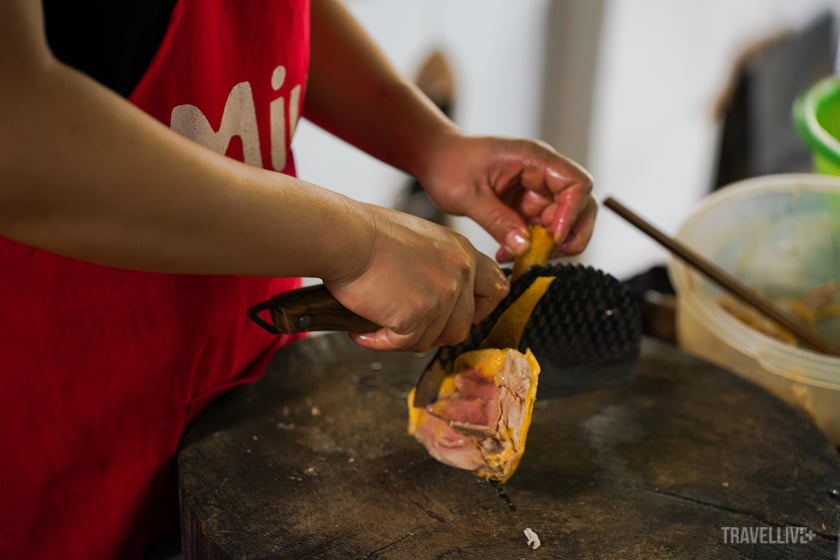
After boiling, the chicken is chopped into pieces and added to the bowl of pho.
The broth here contains no MSG, no artificial flavoring, just chicken or pork bones simmered with a few ginger and turmeric roots, and a touch of cardamom and cinnamon picked from the forest. The wholesome sweetness isn't overpowering, but it's delicate, deep, and especially pleasant, like a cool stream flowing from a mountain ravine through one's heart.
Without fancy herbs, they simply add a few slices of wild bamboo shoots, some pickled chili peppers, and a few sprigs of cilantro. But it is precisely this simplicity that prevents the bowl of pho from being overwhelmed, leaving only the aroma of rice, the smoky scent of the kitchen, and the refreshing taste of the mountains and forests.
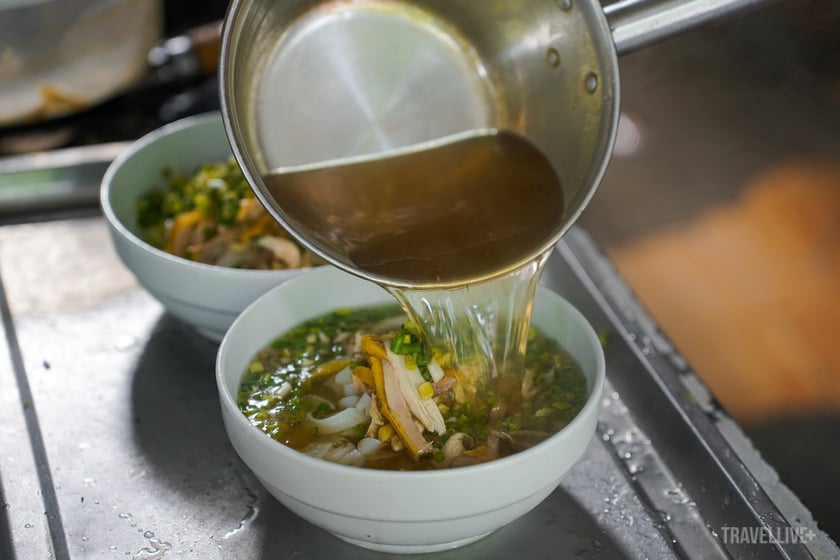
The broth is infused with the sweetness of herbs and spices grown in the Quan Ba forest.
Trang Kim Pho - a piece of edible memory.
Eating pho at Trang Kim is not just about satisfying your hunger. It's a short but emotionally charged journey: from observing the noodle maker over the glowing charcoal stove, watching the noodles air-dried on bamboo racks, to taking a deep breath of the rich aroma rising from the hot bowl of pho. In that moment, everything outside seems to fade away, leaving only you, the cool chill of the highlands, and the gentle fragrance of a nameless dish, yet one that leaves a lasting impression.
Pho Trang Kim is no longer just a dish for locals. Every morning, that small pho restaurant can sell hundreds of bowls, serving both tourists and market-goers. Those who have visited find it hard to forget, and many return to Quan Ba just to enjoy another bowl of pho in the early morning mist.
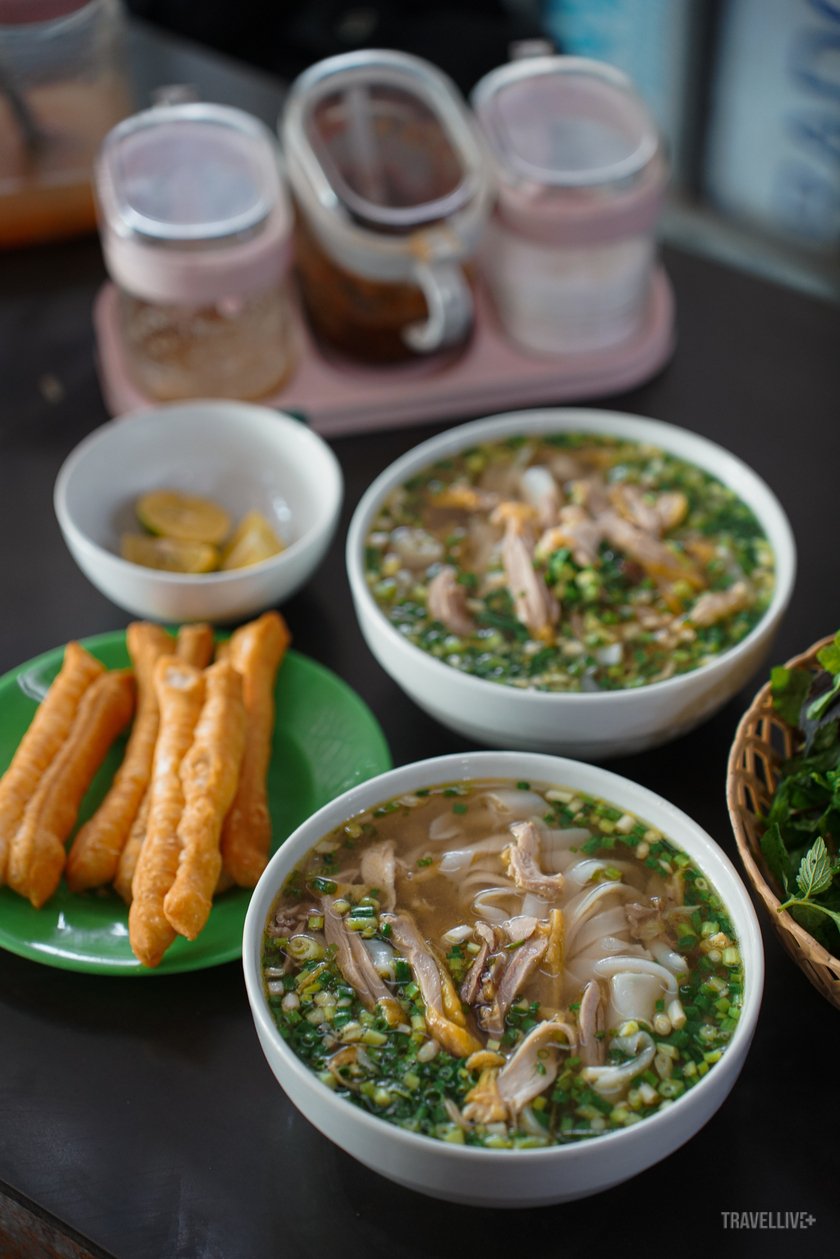
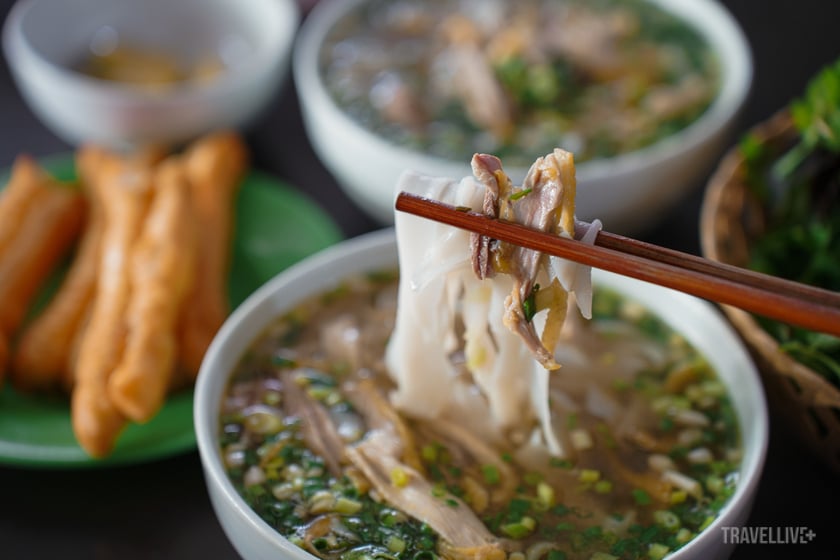
The fragrant aroma and delicate sweetness of Trang Kim's pho linger on the tongue and throat, as if wanting to entice visitors to stay longer.
One could say that Trang Kim pho is like an invitation that this land sends to those who want to explore Ha Giang not only through its scenery, but also through its flavors. A bowl of pho is like a small bridge leading visitors from the feeling of strangeness of those visiting this rocky land for the first time, to a sense of familiarity and warmth, and when they leave, their hearts still linger with fondness.