VI
VI


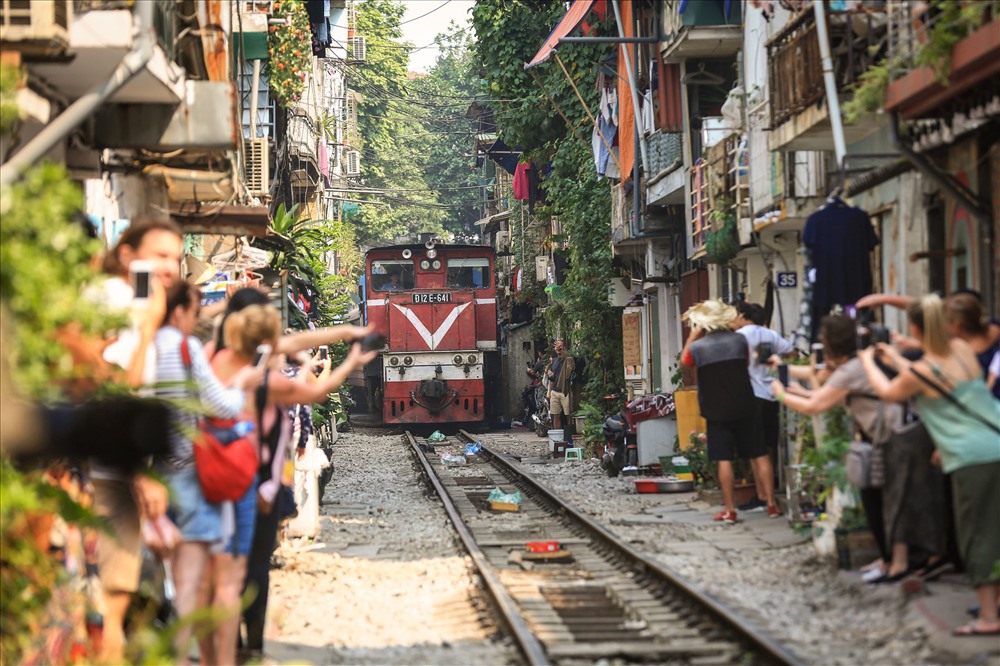
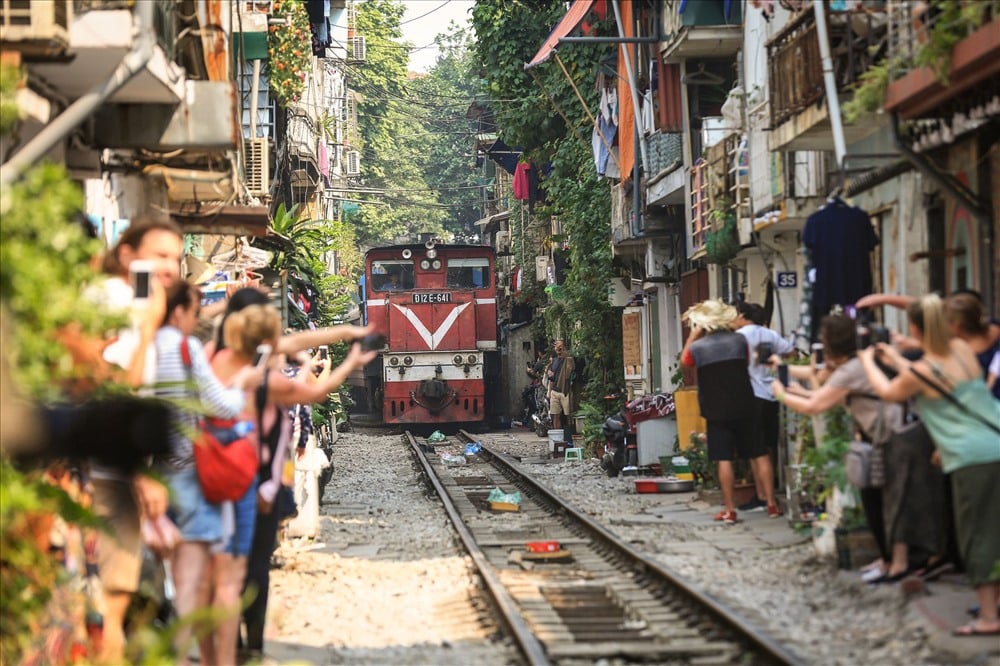
The "golden age" before the closure of the railway-side coffee street.
The railway-side coffee street has started to flourish after a two-year hiatus caused by the pandemic. It has become a popular destination for foreigners and tourists visiting Hanoi. Many foreign newspapers have even voted this street as a unique and must-visit destination when in Hanoi.
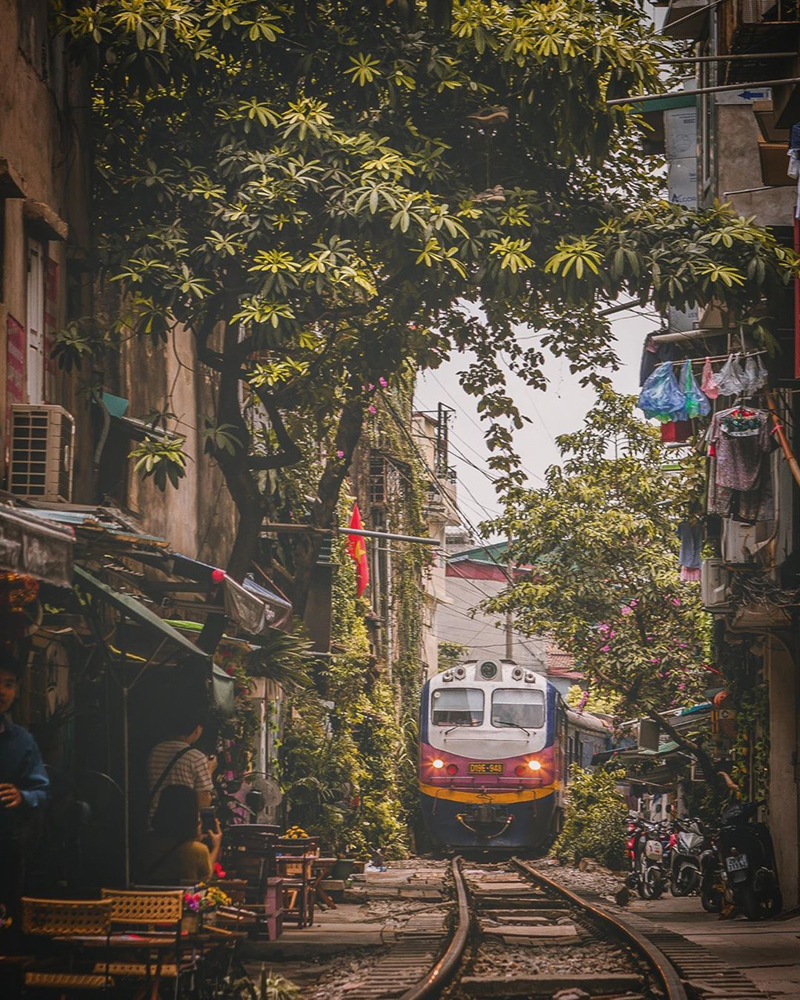
A picturesque scene on the railway street.
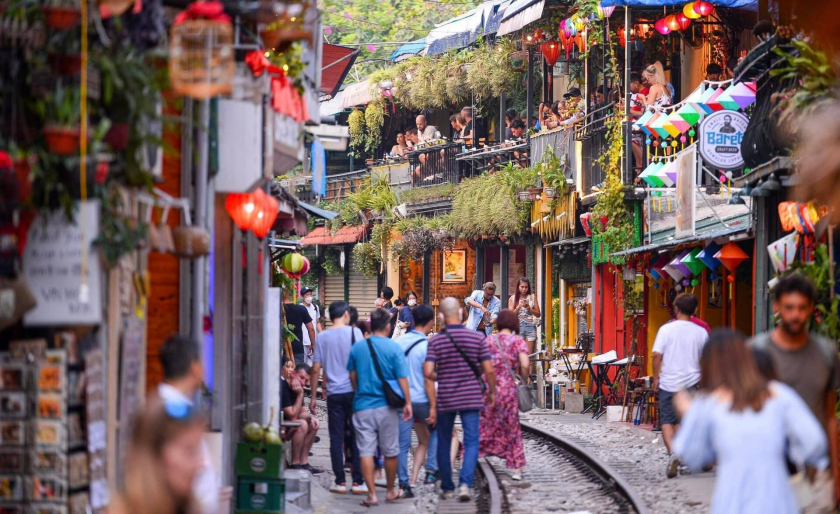
The railway street is crowded, bustling, and lively with large numbers of tourists flocking there.
The railway street is the section connecting Le Duan, Tran Phu, Cua Dong, and Phung Hung streets. The section is approximately 2 km long. The vast majority, 100%, of the businesses located here violate the railway safety corridor.
The cafes started opening around 2017. The 300-meter stretch of road is lined with old houses and businesses built over 100 years ago when Vietnam was a French colony. Since then, the landscape has changed significantly as residents have transformed their homes into trendy cafes and souvenir shops.
The businesses are located just about 1 meter from the railway tracks and have no fences or railings. After photos of the area started appearing on social media, tourists began flocking there.
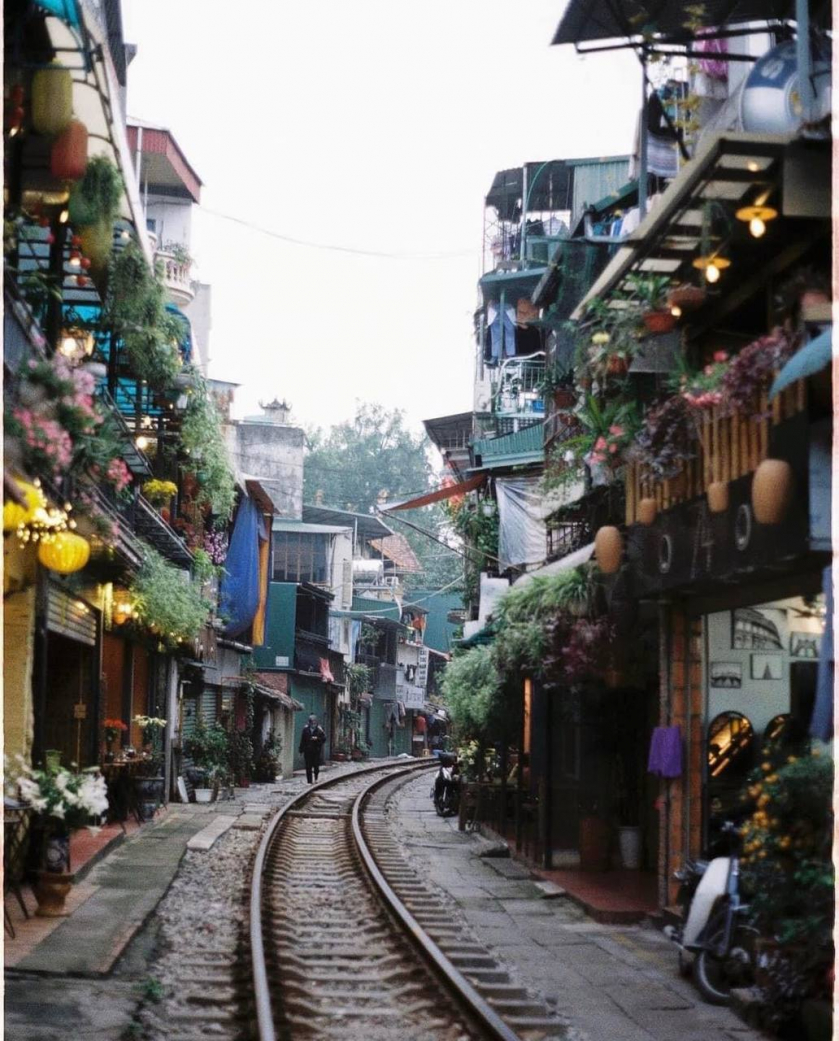
The railway street is now just a memory.
Perhaps what attracts all visitors here is the serene beauty of the railway line, observed from a balcony or a small corner of a house… Many people enjoy gazing at the tracks and waiting for a train to pass, especially on a relaxing afternoon, while sipping a cup of coffee.
As the train passes by, tourists pull out their smartphones and start snapping photos. Often, the cafes are packed before the train arrives. Especially during holidays, the number of tourists coming to take photos, videos, and enjoy coffee skyrockets, boosting the revenue of the locals. Many believe this is a key aspect contributing to the development of the capital's tourism industry.

Closed due to potential risks.
The Hoan Kiem District People's Committee's announcement on the afternoon of September 14th to temporarily close cafes along the railway tracks came as a surprise to both business owners and tourists. The announcement aims to definitively address the issue of vendors and photographers operating at these cafes, which are negatively impacting railway traffic safety.
This is not the first time the issue of violating the railway safety corridor has been raised at the railway-side coffee street. In October 2019, the railway-side coffee street was forced to cease operations due to violations of the railway corridor and the outbreak of the Covid-19 pandemic. By April 2022, the railway-side coffee street reopened and became a popular attraction for foreigners and tourists visiting Hanoi.
The railway industry has highlighted the serious violations of railway safety corridors occurring in the Hang Bong and Cua Nam wards of Dien Bien province. Many cafes are open for business, and numerous foreign tourists and locals come to take photos and videos on the railway tracks.
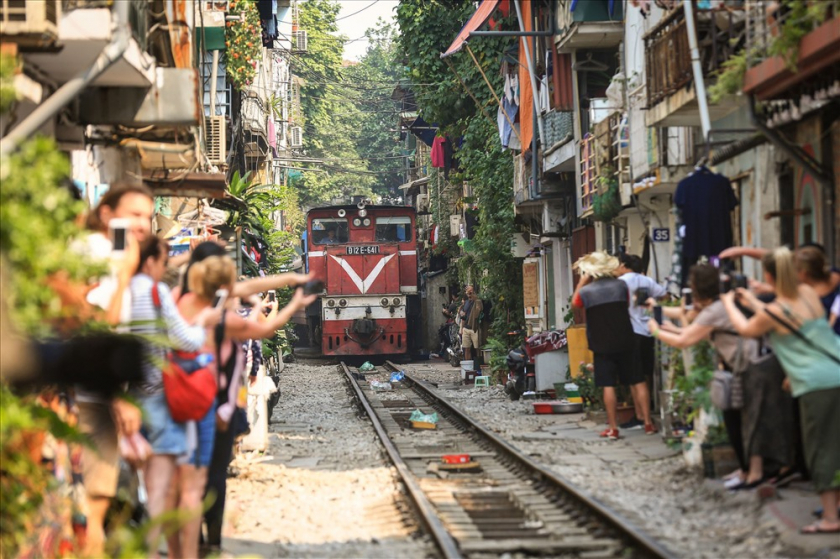
Tourists are busy taking photos on the street along the railway line.
Following feedback from the Ministry of Transport, Hanoi has instructed local wards to erect barriers to prevent tourists from taking photos on the railway tracks.
The issue of violations of the railway safety corridor in the railway-side coffee street is not new; railway management agencies and local authorities have intervened many times before. In fact, authorities have repeatedly dealt with violations encroaching on the railway safety corridor. However, things haven't changed significantly, as people continue to live and work along the railway tracks.
Many argue that while Hanoi is striving to attract tourists, it's crucial to maintain and manage unique and appealing tourist destinations. The railway-side coffee street has been featured on numerous international travel websites and attracts a large number of foreign visitors. However, safety remains paramount.
The increasing number of customers on the railway-side coffee street poses a potential traffic safety risk. Train drivers are stressed every time they pass through, constantly sounding their horns for fear of collisions. About 10 minutes before a train passes, the entire street suddenly becomes chaotic with the loud sound of horns, and people on the tracks rush into the cafes to avoid the train.
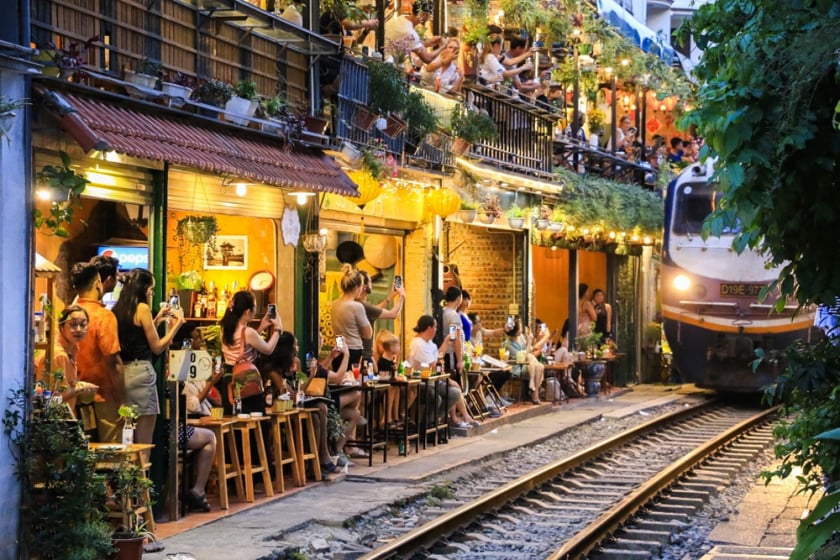
The increased number of customers on the railway-side coffee street poses a potential traffic safety risk.
Meanwhile, tourists holding phones, cameras, and camcorders eagerly watch the train from its arrival to its departure, seemingly forgetting the danger of the iron train speeding past them at less than 1 meter, all for the sake of capturing beautiful photos and videos.
According to the Hoan Kiem District People's Committee, the unit will assign relevant agencies to set up barriers and conduct awareness campaigns through various means to prevent people and tourists from crowding together to take photos on this street, which compromises the safety of the railway corridor.