VI
VI


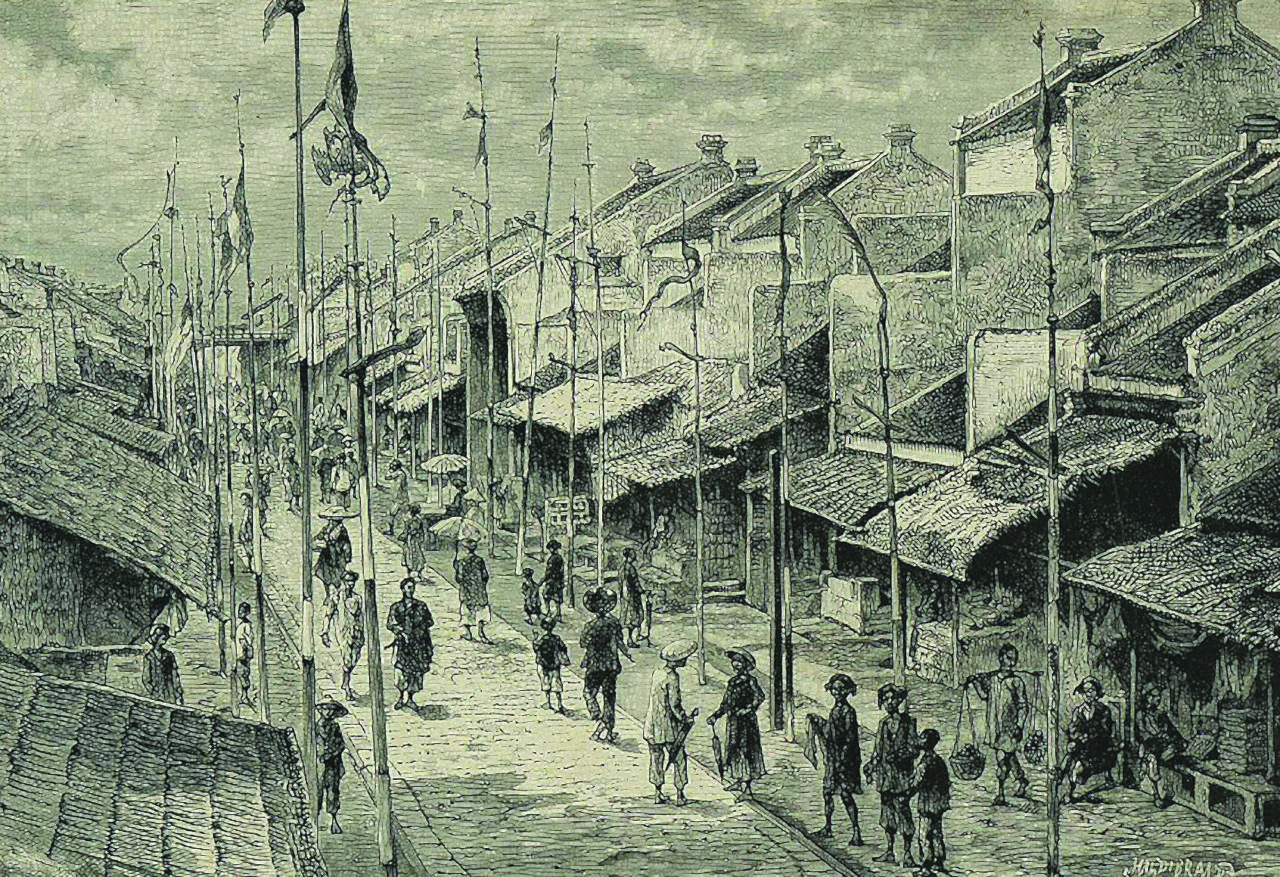
The woodblock prints clearly depict the specific activities of the Nguyen dynasty's kings and officials in preserving and maintaining the traditional Lunar New Year, including how to prepare for the Lunar New Year, the rituals for welcoming the New Year, and the rewards given during the New Year.
Accordingly, Tet Nguyen Dan (Lunar New Year) is the biggest of all traditional festivals of the Vietnamese people. From the first day of the twelfth lunar month, the Nguyen dynasty held the Ban Soc ceremony (distributing the calendar for the new year) at Ngo Mon Gate. This calendar was compiled by the Imperial Observatory.
Following the Ban Soc ceremony, the imperial court held the Phat Thuc ceremony (the ceremony of washing the seals and cleaning the books of appointment) at the Can Chanh Palace on the 20th day of the 12th lunar month.
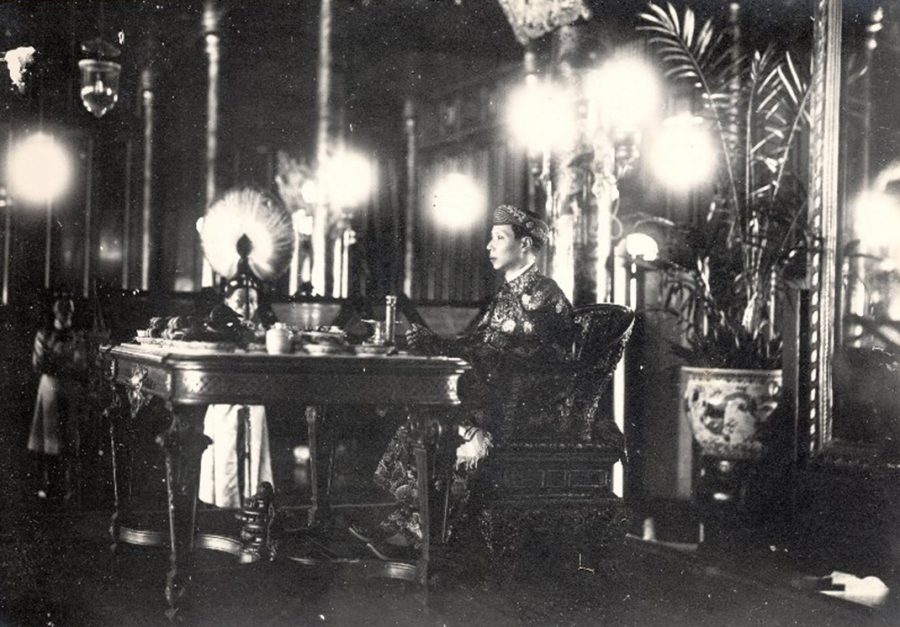
King Khai Dinh at Can Chanh Palace (Photo: khamphahue.com.vn)
Next came the Sacrifice Ceremony at the temples (the end-of-year worship ceremony at the temples). During the ceremony at the temples on the 30th day of the 12th lunar month, the king presided over the Thai Hoa Palace to perform the Thướng Tiêu ceremony (erecting the New Year pole) with the civil and military officials. All the palaces within the royal court erected New Year poles and hung firecrackers to celebrate the New Year.

The moment of New Year's Eve is when the ritual of "Trừ tịch" is performed, erasing all the misfortunes and joys of the old year.
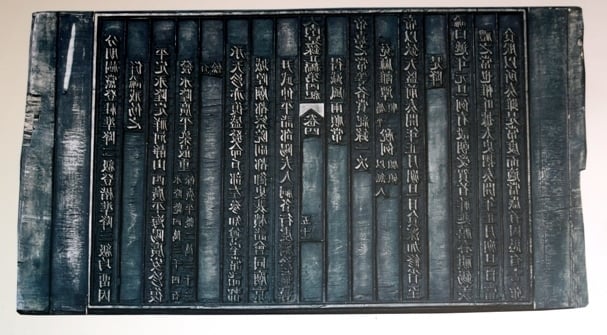
Woodblock prints from the Nguyen Dynasty (Photo: vnexpress.net)
During the Nguyen Dynasty, the Lunar New Year holiday was typically from the 28th day of the 12th lunar month to the 8th day of the 1st lunar month of the following year. On New Year's Eve, the gates of the Imperial Citadel would be opened. In the courtyard of the Thai Hoa Palace on New Year's Eve, 20 ceremonial gunshots would be fired every hour, totaling 1,000 resounding gunshots throughout the night.
On the morning of the first day of the Lunar New Year, the king would wear his imperial robes and go to the Empress Dowager's palace to offer New Year greetings. Afterward, the king would preside over the Thái Hòa Palace to receive the celebratory greetings of his officials and bestow monetary rewards upon them. The amount of money given to officials varied depending on their rank. The king would also hold a grand feast to celebrate the New Year with his officials.
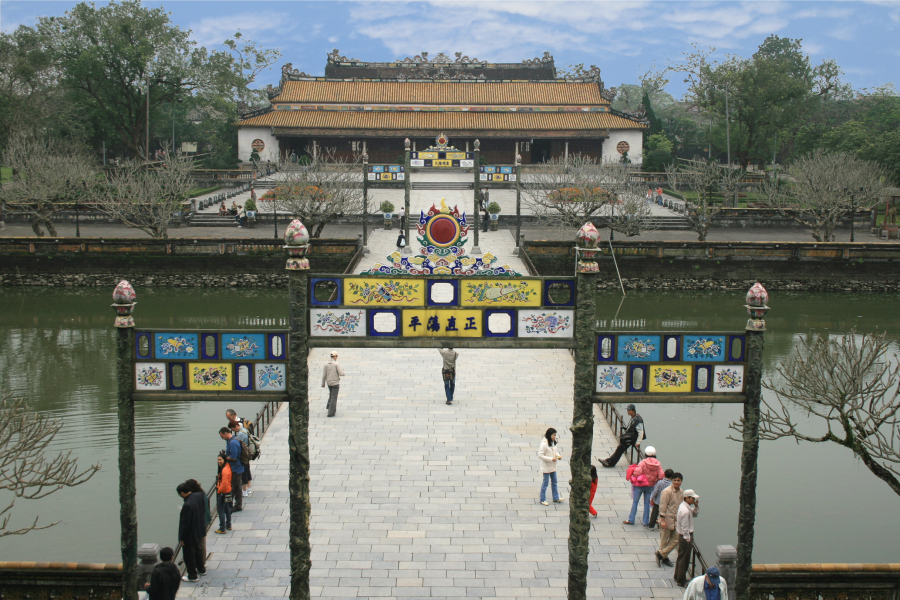
Thai Hoa Palace today
From the third day of the Lunar New Year, the king would often organize excursions outside the capital to learn about the lives of the people and visit his former teachers.
On the 7th day, the "Khai Ha" ceremony (taking down the ceremonial pole) is held. After nine cannon shots fired on the flagpole, officials open the box containing the seal to begin the work of the new year.
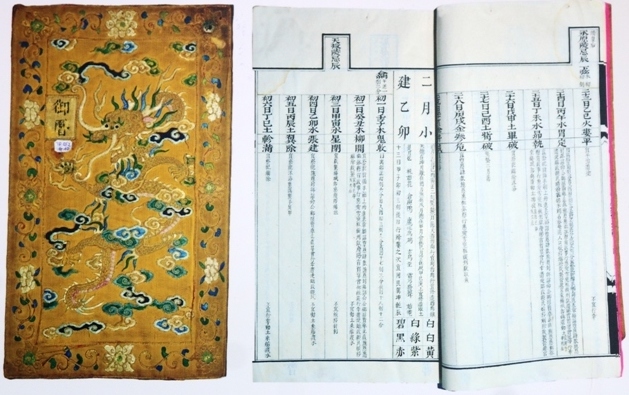
Imperial calendar from the Nguyen Dynasty (Photo: Hue Royal Antiquities Museum)
The exhibition "Imperial Tet through Nguyen Dynasty Woodblock Prints," organized by the Hue Imperial Citadel Relics Conservation Center in collaboration with the National Archives Center IV, runs until March 30th at the Grand Palace Gate Corridor (Hue Imperial Citadel).