VI
VI


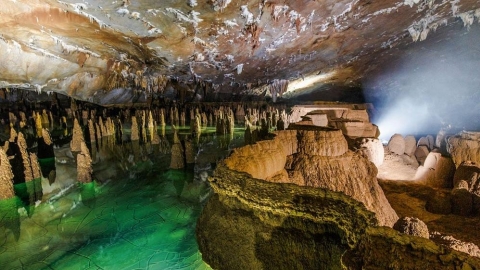
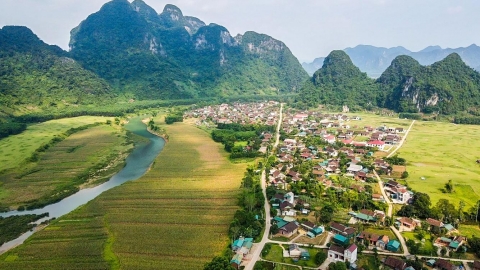
Phong Nha - Ke Bang National Park, with its vast and magnificent cave system, has once again amazed tourists and explorers with the discovery of 22 new caves by a British-Vietnamese cave exploration team.
A team of 12 experts collaborated with the Phong Nha - Ke Bang National Park Management Board to survey and explore the park area and surrounding regions in Minh Hoa and Tuyen Hoa districts in April 2024. Their efforts were richly rewarded with incredibly impressive results: 22 new caves were discovered, along with 3 additional caves surveyed, totaling 3,550 meters in length.
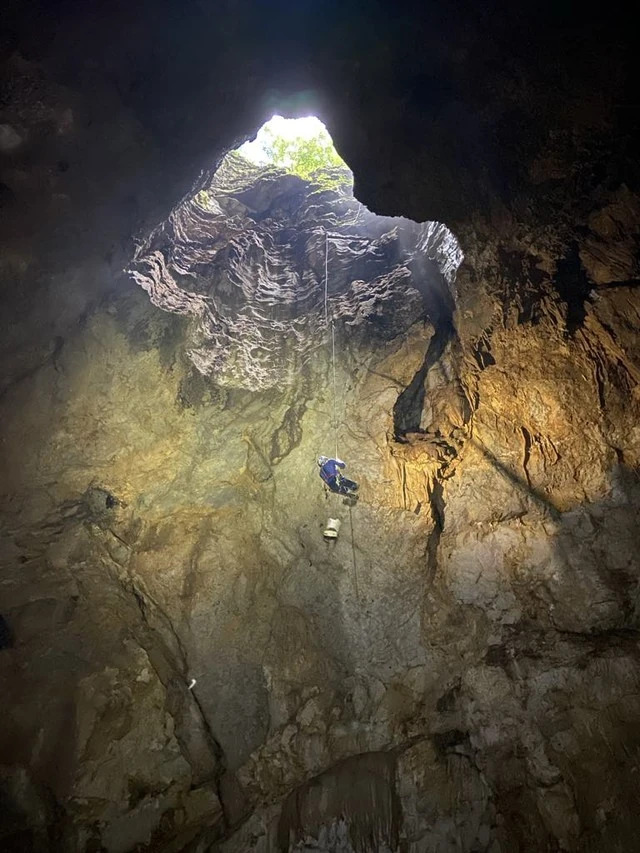
The expedition team, consisting of 12 experts, surveyed the Phong Nha-Ke Bang National Park area and the two districts of Minh Hoa and Tuyen Hoa.
The newly discovered caves range in length from 30 to 572 meters, with the four longest caves being particularly noteworthy: Va Cave (516 m) and 12/2 Dry Cave (404 m) in Phong Nha - Ke Bang National Park; Vuc Hung Cave (430 m) in Thuong Trach commune (Bo Trach district), located in the buffer zone of Phong Nha Park; and Ong Dau Cave (572 m) in Lam Hoa commune. The cave entrances range in height from 46 to 550 meters, and their depths from 32 to 154 meters.

Twenty-two new caves are distributed across three main areas: seven caves in the core zone of Phong Nha - Ke Bang National Park (1,415 m long), seven caves in the buffer zone (1,027 m long), and eleven caves in Lam Hoa commune (1,108 m long).
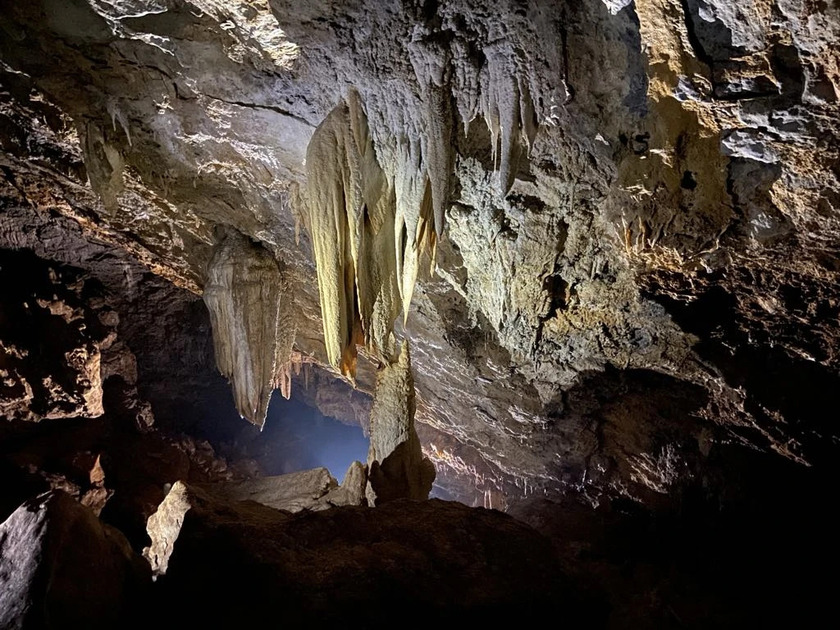
22 new caves have been discovered in Quang Binh.
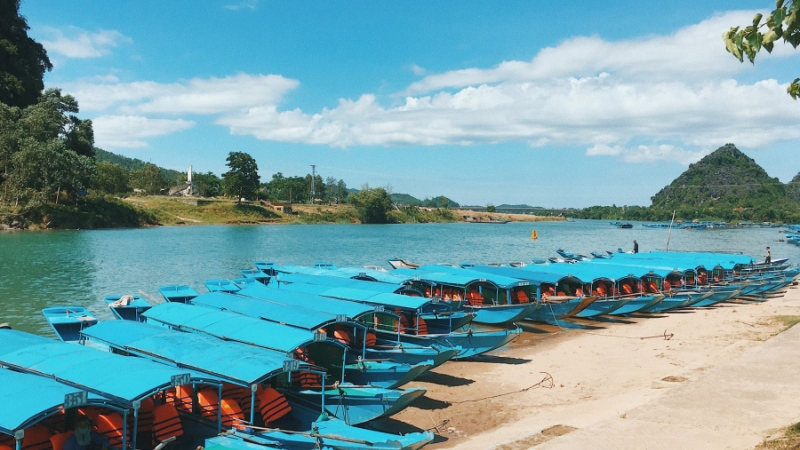
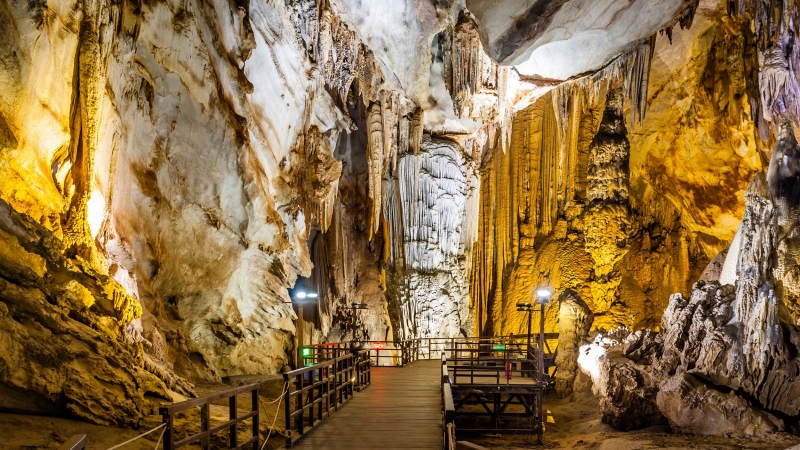
This discovery not only enriches the breathtaking natural landscape of the world natural heritage site but also opens up enormous potential for scientific research, archaeology, and tourism in Phong Nha - Ke Bang National Park. Visitors will have the opportunity to experience adventurous explorations, admire the majestic beauty of the caves, and discover the mysteries that nature has bestowed.
According to the Phong Nha - Ke Bang National Park Management Board, these caves have currently only been studied at the preliminary stage, identifying their locations and providing a basic description. In the future, more in-depth surveys and research are needed to clarify the value of these newly discovered caves. Scientists need to study their geological structure, ecosystem, formation history, as well as their cultural and tourism value. Based on the research results, relevant authorities will make an accurate assessment of the value of these new caves, thereby developing appropriate conservation and exploitation measures.