VI
VI


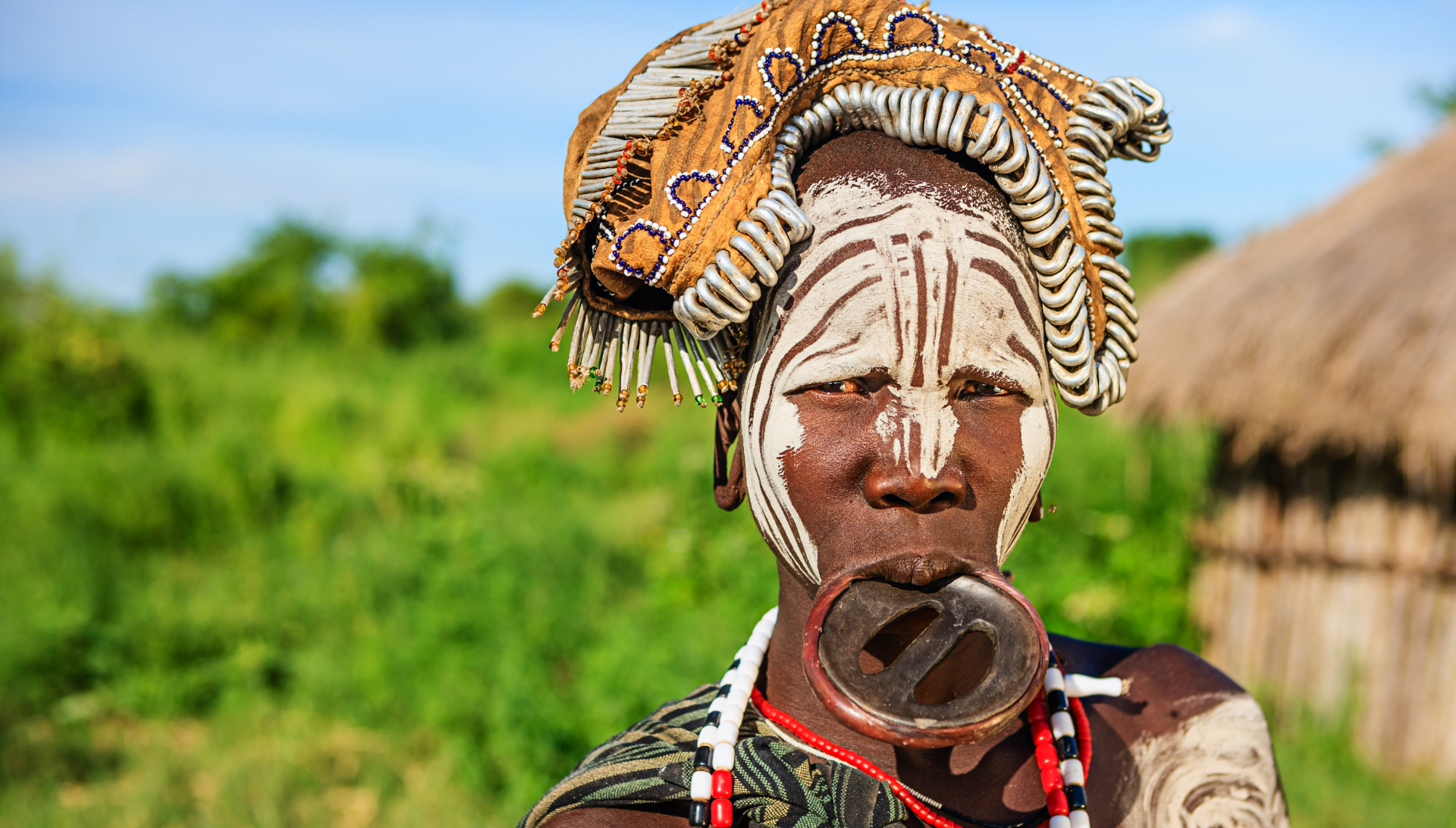
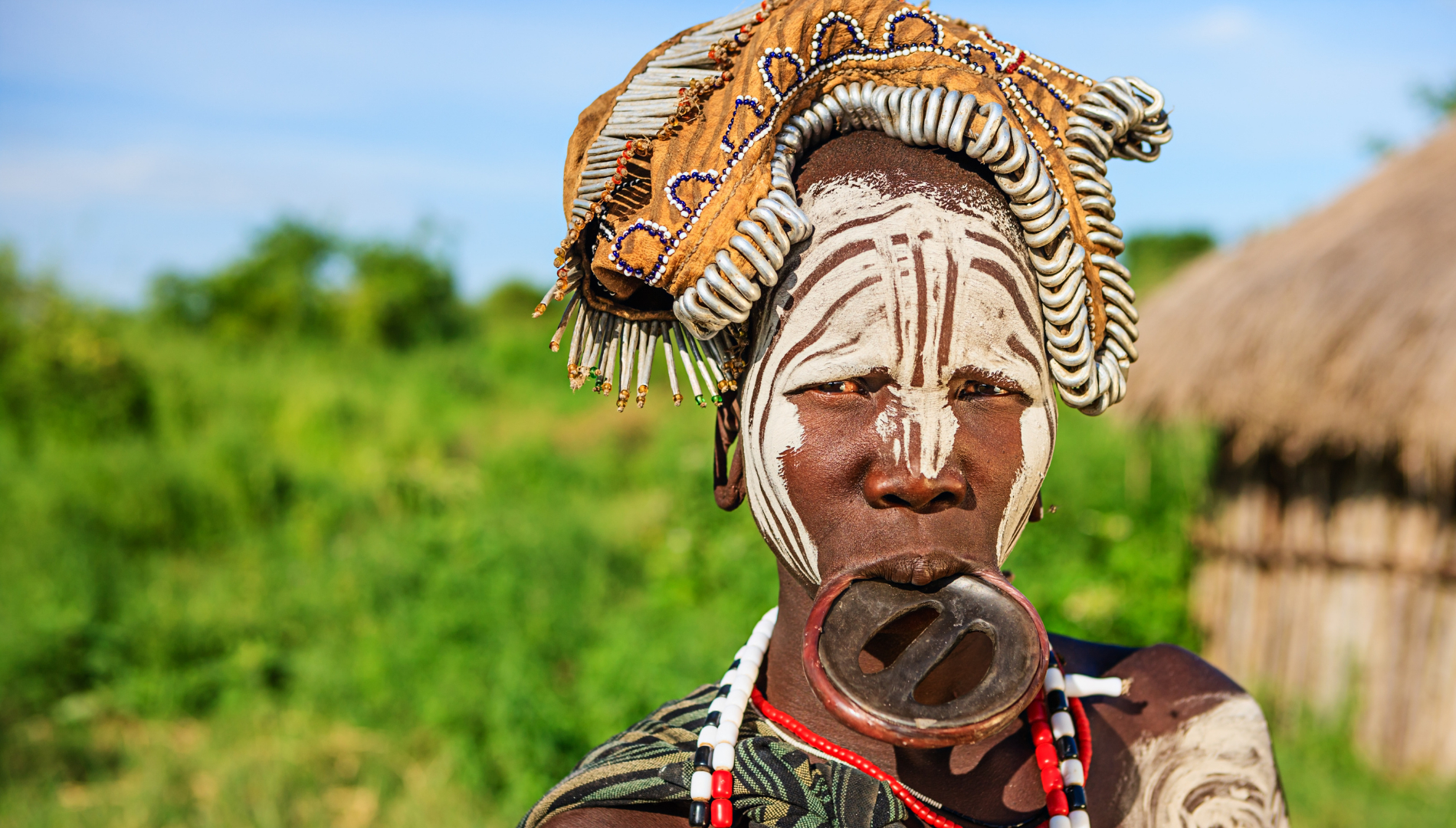
The Mursi, also known as Mun, along with the Suri tribe, live in one of the most isolated areas in southwestern Ethiopia. According to the 2007 national census, the Mursi population was estimated at around 10,000. Of these, only 848 lived in urban areas, with the remainder primarily settled in rural areas of the Debub Omo region – near the border with South Sudan and surrounded by mountain ranges along the Omo River.
The Mursi live in the lower reaches of the Omo Valley, while the Suri reside in the upper reaches. The rugged terrain and difficult-to-access roads make the Mursi a unique feature that attracts visitors. The Mursi's mother tongue is Surmic, and they belong to the Surmic ethnic group along with the Me'en and Kwegu tribes. Of the three Mursi priestly families, the Kimorte family is the most respected, compared to the Garikuli and Bumai, as they are considered the most sacred lineage.
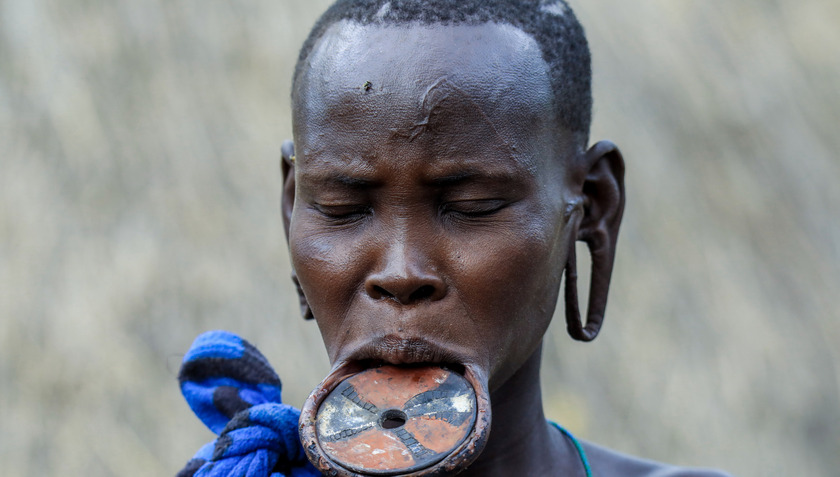
The practice of Mursi women wearing lip plates, while seemingly strange and even somewhat frightening, is a unique cultural feature.
Standards of beauty for women
According to Mursi custom, around the age of 12-13, girls are assisted by relatives in stretching and widening their lower lip so that a disc can be inserted. First, a small incision is made in the lower lip, and a wooden pin is inserted. Over the next few weeks, the wound heals, and the pin is replaced with a larger one. This stretching process continues with progressively larger pins.
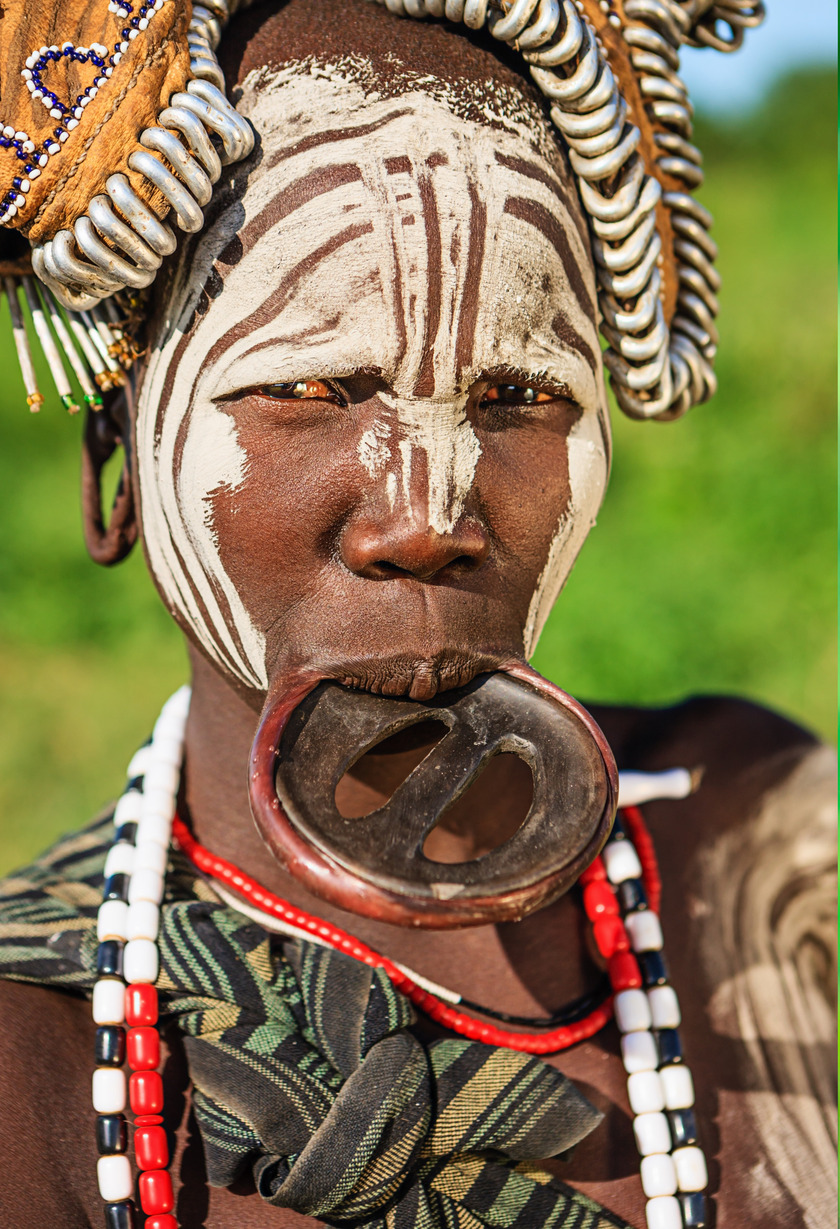
According to Mursi custom, around the age of 12-13, girls are helped by relatives to cut and lengthen their lower lip so that a disc can be placed on it.
Once the hole in the lower lip is wide enough, the girl will have to wear her first wooden or clay disc, about 4cm in diameter. Over the course of a year, several increasingly larger discs will be replaced, and the woman has the right to decide how wide she wants to wear the disc.

The final disc can range in diameter from 8 to 20 cm, and some women even have to chip away at their lower teeth to make room for the discs. These clay discs, called dhebinya, are made individually and decorated with various patterns. The final disc a woman wears may be white, dyed red, or black. Unmarried girls wear wooden discs called kiyo.
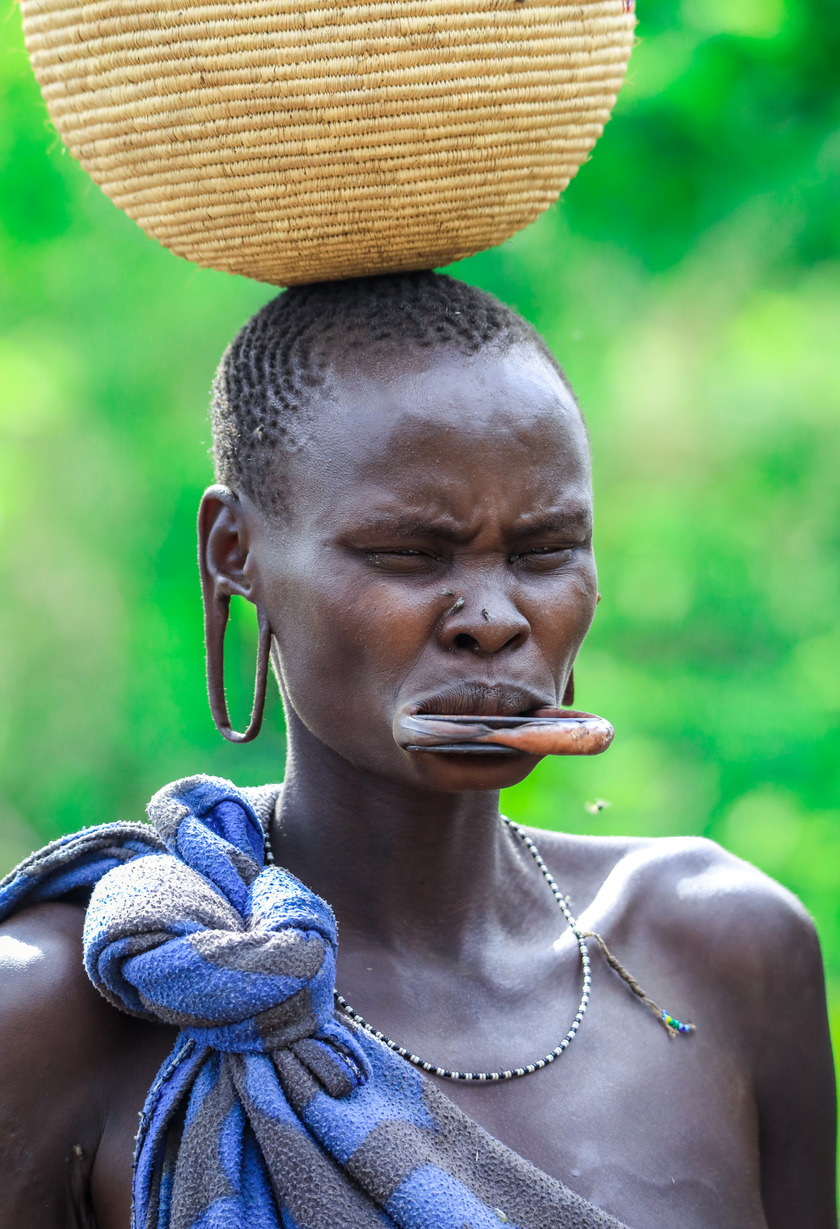
According to Mursi custom, around the age of 12-13, girls are helped by relatives to cut and lengthen their lower lip so that a disc can be placed on it.
Married women must wear a disc when serving food to their husbands and during important ceremonies such as weddings and battles. When the husband dies, the disc is discarded. The hole in the woman's lip is believed to directly influence the life of the entire tribe: the health of the livestock, the fate of the children, and so on.

The larger the plate and the fuller the lips, the more attractive the woman is considered, and the more dowry she receives at marriage.
Although the process of wearing lip plates is painful, for Mursi women, it is a journey to achieving perfect beauty. They believe that the lip plate is not just an ornament but also a symbol of maturity, social status, and the unique beauty of a Mursi woman. The larger the lip plate, the more respected the woman is, and the more dowry her family will receive at the wedding. This is a long-standing tradition, passed down from generation to generation, and has become an integral part of the Mursi tribe's cultural identity.
Many potential risks
The tradition of wearing lip plates, while deeply rooted in Mursi culture, goes against modern health and aesthetic standards. Constantly altering the body to achieve a certain beauty standard can lead to numerous health consequences, from aesthetic damage to serious infections. Continuously stretching the lips to wear large plates can cause complications such as infection, swelling, and even lip tearing. Many Mursi women face the problem of deformed, drooping lips, severely impacting their health and daily lives.
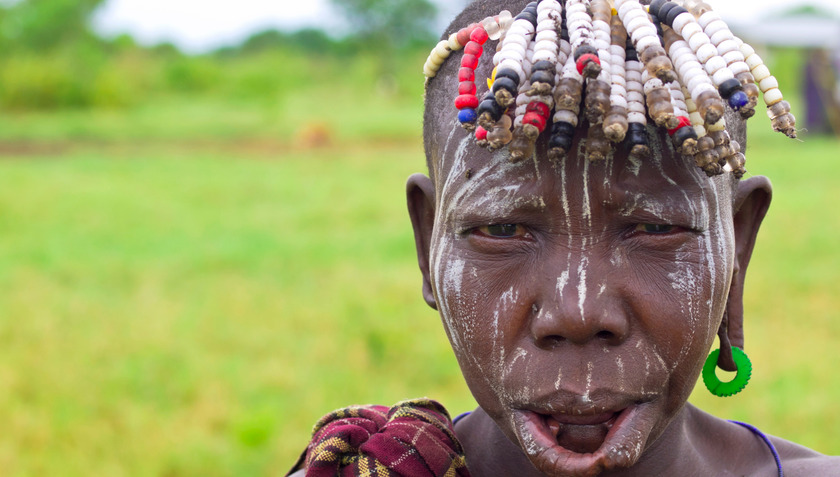
Wearing discs has many negative effects on women's health.
The origins of the Mursi people's unusual lip-plate custom remain a mystery to researchers. One theory suggests that, in the past, during a time of rampant slave trade, Mursi women voluntarily altered their appearance to be less attractive to traffickers. Wearing large lip plates made them distinct and less recognizable, thus protecting them from brutal abductions. However, this is just one of many theories, and the true origin of this custom remains unknown. It can be said that lip-plate wearing is an expression of the complexity and diversity of human culture.
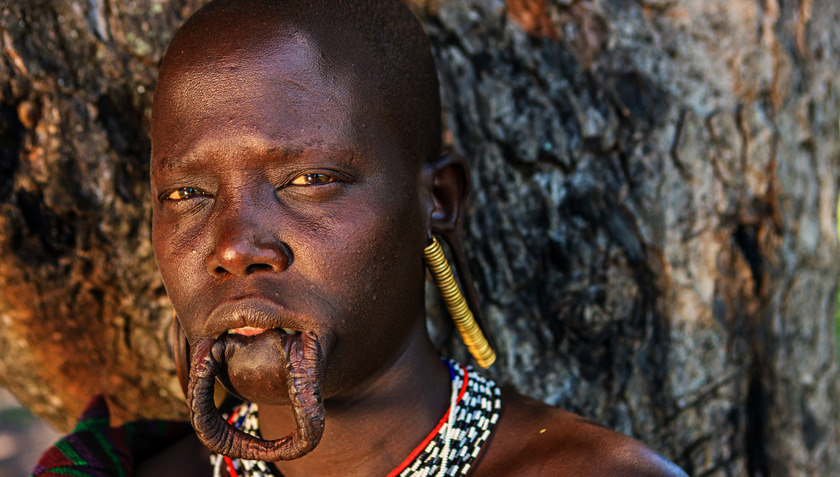
Although it's an ancient custom, it still has many negative consequences today.
Today, some young Mursi women no longer follow the custom of wearing lip plates. However, a segment of Mursi women still wear lip plates and consider this custom a part of their tribal heritage, as well as a cultural identity to attract tourists.