VI
VI


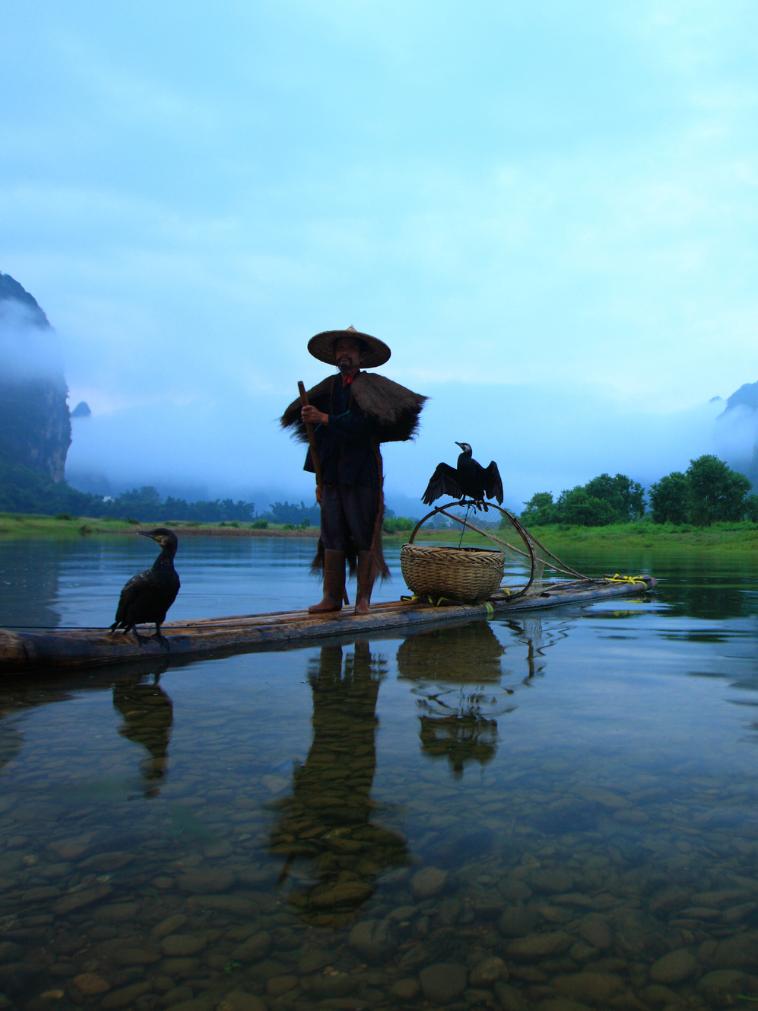

"The mountains and rivers of Guilin border the world, and the mountains and rivers of Yangshuo border Guilin."
The Li River, the "mother river" of Guilin, is also one of the most important waterways in Lingnan, China. Since the Qin Dynasty, Qin Shi Huang ordered the construction of this important route, utilizing the Li River to connect the north and south.
Visiting the Li River in Guilin, China, tourists can not only admire the tranquil and peaceful beauty of the picturesque river but also witness the unique art of fishing using cormorants practiced by the local people.
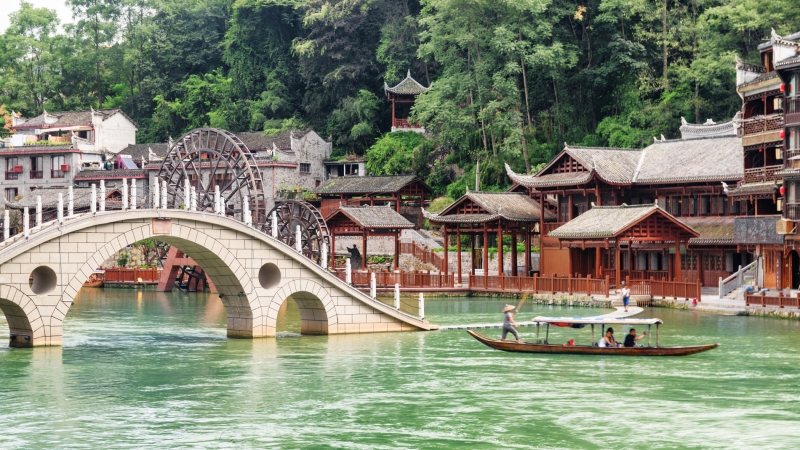

Come to Li River to see the art of catching fish with birds.
The Li River, stretching 83 kilometers from Guilin city to Yangshuo county in Guangxi province, flows like a giant green silk ribbon, winding through hundreds of interconnected mountains of varying sizes. The scenery along its banks is picturesque and is one of the must-see tourist destinations when visiting Guilin.

The Ly River flows gently and peacefully, imbued with the charm of "picturesque landscapes."
The picturesque landscape here captivates anyone with its beauty. And along the Li River, visitors will encounter fishermen catching fish on the river using cormorants. This is a unique traditional occupation that has been preserved for over 1300 years.
As the Li River became a popular tourist destination, the image of fishermen using cormorants to catch fish also became a unique feature found only in Guilin. Abandoning nets and modern fishing rods, the fishermen here continue the ancient methods of their ancestors from centuries ago, with cormorants as their "companions." Cormorants, professional fish-eating seabirds, have become invaluable allies in fishing thanks to their ability to dive deep and catch prey accurately.

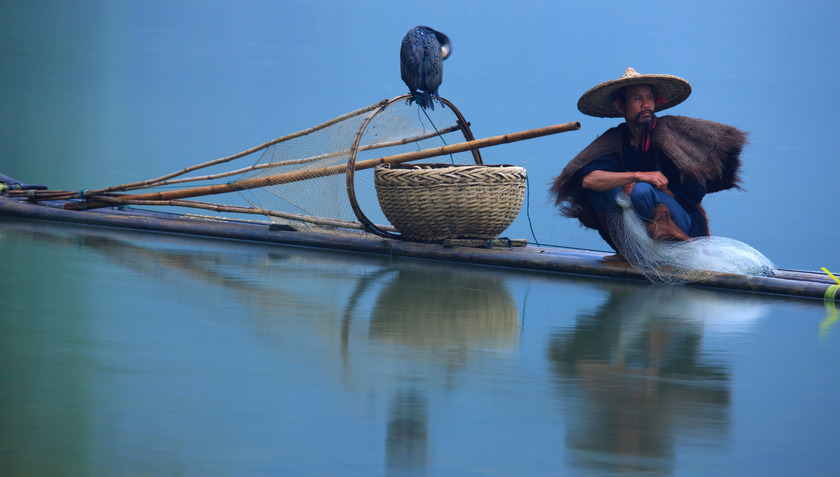
The people here make a living by fishing.
Cormorants have a diet consisting mainly of fish. They are capable of deep diving and are extremely agile hunters. Their long, strong beaks help them accurately capture prey. Cormorants can catch fish from the age of 3 months, and their fishing ability is at its peak when they are 3 years old. The average lifespan of a domesticated cormorant is over ten years; their eyesight gradually deteriorates, their movements become sluggish, and they are no longer able to catch fish. At this point, fishermen continue to raise them until they die.
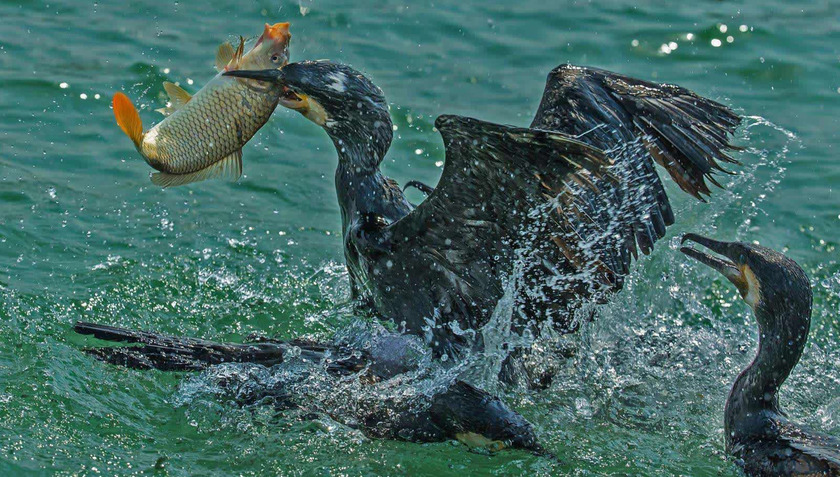
Cormorants are reliable companions to humans.
Training and using cormorants for "hunting" requires patience and special skills from the people. The trainer must create a close bond with the bird, so that it trusts and obeys commands. A small trap is attached near the cormorant's throat to prevent it from swallowing large fish. These fish are then trapped and harvested by the people.
As dusk fell, the moon shone brightly over a vast expanse of darkness. The water was calm, and the fishermen's bamboo rafts simultaneously lit their lamps and set out on the river. The oil lamps shone like fallen stars on earth. The fishermen, clad in their straw raincoats, used bamboo poles to push their rafts into the middle of the river, and a feast of "Ly Giang fishing fires" officially began.
Fishing with cormorants begins by taking the birds to areas with abundant fish. Seeing many fish near the water's surface, the cormorants' instincts are stimulated to catch more. However, after eating their fill, the cormorants will stop fishing. Therefore, to encourage continuous fishing, fishermen first tie straw around the birds' necks, ensuring they can still breathe normally. This is done to prevent the cormorants from swallowing the fish completely, instead getting it stuck in their throats.
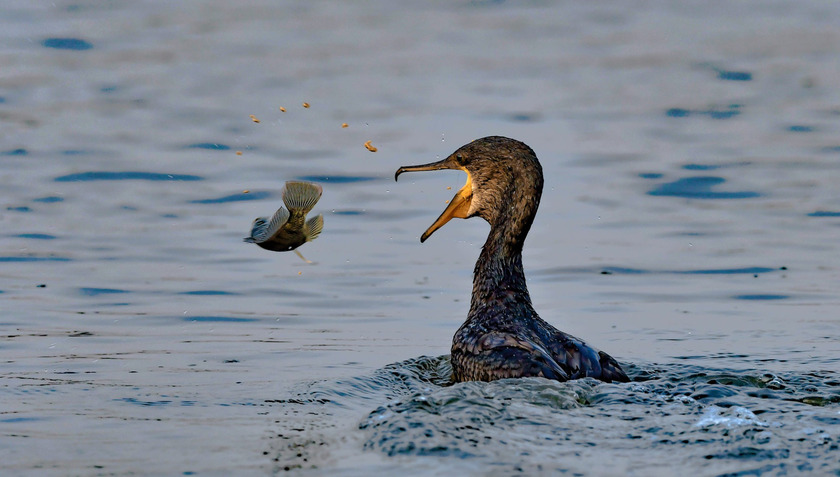
Training a cormorant to master hunting skills is not easy.
Cormorants swim swiftly through the water, using their superb diving abilities to catch large fish sheltering at the bottom. The cormorants then carry the fish in their beaks and, as usual, return to their bamboo rafts. Fishermen use bamboo poles to help the cormorants stand on the rafts, then remove the fish from their beaks. With skillful coordination, the baskets are quickly filled with fish.
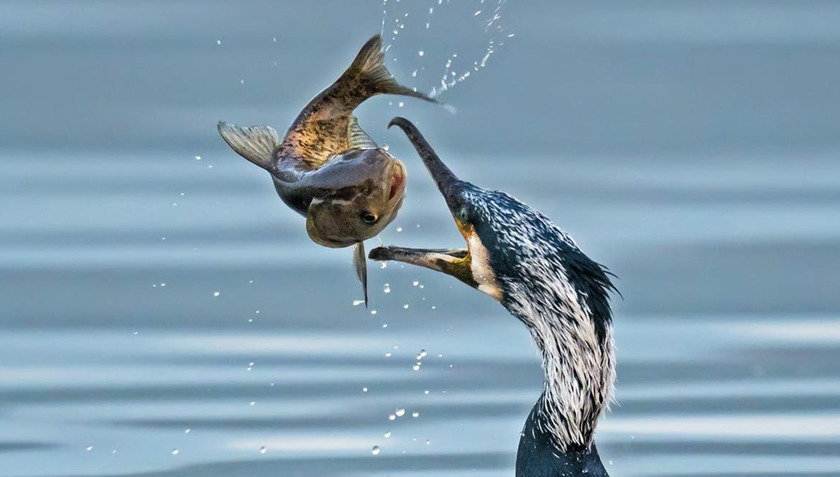
The technique of catching fish using cormorants is a unique traditional fishing method, deeply rooted in the culture of the people of Lijiang.
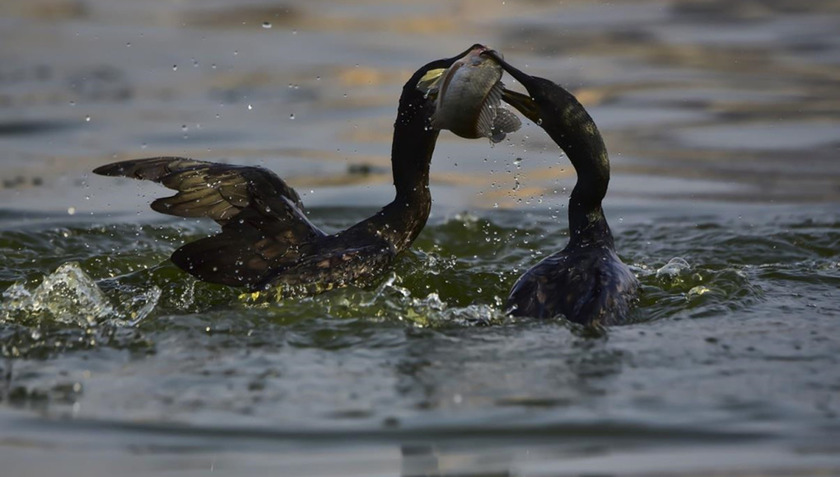
The night of fishing ended, the fishermen selected a few small fish to reward the cormorants, then paddled their rafts back. The Li River regained its tranquility, as if no one had ever visited. The earliest fishing method invented by the Chinese did not use fishing rods or nets, but instead used birds that dived into the water to catch fish. Only in this way could fishermen of the past support their entire families.
Fishermen and cormorants – the harmonious cosmopolitan relationship between man and nature forms the cultural heritage of Lijiang region.
The ancient practice of fishing with cormorants is associated with the phrase "Ly Giang fishing fire." The word "fish" refers to the skillful fishing activity of the cormorants. Many people wonder why the word "fire" is used instead of "water" when fishing on a river. However, everything has its own meaning.

This technique has been passed down through generations and has become the main source of income for many local families.
The word "fire" in "Ly Giang fish fire" refers to the flickering light from an oil lamp hanging and swaying on a floating bamboo raft. The light attracts light-seeking fish at night. Upon seeing the light, the fish swim closer to the raft. At this point, the fishermen use long sticks to forcefully stir the water's surface, causing the frightened fish to scatter and create a disturbance.
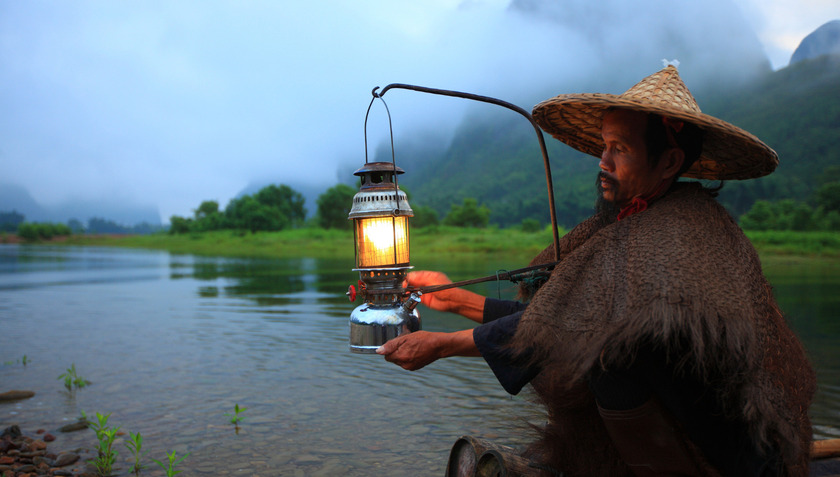
The livelihood of the fishermen here

The water was calm, and the fishermen's bamboo rafts simultaneously lit up their lights as they headed out onto the river.

A "Ly Giang Fishing Fire" feast officially begins on the river.
The locals call cormorants "life-sustaining children," meaning "giving oneself a child to nourish one's life." Fishermen in the past cherished their cormorants, raising them like family members. During droughts or unfavorable weather, they would still use their usual fishing methods and buy fish from the market to feed the cormorants.
"The Ly Giang fish-fire relationship," spanning thousands of years, represents the evolutionary survival dynamic between humans and animals. It also embodies the profound harmony between humanity and nature, according to ancient Chinese philosophy.