VI
VI


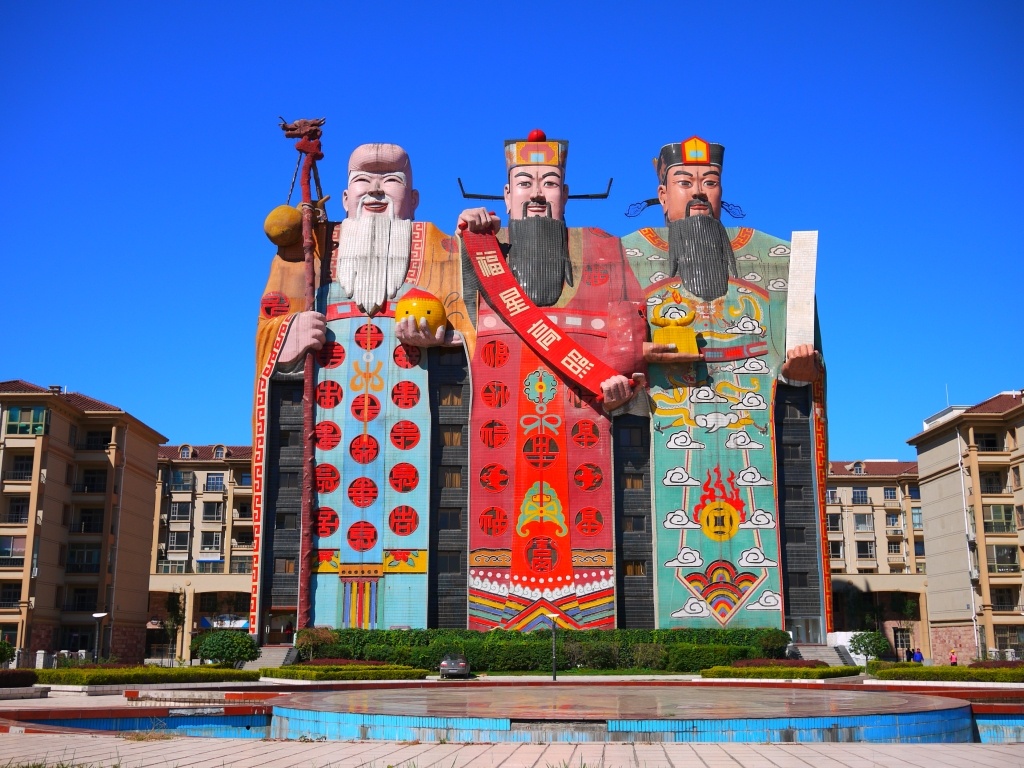
China is famous for many unique structures, and one of them is a hotel modeled after three giant statues of the gods of Fortune, Prosperity, and Longevity, located in a prime location in the heart of Langfang City, Hebei Province. The hotel forms a 10-story building, standing 41.6 meters tall.
The hotel is named “Tianzi,” which translates to “Son of Heaven,” after the statues of three deities. Dating back to the Ming Dynasty (1368–1644), these deities embody three attributes believed to bring about a good life. Each deity also has its own astrological association and history.
Furthermore, the building's architect revealed that the site of the hotel was once a cemetery, so he believed that designing the building with the three gods of Fortune, Prosperity, and Longevity would ward off evil spirits. These three gods symbolize good things in life such as luck, prosperity, and longevity.
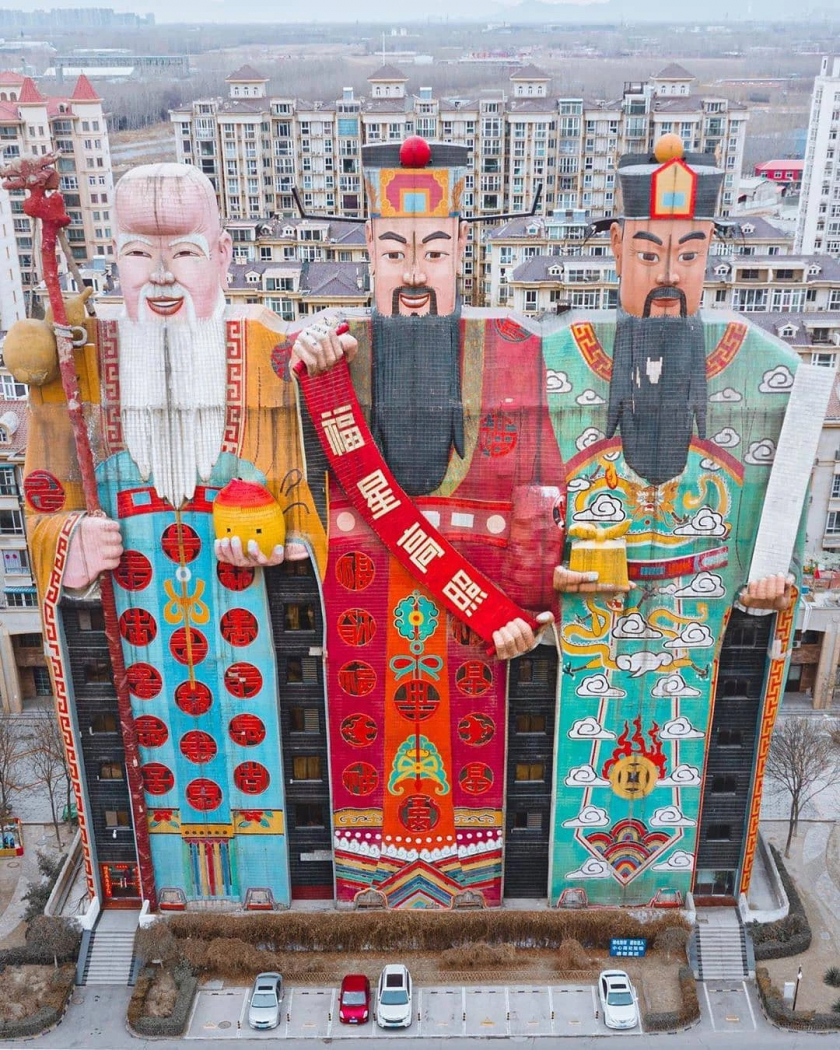
The Tianzi Hotel is located in Langfang City, Hubei Province.
If you stand facing the hotel, you'll see a "peach" in the left palm of the God of Longevity's hand. This isn't just a fruit, but also a hotel room. Most of the hotel's windows are hidden behind the costumes of the three gods. From a distance, it's difficult to see the hotel entrance, a double-sided glass door designed at the right foot of the God of Longevity. Furthermore, the most expensive room is the magical peach in the God of Longevity's hand.
These images are symbolic of Chinese culture, with three deities: Fu (福) in the center, representing happiness, blessings, and good fortune; Lu (祿) on the right, signifying wealth, auspiciousness, status, and prosperity; and Shou (壽), meaning longevity, similar to Confucius' saying: "The wise are happy, the benevolent live long."

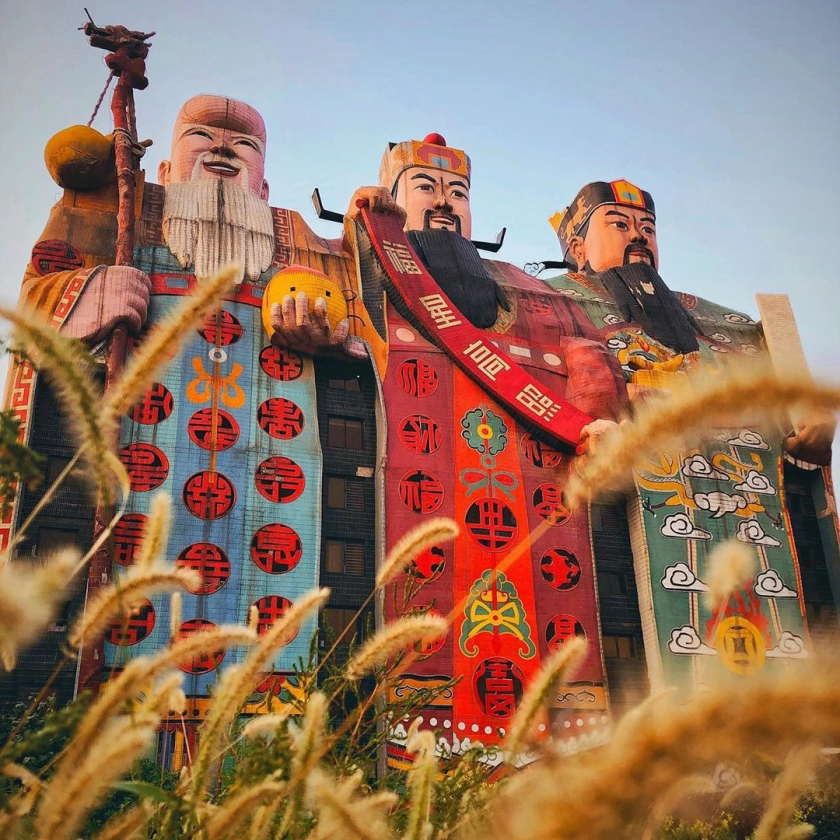
From a distance, the structure stands out among the surrounding high-rises due to its unusual shape. Many people mistake it for a giant statue of a god, but in reality, it houses a vast hotel.
In 2011, the Tianzi Hotel was recognized by the Guinness World Records as the "largest building with a figurative image" shortly after its completion and was considered one of the 10 strangest architectural structures in the world.
With its flamboyant appearance and unique design, the building, resembling three gods, has left a deep impression on many tourists. This building has piqued the curiosity of many, making it a popular check-in spot in Hebei when traveling in China. However, according to Frommers, the Tianzi Hotel was voted the ugliest building in China in 2012.
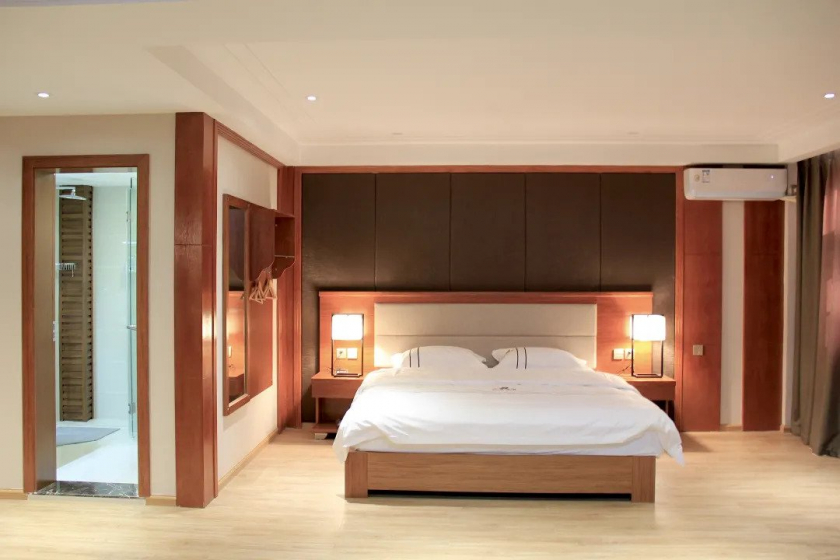
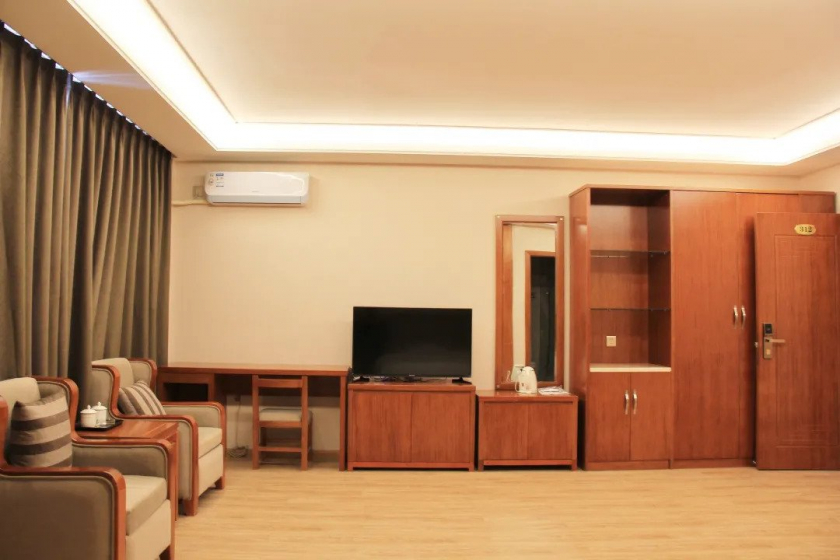
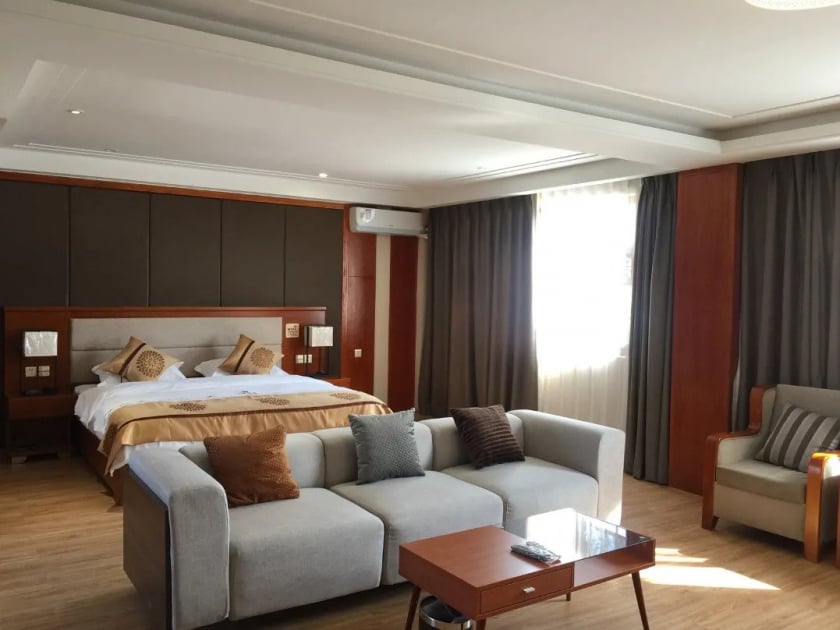
Interior of Tianzi Hotel
Despite consistently ranking among the world's most bizarre hotels, precise details about the interior of this millennium-spanning masterpiece are scarce; rather, mysterious stories of visits are passed from one guest to another. This is quite unusual in an age where the internet allows us to search for complete information about most hotels before booking. But perhaps it is this element of mystery that makes this uniquely designed hotel so alluring.
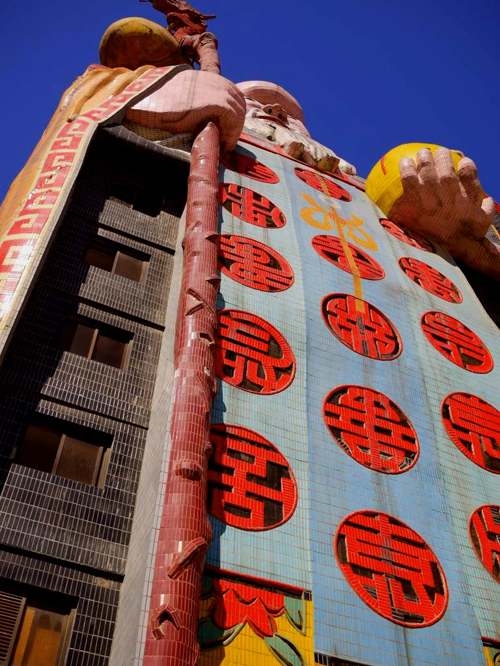
The architects tried to incorporate details that made the building more airy, such as windows and vents in decorative elements or in the spaces between the three "gods".
Some people think the hotel isn't that bad, but sleeping inside a hotel decorated with the three symbols of Fortune, Prosperity, and Longevity is perhaps "a bit unusual."
According to a review from traveler Herper on trip.com, who previously stayed at the Tianzi Hotel: "The hotel is generally quite good, although it's a bit noisy at night because it's located on the roadside. Compared to similar hotels, the advantages are that the rooms are spacious enough and there's parking in the backyard. The drawback is the lack of an elevator. It would be very inconvenient if you have luggage."
Another account named lanxing1860 also said: "The owner had a very good attitude, the facilities were new, clean and hygienic. But on the day I checked in, there were quite a lot of mosquitoes and ants, and I couldn't sleep until almost morning."
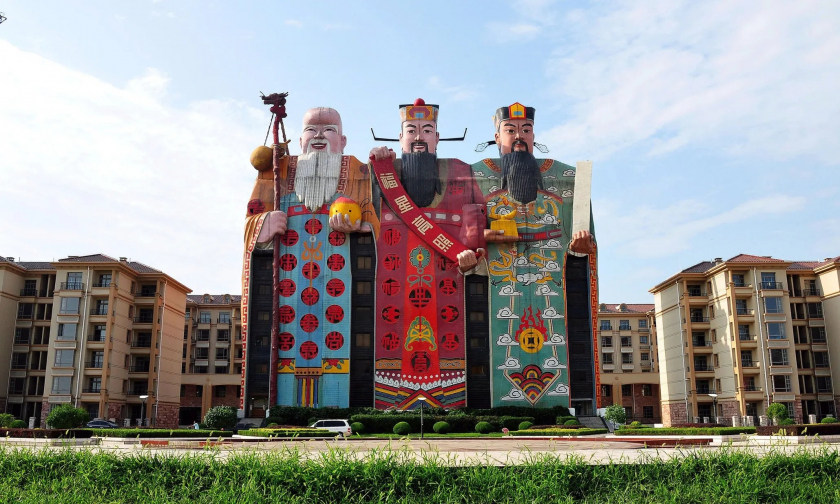
Despite its popularity, the Tianzi Hotel is quite difficult to find. Many tourists who want to visit have to use a GPS system because of its unique location.
Viewed from the rear, the Thien Tu Hotel is designed in a consistent style with the front, featuring vibrant colors reminiscent of the "robes" of the three deities. The architects attempted to incorporate details that make the building more airy, such as windows and vents in decorative elements or in the spaces between the three "gods."