
 VI
VI


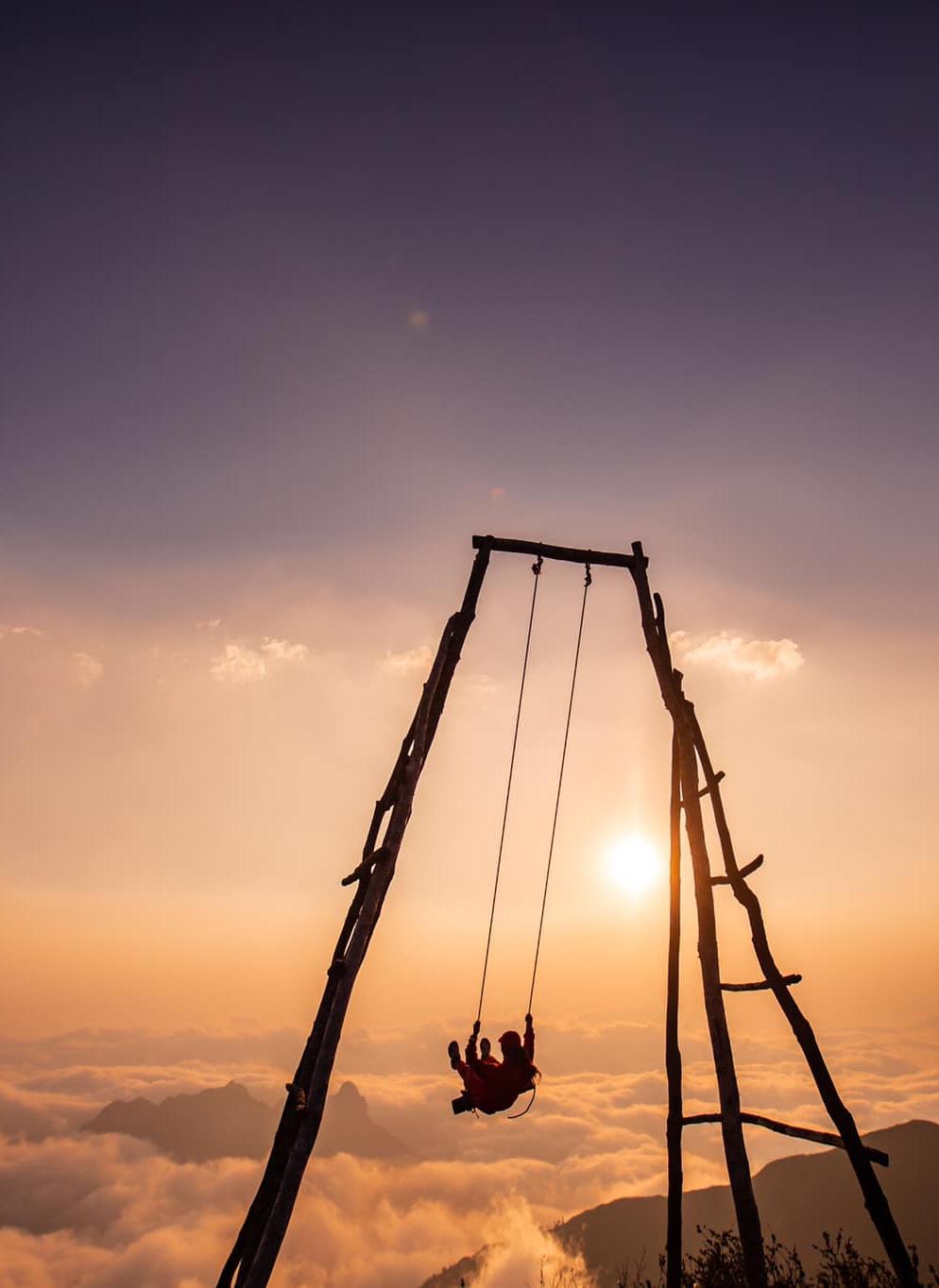
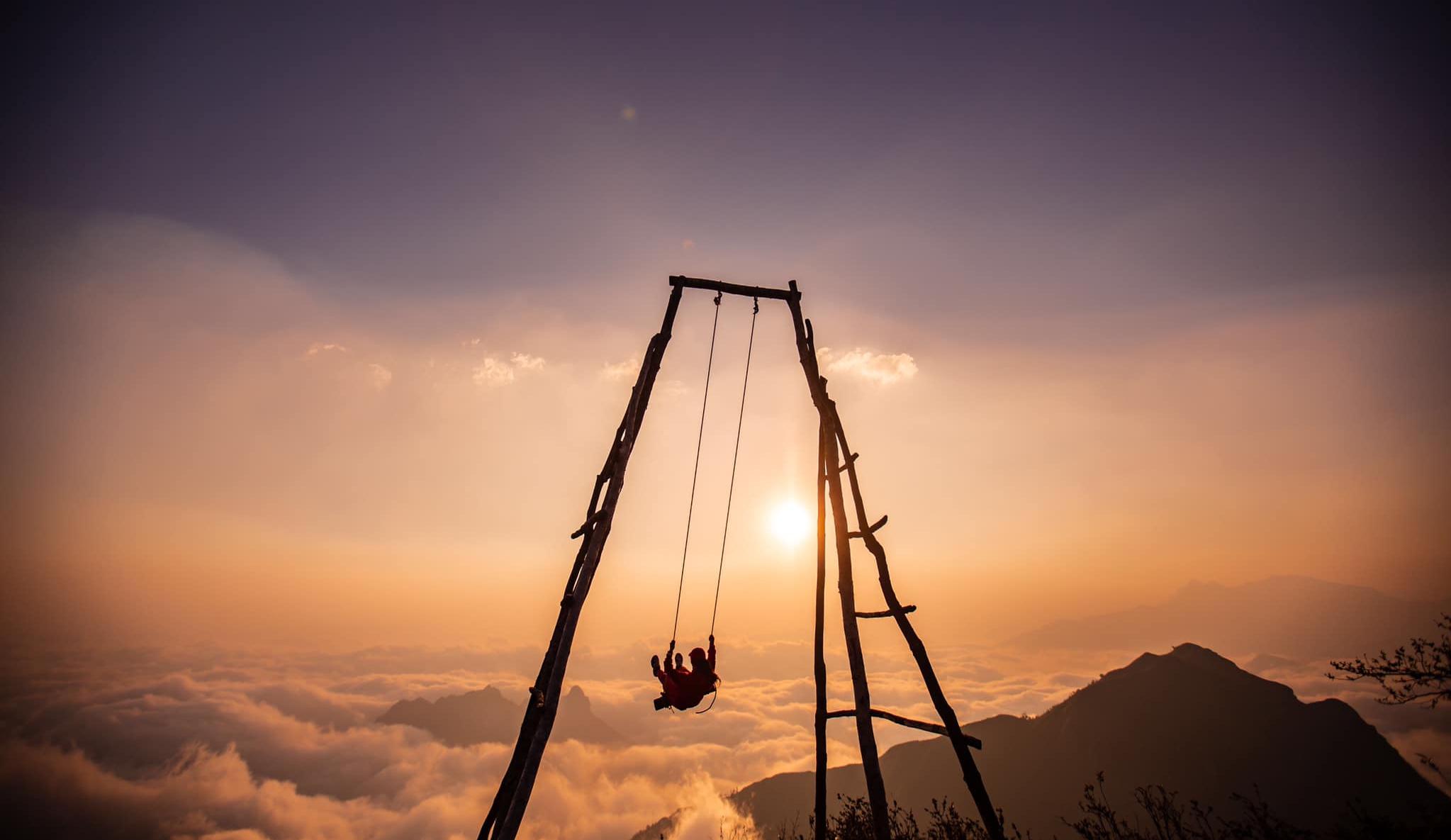
The name Salt Mountain was given by the Hmong people during the resistance against the French. During the French colonial period, the Hmong people did not have salt to eat. They discovered a special plant on the mountaintop called the "Cricket Turtle" plant, whose white seeds, when tasted salty, fell from the tree's roots. The Hmong people picked the leaves and used these seeds as a substitute for salt. Gradually, the name Salt Mountain came into being.
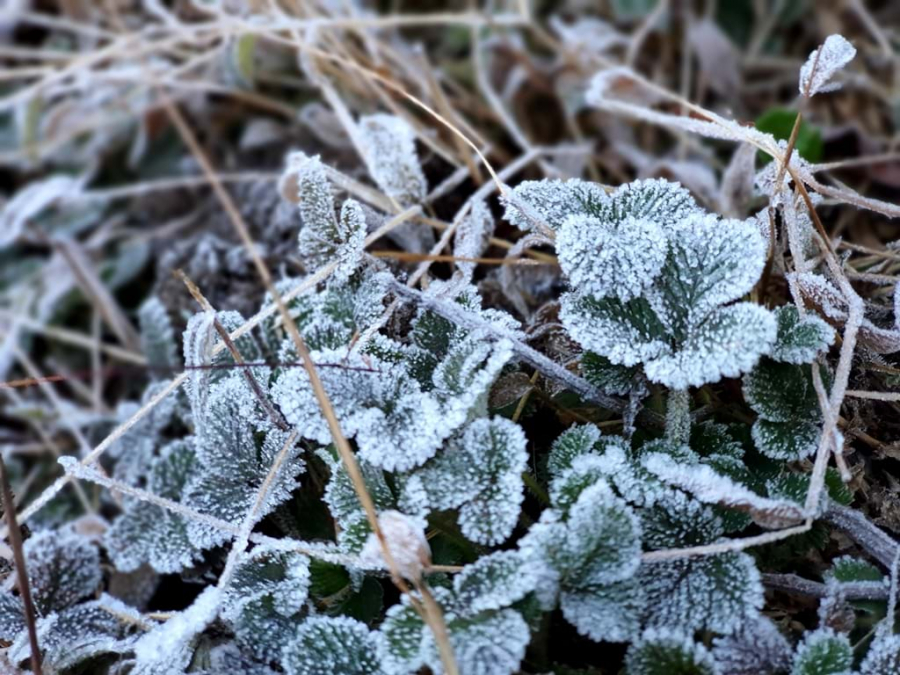
Frozen leaves cover the trees on the summit of Salt Mountain.
Muoi Mountain, part of the Ky Quan San mountain range, is also known as Bach Moc Luong Tu. Previously, Muoi Mountain was often considered merely a resting point on the trekking route to Bach Moc peak, which is over 3000 meters high. However, in recent years, Muoi Mountain has begun to be regarded as a destination, and sometimes even the final destination of the journey.
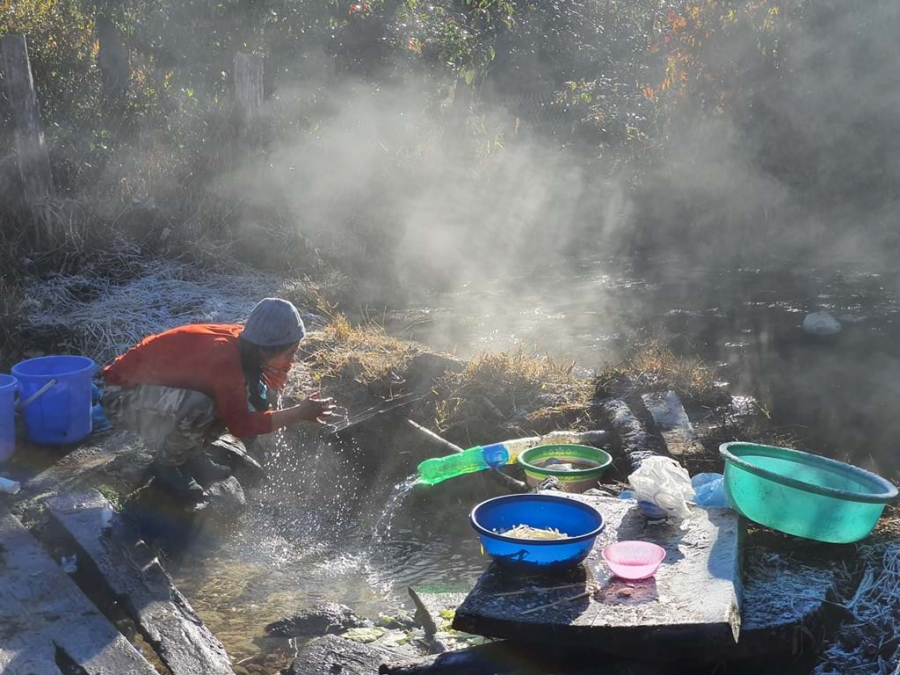
Muoi Mountain has a flat area with huts built by the Hmong people, which now serve as a rest stop for mountain climbers.
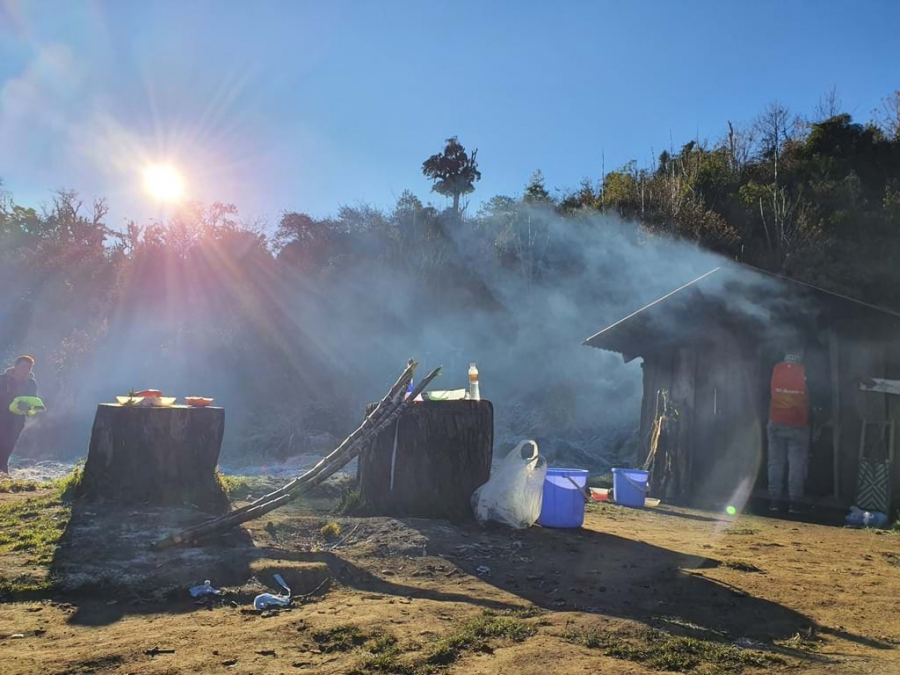
Climbing Muoi Mountain takes about two days. Because it is located between Lai Chau and Lao Cai provinces, visitors who want to fully enjoy the magnificent natural scenery at this border can choose to climb up and down the mountain via two different routes: one from Sang Ma Sao commune, Bat Xat district; and the other from Den Sung village, Sin Sui Ho commune, Phong Tho district.
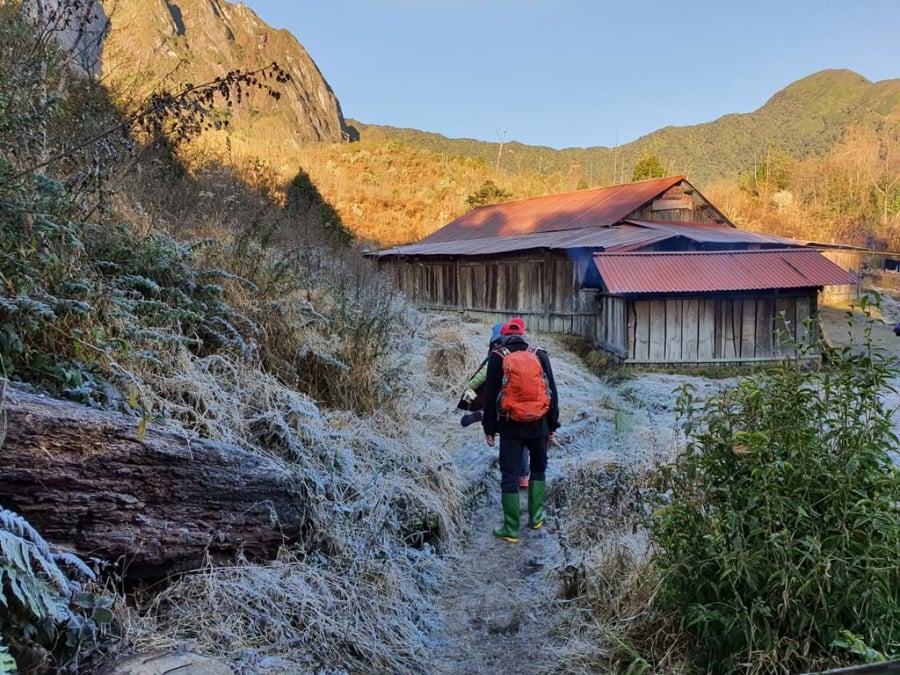
The road up to Muoi Mountain.
The best time to climb the mountain is from autumn to the following spring, when there are fewer heavy rainforest downpours and the streams are less dry. However, the temperature will drop significantly and fog will be thick, especially when crossing dense forests. The climb up Muoi Mountain is arduous. It is also not a safe choice for beginner trekkers. Many have given up and turned back when faced with steep slopes where the path is invisible only through tangled trees, and the waterfalls roar day and night.
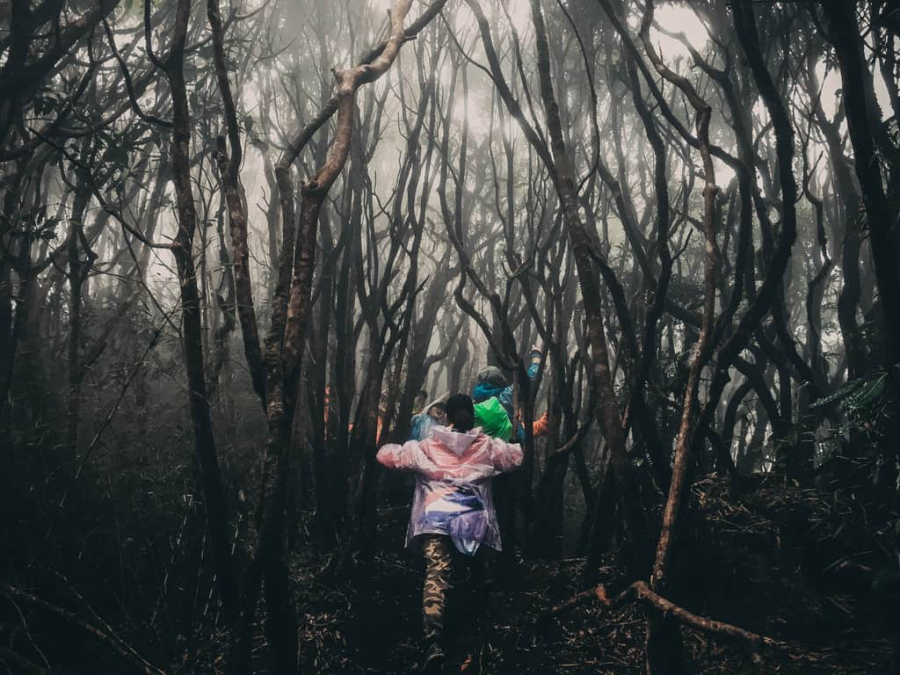
Dense forests, swirling fog, and the possibility of sudden rain showers are what deter many mountain climbers.
On the way to Muoi Mountain, hikers will pass through a vast bamboo forest, resembling a familiar scene often seen in Chinese martial arts films. This also serves as a safe haven during sudden jungle rains.

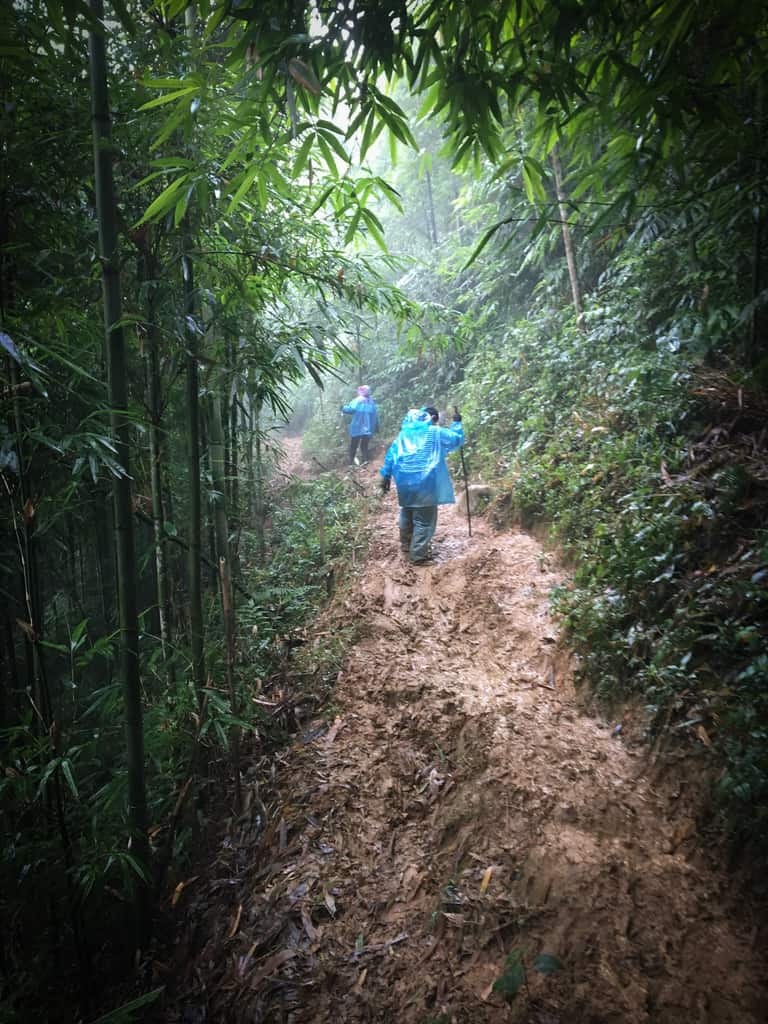
Bamboo forest after the rain.
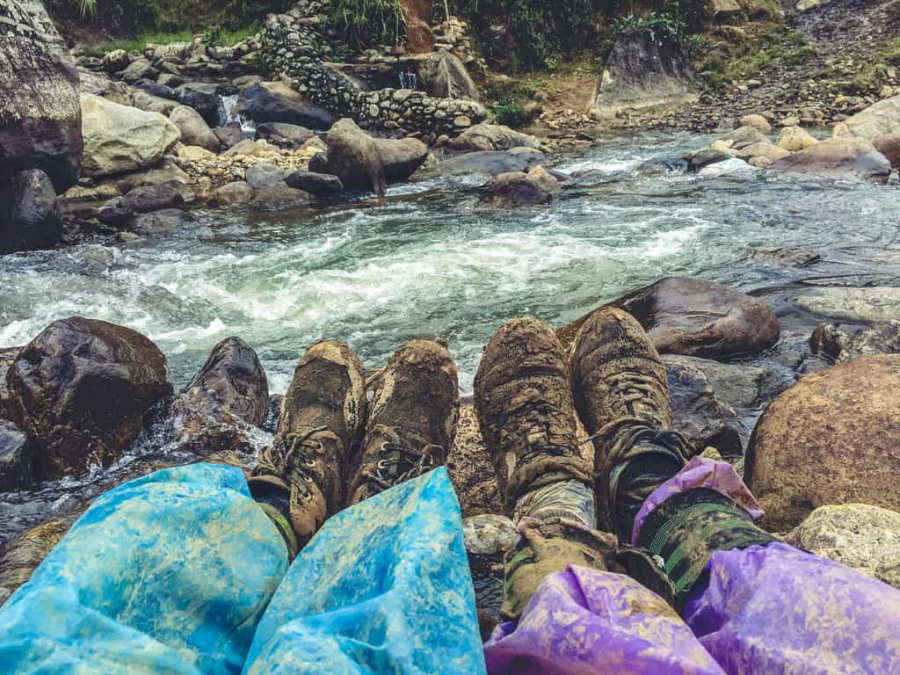
The largest stream along the way is the De San Nhua stream, meaning "the stream that gives birth to children." The stream, originating from high above, branches into many smaller streams, like giving birth to children, bringing water to the terraced rice fields for the villagers to cultivate. Perhaps, "De San Nhua" here also carries the meaning of gratitude to nature for providing sustenance to the people of the village.
The distance from the foot to the summit of Muoi Mountain is 14 km. After traversing about two-thirds of the way, visitors pass through a magnificent old-growth forest, where thousands of giant trees appear like bonsai trees pruned by nature. Among them are some of the rarest species in the world.
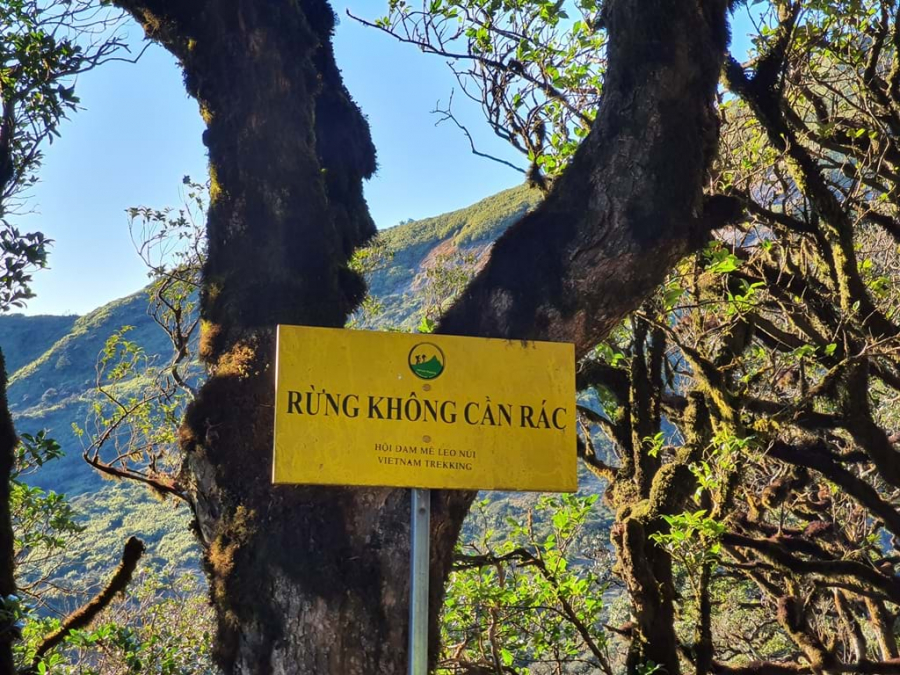
The sign was erected by the "Mountain Climbing Enthusiasts Club" in the old forest.
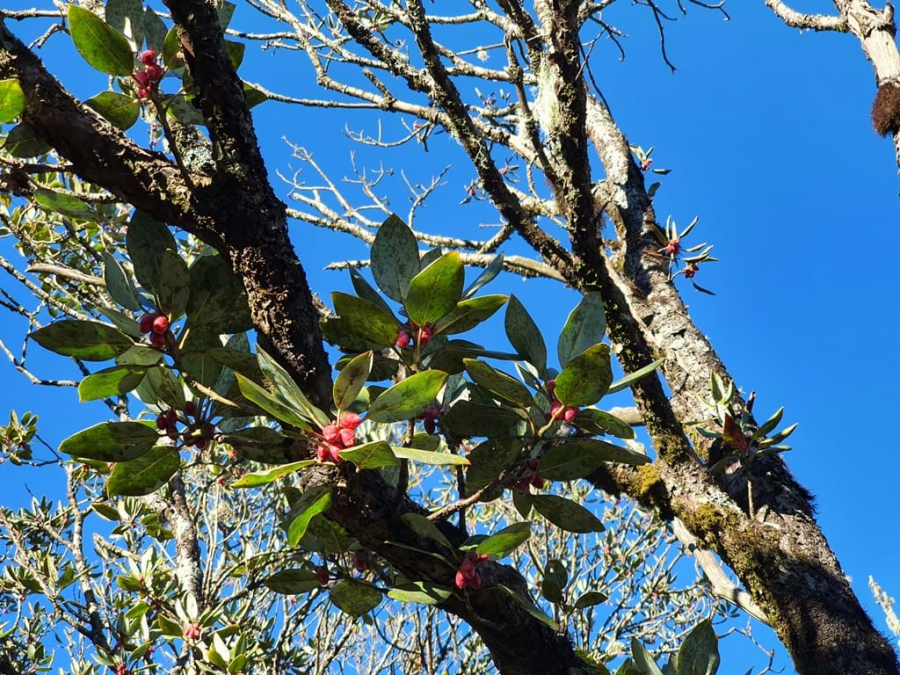
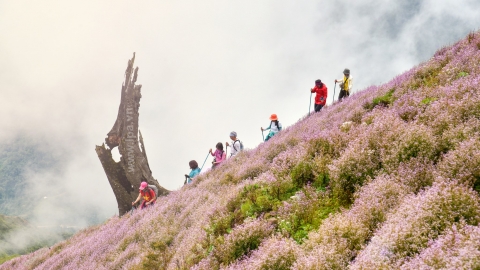
Azaleas bloom in the middle of winter.
Compensating for the arduous journey is the magnificent sea of clouds embracing the green mountains on the horizon from the summit of Muoi Mountain; many describe this breathtaking and unique sight as witnessing a Ha Long Bay from the sky.
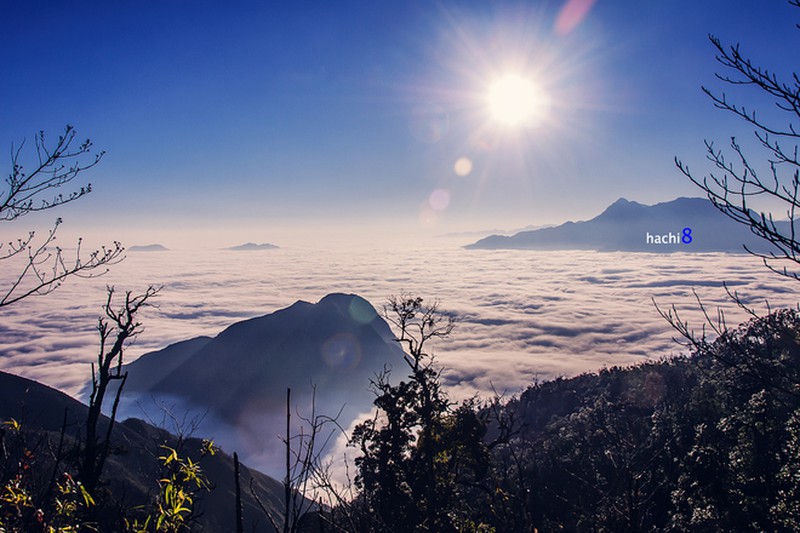
A sea of white clouds over the summit of Muoi Mountain.
This is also the most expansive viewpoint on the entire journey from the foot of the mountain to the summit of Ky Quan San. Therefore, anyone who has ever stayed overnight on Muoi Mountain tries to wake up early to admire the magnificent natural landscape, marked by the first rays of sunlight peeking over the distant mountains, until the sun paints the sea of white clouds pink before their eyes.
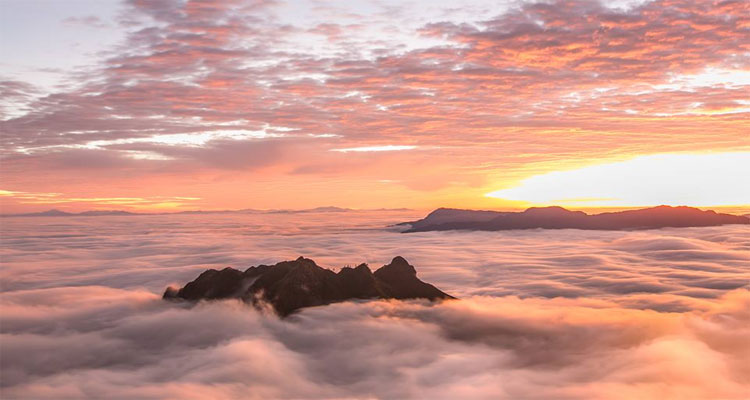
A rosy sunrise through the clouds.
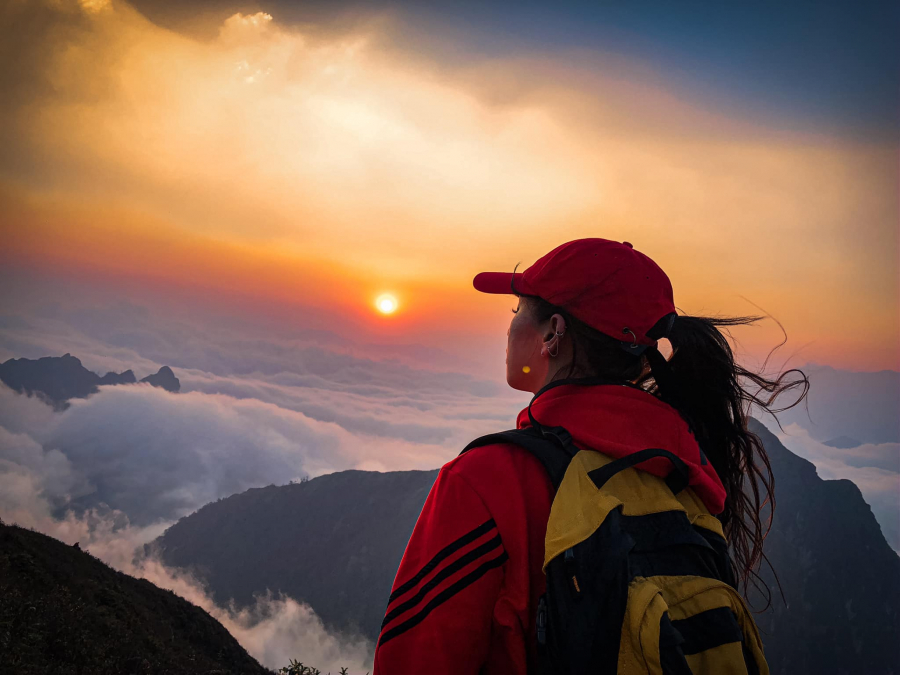
Photo: Facebook Huyen Lii
If you visit Muoi Mountain on a cloudless day, the moment when the sun's rays shift, casting a golden glow over the entire valley is equally breathtaking. On a clear day, from the summit of Muoi Mountain, you can see distant mountains...
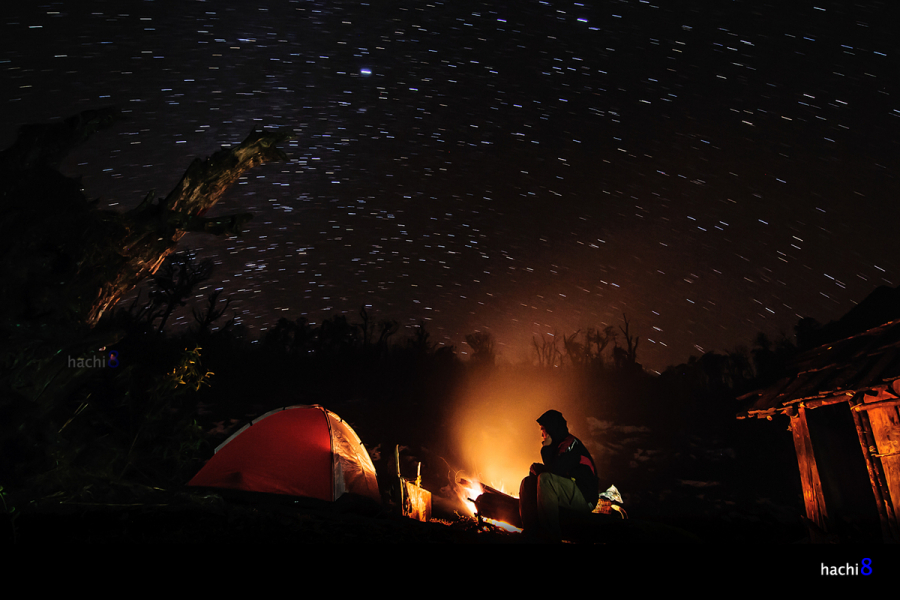
A starry night on the summit of Salt Mountain.
Note:
- Mountain climbing requires endurance and patience. Therefore, prepare your body thoroughly before deciding to set off for Muoi Mountain.
- Check the weather and prepare thoroughly for a challenging sightseeing trip, including: clothing, shoes, and first-aid supplies.
- The path up the mountain is difficult and overgrown, so it's best to hire a local porter for guidance and to have the opportunity to hear stories from the local people about the origins of each forest and stream.





.jpg.jpg)


.jpg.jpg)






