VI
VI


Bui Kim Ngan (Bao Loc - Da Lat, 30 years old) is currently a freelancer with a passion for travel. Due to the nature of her work, she has flexible time to explore and experience many new places. According to her, travel is a way to enrich one's life, gain broader and fresher perspectives on the world and oneself, and truly live life to the fullest.
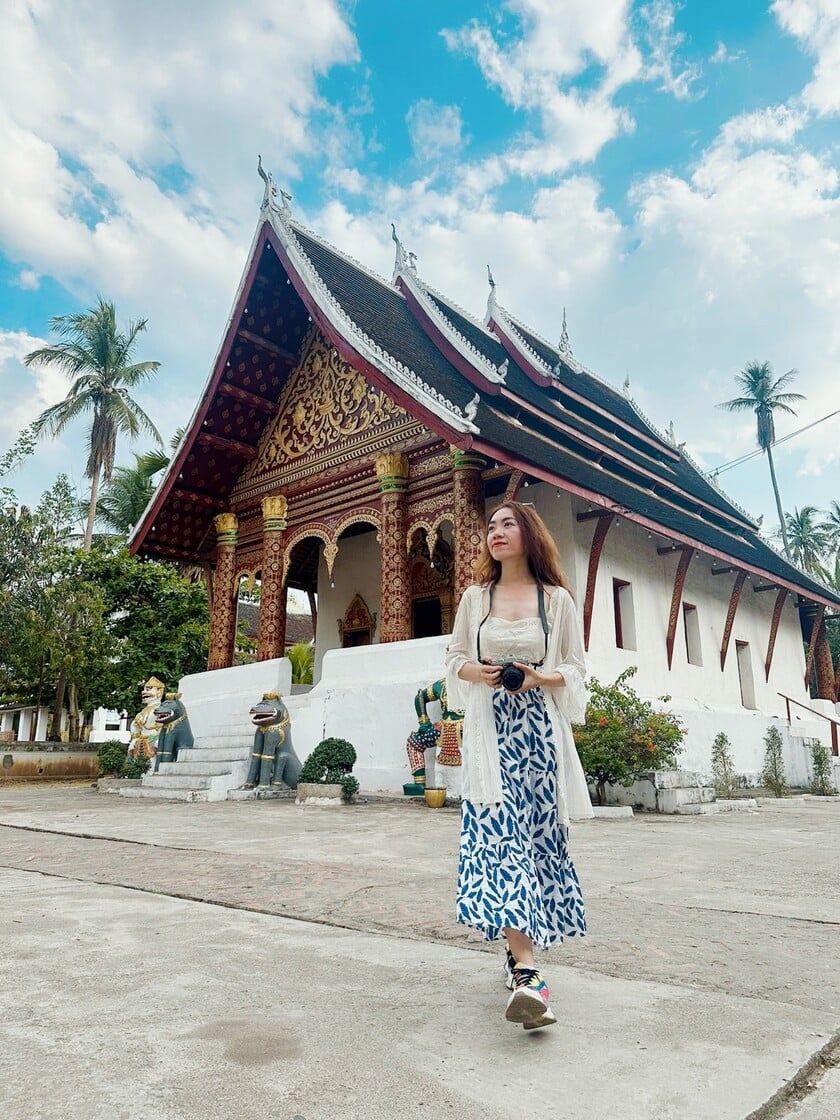
During her recent trip to Laos, Kim Ngan had the opportunity to experience the alms-giving ceremony while visiting the ancient capital of Luang Prabang.
Alms-giving ceremony - a traditional cultural practice of the people of Laos.
During her recent trip to Laos, Kim Ngan had the opportunity to experience the alms-giving ceremony while visiting the ancient capital of Luang Prabang. This was also an activity that Kim Ngan was very much looking forward to participating in on this trip to Laos.
The alms-giving ceremony in Laos, also known as Tak Bat, is a traditional ritual of the Lao people to honor and express reverence for Buddhism. It is one of the long-standing traditions of the culture of the Land of a Million Elephants.
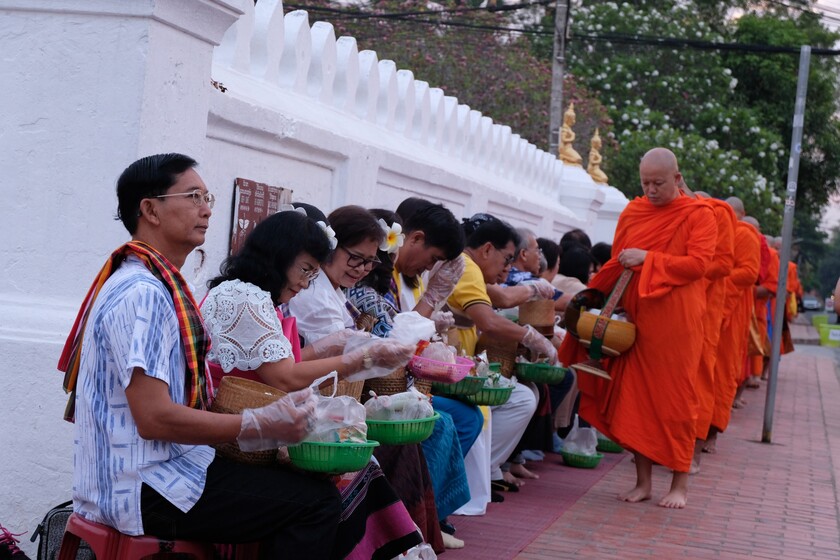
The alms-giving ceremony in Laos is also known as the Tak Bat ceremony. It is one of the long-standing traditions of the Buddhist culture of the Land of a Million Elephants.
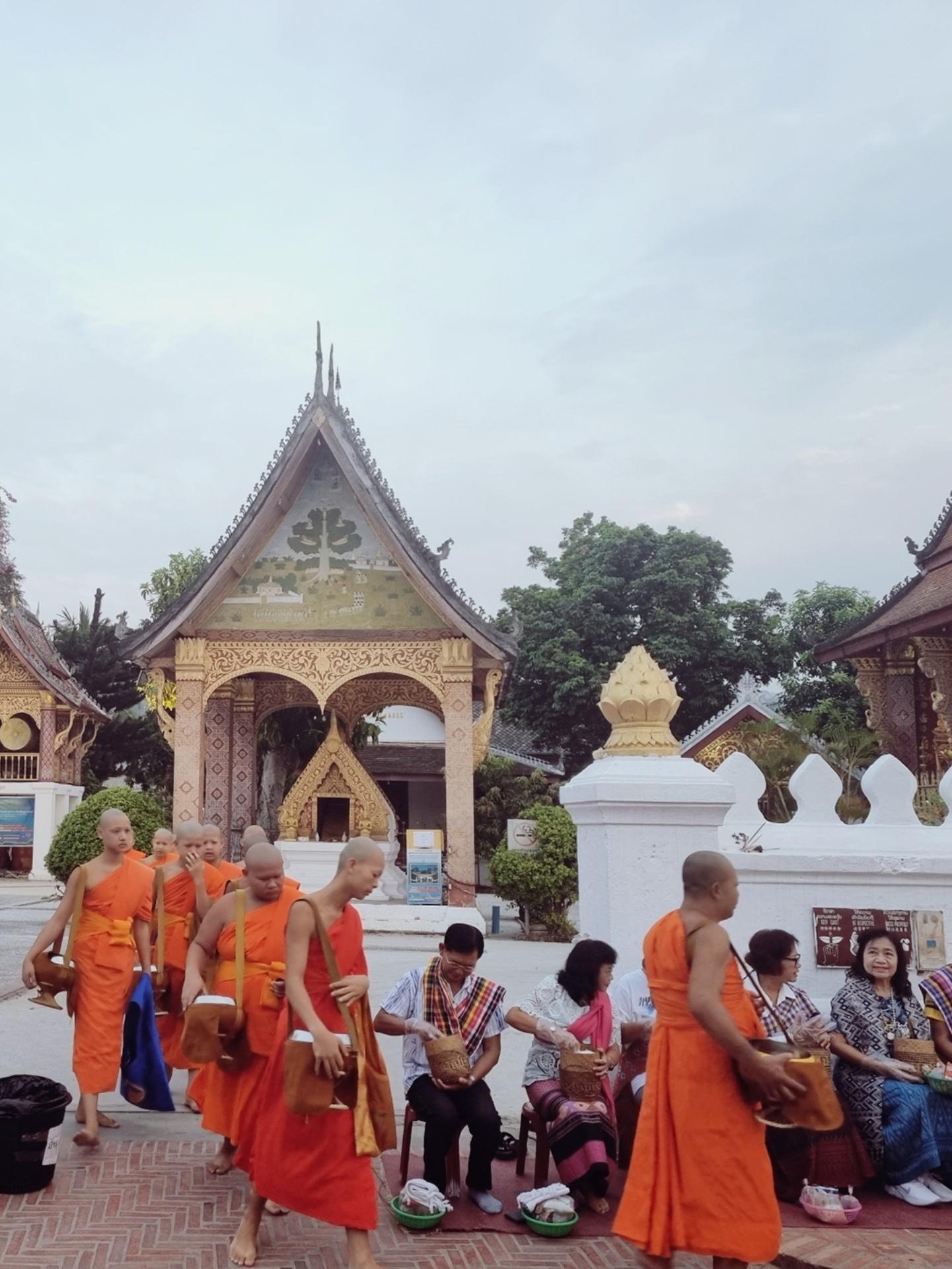
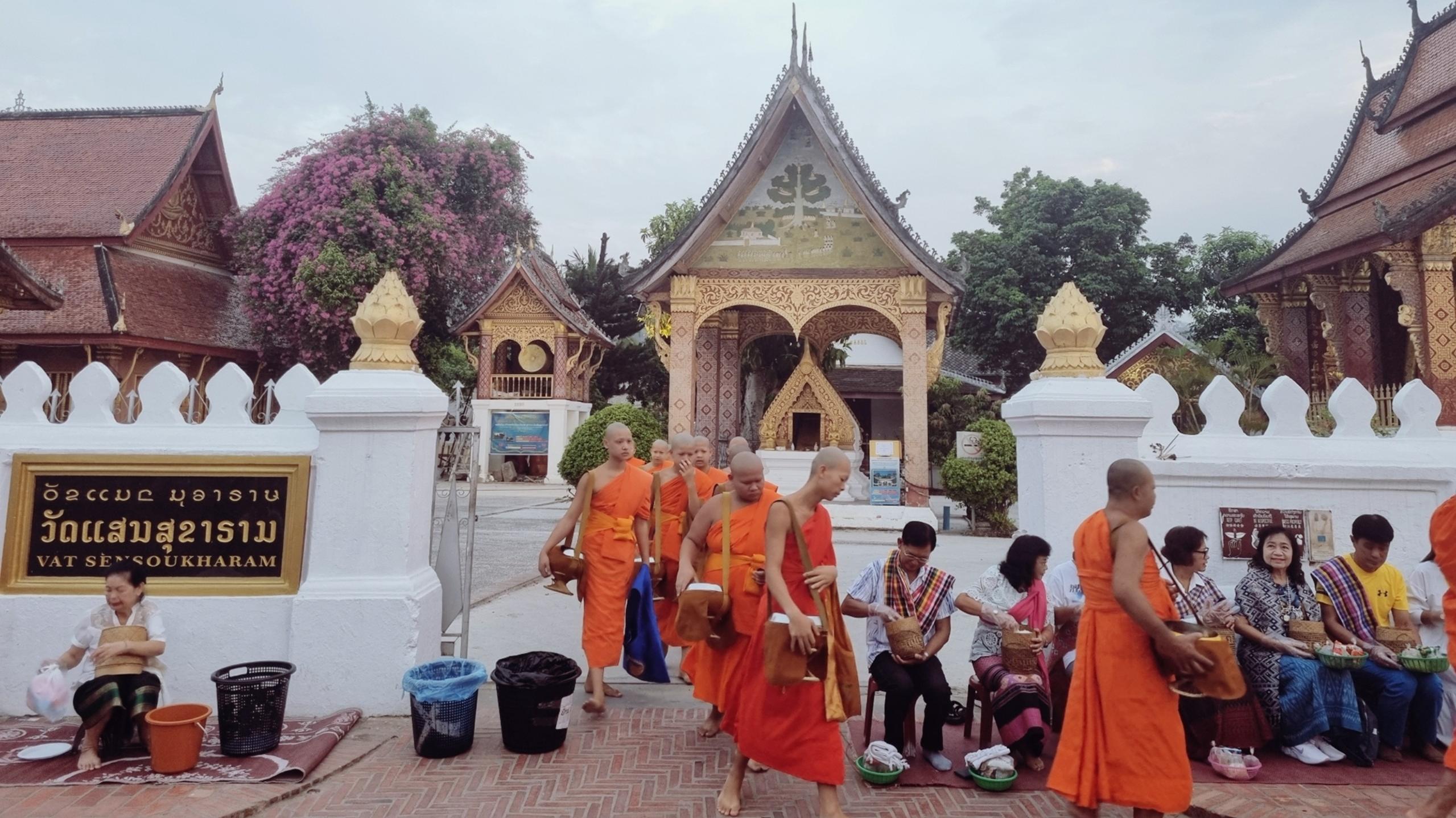
According to Kim Ngan, the alms-giving ceremony takes place daily in the early morning at temples and pagodas throughout Luang Prabang. The ceremony usually takes place between 5:30 and 6:30 AM. Participating in the ceremony, you will witness a special sight: hundreds of monks in yellow robes from various temples walk in rows along the streets barefoot, carrying large alms bowls. Buddhist devotees or tourists wait along the roadside to offer alms. As they pass each kneeling person, the monks pause briefly, receive the alms (rice/cake), and then repeat the process with the next person. Most people offer a short prayer before placing their offerings in the monks' bowls, and conversely, the monks also offer prayers to bestow blessings upon the people.
“I heard that the food the monks received from the people would be distributed to the poor in the city. And also, it would be for the monks' daily use. The monks would walk through the main streets of Luang Prabang, but the place with the most people participating in the ceremony that I saw was on the night market street in Sisavangvong, starting from Wat Mai temple,” Kim Ngan said.
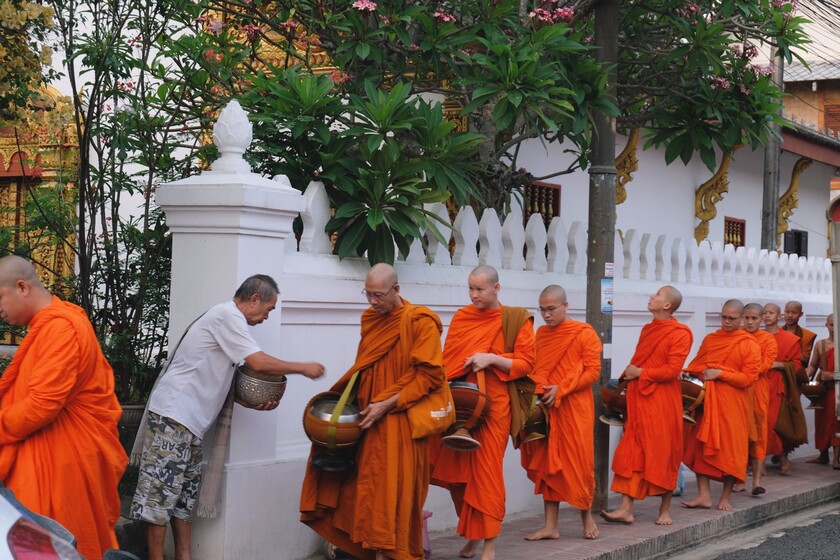
Most foreign tourists visiting the ancient capital of Luang Prabang are impressed by the alms-giving ritual in Laos, with the golden-orange colors of the monks going on their alms-gathering rounds each morning.
To prepare for the alms-giving ceremony in Luang Prabang, there are a few things tourists should prepare. First, try to set an alarm to wake up early because the ceremony takes place from dawn. Next, wear modest, respectful clothing that shows reverence for the Buddhist faith.
You can prepare to bring some small food items such as sticky rice, sugar, and fruit to offer to the monks. Finally, prepare yourself with an open mind and be ready to explore new experiences. The alms-giving ceremony in Luang Prabang and the surrounding areas is not just a religious ritual, but also a profound sense of reverence, humanity, and community solidarity.

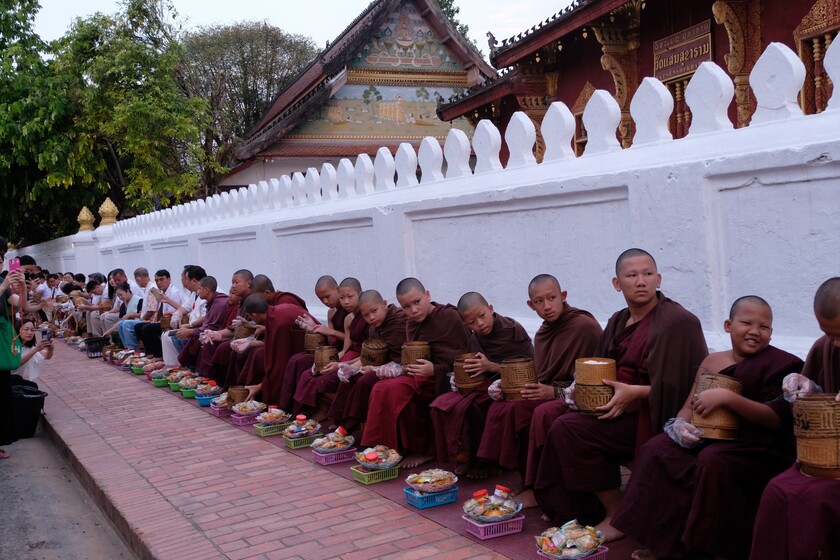
The Tak Bat alms-giving tradition in Laos dates back to the 14th century, when local people would wake up very early to prepare a portion of food to offer to the monks.
“For me, the alms-gathering ceremony is a truly beautiful and admirable cultural tradition of our brothers and sisters in the Land of a Million Elephants. This activity doesn't just take place on a fixed day, but regularly every morning. From what I've learned, alms-gathering is one of the activities that monks practice to overcome greed and pride by accepting to beg for food from everyone. At the same time, it helps people create merit through offerings. Children here are also encouraged by their parents to participate, kneeling on mats to perform what they consider a sacred and proud duty. Perhaps it's thanks to being educated from a young age according to Buddhist principles to learn generosity, tolerance, and humility that the Lao people in general, whom I've met, seem so gentle and peaceful. The people here are what I'm most impressed with about this land,” Kim Ngan recounted.
Experiences and some things to note when participating in the Luang Prabang alms-giving ceremony in Laos.
Typically, tourists don't prepare their own food like sticky rice/cakes to offer as alms, but rest assured that along the streets in the area where the alms-giving ceremony takes place, there are many vendors selling ready-made baskets containing all the necessary items for the ritual, priced from 80,000 Lao Kip (approximately over 100,000 VND).
When you buy items here, you'll get to sit in a chair provided by the seller and participate in the offering ceremony. The advice is to buy directly on Sisavangvong Street because if you buy from somewhere else and bring it here, you might find there are no chairs available.
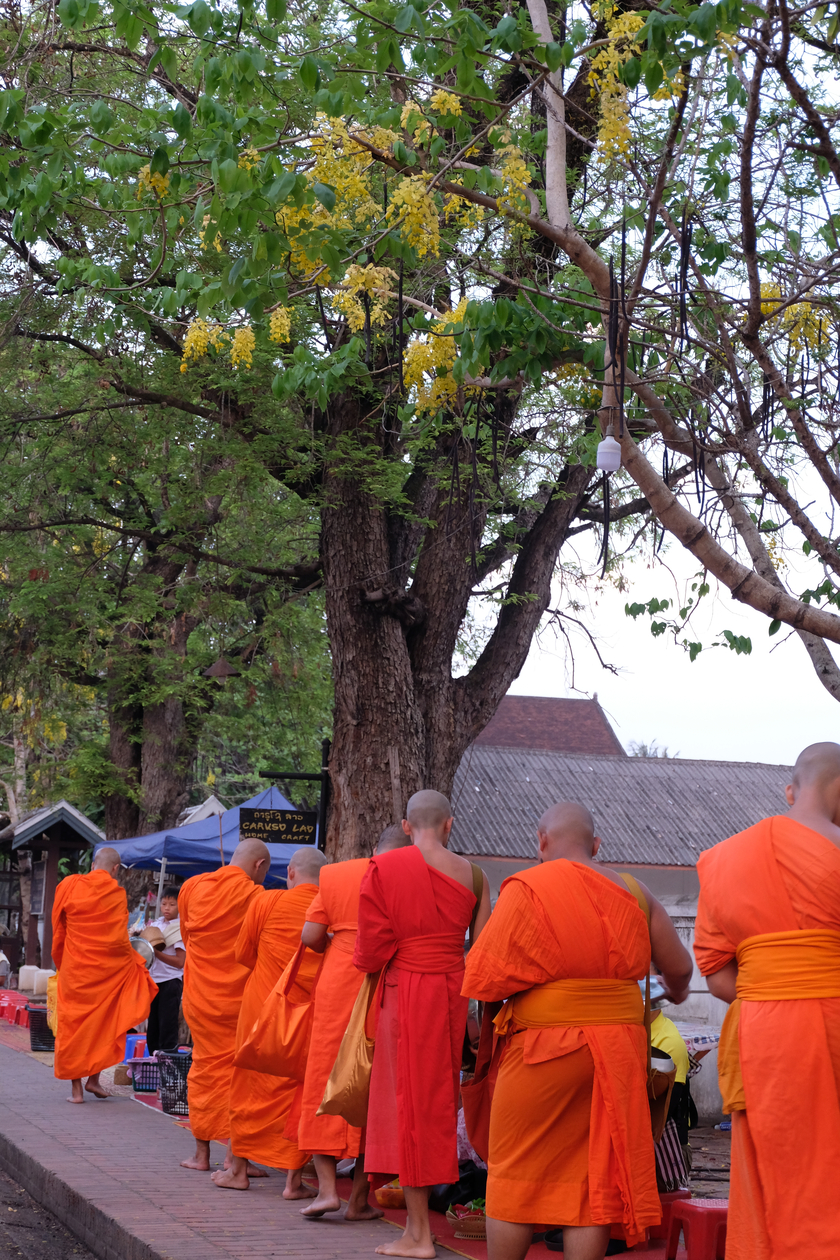
With every step we take, we feel the orange robes of the monastic order moving together in the pristine morning of life, the awakening of a new day.
Even if you don't sit directly with the people offering gifts, you can still observe the ceremony from the sidelines. However, remember to maintain silence and respect the local people during the ceremony; do not make noise, push your way through the crowd, take photos/use flash, or make excessive camera noise that disrupts the solemn atmosphere.
"Luang Prabang is a city where car horns don't exist."
In Luang Prabang, after participating in the alms-giving ceremony, you definitely can't miss the morning market right there. Just search "Morning market" on maps and walk a short distance to get there. If you're interested in learning about the culture of a particular region, the market is the best place to see the rhythm of life, the people, and the local specialties.
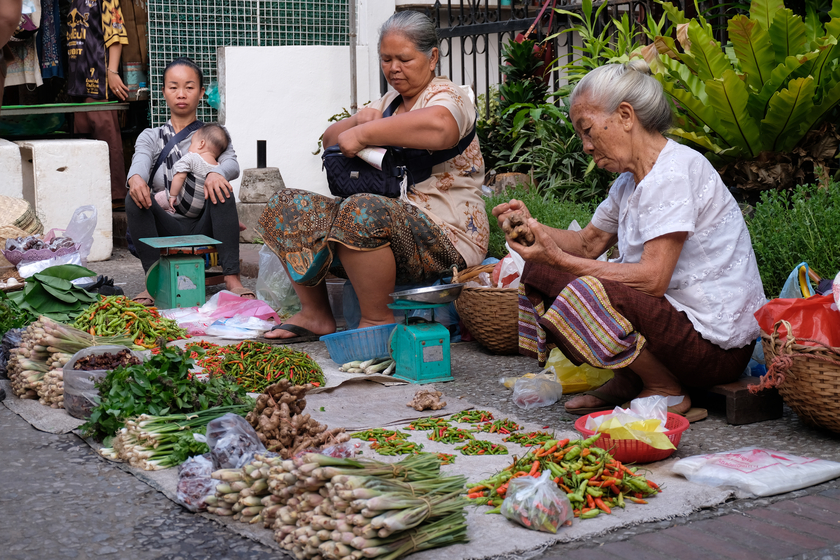
Market area in Luang Prabang
“Here, in my opinion, souvenirs and local specialties like scarves, wallets, dried meat… are sold at more affordable prices compared to the night market. People often say it’s ‘noisy like a market,’ but try the Lao market and you’ll see that’s no longer true. Even in the market, the pace is slow, there’s no aggressive sales pitching, as if everyone thinks they’ll buy if they find the right opportunity. And even in the market, it’s very clean and everything feels neat and tidy, from the small bundles of vegetables tied together neatly, to the portions of onions and chilies divided into small, interesting-looking mounds,” Kim Ngan remarked.
Besides participating in the alms-giving ceremony and visiting the morning market, Kim Ngan also suggested some must-try experiences when visiting the ancient capital of Luang Prabang.
Visit Wat Xieng Thong – the most beautiful ancient temple in Luang Prabang, with its magnificent towers and exquisitely carved walls. Or immerse yourself in the cool, turquoise waters of Kuang Si Waterfall, watch the sunset over the Mekong River, and feel the peaceful atmosphere and slow pace of life in the ancient capital.
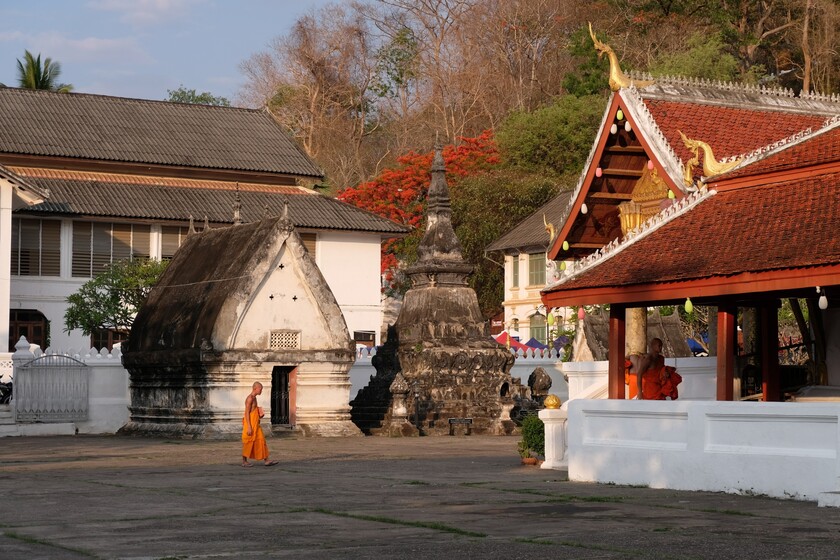
The peaceful atmosphere and slow pace of life in the ancient capital of Luang Prabang.
Enjoy street food by strolling through the night market and trying dishes like grilled fish, Lao noodles, drinking Lao beer, and eating sweet soups… Wander through the streets, admiring the traditional, old-fashioned houses reminiscent of Hoi An ancient town, but with a touch of Western influence.
Kim Ngan said: “Of the three provinces I had the chance to visit in Laos, the ancient capital of Luang Prabang was my last stop, but it left the most special impression on me. Here, everything felt so peaceful, time seemed to slow down like the calm, tranquil surface of the Nam Khan River. What particularly impressed me was that there weren't a single traffic light in this beautiful city. Whether the roads were busy or empty, vehicles moved slowly, and no one hurriedly honked their horns, not even a little. Luang Prabang is a city where car horns don't exist.”
One unforgettable memory from this trip to Laos was when a member of Kim Ngan's group lost her passport right before returning to Vientiane to fly back to Vietnam. Because time was so tight, her friend even considered staying in Laos for a few more days to resolve the situation. However, thanks to the enthusiastic support of the Vietnamese Consulate in Laos, her friend received assistance in obtaining a temporary passport, even though it was almost the end of the workday and the next day was the weekend.
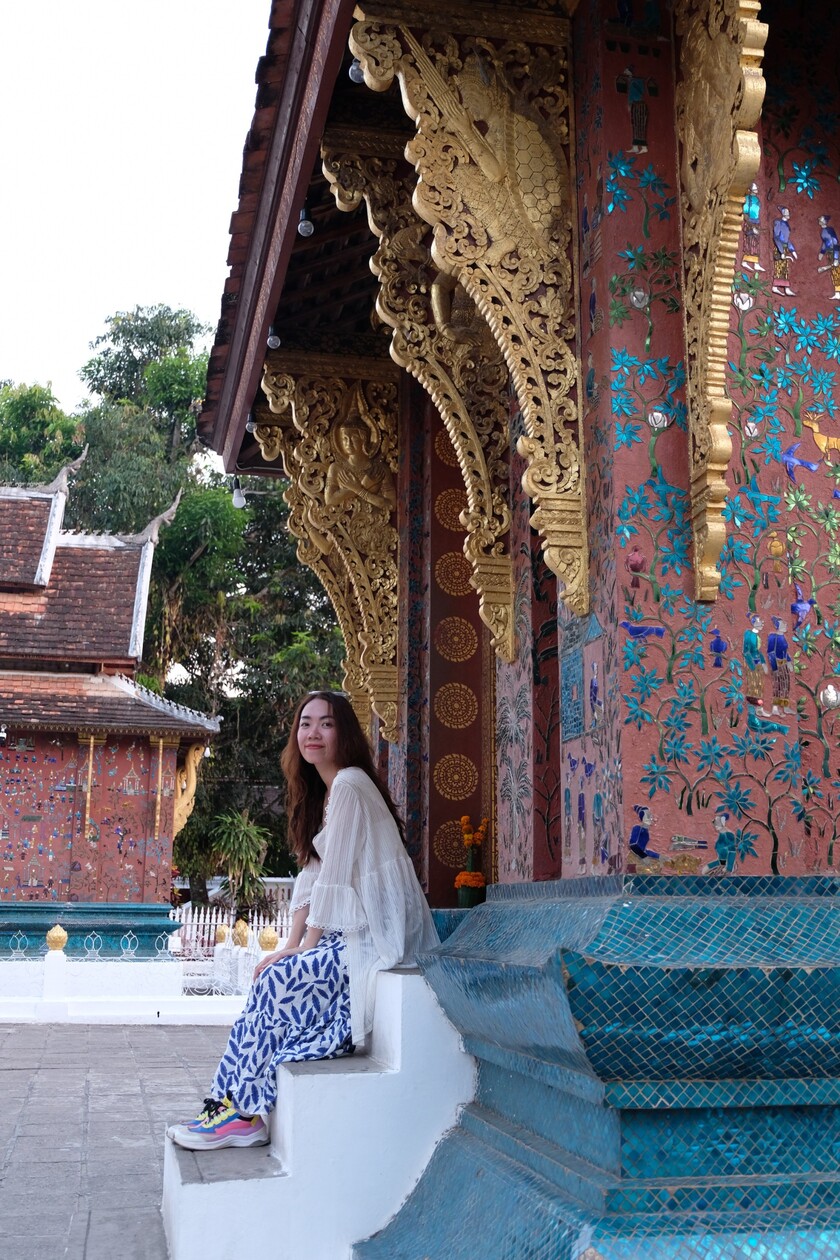
Kim Ngan was impressed by the country, its people, and her experiences in Laos.
During that time, the local tourist police in Luang Prabang were still trying to find the lost passport. Fortunately, just before boarding the high-speed train back to Vientiane, the Consulate informed them that they had found her friend's passport and rushed to the train station to return it in time. Thanks to this, Kim Ngan's friend no longer needed to use the temporary passport.
"I was truly impressed by the country, the people, and the experiences in Laos. If I have the chance, I will definitely return to this land and immerse myself in the slow-paced, peaceful life here," Kim Ngan added.