VI
VI


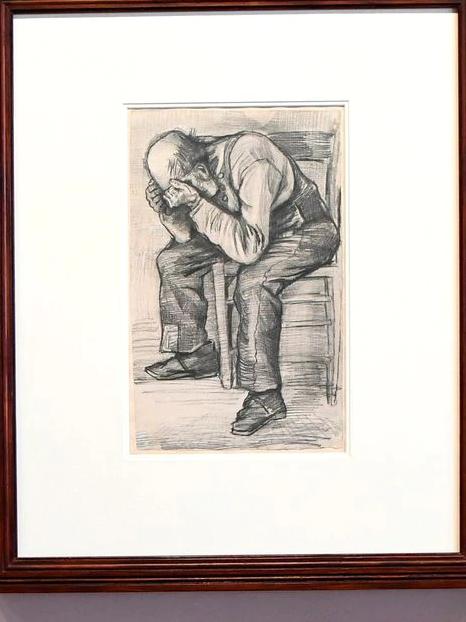
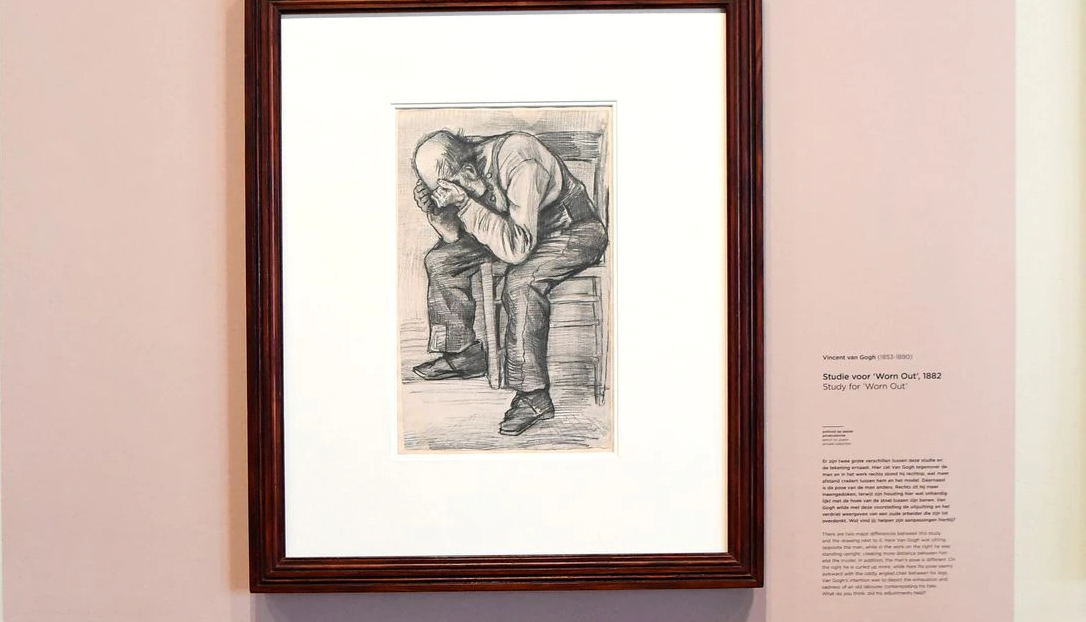
The Van Gogh Museum in Amsterdam has confirmed that the painting is indeed a work by Van Gogh. Teio Meedendorp, a senior researcher at the museum, said it was a "spectacular" discovery that sheds light on Van Gogh's early painting career as an artist living in The Hague – a period when he was little known before he arrived in Paris and the southern parts of France.
The 50x30cm painting, titled "Study for 'Worn Out'," was drawn with a carpenter's pencil on a sheet of rough watercolor paper. It depicts an old man, looking exhausted from his work, wearing a waistcoat, trousers, and boots, sitting on a wooden chair with a weary expression.
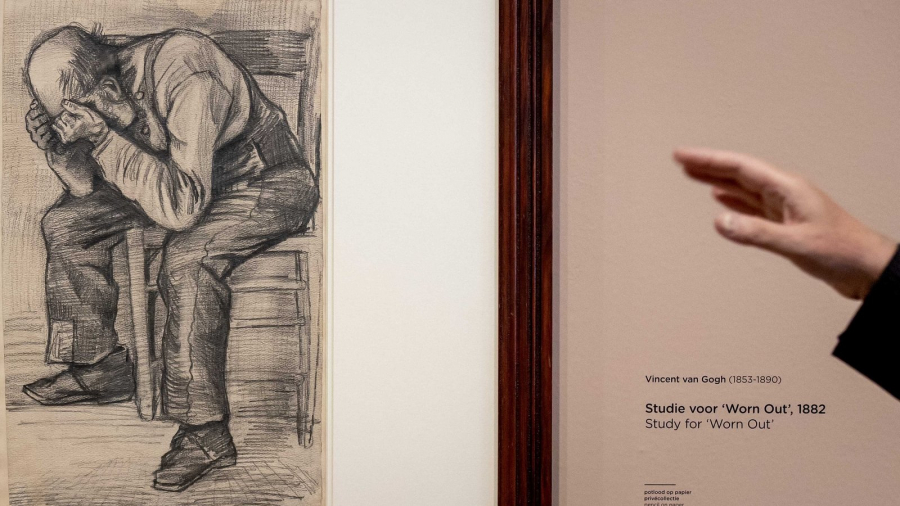
The artwork "Study for 'Worn Out'" is currently on display at the Van Gogh Museum.
The work was painted in late 1882 when Van Gogh was 29 years old and in the second year of his artistic career. At that time, he painted many portraits of people to study as many people as possible, often hiring models from the Dutch Reformed Old Men's and Women's House and paying them a fee, perhaps 10 cents at the time or some coffee.

Not long after the painting "Study for Worn Out" was created, Van Gogh also produced a similar work titled "Worn Out." This painting is now in the collection of the Van Gogh Museum. In addition, the Van Gogh Museum also houses a lithograph with a similar theme called "At Eternity's Gate."
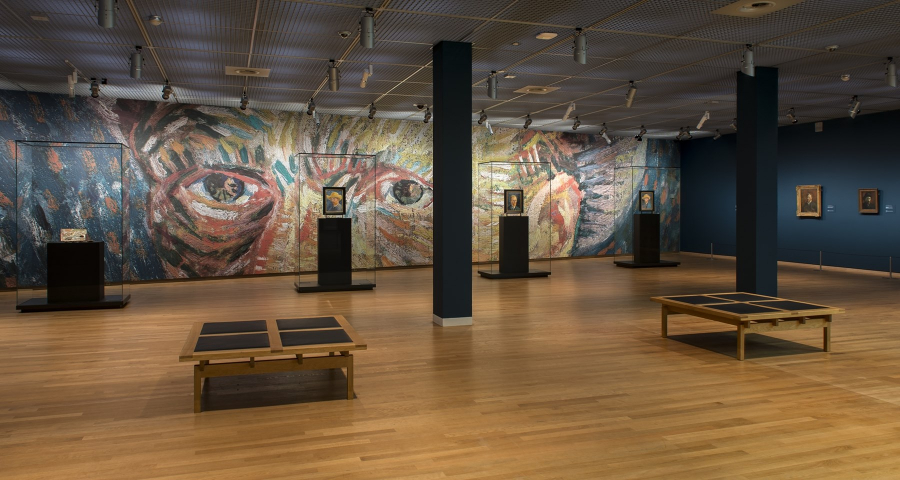
The Van Gogh Museum in Amsterdam, Netherlands.
Meenendorp said that Van Gogh gave his works English titles, partly in the hope that his drawings would get noticed and that he would have the opportunity to work as an illustrator for a magazine. However, that did not happen, and during his lifetime, he did not have much commercial success.
The painting has been in a private collection in the Netherlands since around 1910. According to plan, "Study for 'Worn Out'" will be displayed at the Van Gogh Museum until January 2, 2022, before being returned to its owner.
In a single year, the museum receives numerous requests from people who believe they possess a work by Van Gogh. Very few of these are authentic and are brought to the museum for display.