VI
VI


A green ribbon draped between the heritage mountains and forests.
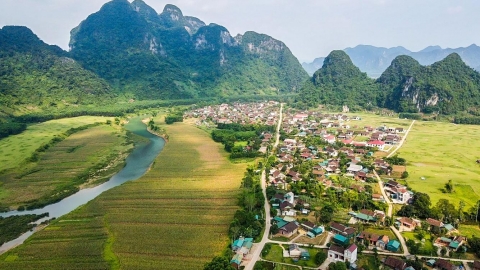
From Dong Hoi, following the western branch of the Ho Chi Minh Trail, Mr. Cung stopped in Bo Trach district, where the Chay River branches off from the Son River and flows silently, nestled beneath limestone mountains and ancient trees. The river is named Chay because the sound of its flowing water amidst the mountains and forests resonates like the sound of a pestle pounding rice. The river is about 10 km long, with a clear blue stream in the middle and rocky rapids and limestone banks on either side, featuring unique and striking rock formations.
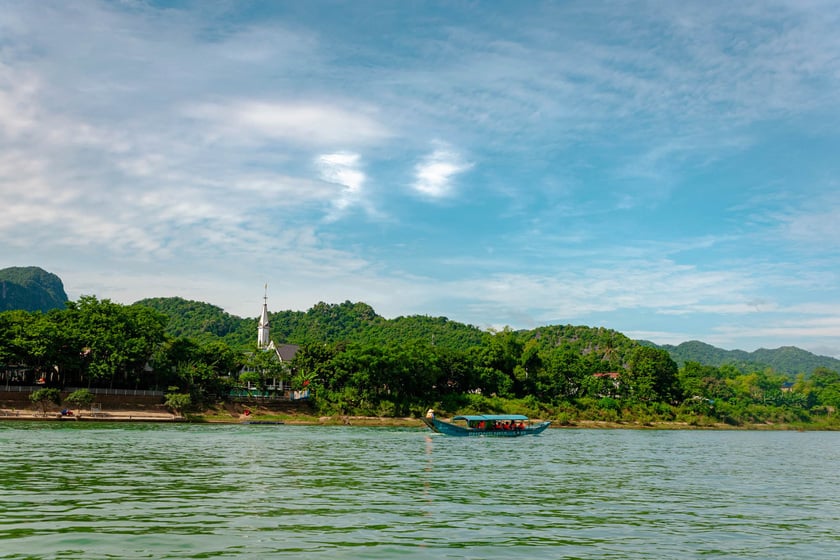
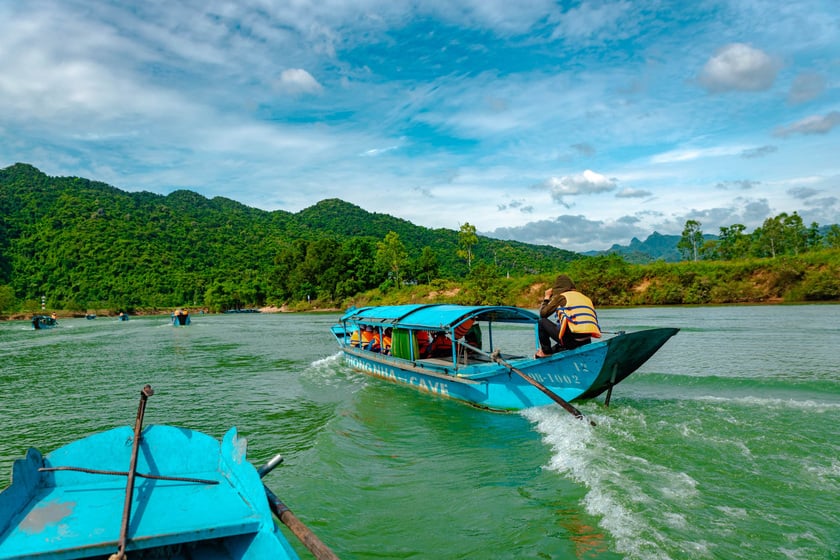
Nhiếp Anh Cung took a boat down the Chày River to explore the natural beauty of the core area of Phong Nha - Kẻ Bàng National Park.
The river's blue color isn't due to reflected light, but rather radiates from its very depths, profound and serene. It's the result of millions of years of water dissolving calcium from limestone. As the boat glides through the water, each stretch reveals a different shade of blue. Some sections are emerald green like the sky, others a verdant green like ancient moss, like a mosaic of colors naturally blended to create a masterpiece. They aren't gaudy, but tranquil and clear, drawing one into a cool, green space on a summer day, where only the sound of oars and the wind rustling through the mountains remain.
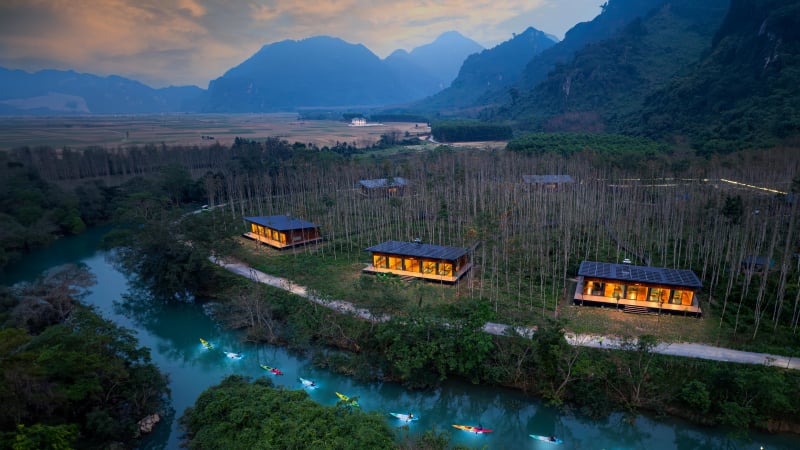
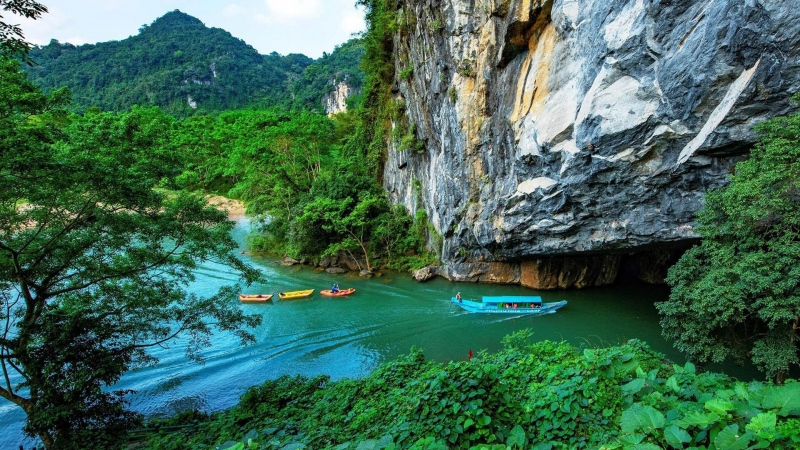
Beyond its vibrant colors, the Chay River also boasts a rare ecosystem, home to species native to the sea, including the spotted sardine and spotted eel, both of which are listed in the world's Red List of endangered species.
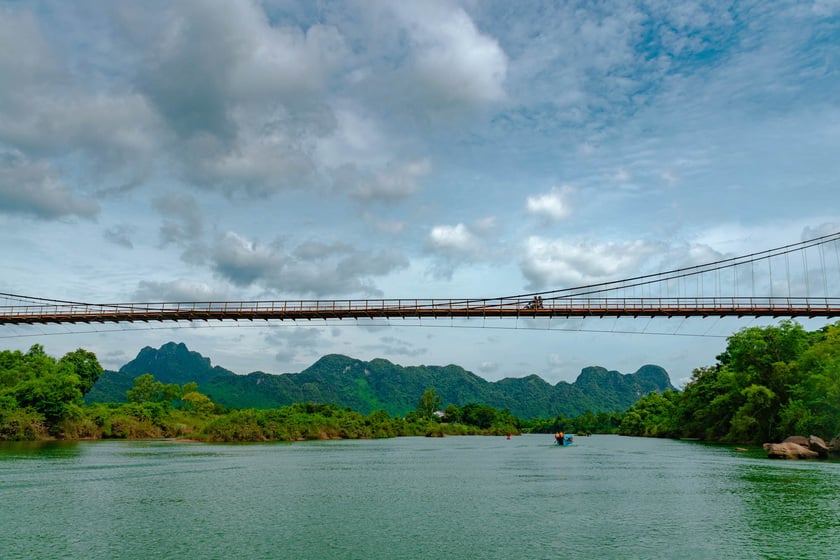
The Chay River, with its emerald green water, reflects the clouds and sky.
Although familiar with the mountains and forests of Northwest Vietnam and the seas and skies of Central Vietnam, the Chay River gave Cung a different feeling: "It's not wildly fierce, nor majestically arrogant. The Chay River is like an old friend, quiet, gentle, and with something very meditative about it."

Darkness opened the way inside.
The flow of the Chay River led Cung into Dark Cave. Dark Cave appeared neither glorious nor brightly lit, just a dense, pitch-black space opening up between the cliffs, where the darkness was so thick it felt like you could touch it. "Entering the cave felt like stepping into a geological space millions of years old, deep and with nothing to guide me except a headlamp," he recounted.
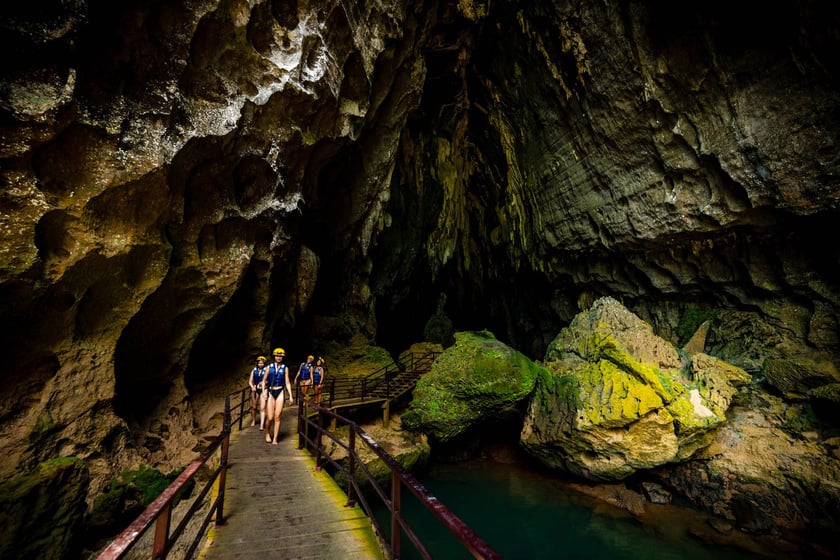
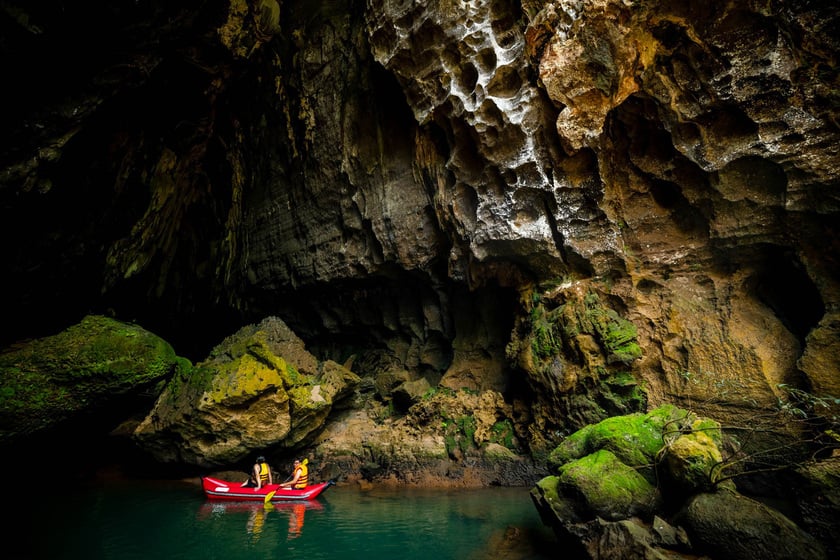
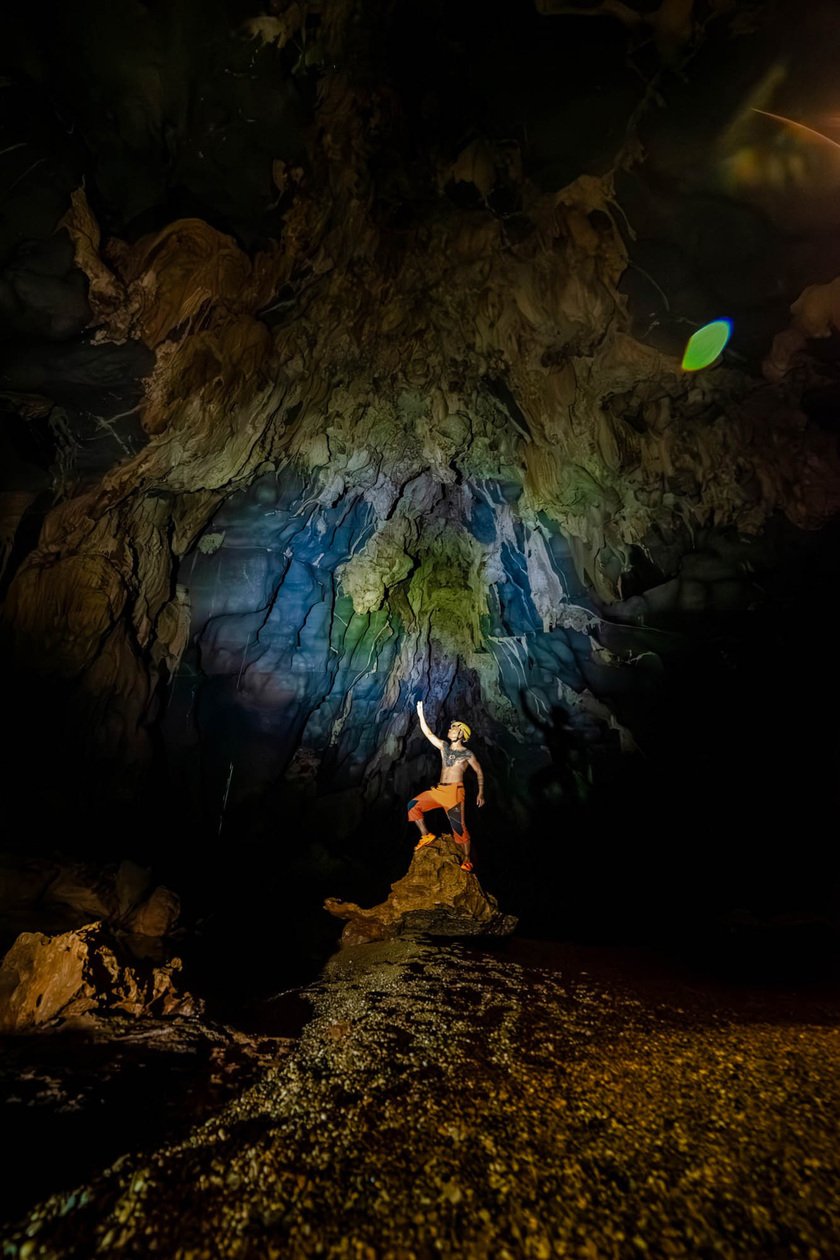
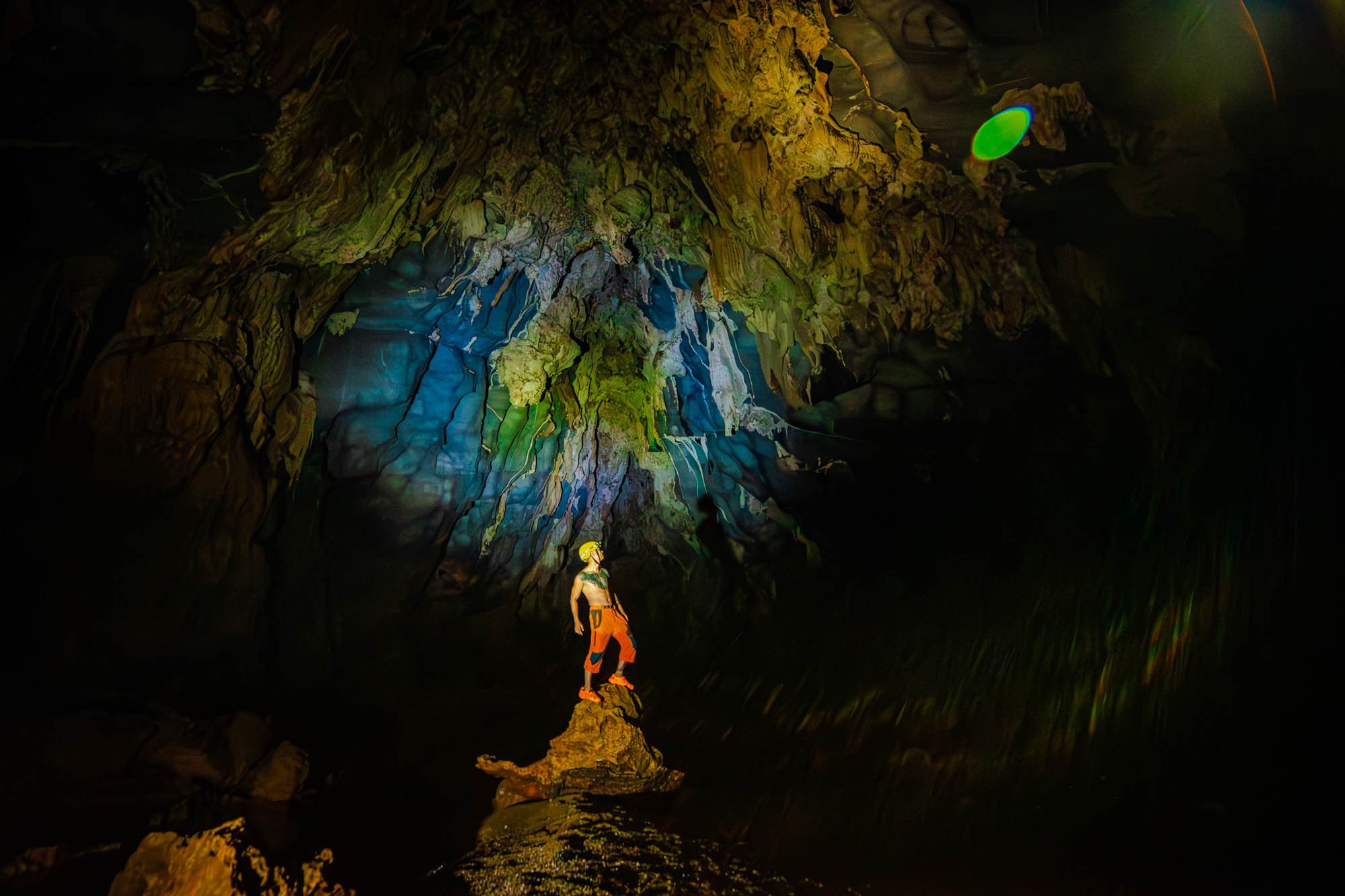
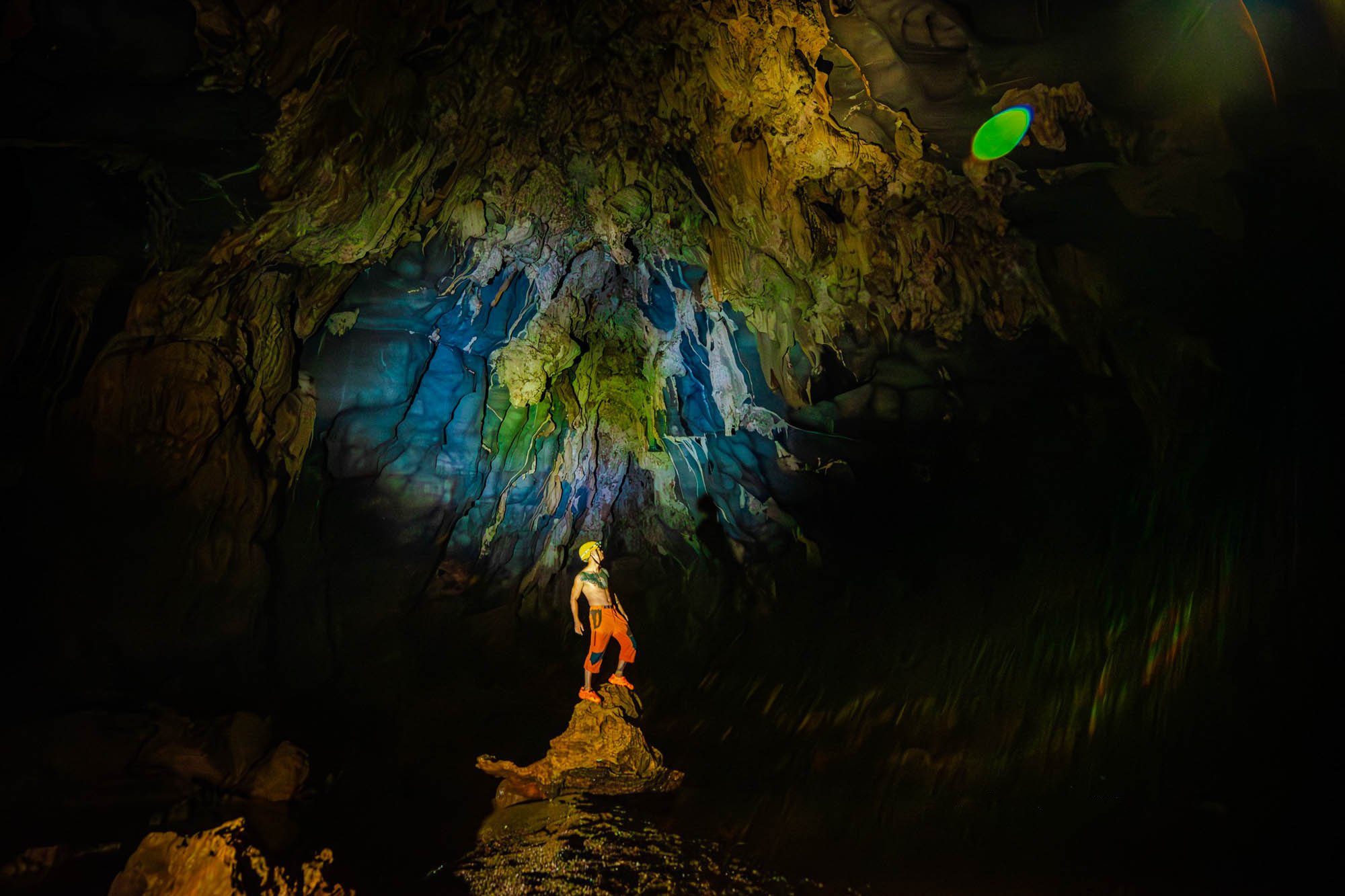
Dark Cave retains its pristine, untouched beauty, with no artificial lighting; the only source of light comes from headlamps.
Dark Cave was discovered in 1990, surveyed and named in 1992 by the Royal British Cave Exploration Association. The cave is over 5 km long, 80 m high, and has two entrances: one facing the river, the other into the forest. "There's nothing fancy here, just rocks, moss, and the feeling that you're venturing deep into something very ancient," said Mr. Cung.
The deeper he went, the more he felt the chill emanating from the rocks. The high humidity caused the stalactites to be covered in green moss, a gloomy green that, when photographed, was hauntingly beautiful. Even more surprising were the ferns growing parasitically on the stalactite columns. According to researchers, the weak light from the cave entrance, the high humidity, and the wind helped plant spores penetrate and grow on the stalactites – a place where life seemed impossible.
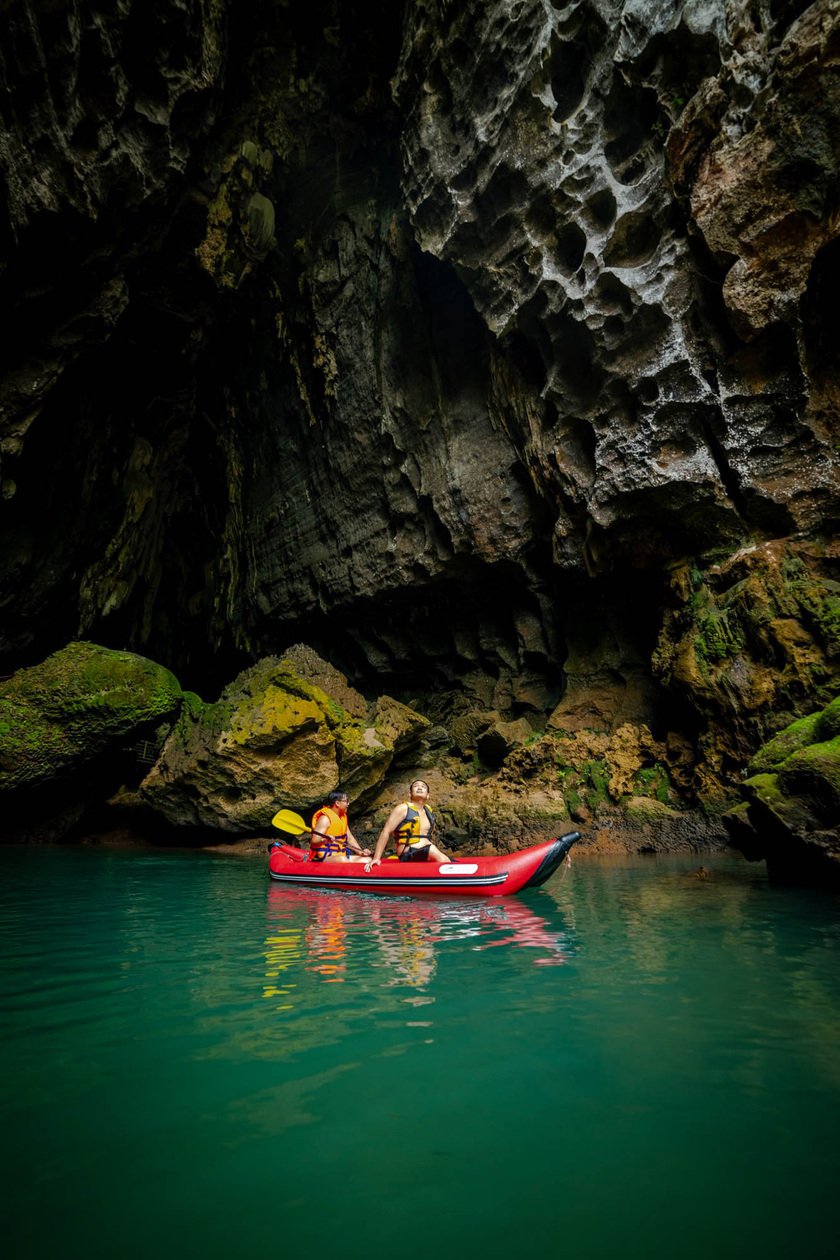
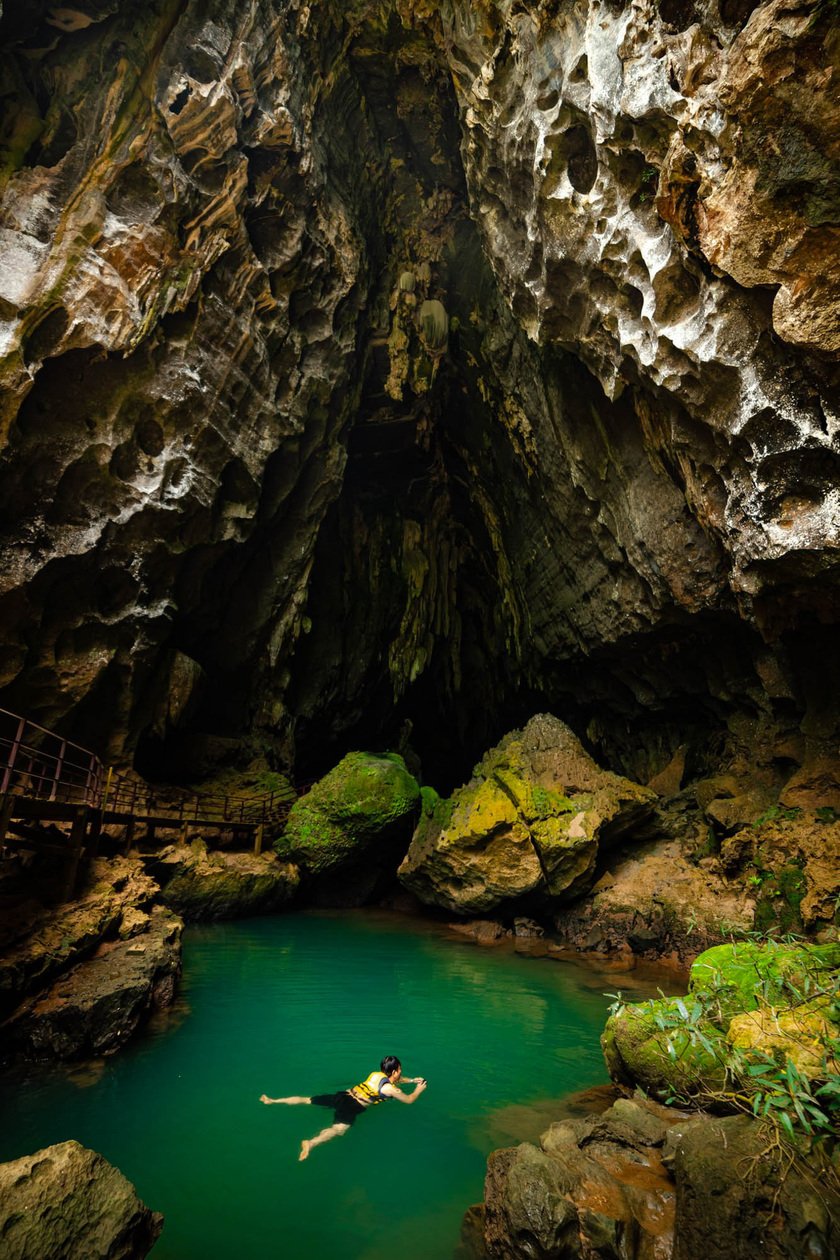
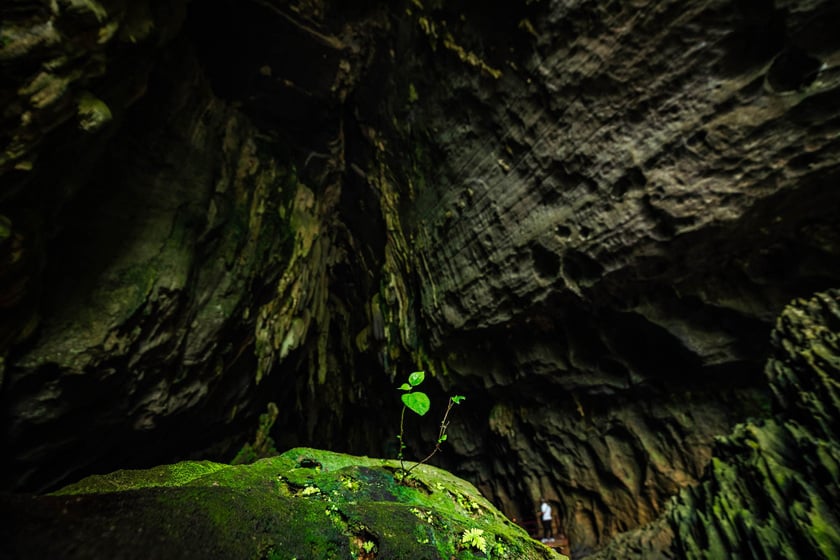
Dark Cave possesses an eerie beauty of rocks, moss, stalactites, and a damp space enveloped in darkness.
Dark Cave still preserves geological formations dating back approximately 400-500 million years. It provided a type specimen of a completely new crab species to the Singapore Natural History Museum and is evidence that the Ke Bang mountain range once lay beneath the ancient sea. Cung said that standing in this space feels like reading a record of the Earth's history written in stone, moss, and the damp, cool breaths emanating from deep within the cave.
Experiences that bring you closer to nature.
Although not as magnificent as Thien Duong Cave or Son Doong Cave, Dark Cave offers explorers a rare sense of unspoiled wilderness. Inside the cave, visitors can swim in the cool Thuy Tien Lake and immerse themselves in a natural mud pool about 20 meters wide.2- a place where mud is formed from groundwater seeping through limestone, containing a high concentration of minerals, which are good for the skin and health.
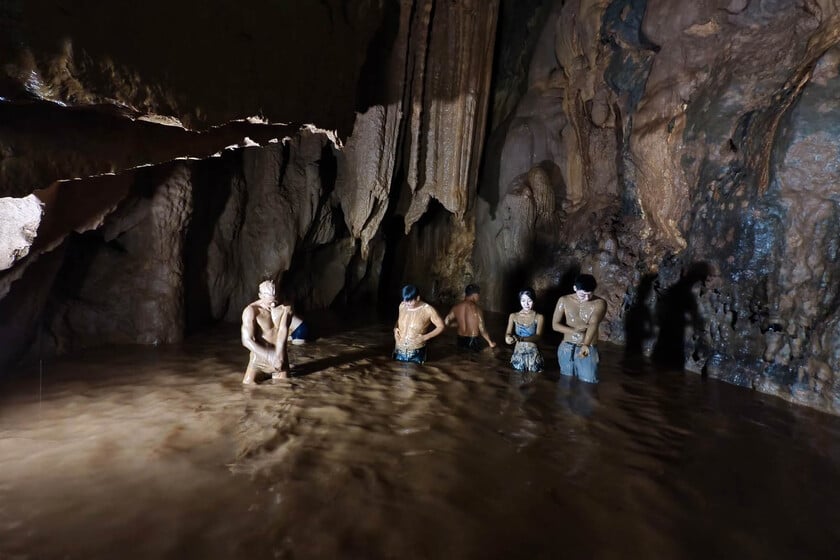
Natural mineral mud pool inside Dark Cave
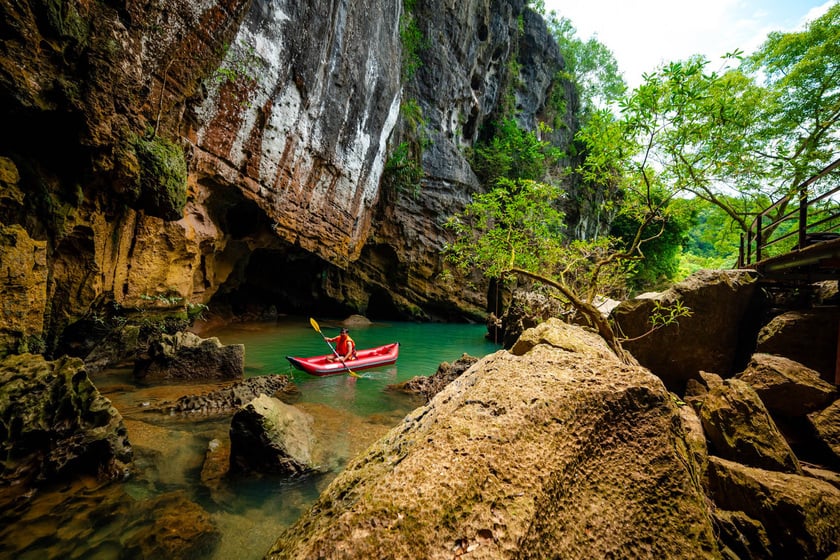
After leaving the cave, the journey continues with outdoor activities such as a short zipline ride down the river, kayaking along the Chay River, or taking photos at floating rafts, water buoys, and pyramids on the river. Those who enjoy a challenge can jump from a bridge 6-7 meters high, or simply sit by the riverbank, enjoying grilled fish, free-range chicken, and traditional dishes of the local people in ancient villages along the river such as Ha Loi, Tram, Me, and Chay Lap.
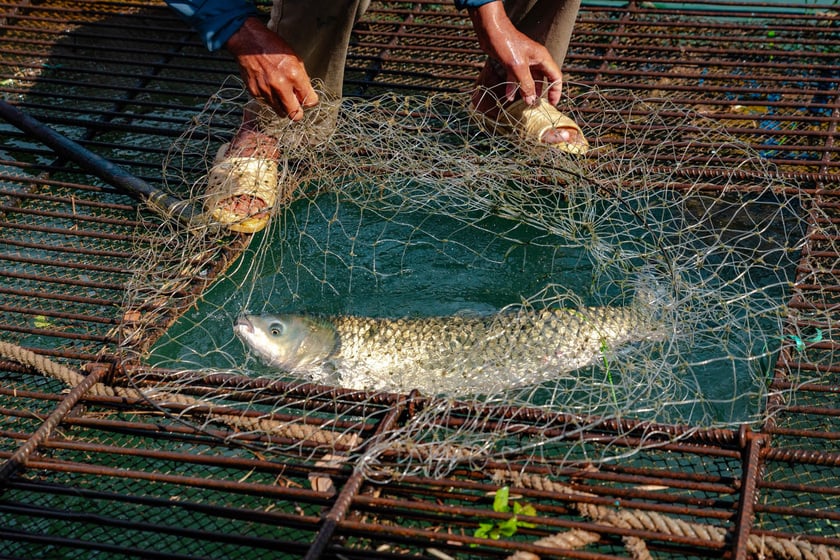
Visitors can enjoy simple yet delicious local dishes in the riverside villages.
Nguyen Trong Cung embarked on his journey to the Chay River and Dark Cave like a pilgrim to a sacred land of nature. Amidst the darkness of the cave, amidst layers of pristine space, he seemed to find his own "light." "Sometimes, beauty needs to be nurtured within, like light lying still in the darkness," he said, then quietly reminisced to the west, where the green river still flows endlessly through ancient rock formations.