VI
VI


While Hanoi's autumn beckons with gentle breezes and the fragrant aroma of young rice flakes filling every street corner, Da Lat welcomes autumn in its own unique way. The dreamy rose gardens, dotted with ripe red and yellow roses, have become a familiar image for those who love Da Lat's autumn.
In September, when the autumn sun begins to shine like silk and the persimmons turn a golden-yellow color, the persimmon season begins.
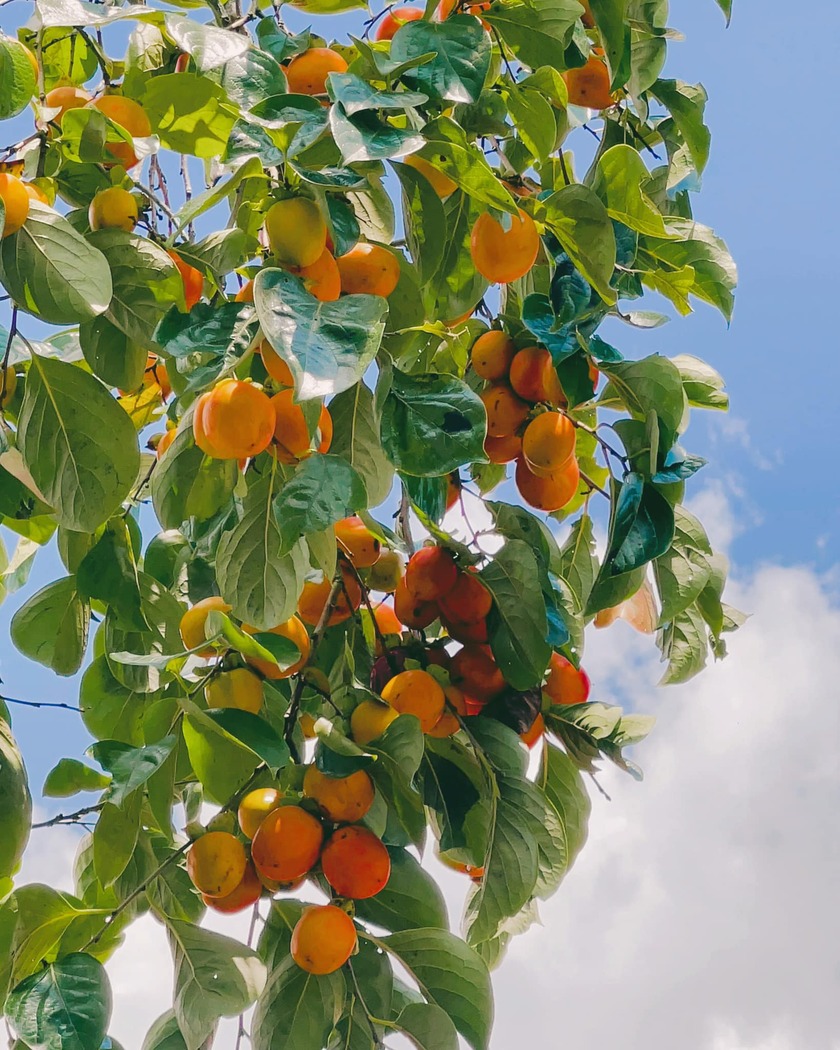
Amidst the fragrant flowers and sweet fruits of Da Lat, the persimmon tree stands out with its distinctive color.
A yearning to return to simple, authentic things.
Anh Thu (26 years old, from Vinh Phuc province), born and raised in a farming family in Vinh Phuc, experienced a significant turning point in her life after graduating from university. Despite having a stable job and income in a big city, Thu always wanted to leave urban life and return to a rural area, firstly to experience life there, and secondly, if she found it suitable, to settle down and develop economically.
In the autumn of 2020, she visited Da Lat, a dreamy city nestled among whispering pine hills. At that time, Thu didn't know that Da Lat was famous for its persimmon season. During her short trip, wandering through the tea hills of Cau Dat and Xuan Truong, Thu learned about persimmon trees and the persimmon ripening season. Exploring and learning on her own, she was given ripe persimmons picked directly from the trees by local farmers and allowed to visit their orchards to take souvenir photos. Her fortunate encounter began there.
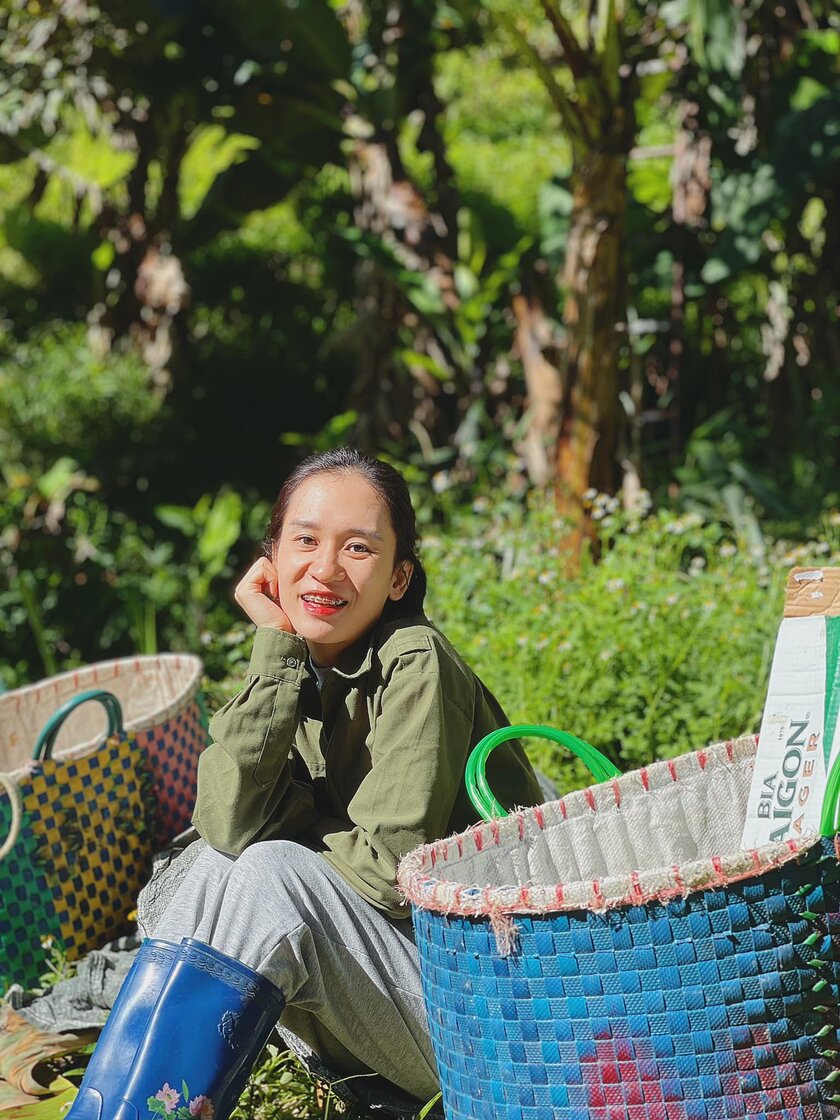
Anh Thu on the day of harvesting the crunchy persimmons from Chin Nen.
Returning from that trip, Anh Thu decided to leave the hustle and bustle of Hanoi behind and pack her bags for Da Lat, the city of a thousand flowers. The flight that took her to the land of ripe persimmons marked a significant decision in Thu's life. She reminisced, "Even now, if someone asks why I was so reckless that year, I can't give a precise answer. I can only say that I trusted my feelings, my choices, and my decisions. That December, 2020, a leap year, I packed a suitcase full of 18 kg of checked baggage and left Hanoi to live and work in Da Lat."
Beloved seasons of roses
Every year, around the end of August, Da Lat persimmons begin to bear green fruit on the branches. By September, the skin turns yellow, and in October they ripen to a plump, glossy pink, creating a vibrant spectacle. A persimmon season is usually very short, lasting only about 3-4 months (from September to December), and the fruit is then successively named: crunchy persimmon, ripe persimmon, dried persimmon, and hanging persimmon.

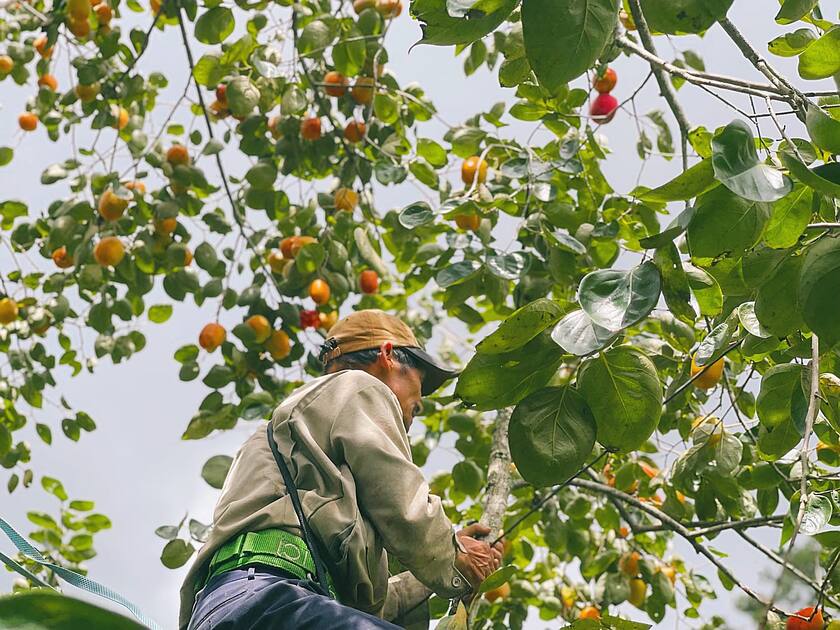
The farmers harvest persimmons directly from the trees.
The season begins with the Chín Nên persimmon, a famous variety from Dran, Đơn Dương. This persimmon has left a lasting impression on locals with its sweet, refreshing flavor, golden-yellow flesh, and almost seedless nature, leaving a lasting impression on anyone who tries it. Tourists visiting the area are captivated by the allure of the Chín Nên persimmon. This persimmon is also linked to an interesting historical story, originating from a farmer named "Chín Nên" (or Uncle Chín) who brought the persimmon variety to the town. Thanks to grafting techniques, the number of persimmon orchards in Dran has steadily increased. The name "Chín Nên" was born to commemorate the first person to bring this persimmon tree to the town.
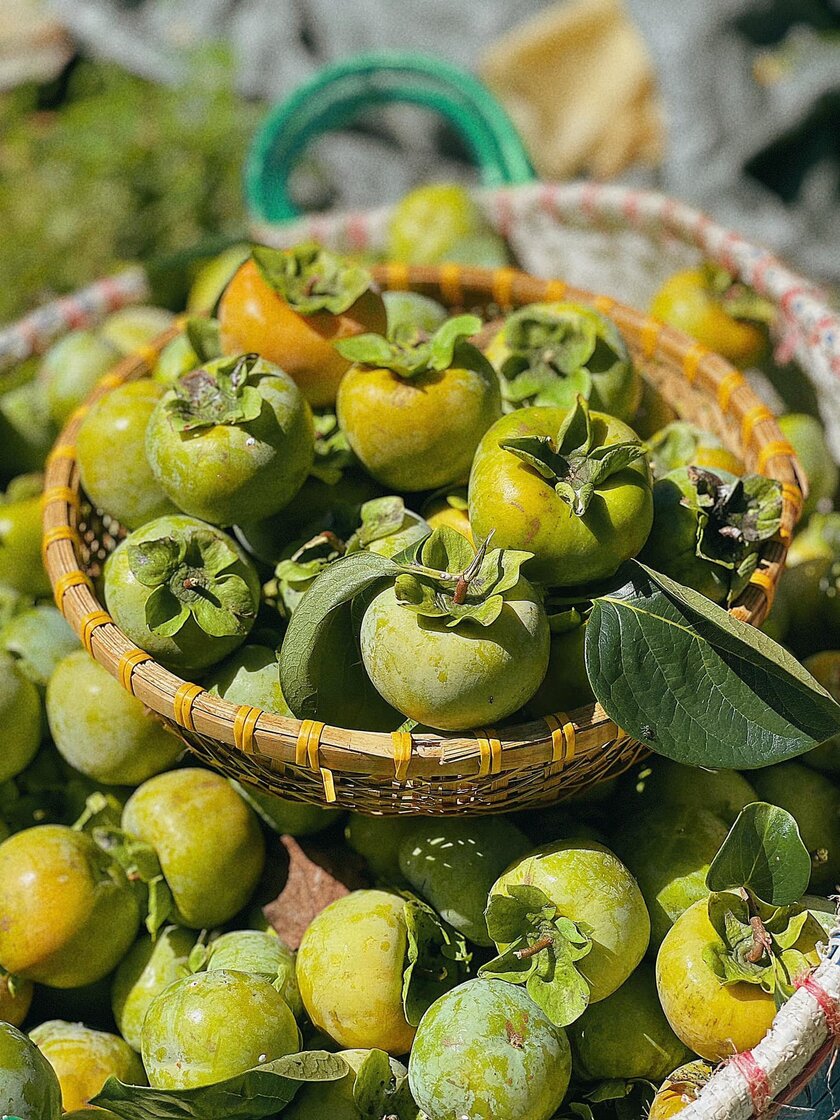
The season will begin with the famous Chín Nên persimmons from Dran, Đơn Dương, Lâm Đồng.
Alongside the crisp persimmon season of Chín Nên, there's also the "muse" of the smooth, egg-shaped persimmon, considered a northern version of the bamboo-skinned persimmon. This type of persimmon is harvested when fully ripe, with a beautiful yellow color, and then left to ripen naturally. The persimmon is at its best when the skin is translucent, easy to peel, and can be scooped out with a spoon simply by cutting it in half. The sweetness is intoxicating, and each segment has a delicate, jelly-like crispness. When chilled, the flavor becomes even more captivating.
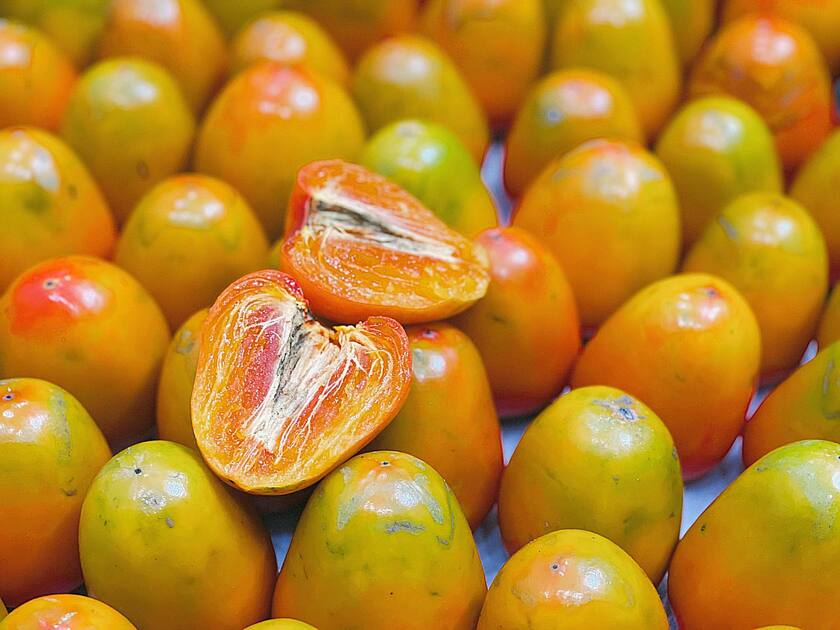
"The muse" - a rosy, egg-shaped, smooth rose.
After the season of crunchy and ripe persimmons passes, Da Lat transitions to the season of Tam Hai square persimmons for drying, around the end of October to November. At this time, the persimmon trees in the orchards begin to ripen, and the persimmons on the trees are fully ripe. This type of persimmon is not only suitable for eating directly but is also used to make dried persimmons, which are soft, chewy, and fragrant. The drying process requires patience, skill, and temperature is the key factor determining quality. Too high a temperature will cause the persimmons to dry too quickly. The outside may be dry, but the inside will remain wet, making them unsuitable for long-term storage. To ensure the persimmons retain their color, flavor, and chewy texture, temperature control is crucial. When you enjoy them, you will feel the soft, smooth flesh, the sweetness, and the characteristic aroma of ripe persimmons.
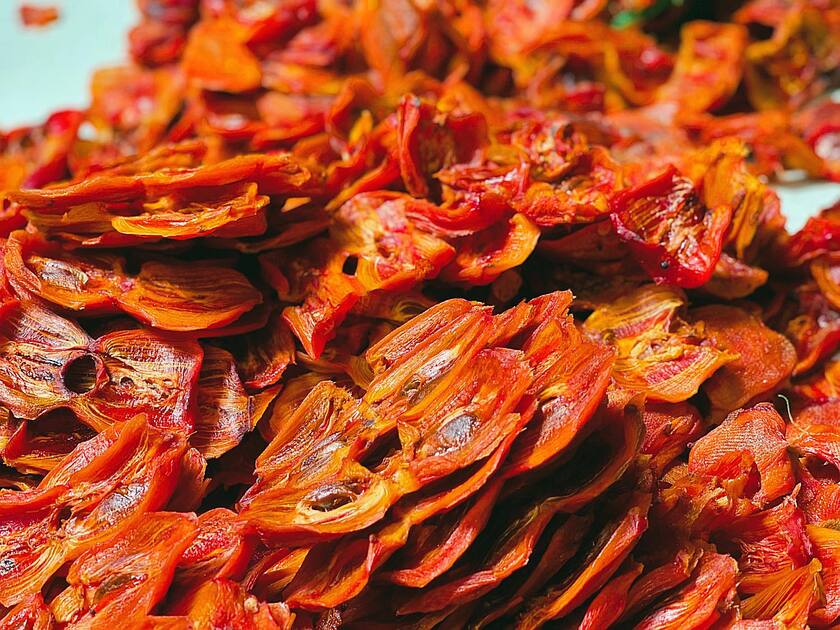
Dried Tam Vuong persimmons.
Persimmons are harvested when they turn a deep orange color, then left to ripen until very soft. They are peeled, pitted, and placed in a drying oven. The drying process takes 48 hours, repeating this cycle of drying and resting. During drying, the persimmons must be turned over to ensure even coloring. Perfectly dried persimmons are those with a slightly deep orange color, a chewy and fragrant texture, and a soft, non-hard texture.
She explained: "After the persimmons are ready, to pack them, I have to wait for them to cool completely, select the pieces that are soft and fragrant, discard the dry and hard ones, divide them into smaller 250-gram bags, vacuum seal them, and send them to customers."
Following the season of dried persimmons, the season of hanging persimmons arrives. At the end of the year, when the persimmons on the trees have turned a yellowish-orange color but are still firm (this is a crucial factor determining the quality of hanging persimmons), the hanging persimmon season begins. There are two popular types of hanging persimmons: egg-shaped persimmons (also known as fire-shaped persimmons or flat-headed persimmons) and square-shaped persimmons. Both are renowned for their delicious taste.
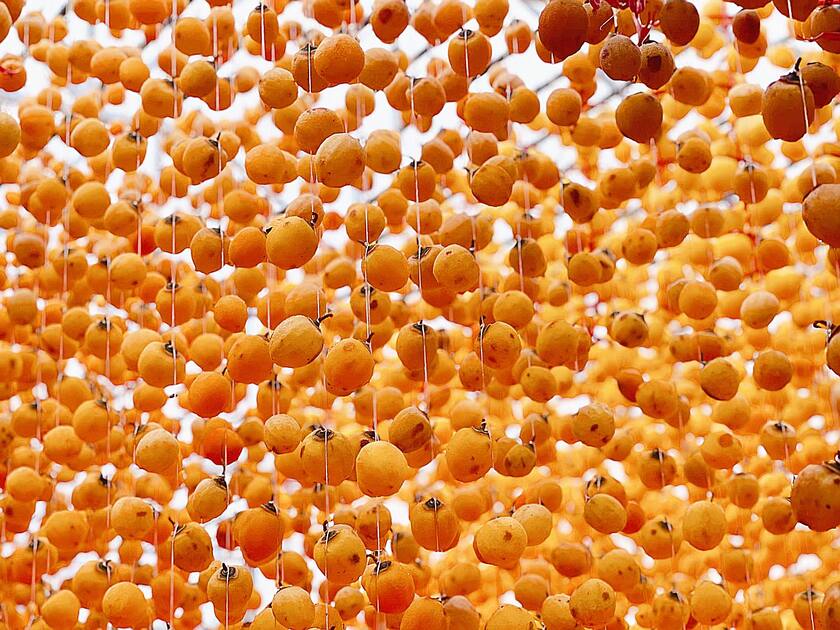
The season of hanging persimmons arrives, carrying with it the weight of the sky, the dreams, and the aspirations of the humble farmer.
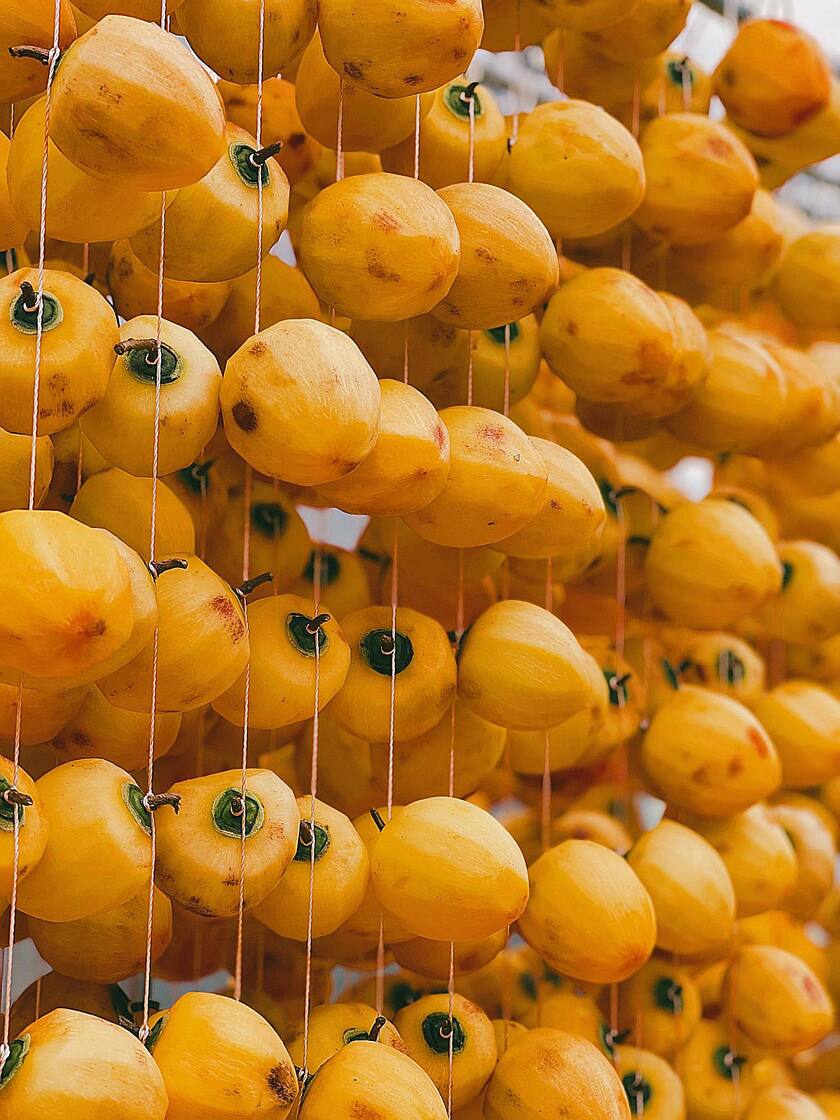
Pink egg-shaped pendant hanging in the wind.
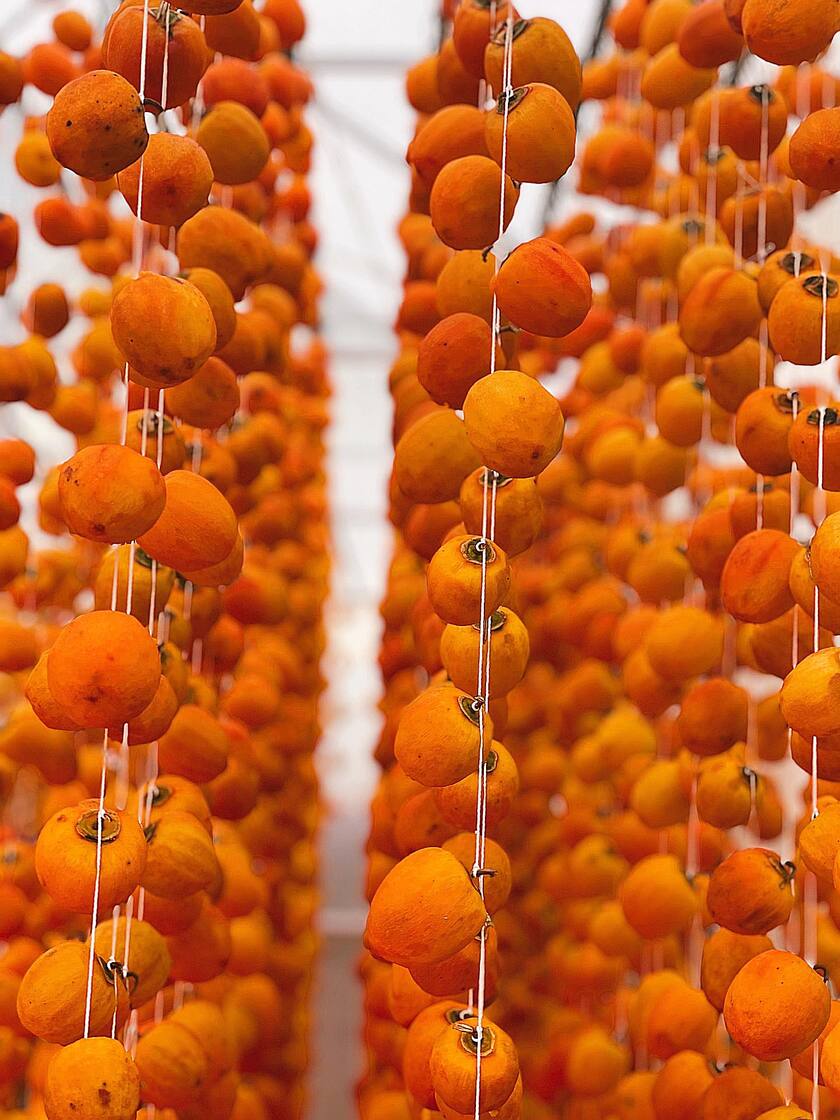
Red egg yolk hanging in the wind.
"As part-time farmers, we often call this the most arduous but also the most lucrative season. The persimmons selected for hanging are those that have fully turned orange, but must still be firm. If the persimmons aren't ripe enough, they won't have the beautiful orange-yellow color when hung. If they're overripe, they'll get crushed during transport. After that, the persimmons are peeled and hung on racks for 20-25 days, drying in the sun and wind. In late November and early December, when the weather starts to get sunnier and windier, the persimmons absorb that sun and wind, becoming chewy, fragrant, and oozing with sweetness. Hanging persimmons in the dry wind, despite facing many risks, results in an incredibly sweet and visually appealing product. The chewy, fragrant persimmons, oozing with sweet nectar, seem to embody all the love for the profession of farmers like us," Anh Thu shared nostalgically.
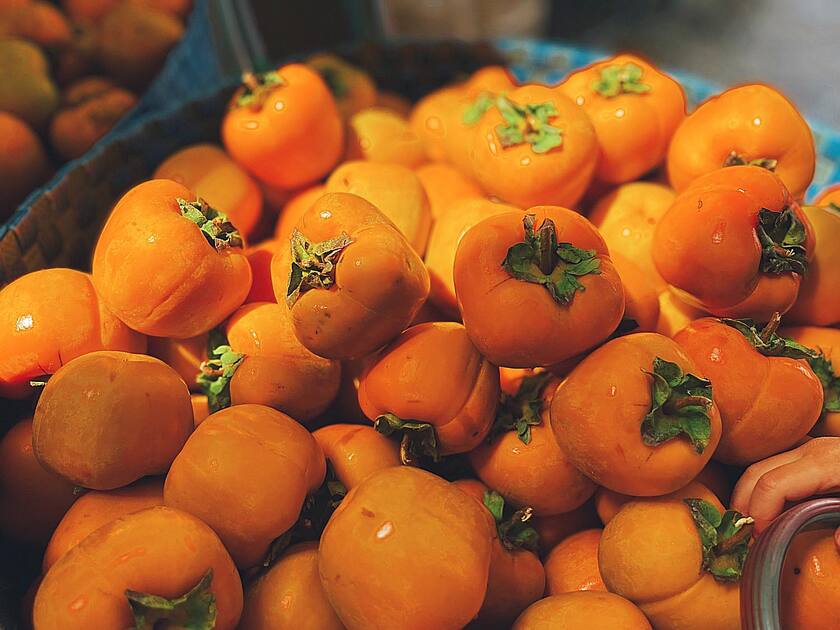
When the egg-shaped persimmons are halfway through their season, the square-shaped persimmons ripen, turning a rich orange-yellow. This type of persimmon is significantly more expensive than the egg-shaped persimmon, both fresh and after being dried.
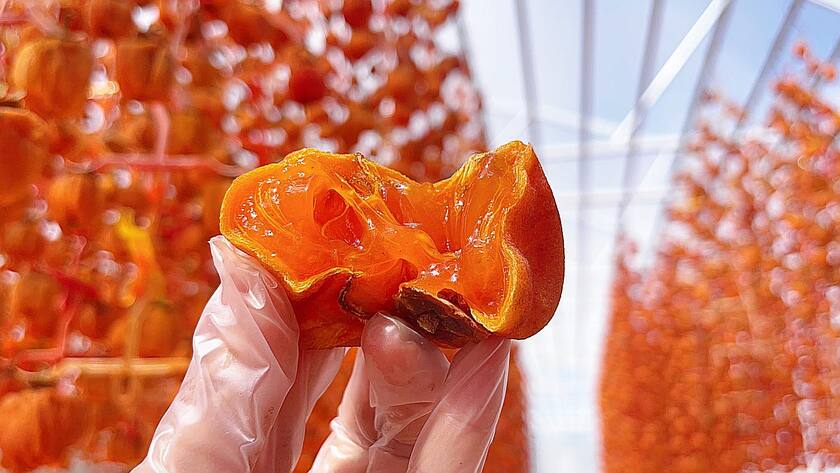
A square persimmon hangs in the wind for 27 days on the vine. The persimmon juice is orange and jelly-like.
Difficulties and challenges do not discourage farmers.
After a year of nurturing and caring for their crops, the happiness of farmers like Thu is limited to the fleeting persimmon season. In a conversation with Travellive, Anh Thu candidly shared her feelings about the harvest season.
Anh Thu recounted: "When making dried persimmons, the most difficult part is setting the temperature correctly. Initially, even though I monitored the temperature evenly and constantly rotated the trays, the batches of dried persimmons still came out dry and hard, sometimes even burnt. Some batches were dry on the outside but still wet on the inside; drying them until the inside was dry would leave the outside stiff and inedible. Furthermore, selecting the right persimmons is crucial. If you accidentally pick an unripe persimmon, the dried persimmons will be bitter and won't achieve the desired color. After countless failed attempts, my hard-earned lesson is to use low heat, allowing the persimmons to dry slowly and evenly from the outside in. And always wait until the persimmons are fully ripe before peeling and drying them. Although peeling fully ripe persimmons is difficult and requires more labor, the resulting product is incredibly satisfying."
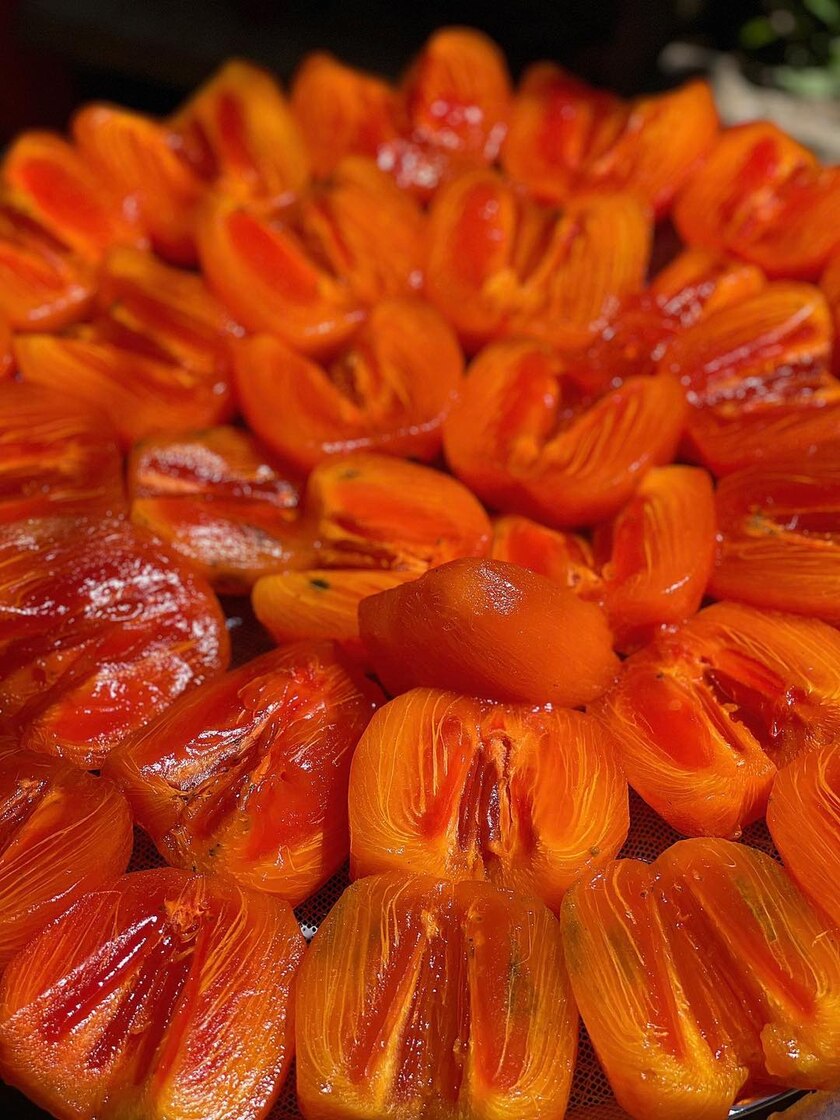
The persimmons are peeled, arranged, and then put into a drying oven.
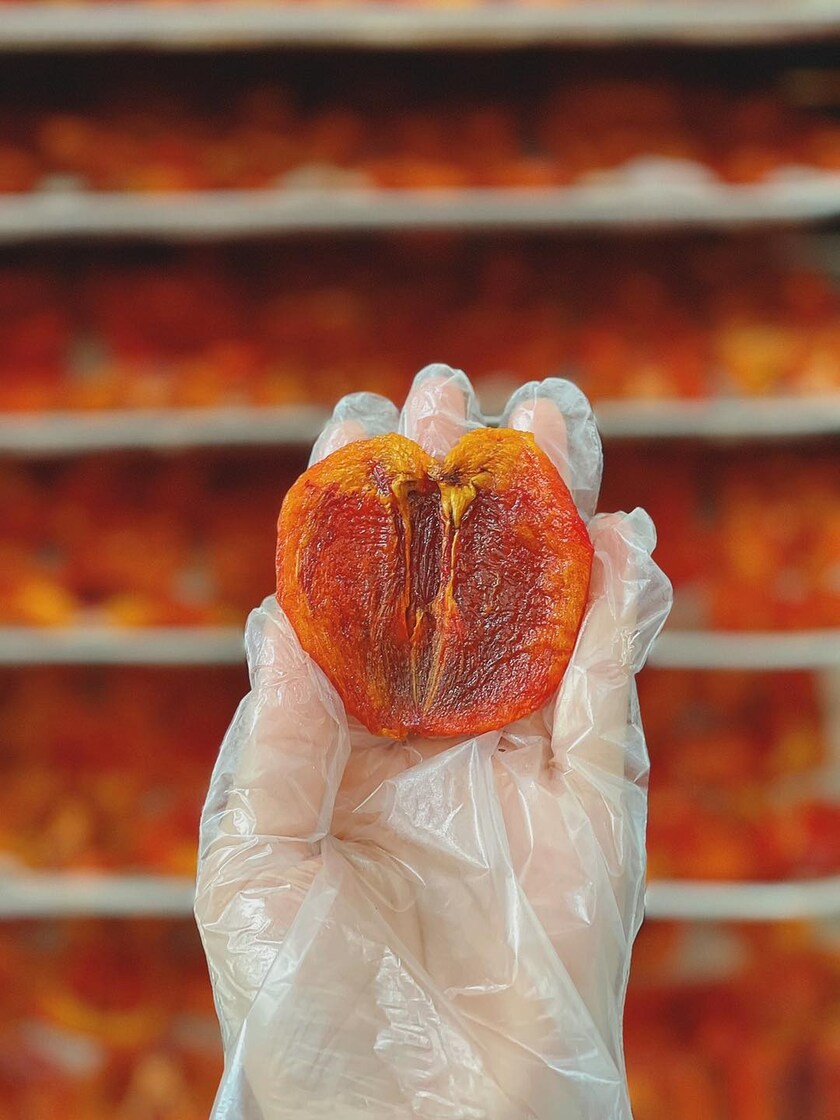
Dried persimmons - a delicious treat at the end of the season.
Having been involved in this profession for four years, Thu feels a deep sense of emotion with each passing persimmon season. It's the season when she can live out her passion and enthusiasm. Sharing with Travellive, Thu honestly said: "I almost work with 200% of my capacity. For me, a year in Da Lat only has two seasons: the persimmon season and the non-persimmon season. So, I look forward to the season so much. It's a season of being busy, of loving, and of seeing the fruits of my labor after a whole year of waiting."
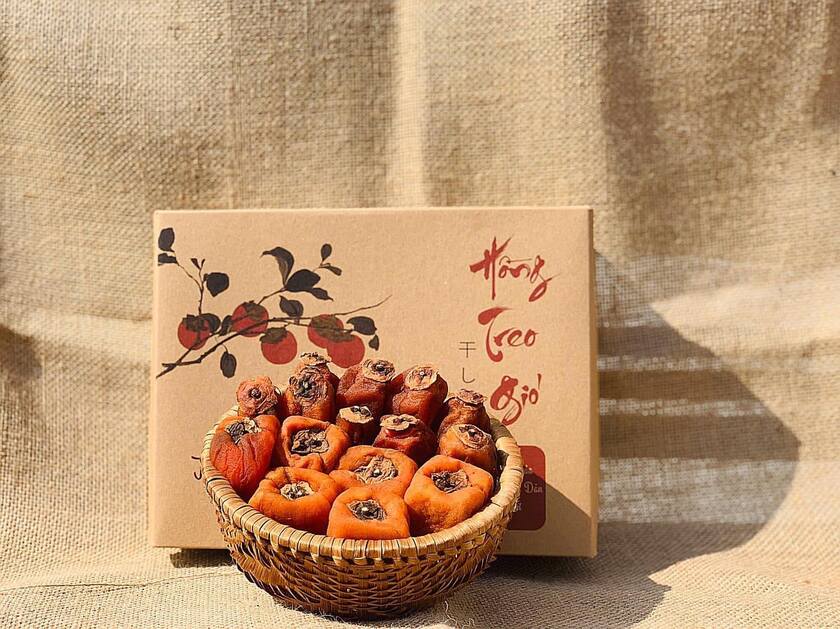
The finished product delivered to the customer is meticulously prepared and delicious.
With unwavering faith, and with that love and perseverance, Anh Thu and the farmers of Da Lat will bring even more seasons of persimmons that captivate hearts. These crisp, chewy, fragrant, and sweet persimmons not only carry the essence of Da Lat's autumn to the hearts of those passionately in love with the city of a thousand flowers, but also nurture the hopes, dreams, and love of countless hands working tirelessly in the cold, waiting for a bountiful persimmon season.