VI
VI


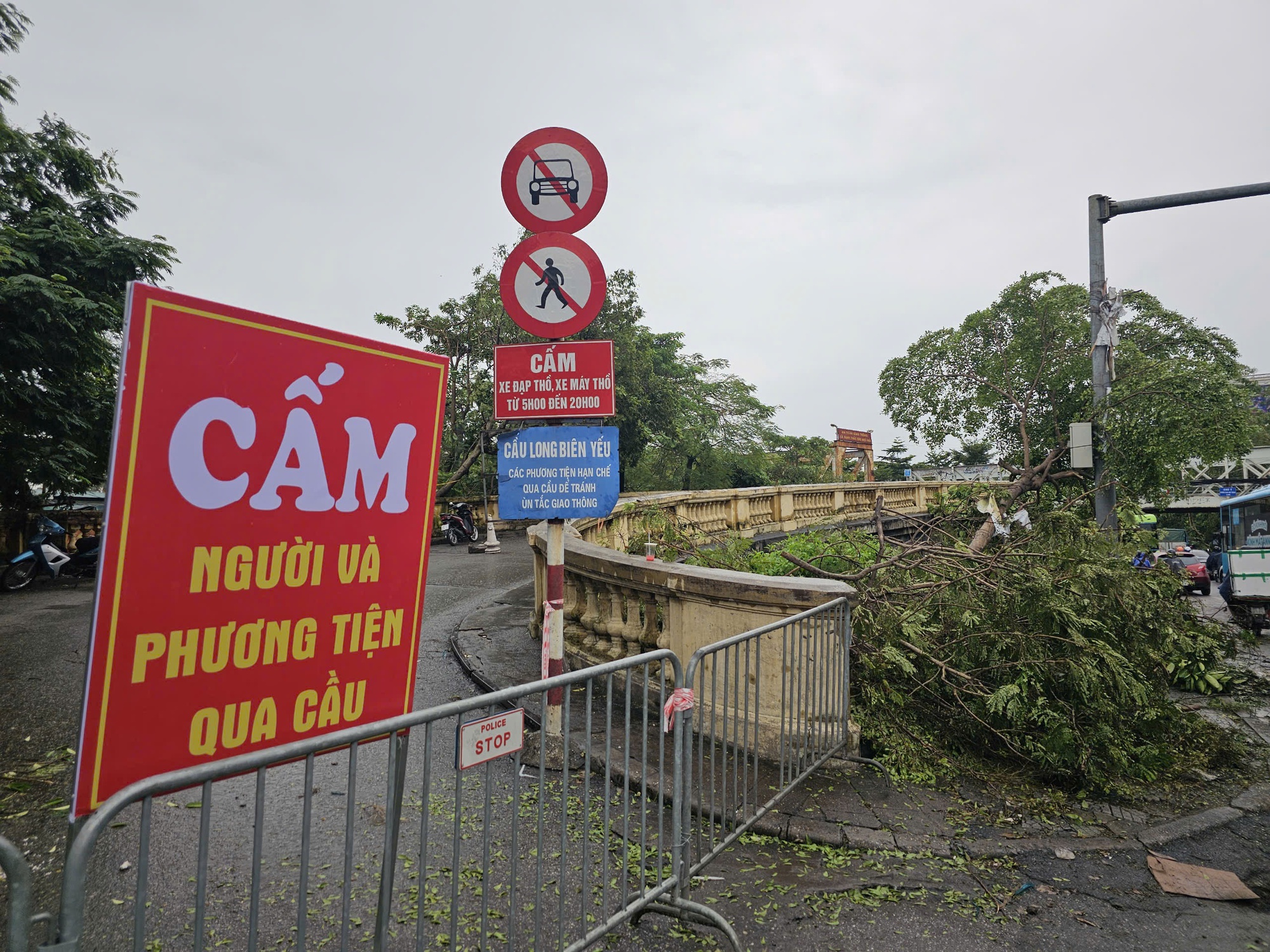
From 3 PM on September 10th, all vehicles were prohibited from crossing the Long Bien Bridge due to the high water level of the Red River, posing a traffic safety risk. The Hanoi Department of Transport stated that this decision will remain in effect until the floodwaters recede and safety conditions are ensured.
The water level of the Red River in Hanoi has risen to alarm level one, reaching 9.5m, the highest level since 2008. This is the result of a major flood caused by Typhoon No. 3 (Typhoon Yagi), with heavy rainfall and simultaneous flood releases from hydroelectric power plants, causing sudden water surges in many areas along the main rivers of Northern Vietnam. This water level is only a short distance from alarm level three, the highest level in the flood warning system, posing a significant risk to the structure of the Long Bien Bridge.
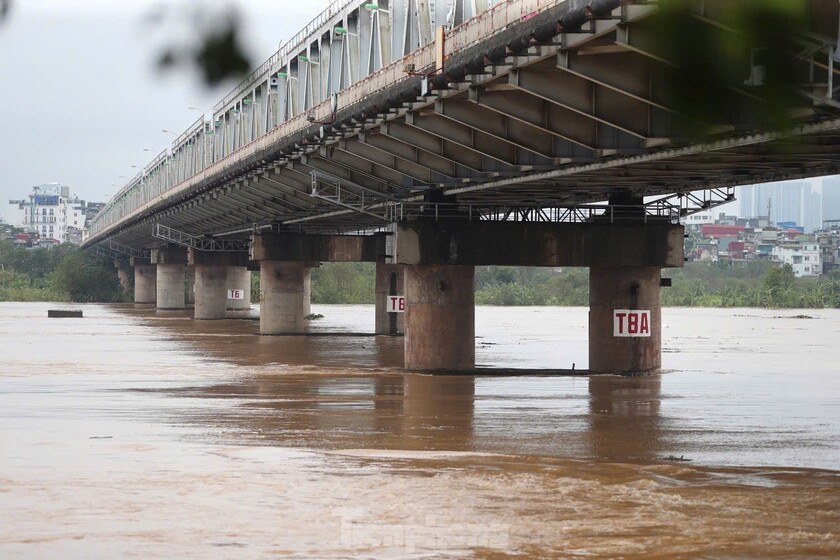
Floodwaters rose so high they almost reached the base of the bridge.
Earlier that day, the railway sector also decided to temporarily suspend all train services across the Long Bien Bridge. Trains on the Hanoi - Hai Phong route had to be diverted to Gia Lam station to ensure safety. The Hanoi - Lao Cai railway line also temporarily suspended operations due to severe flooding at many points along the route, especially in sections passing through Yen Bai.

To avoid traffic congestion, the Department of Transport has directed people and vehicles to use other bridges across the Red River such as Chuong Duong, Nhat Tan, Thanh Tri, Vinh Tuy, and Thang Long. These are the main bridges with high load capacity and are operating stably. Specifically, vehicles with a load capacity exceeding 0.5 tons, and passenger buses, contract vehicles, and tourist buses with more than 9 seats are only permitted to use Thang Long, Nhat Tan, Thanh Tri, and Vinh Tuy bridges. This puts greater pressure on traffic on the remaining bridges, especially during peak hours.
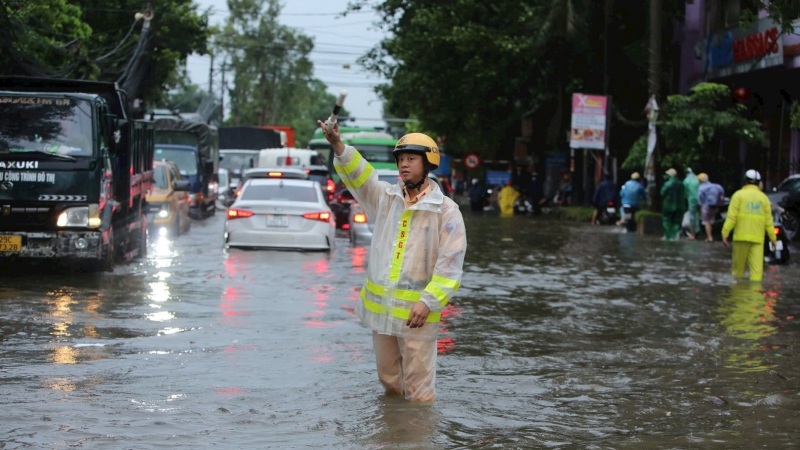
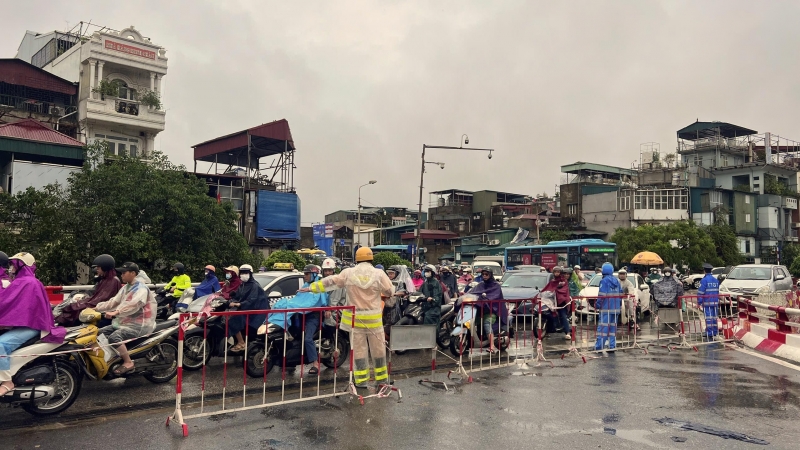
Given the complex situation caused by heavy rain and flooding, the Chairman of the Hanoi People's Committee, Mr. Tran Sy Thanh, issued a directive requesting relevant agencies to urgently review and inspect the condition of bridge structures in the city. Specifically, bridges crossing rivers, temporary bridges, and pontoon bridges must be thoroughly inspected to promptly detect any safety risks. In cases where bridge structures show signs of danger, the relevant units must quickly suspend operations for repair or upgrading.
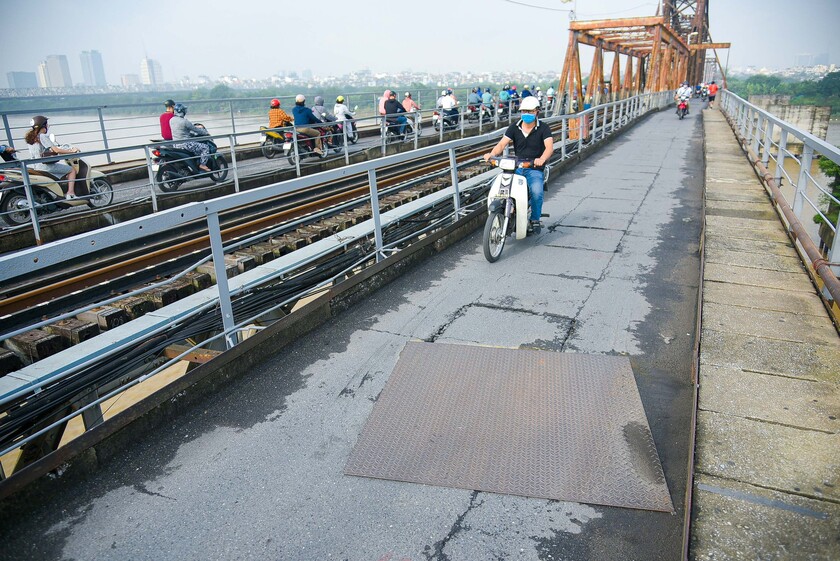
Many sections of the Long Bien Bridge have deteriorated.
Currently, with the Long Bien Bridge and part of the Chuong Duong Bridge temporarily closed, traffic across the Red River in Hanoi is facing significant difficulties. Pressure is concentrated on the remaining bridges, especially during rush hour. To alleviate congestion, traffic police forces are being reinforced at key intersections to regulate and redirect traffic flow promptly.
In addition, authorities are encouraging people to use public transportation such as buses to reduce traffic congestion on major roads. At the same time, strict control of heavy vehicles crossing other bridges is considered a crucial measure to ensure traffic safety amidst the still unpredictable weather conditions.
With forecasts predicting continued heavy rain and flooding, the closure of Long Bien Bridge and traffic diversion measures are considered necessary to ensure public safety. Hanoi authorities are committed to closely monitoring the situation and implementing timely solutions to minimize traffic disruptions in the coming period.