VI
VI


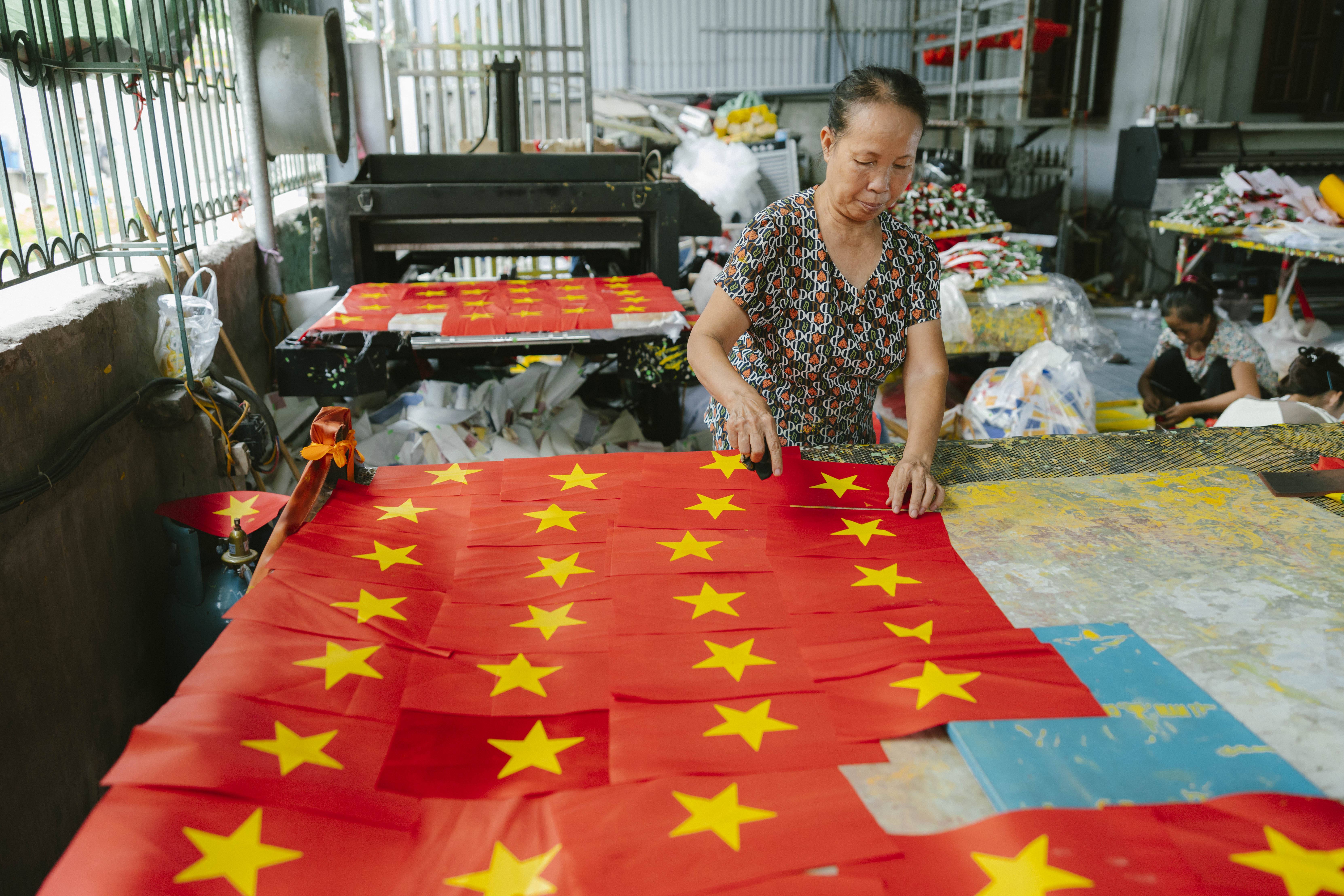
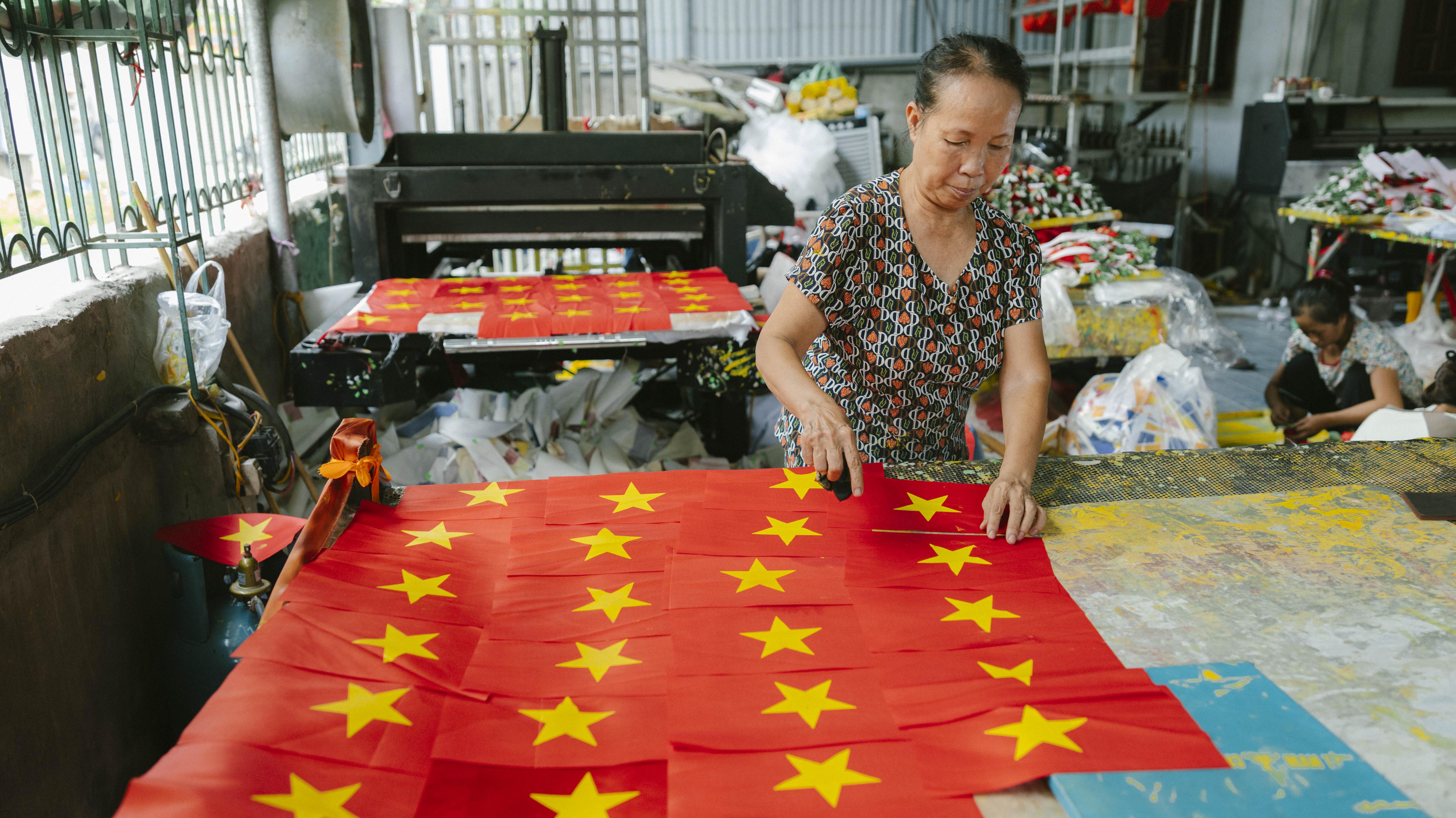
According to the village elders, since the 16th century, this area has been famous for its traditional embroidery and weaving products. Hundreds of years ago, many people from the village went to "Kẻ Chợ" (today Hàng Bông and Hàng Gai streets in Hanoi's inner city) to open shops selling products made by their own skillful hands.
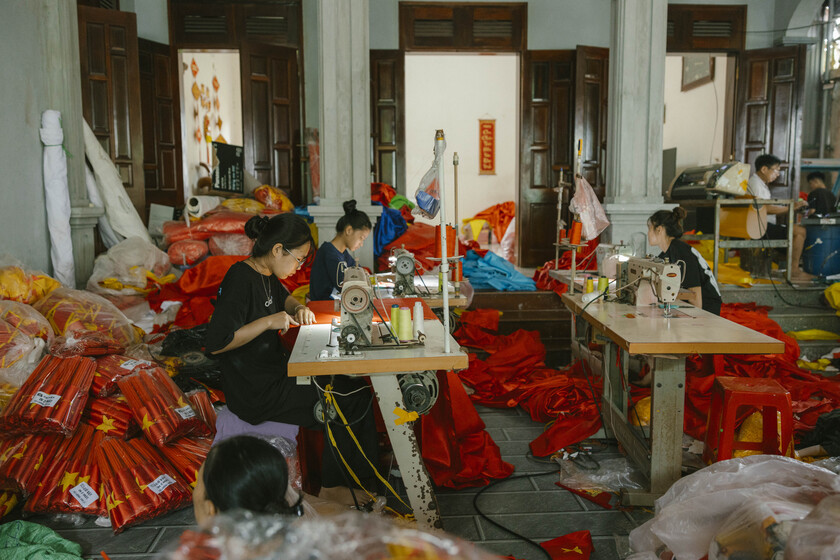
The people of Tu Van village have always been proud of their village's glorious craft of embroidering the national flag.
In August 1945, artisans from Tu Van village were assigned a "special task" by the Resistance Committee: to embroider tens of thousands of national flags in preparation for the August Revolution. Amidst the jubilant crowds and the fluttering flags in Ba Dinh Square on September 2nd, 1945, many of the red flags with yellow stars were embroidered by the artisans of Tu Van village. Since then, the people have always been proud of their village's glorious tradition of embroidering national flags.
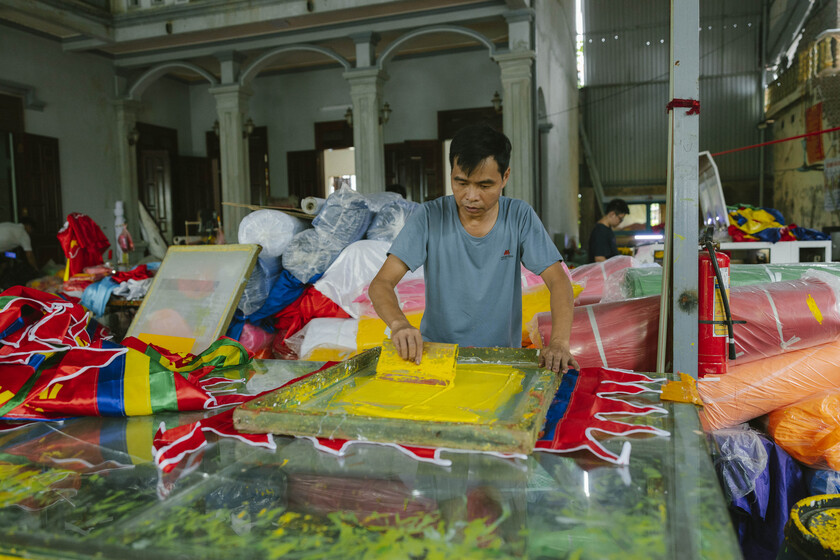
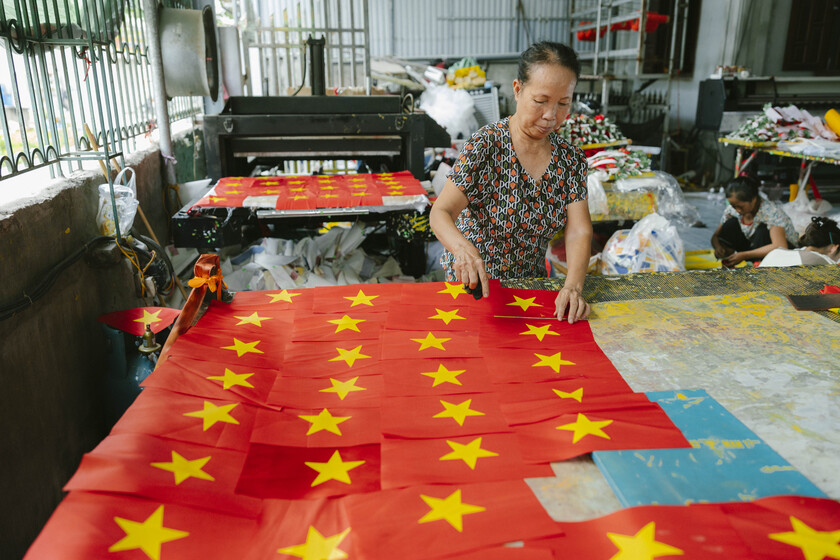
Despite numerous ups and downs, the craft of embroidering and sewing national flags in Tu Van village has been maintained to this day. Most of the flags used in celebrations, Party congresses, rallies, and other important national events are made by families and artisans in Tu Van village. Whether produced by machine or by hand, the flags from Tu Van village always embody the meticulousness, diligence, talent, and love for their craft and their country of the artisans.
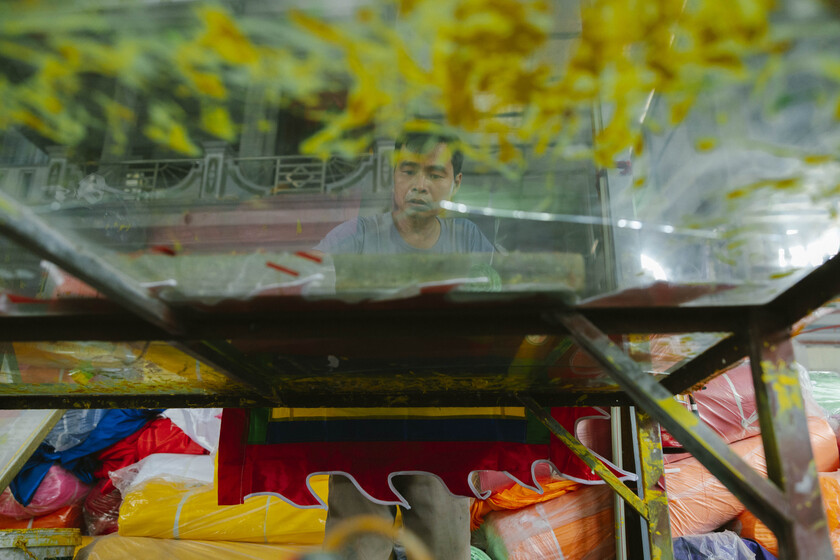
The craft of embroidering and sewing national flags in Tu Van village is still maintained to this day.
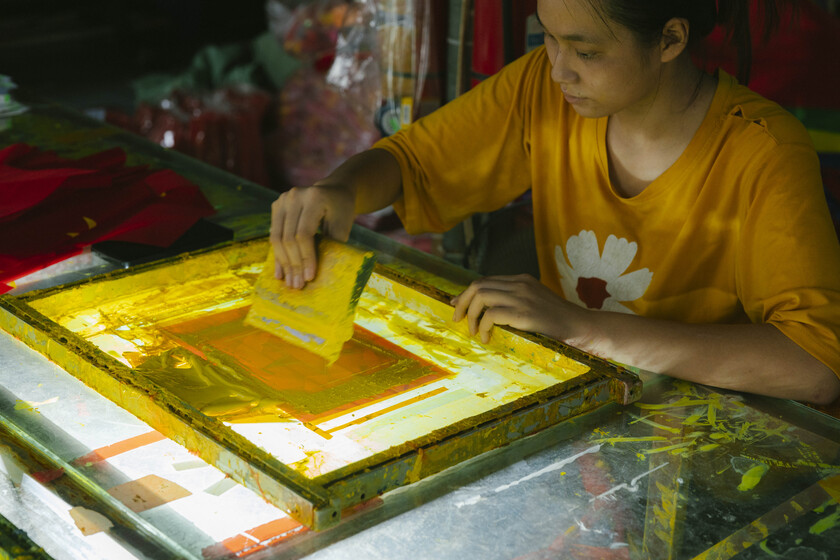
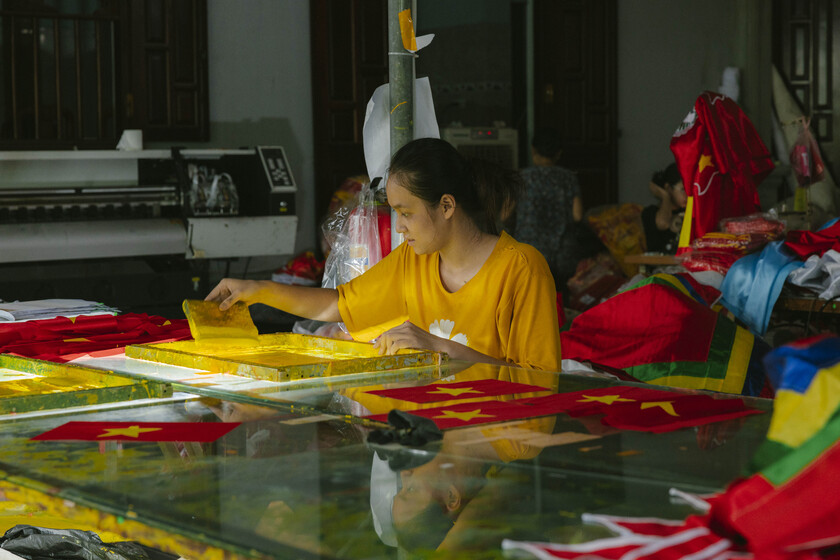
The national flag was created by skillful hands.
When visiting the village famous throughout the capital city around September 2nd, photographer Nguyen Hong Son (currently living and working in Hanoi) witnessed the garment factories in Tu Van immersed in red, with machinery operating at full capacity. Many production facilities had to increase their workforce by dozens of workers to meet the demands of the nationwide market.
“When I arrived at Tu Van village in the afternoon, as soon as I stepped through the village gate, I was greeted very warmly by the locals. They asked me where I was going and if I wanted to see the flag-making process, I could go to the house of the village head's son. Then, they kindly led me to the place, showing the hospitality of the people here,” the photographer said.

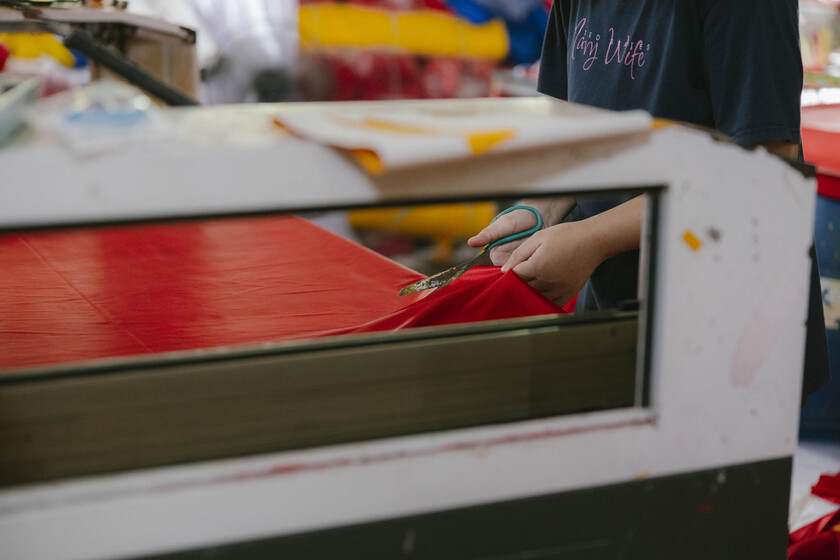
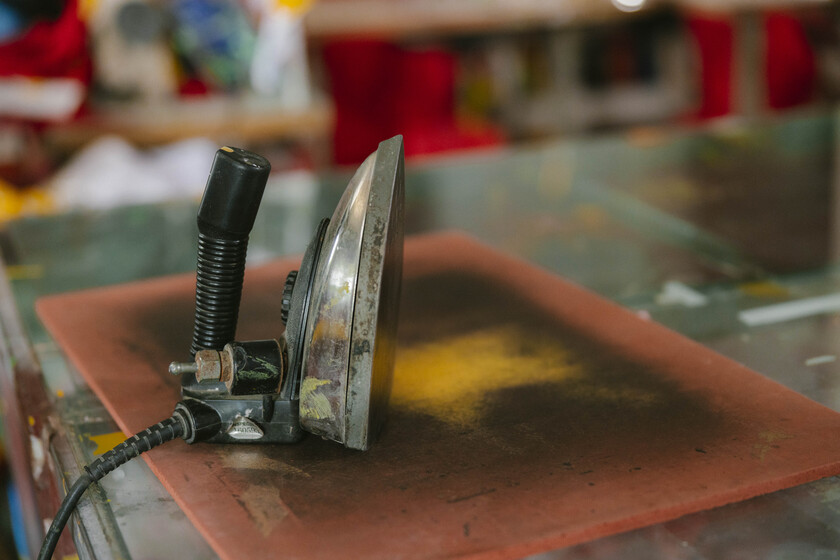
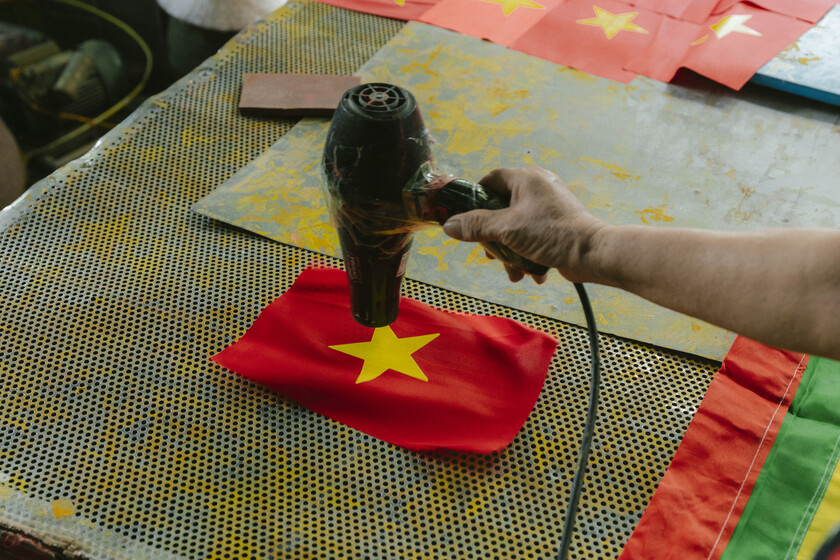
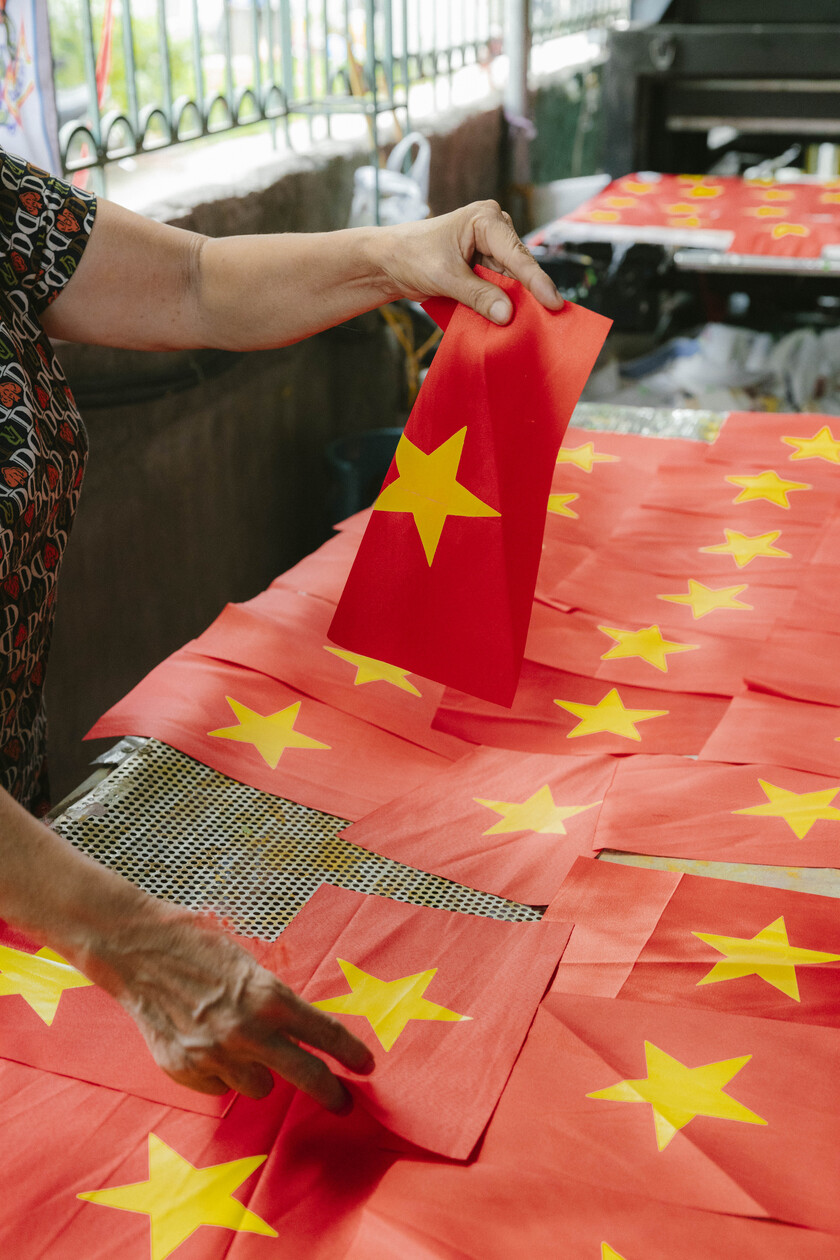
Everyone was working diligently to complete the red flags with yellow stars in time for September 2nd.
Upon entering the small courtyard, Mr. Hong Son saw embroidery frames arranged along the yard. Red fabric was stretched taut, and everyone was meticulously embroidering five-pointed stars with gold thread. They were all focused on completing the red flags with yellow stars in time for September 2nd.
To make flags, the fabric must be satin purchased from La Khe village (Ha Dong), and the embroidery thread must be a special kind sourced from Trieu Khuc village (Thanh Tri). These are all high-quality materials that help create durable, beautiful, and exquisite flags. Therefore, flags from Tu Van village are not only favored by agencies in Hanoi but are also ordered in large quantities from many other provinces from North to South, such as Lai Chau, Son La, Gia Lai, and the Central Highlands.
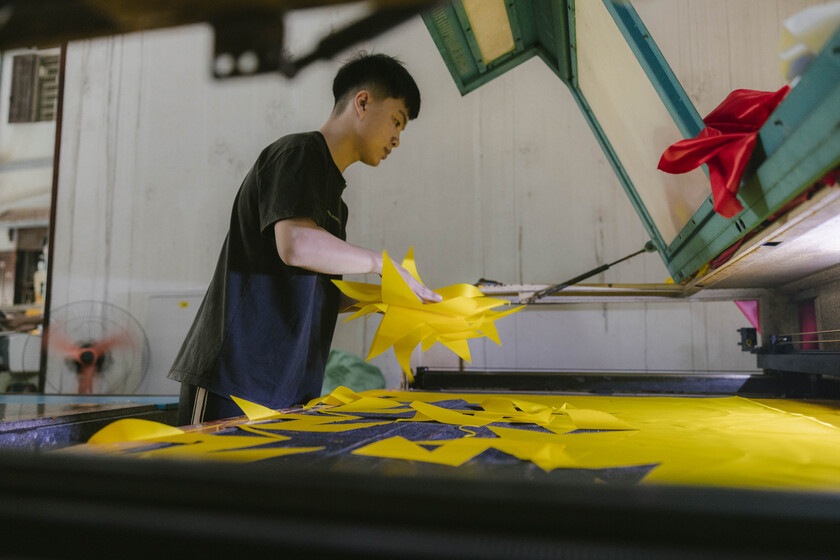
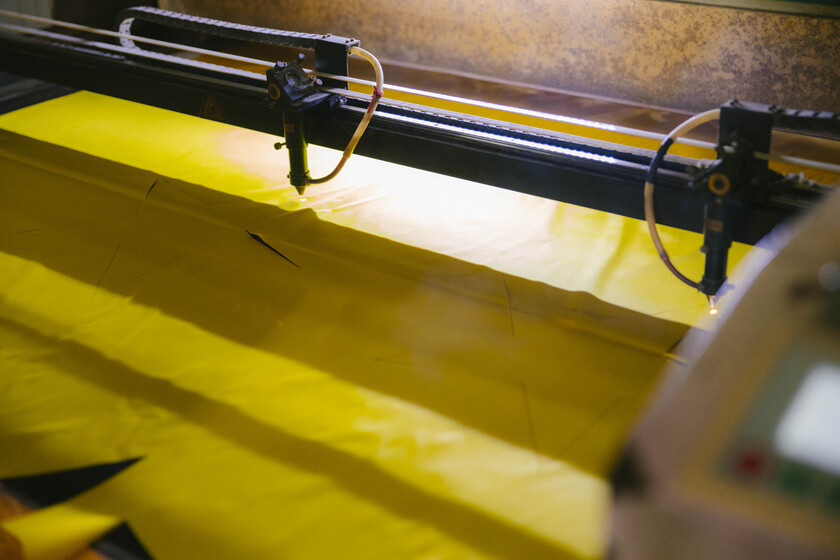
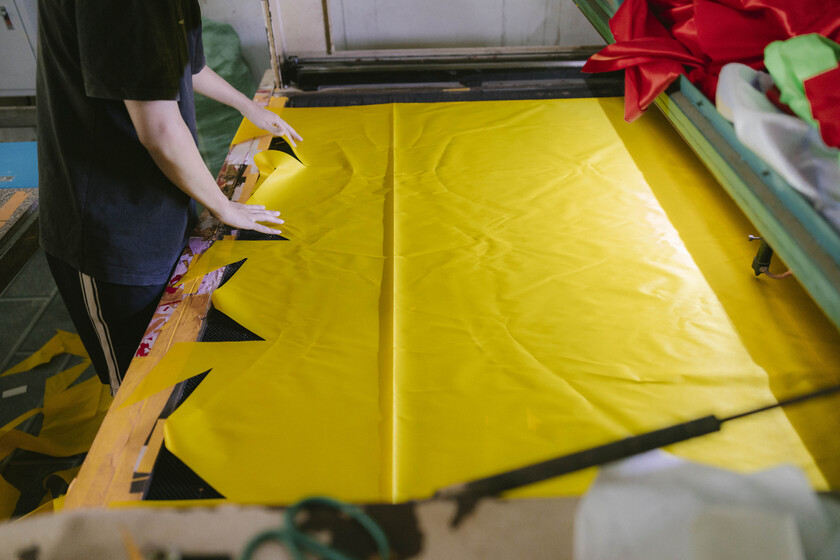
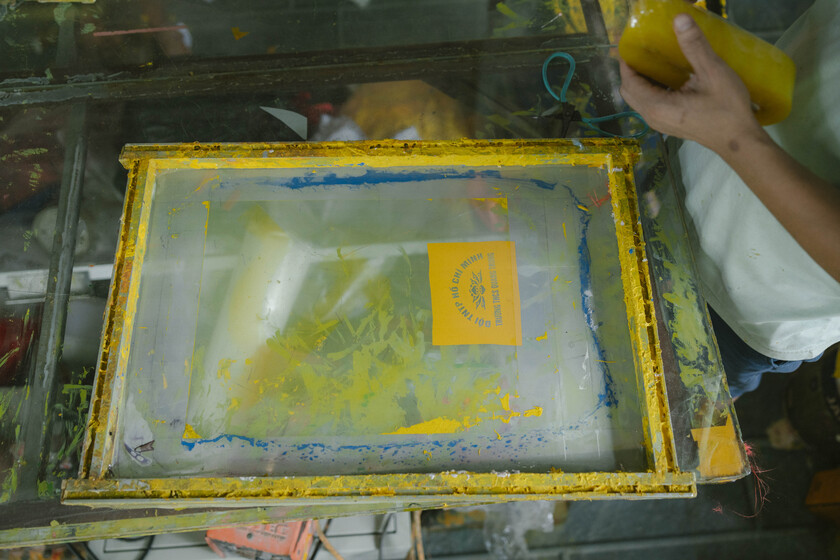
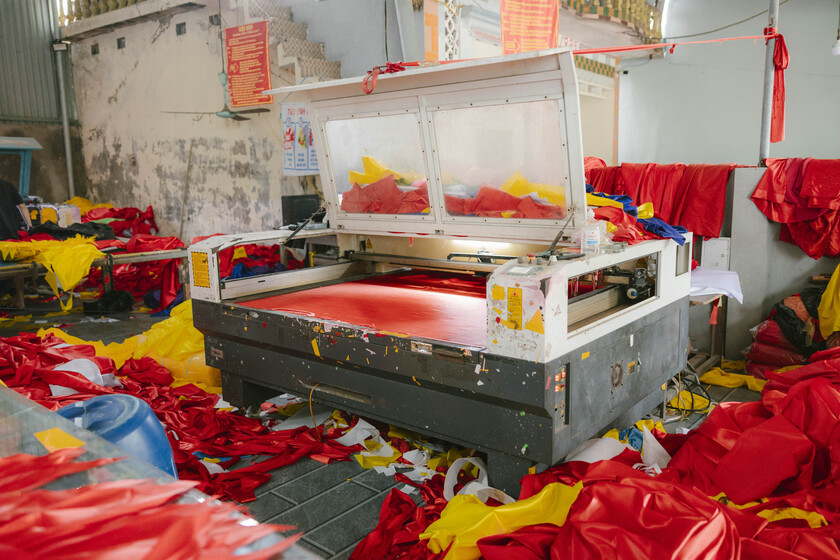
Applying new technologies to flag production.
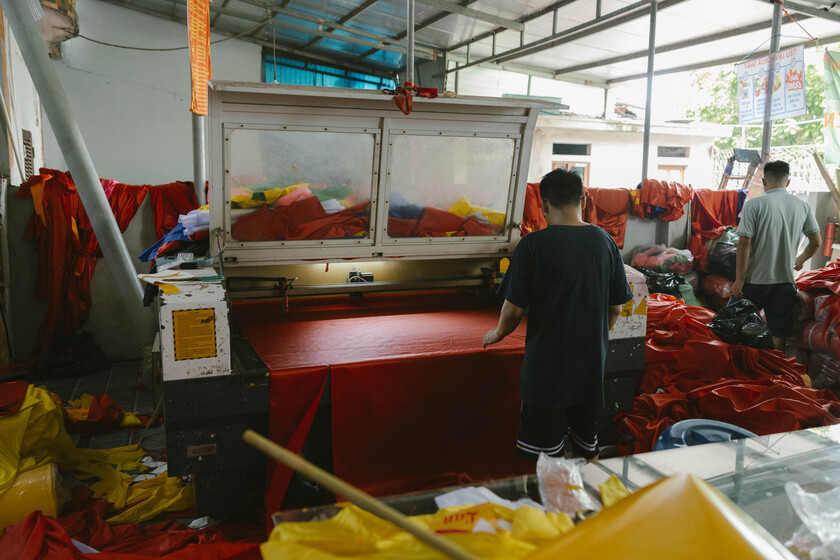
In the past, making a flag entirely by hand was very time-consuming, sometimes taking half a day to complete one, due to the difficulty of cutting the star shape; if it was an embroidered flag, it could take several days. Nowadays, thanks to machinery, the process is faster, but flag making still cannot be done carelessly. To have a beautiful flag, many steps must be taken, each step requiring care and meticulousness to ensure the flag is flat with neat stitching.
“The flag-making process includes the following steps: first, creating a design for the CNC machine to cut the fabric into the flag's components; then, sewing and embroidering the details; and finally, packaging the finished product. The most difficult step is sewing the border and embroidering the star, requiring care and meticulousness to ensure that the folds of the gold star border are straight. Additionally, there is a higher-end type of flag: hand-embroidered flags. These flags are more expensive because they are entirely hand-embroidered,” Mr. Hong Son explained.
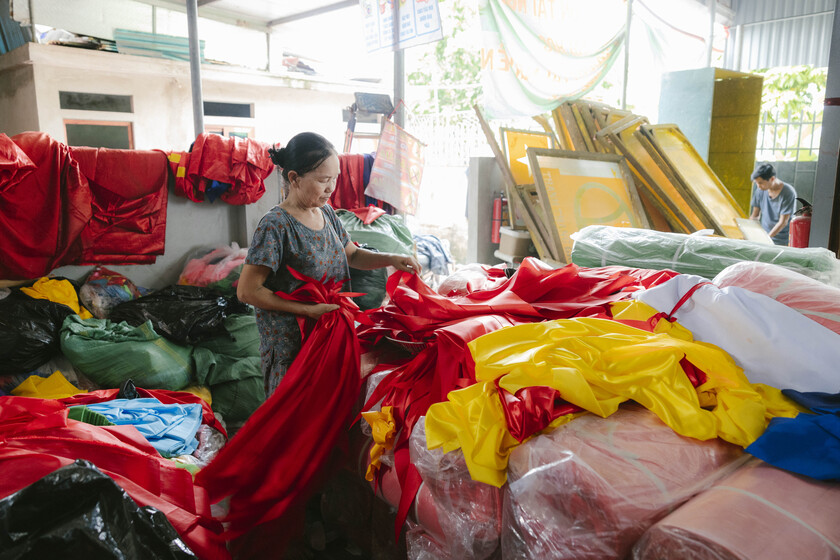
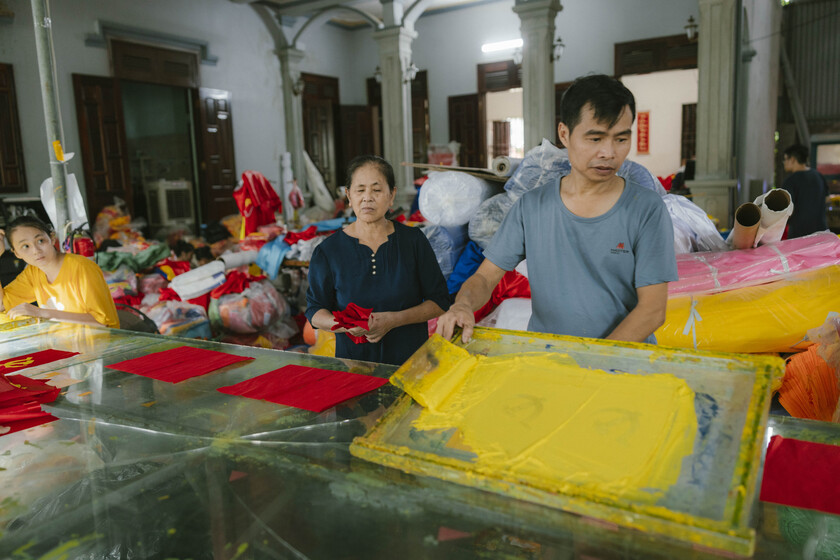
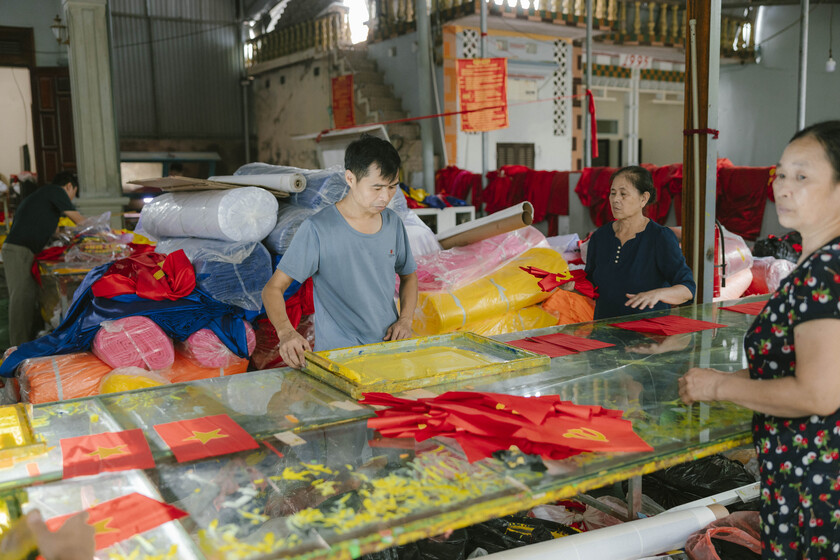
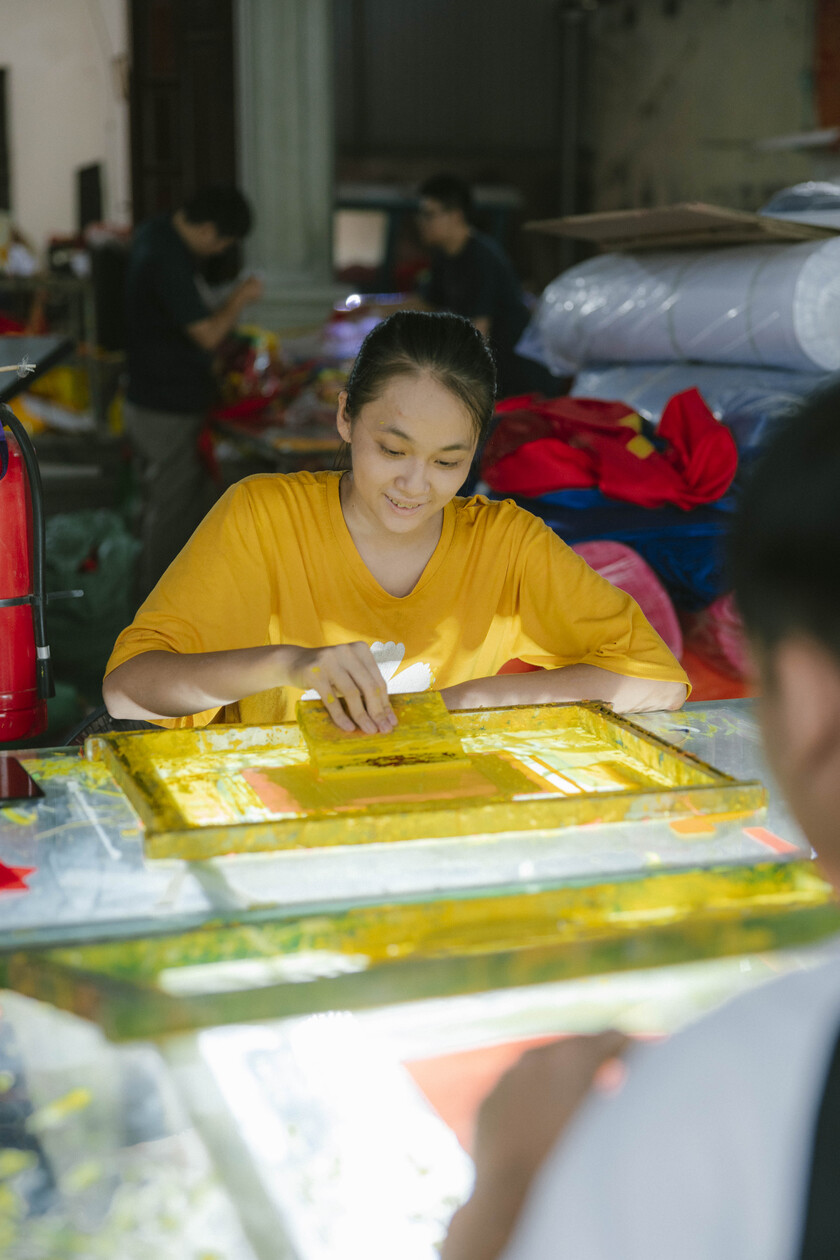
Creating a beautiful flag requires going through many steps.
On average, it takes about 2-3 days to complete an embroidered national flag or military banner, while those who are not skilled may take up to a week. Each stitch must be highly precise, so the price of a hand-embroidered flag ranges from 600,000 to 1 million VND, depending on the size, and is many times higher than machine-sewn flags. However, this product is favored by many people because of its durability and sharp, beautiful appearance.
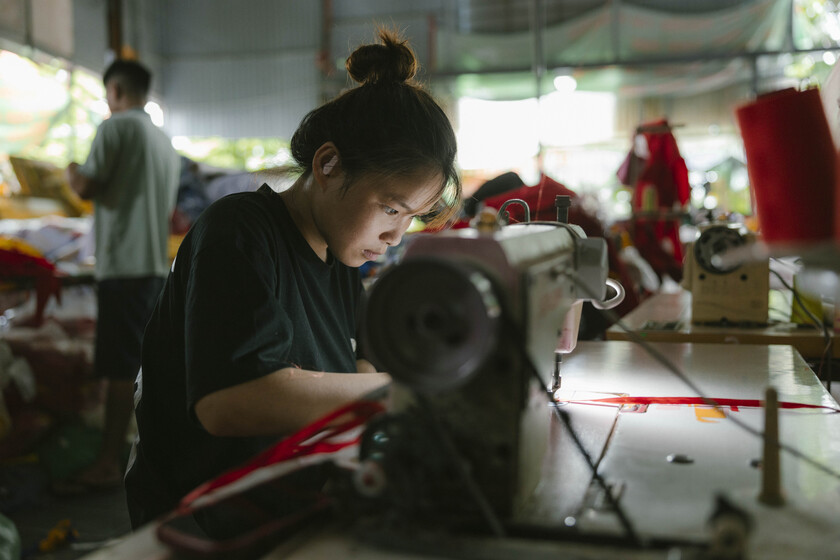
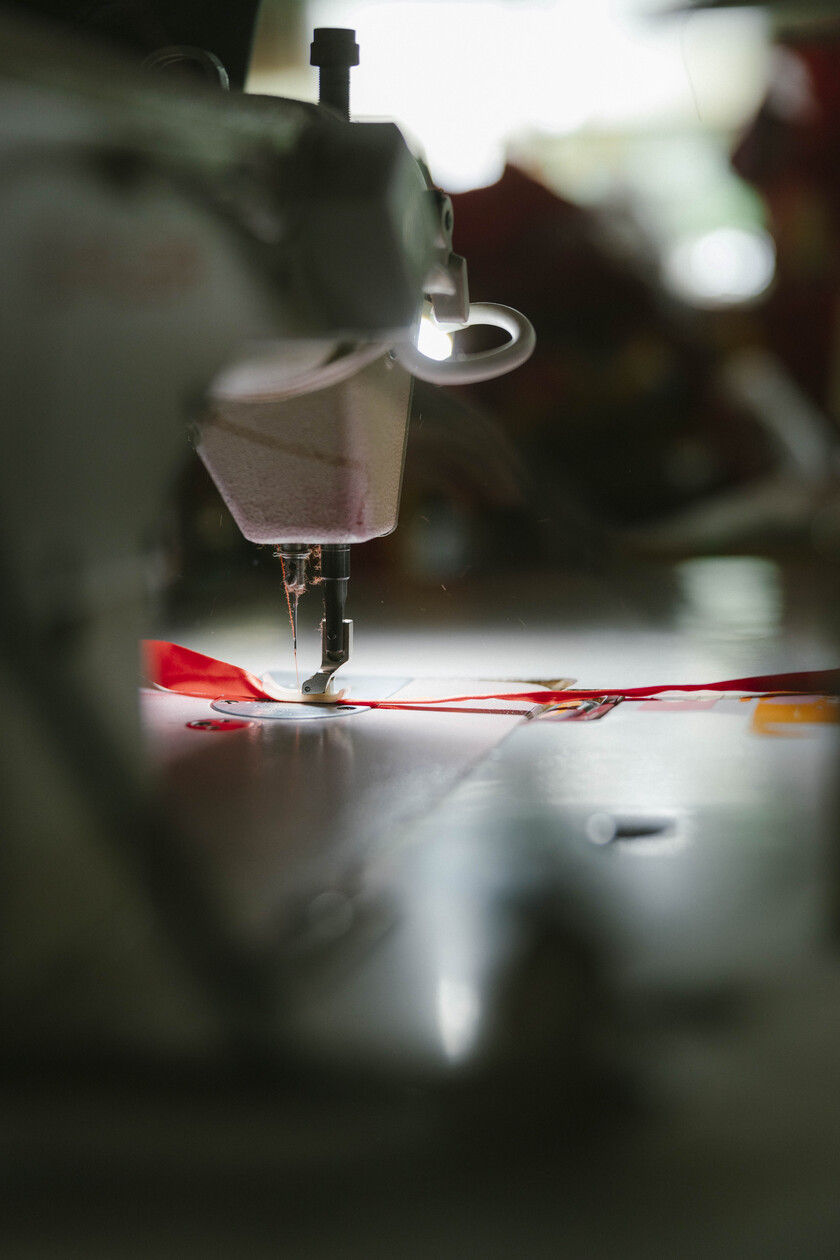
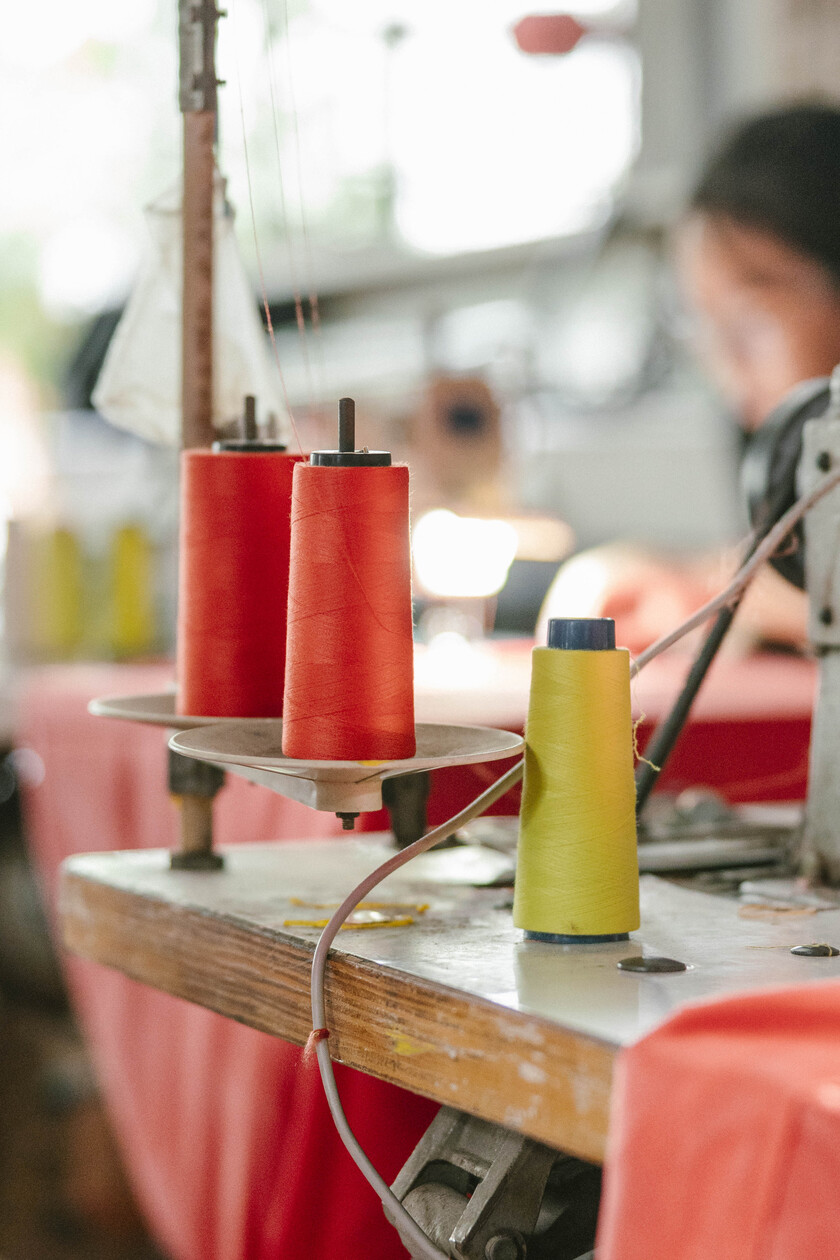
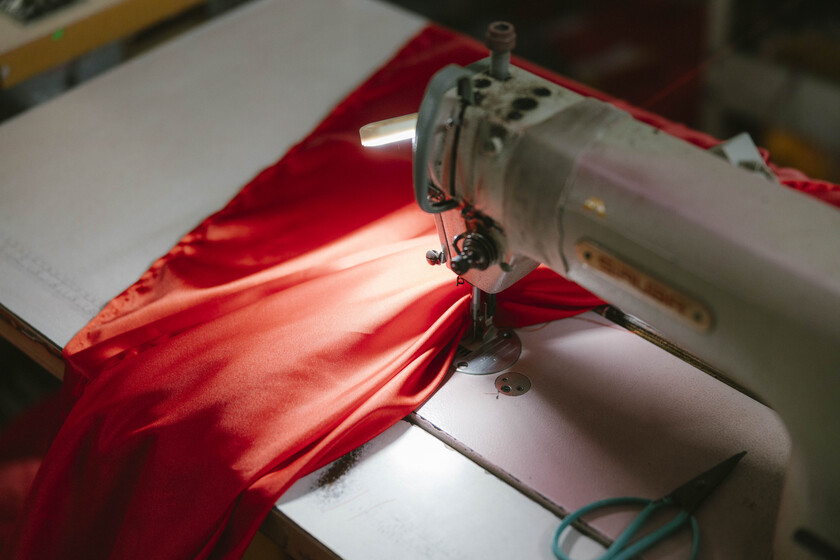
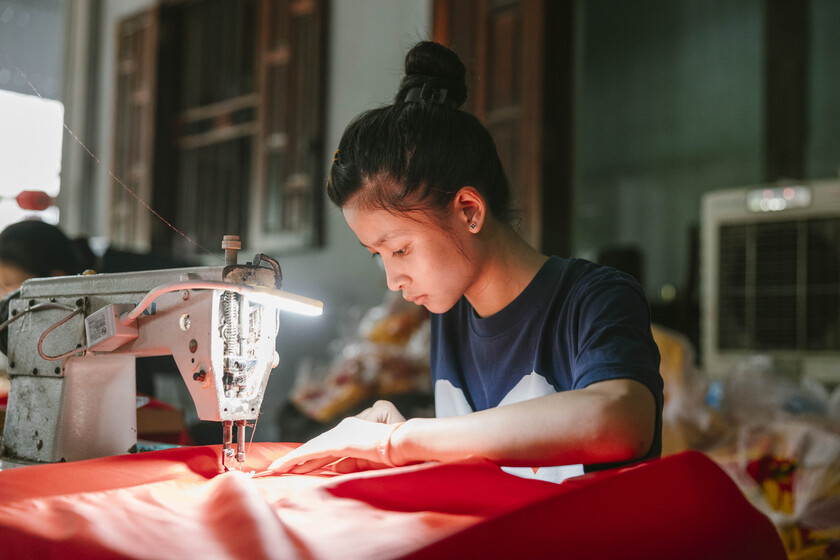
The hand-embroidered national flag is filled with patriotism and national pride.
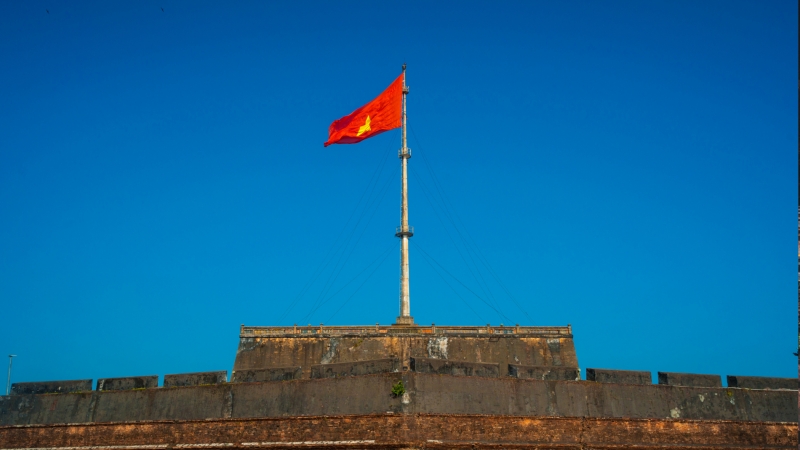

The flag flies high, proudly representing Vietnam.
Previously, Tu Van village had dozens of families engaged in flag-making, but now only about 10 skilled families remain, employing over 100 workers. Their motivation to maintain this traditional craft stems from the pride they feel in contributing to the soul of the nation.
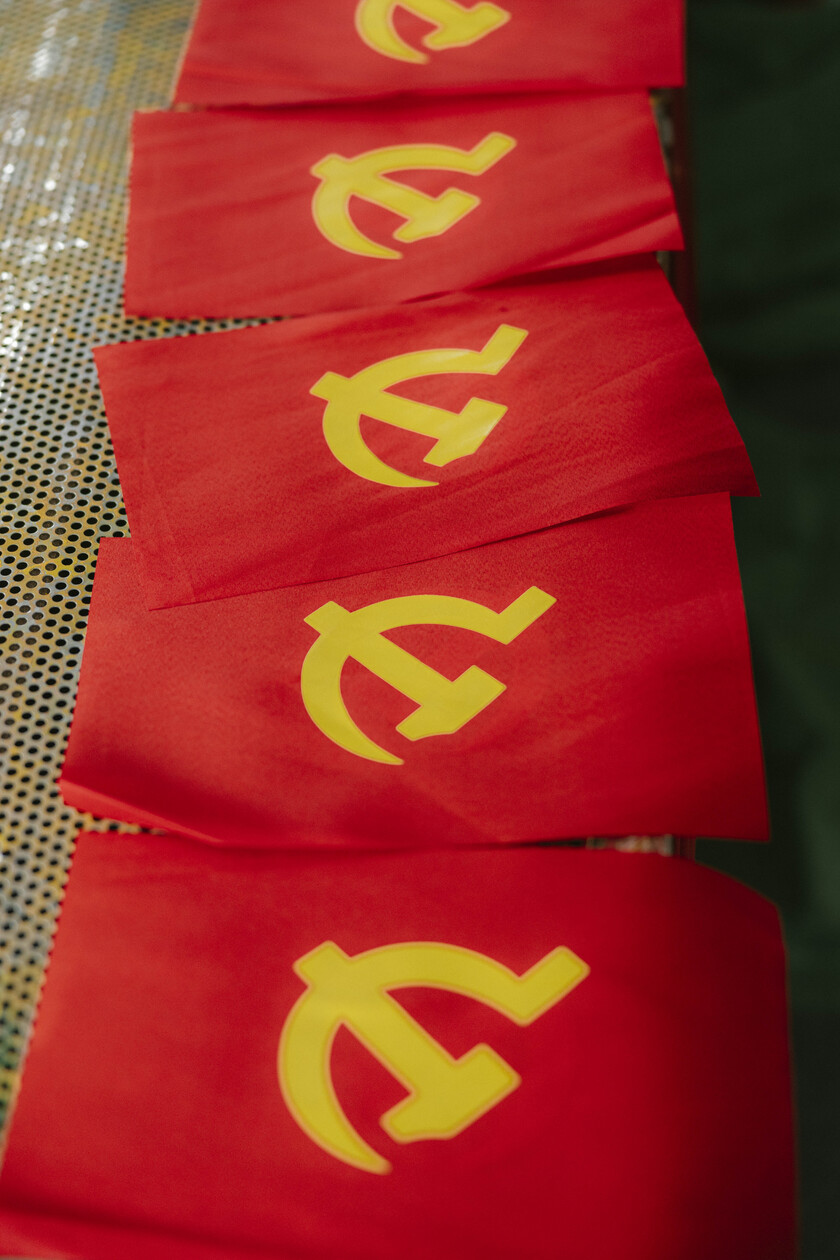
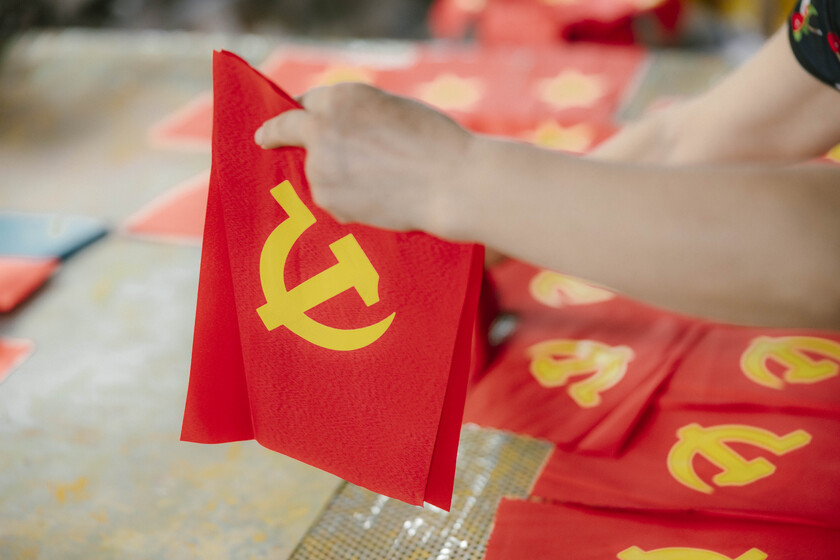
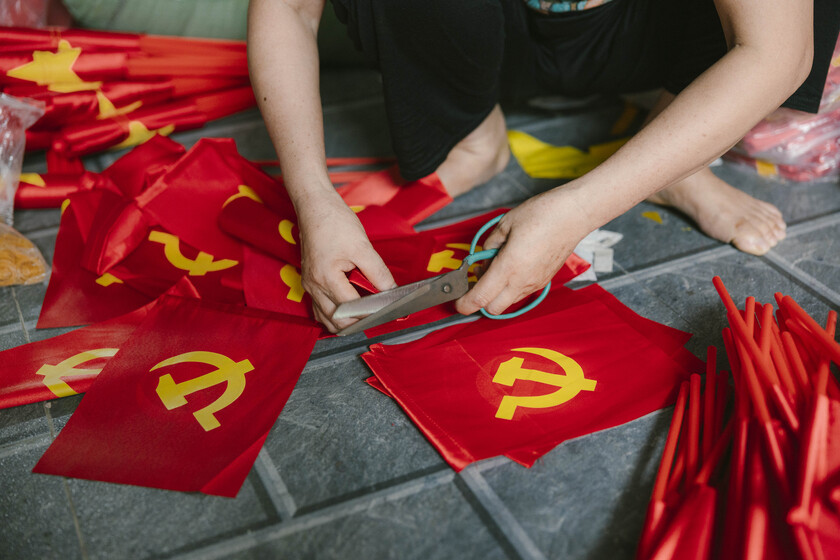
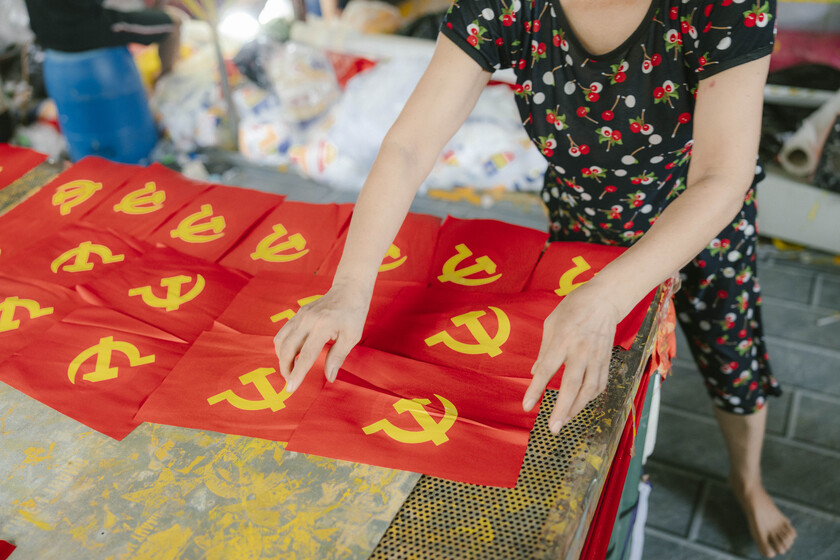
Most of the flags used in important national events are made by families and artisans in Tu Van village.
Regarding income, the villagers say they have a stable but not overly wealthy standard of living. However, what is important to them is that flag-making brings them good fortune and honor that not everyone receives.
Today, every day, the national flag sewn by the people of Tu Van village flies proudly throughout the country, from the Lung Cu flagpole to Truong Sa Island, from city streets to rural villages, always evoking in everyone's heart the proud words "Vietnam." This is also the unique pride of the people of Tu Van village.
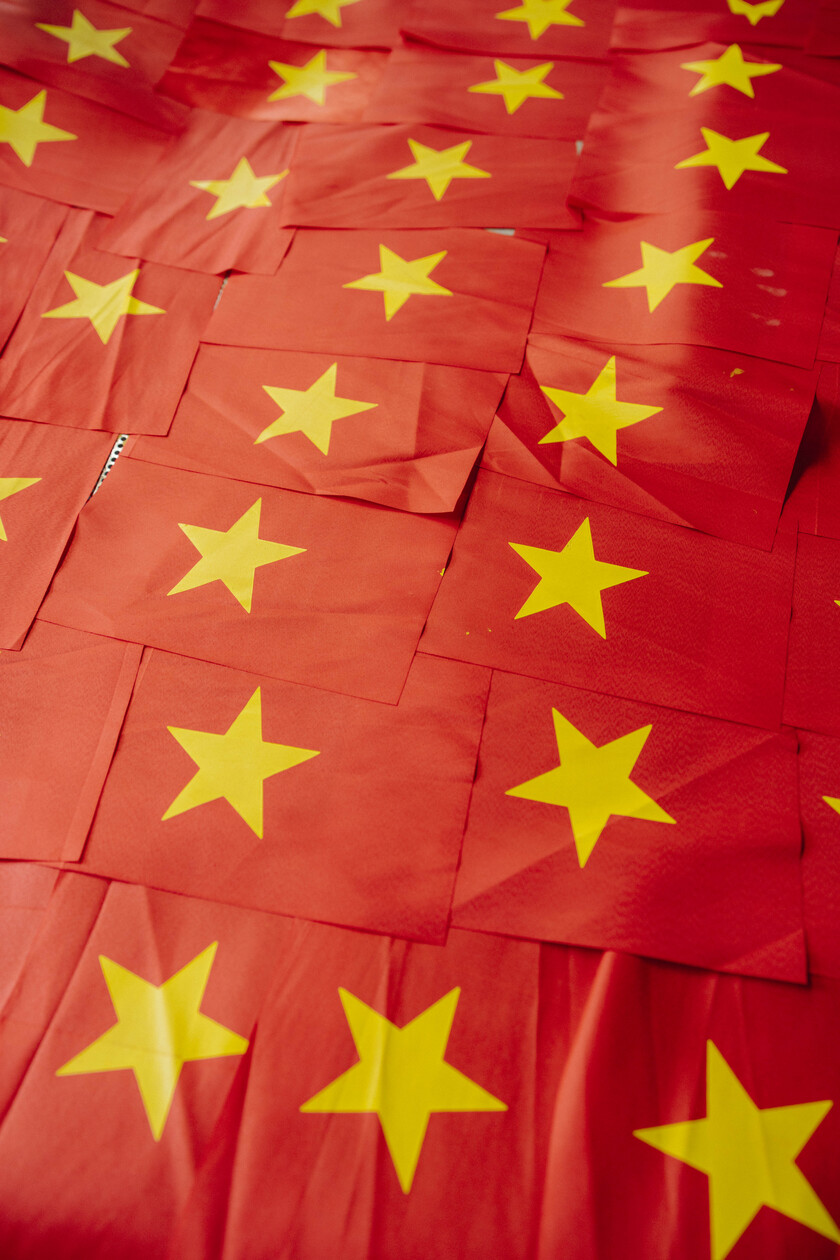
The national flag sewn by the people of Tu Van village still flies proudly throughout the country.