VI
VI


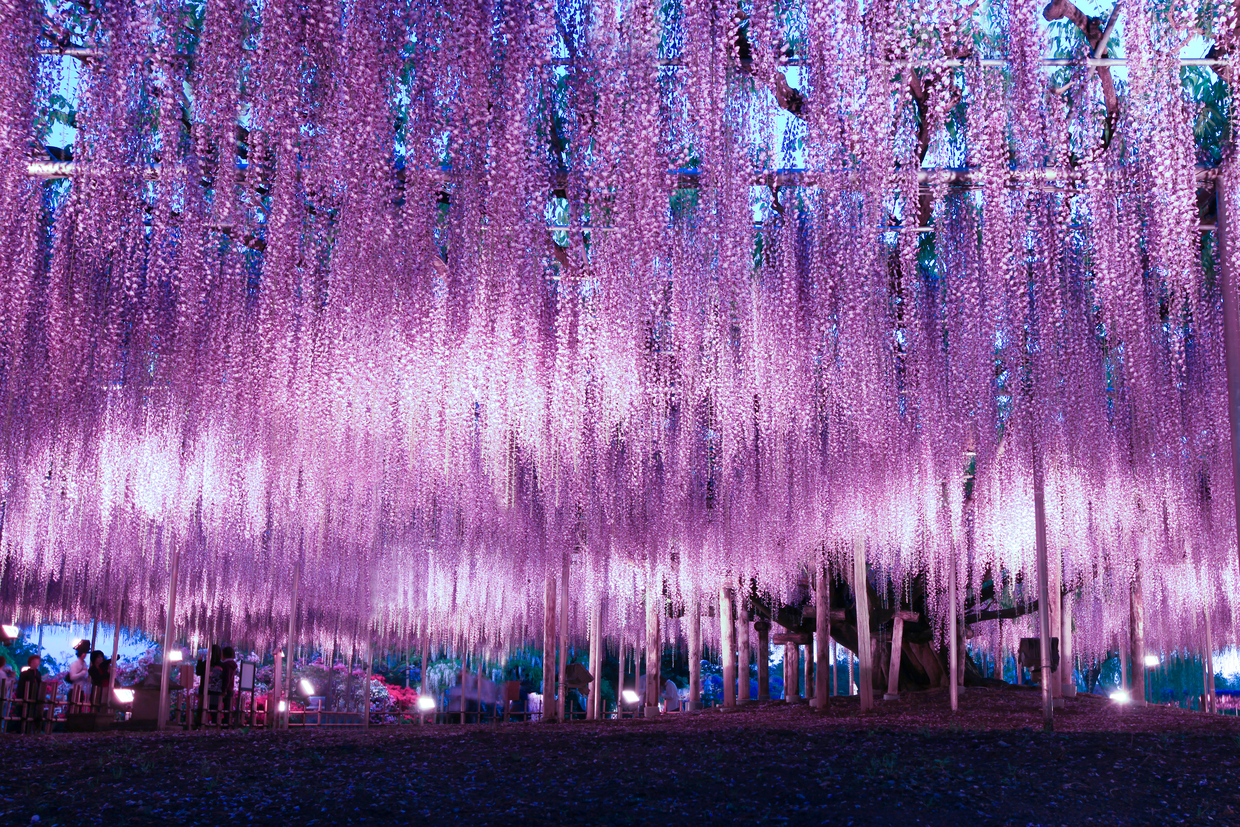

Ashikaga Flower Park in Tochigi Prefecture, Japan, is known as the home of over 350 species of wisteria and other plants. It's an extremely attractive destination that draws large numbers of visitors every time the wisteria blooms, painting the sky purple.
Wisteria flowers have many different names, such as Fuji flowers, Wisteria, or Tiny Bean flowers. They usually bloom in mid-April to early May, and each bloom resembles a colorful waterfall cascading down from the sky.
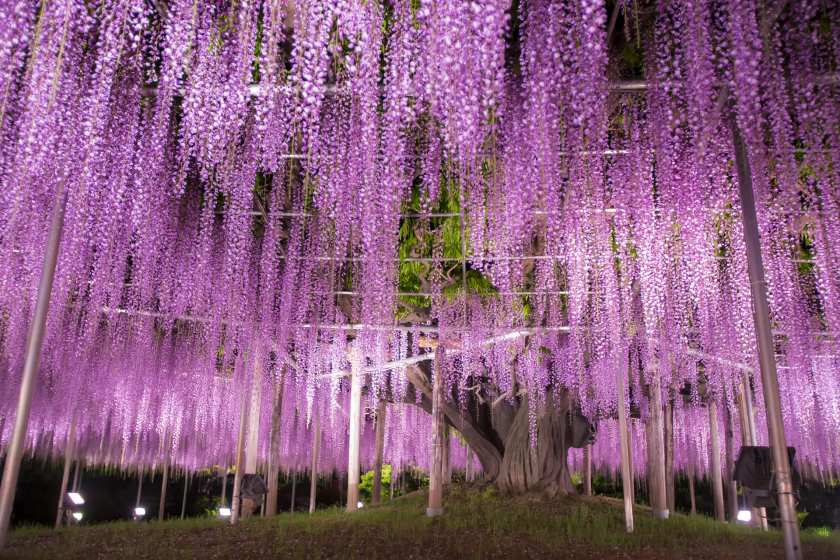
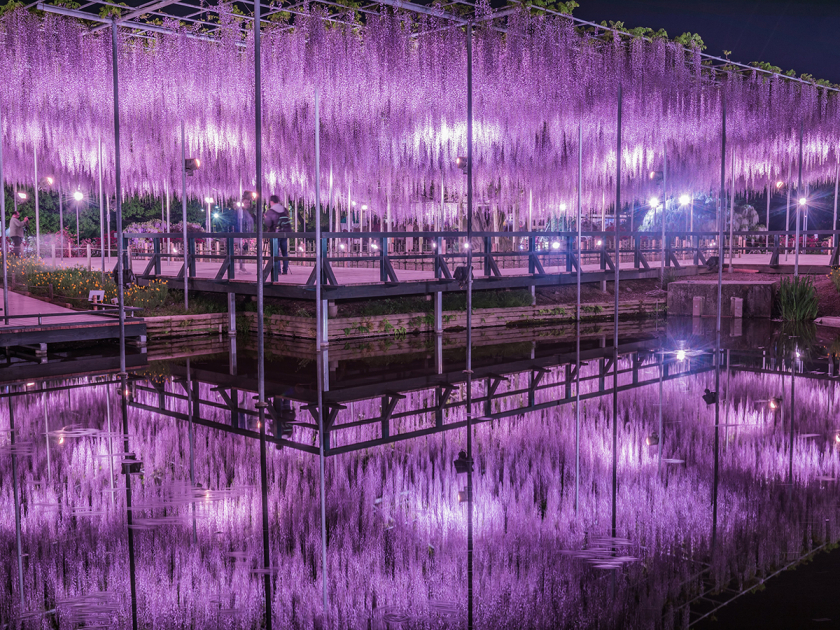
As night falls, the specially placed lights illuminate the tree, making the scene even more dreamy than ever.
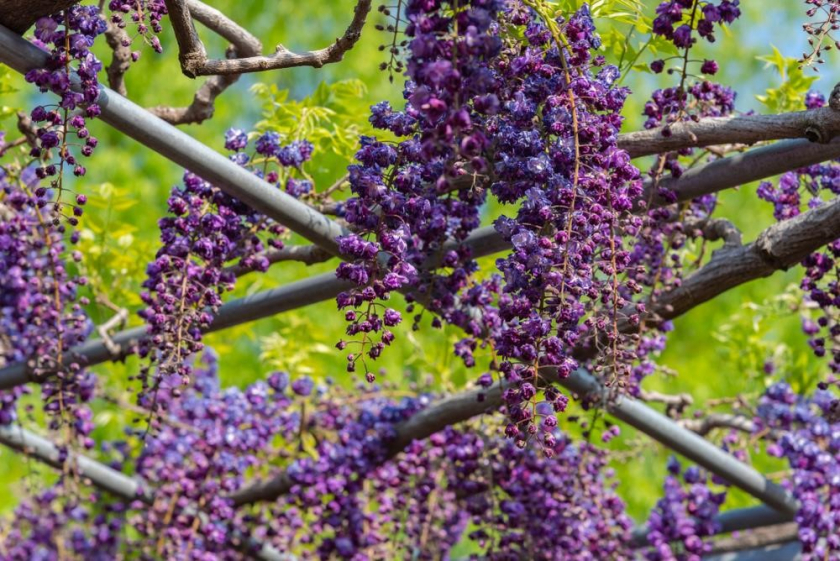
Wisteria flowers typically grow in long clusters, about 80-100 cm in length, and hang down. Even a gentle breeze is enough to make the clusters sway, spreading their fragrance far and wide.
Wisteria is a woody plant with large, fragrant flowers that grow on trellises. They can climb up to 20 meters above the ground and spread up to 10 meters horizontally. The Japanese plant wisteria in pedestrian tunnels, also known as wisteria tunnels. It is estimated that it takes more than 10 years for growers to admire its beauty, as the flowers only bloom when the plant is mature.
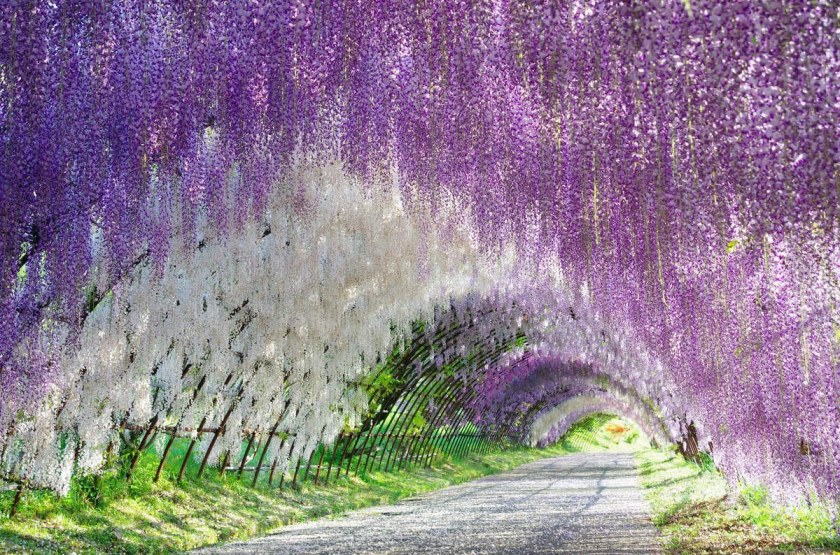
Wisteria is often planted in arches, providing shade and a pleasant fragrance that creates a relaxing atmosphere.

For the Japanese, wisteria symbolizes eternal love and unwavering loyalty, due to its deep and strong roots. Its long lifespan also represents immortality and victory. This flower is also frequently featured in poetry, music, and art.
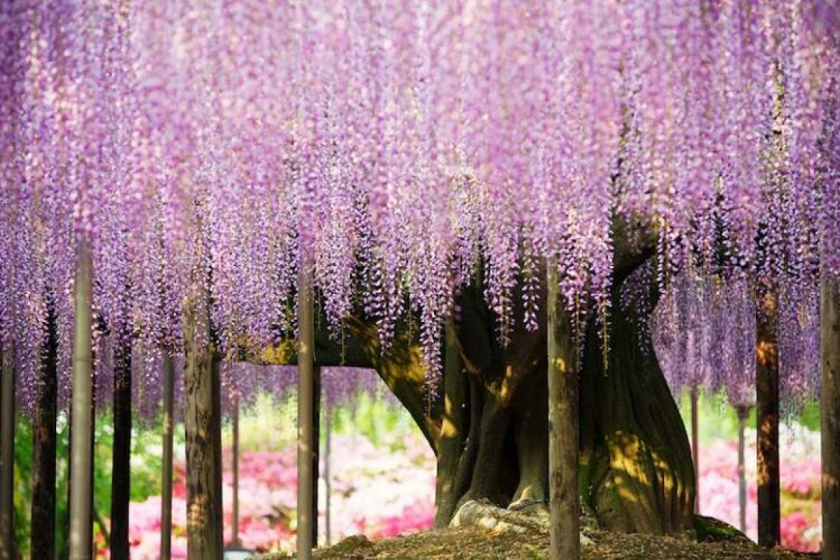
Wisteria symbolizes eternal love because its roots are deep and strong.
In Ashikaga Park, there are many different colors of wisteria flowers such as blue, yellow, pink… but the most striking is the purple one.
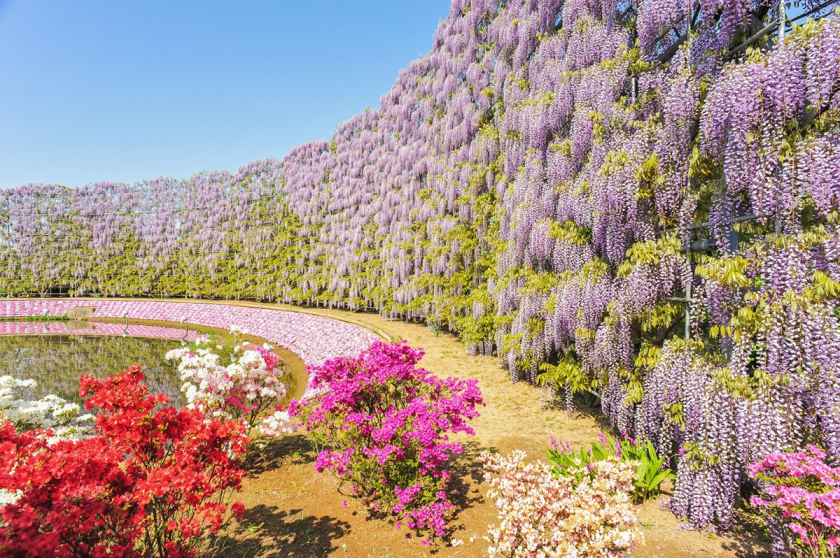
Ashikaga Flower Park in Tochigi Prefecture, Japan, is known as the home of over 350 species of wisteria and other plants.
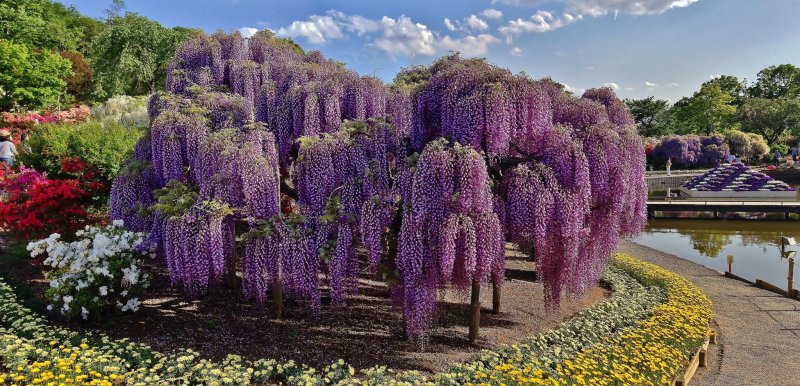
Among them, the purple wisteria stands out the most.
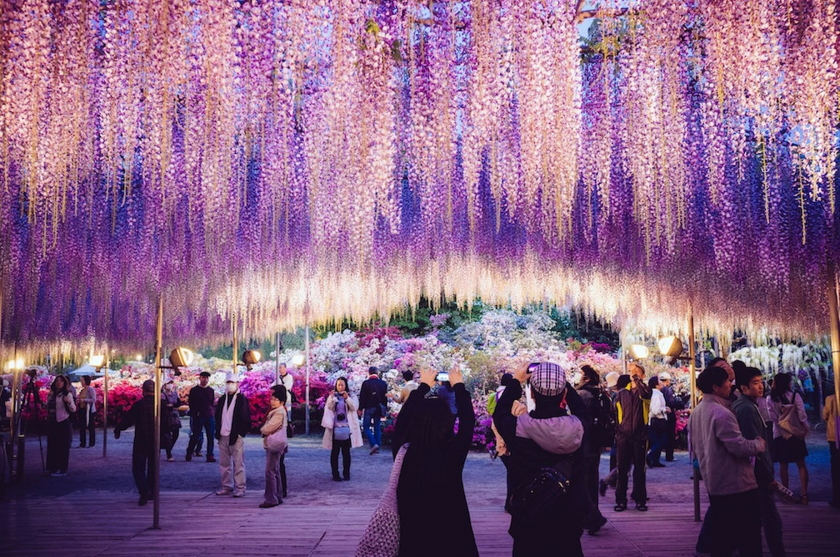
A highlight of Ashikaga Park is the nearly 100-meter-long wisteria tunnel with a high archway, likened to a gateway to a fairytale world.
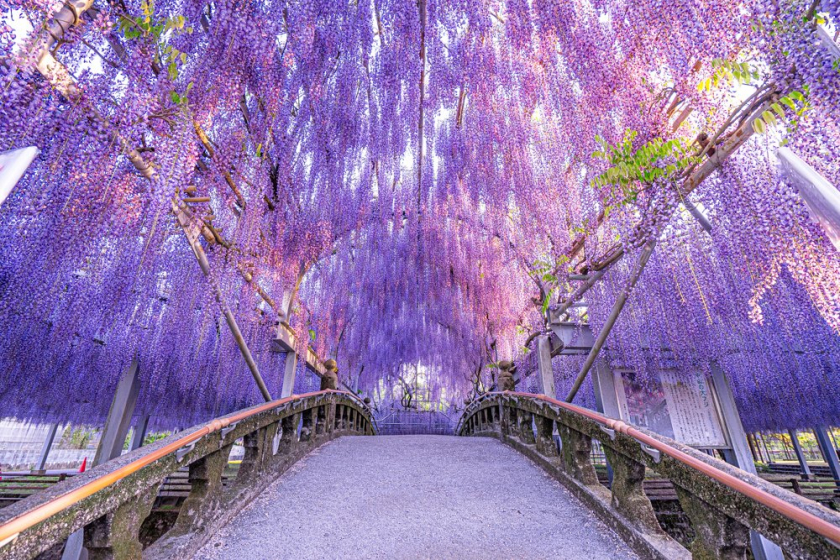
Wisteria tunnel in Ashikaga Park
Most notably, Ashikaga Park is home to a nearly 150-year-old wisteria tree, covering an area of 1,990 square meters.2Its heavy vine system means the entire structure of the tree is supported by a steel arch-like frame, allowing visitors to walk beneath the canopy and immerse themselves in the enchanting pink and purple hues. As night falls, the wisteria display becomes even more magical and magnificent thanks to the lighting system.
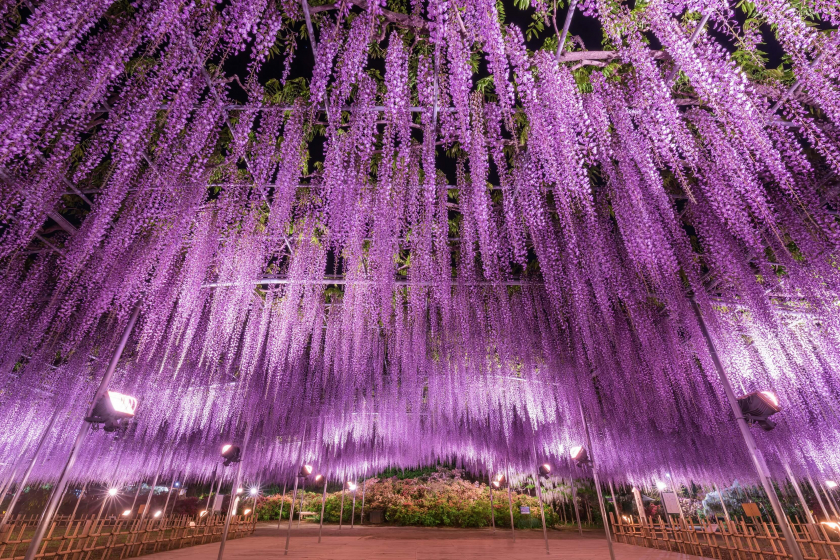
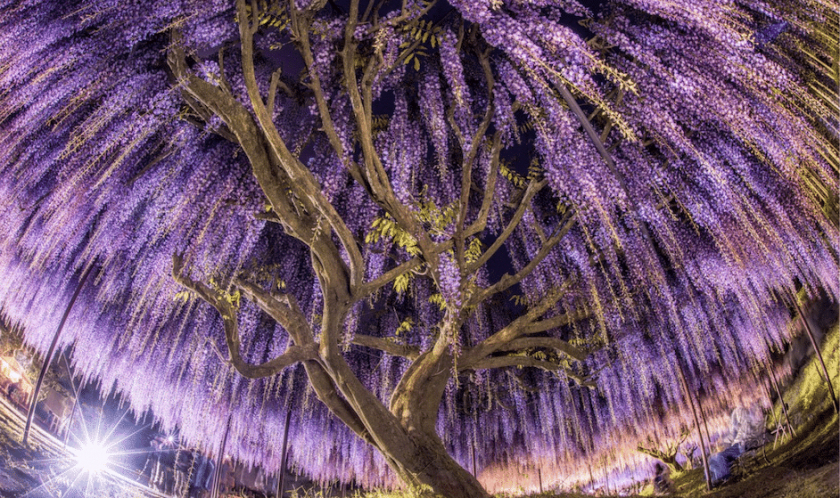
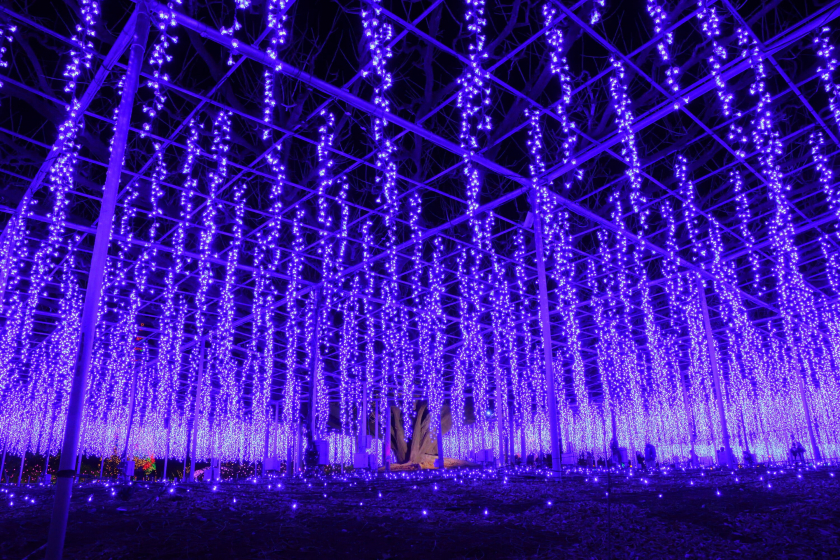
Ashikaga Park is open to visitors from 7:00 AM to 9:00 PM (during the peak wisteria blooming season until May 12th). On subsequent days, it is open until 6:00 PM. Adult tickets cost between $8-16 USD (approximately 185,000 VND - 370,000 VND), while children's tickets cost between $4-8 USD (approximately 93,000 VND - 185,000 VND). Every year, Ashikaga Park hosts an event called "A Tale of the Wisteria - The Great Wisteria Festival".
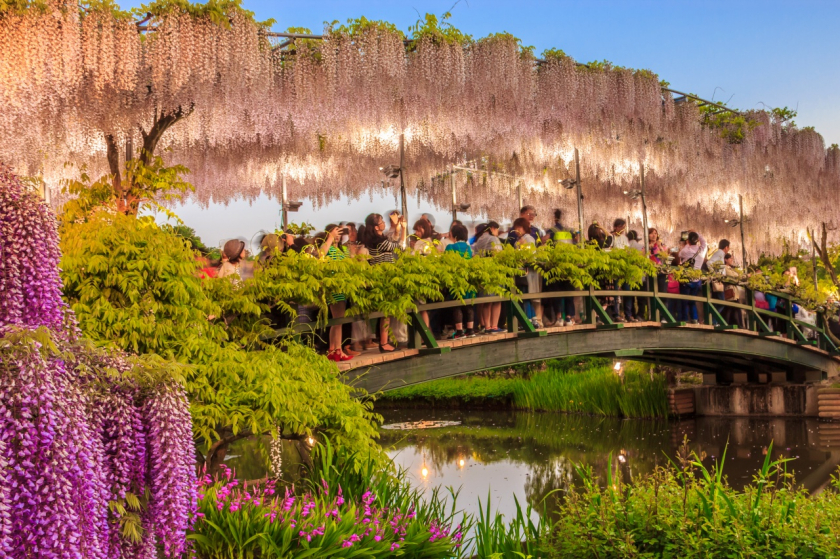
Besides Ashikaga Park, visitors can admire wisteria blossoms at other famous locations in Japan such as: Tennogawa Park (Tsushima City, Aichi Prefecture), Shirai Omachi Fuji Park (Asago City, Hyōgo Prefecture), Kameido Tenjin Shrine (Koto District, Tokyo), Jindai Botanical Garden, etc.