VI
VI


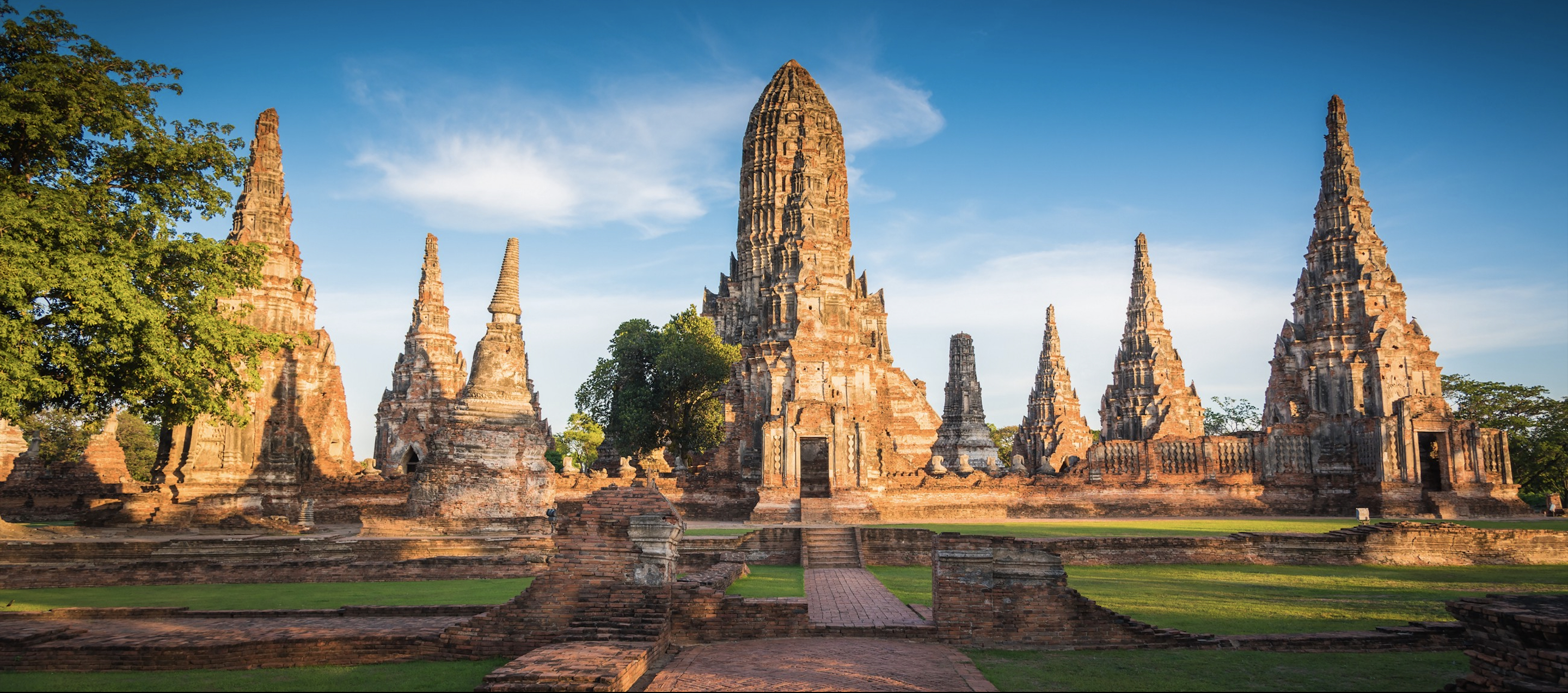
The Land of Golden Temples is not just about the glamorous Bangkok or the romantic Chiang Mai; it also boasts the ancient capital of Ayutthaya, which flourished under the reign of King U Thong.
In the 1700s, Ayutthaya was perhaps the largest city in the world, spanning over 289 hectares. However, after a devastating defeat in the war with the Burmese in 1767, resulting in the destruction and burning of many magnificent structures, Ayutthaya is now just a collection of lingering ruins from its glorious past.
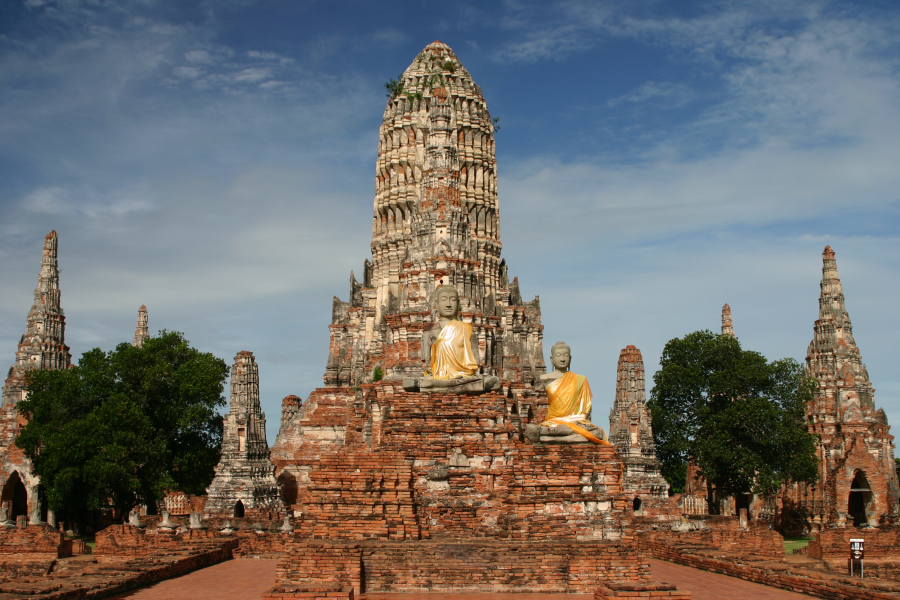
One of the ruins of Ayutthaya
Before the Burmese invasion, this city of one million people was compared to Paris and Venice by European ambassadors. Today, that number has dwindled to around 50,000, but the former capital remains a top tourist destination in Thailand and was recognized as a UNESCO World Heritage Site in 1991.
If you're ready to escape the hustle and bustle of Bangkok, head north to discover this once-glorious kingdom.
1. Transportation to Ayutthaya
Ayutthaya is located 76km north of Bangkok, so the journey won't take too long. Although you can explore Ayutthaya in just one day, consider staying overnight to avoid rushing through your sightseeing.
- Train: The train is the most convenient way to get to Ayutthaya because the space on board is extremely comfortable, you don't have to worry about the nightmare of traffic jams on Bangkok streets, and you can admire the suburban life passing by outside the window. There are many trains departing from Hualamphong station in Bangkok to Ayutthaya every day; each train journey lasts about 2 hours.
- Bus: Buses depart from Moh Chit Station in Bangkok to Ayutthaya approximately every 20 minutes. The fare is less than $2 USD and the journey takes about 2 hours, depending on traffic conditions.
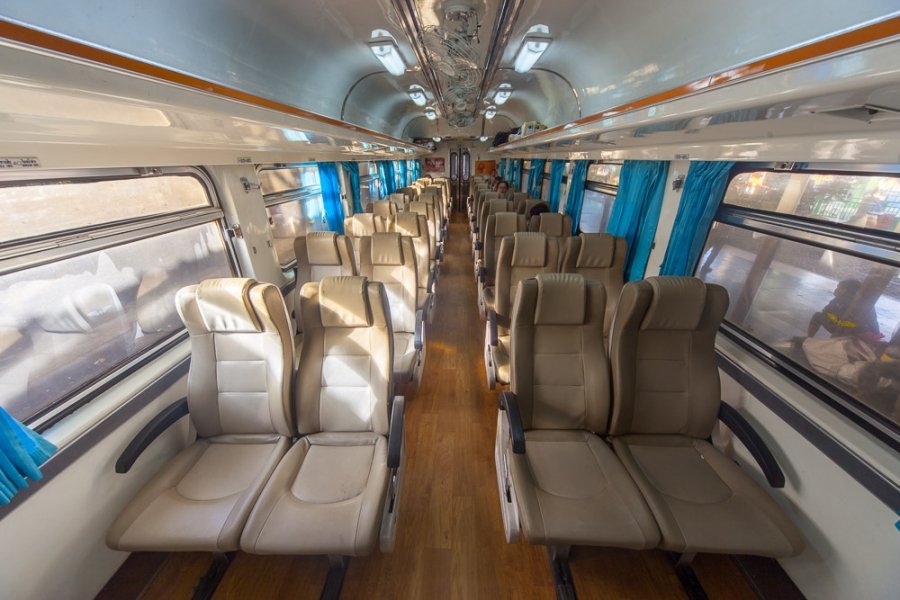
Trains to Ayutthaya are equipped with comfortable seating.
2. Visit the Ayutthaya Historical Research Center.
The first thing you should do when you arrive in Ayutthaya is to visitCenter for Historical ResearchBecause it will help you understand the history of this ancient capital better.
Although this center is quite small and lacks extensive English-language information, it still provides an overview along with sophisticated scaled models and historical photographs, successfully recreating scenes of daily life in Ayutthaya. In less than an hour and for a very low entrance fee, you can equip yourself with some historical knowledge to avoid feeling overwhelmed when faced with the array of historical sites you'll explore later.
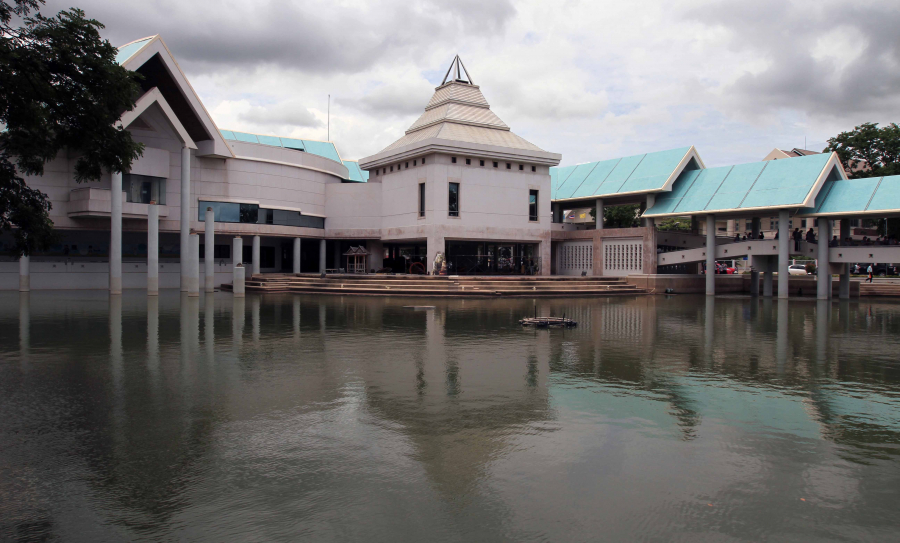
The Ayutthaya Historical Research Center is located on Rojana Road, Pratuchai, Phra Nakhon Si District, Ayutthaya.
3. Explore Ayutthaya by bicycle.
Road conditions in Ayutthaya are relatively good, so consider renting a bicycle to spend more time at the main attractions without wasting too much time commuting.

Ayutthaya is an island city strategically located at the confluence of three rivers, so getting lost is virtually impossible, even for experienced travelers. The only thing to remember when renting a bicycle is to check the tires and brakes for safety. Alternatively, you can rent a rickshaw, but remember to negotiate the price before starting your tour.
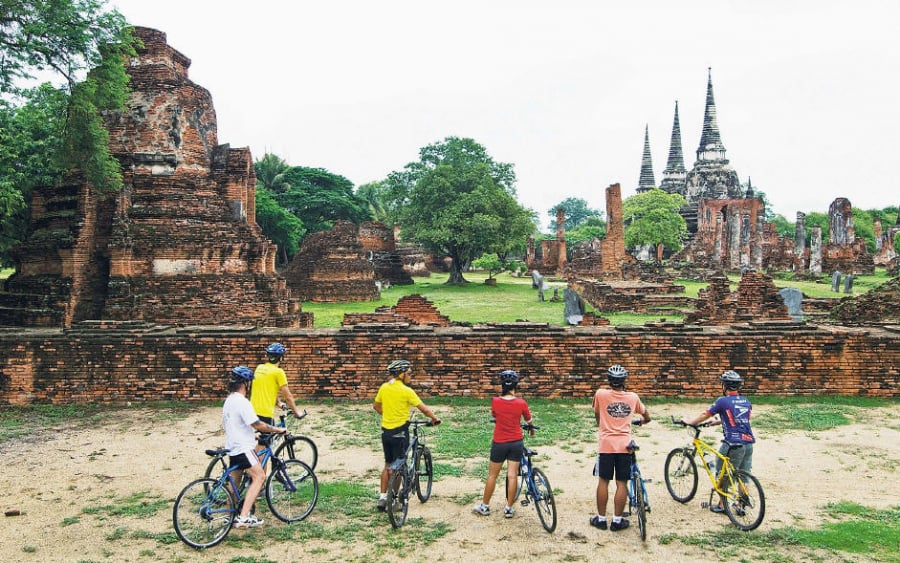
Cycling is the ideal way to explore Ayutthaya.
4. Admire the famous Buddha head statue.
One of Thailand's most famous images originates from Ayutthaya: the image of a Buddha's head stuck in a tree stump. And that stump is located inside the ancient Wat Mahathat temple.
Although the temple itself was destroyed by the Burmese army, the Buddha head statue miraculously survived to this day. During the 100 years the temple was abandoned, instead of being crushed to ashes, a tree grew around the head statue, embracing it with love.
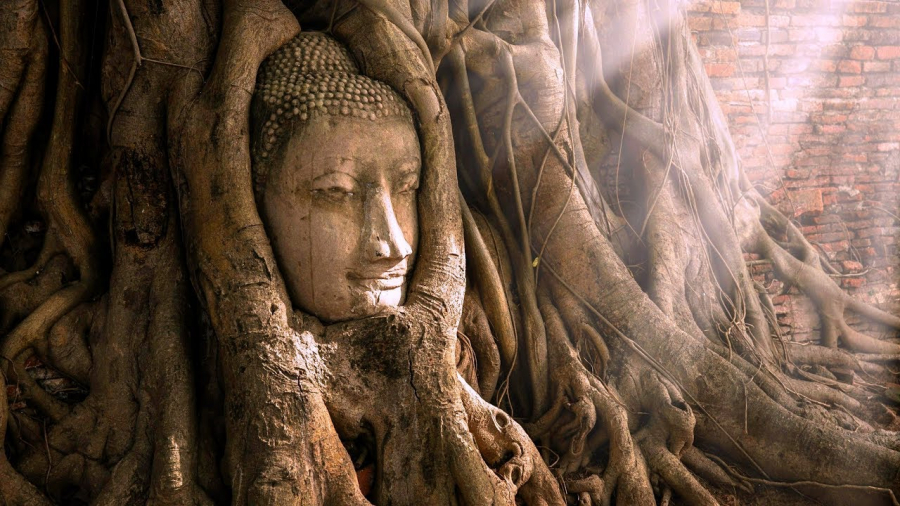
The Buddha head statue is completely embraced by tree roots.
Construction of Wat Mahathat began in 1374 and was completed between 1388 and 1395. Entrance fee is 50 baht. If you wish to photograph the Buddha head in the tree, please show respect to this sacred place by not turning your back to the Buddha statue when taking the picture.
Furthermore, this ancient temple is also famous for its headless Buddha statues. The reason is that collectors (both private and institutional) all want to own the heads of these statues. To date, only a few prestigious universities and museums have done the right thing by returning to Thailand cultural artifacts that were once looted from the country. Therefore, the Buddha head statues you admire in your favorite museums are most likely waiting to return to Ayutthaya, where they rightfully belong.
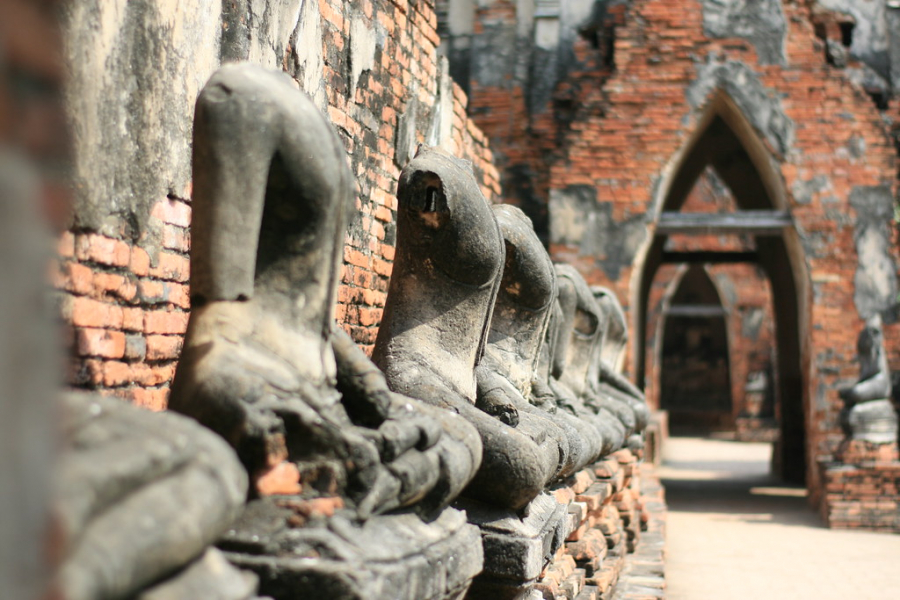
The headless Buddha statues at Wat Mahathat
5. Visit the largest temple in Ayutthaya.
Wat Phra Si Sanphet is the largest temple in Ayutthaya and one of its most famous landmarks. In 1500, it housed a Buddha statue over 15 meters tall, covered in hundreds of pounds of gold. Today, the centerpiece of Wat Phra Si Sanphet is its three towering stupas containing the ashes of members of the royal family. You can also admire the remains of the Royal Palace within the same temple complex. The entrance fee is 50 baht.
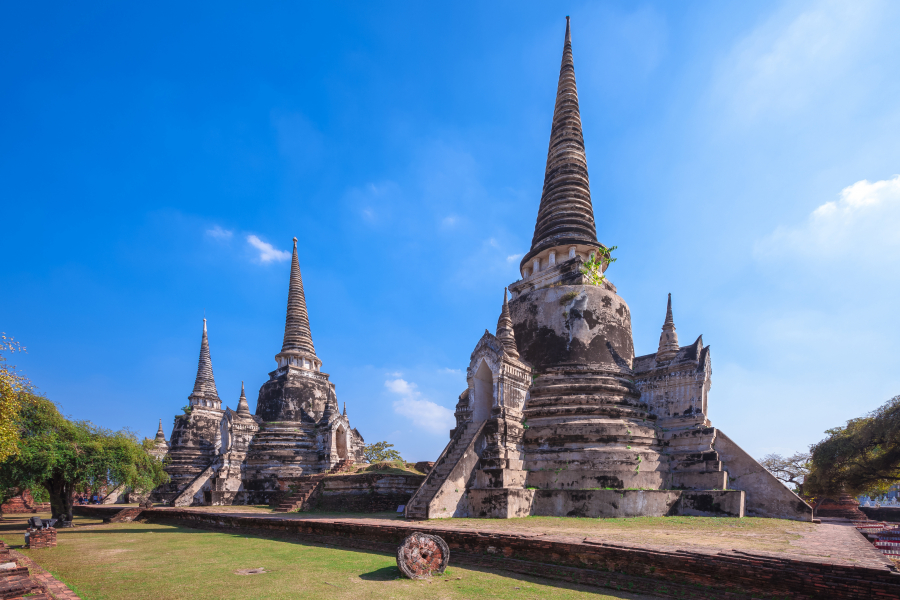
Three stupa tombs are located near Wat Phra Si Sanphet.
6. Amazed by an ancient Buddha statue older than Ayutthaya.
You might feel exhausted after exploring so many temples, but there's still one Buddha statue you absolutely must see at Wat Phanan Choeng. To get there, you'll have to take a short ferry ride.
Wat Phanan Choeng temple predates the city of Ayutthaya by 26 years. It remains unclear who built the temple, but it is known that many kings helped restore it. Inside the temple is the famous golden Buddha statue, Phra Chao Phanan-Choeng, dating back to 1325.
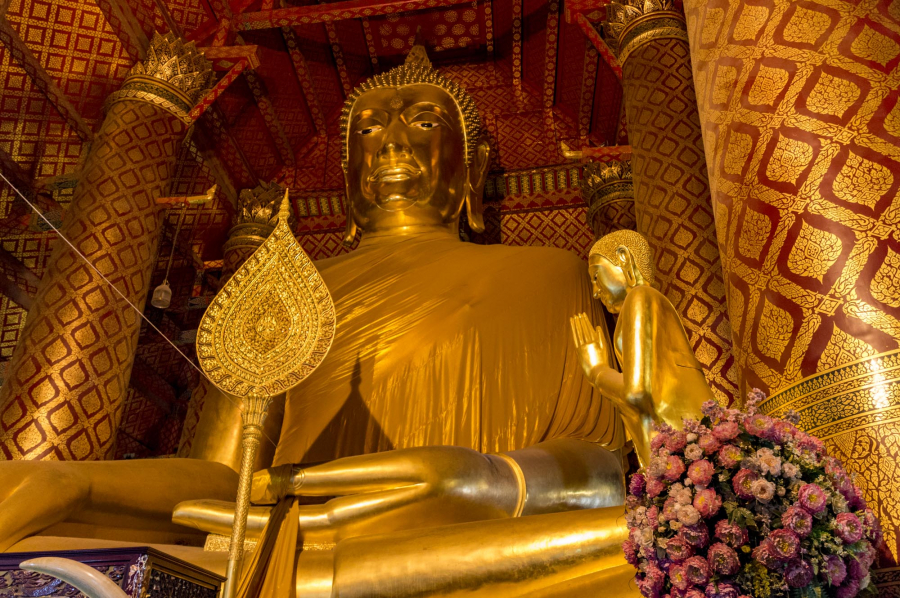
The golden Buddha statue is over 18 meters tall and 14 meters wide.
7. Enjoy boat noodles
If you're exhausted after exploring all the important historical sites, why not experience the culinary delights of Ayutthaya? As a former prosperous capital, Ayutthaya's cuisine is heavily influenced by India, China, Persia, Japan, and even Europe. Therefore, the food here is much more diverse than in other Thai cities.
Boat noodles (kuay tiow ruea) get their name because they are cooked on boats, and are considered a signature dish of Ayutthaya. Look for long, three-plank boats with steaming pots to try these rice noodles served with pork broth. Each restaurant's boat noodles will have different toppings, but the common point is that a bowl is usually very cheap and small, so you don't need to feel guilty about ordering more than one.
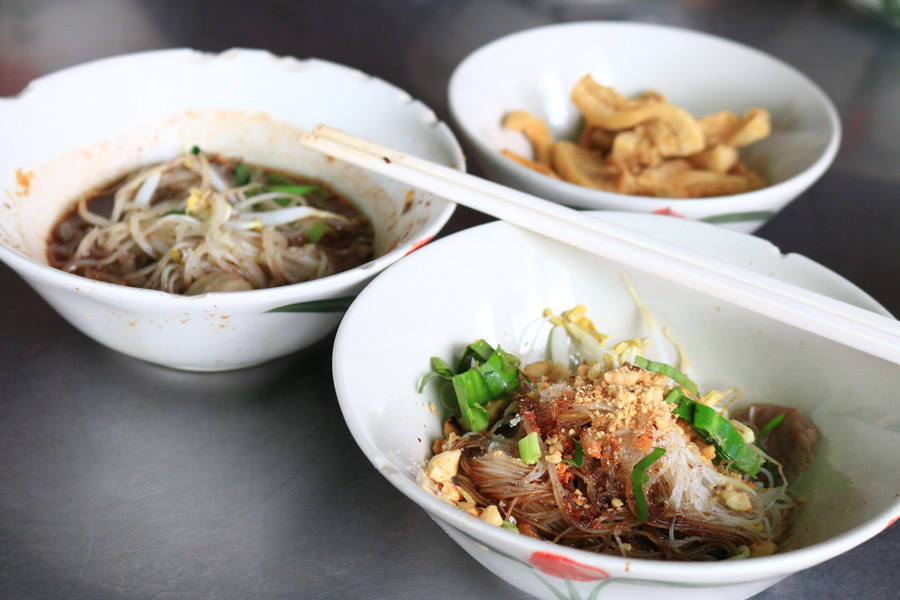
Boat noodles consist of a variety of ingredients and can be eaten stir-fried or with broth.
8. Stroll through the night market
The night market in Ayutthaya not only caters to your shopping needs but also serves as a local hub with incredibly affordable food options. You'll have the chance to fully experience the culture, people, and exquisite cuisine at this market.
If you've already had dinner elsewhere, don't forget to save room for some sweet desserts or drinks at the market. The Ayutthaya night market usually starts getting busy at sunset and stays open until 9 PM.
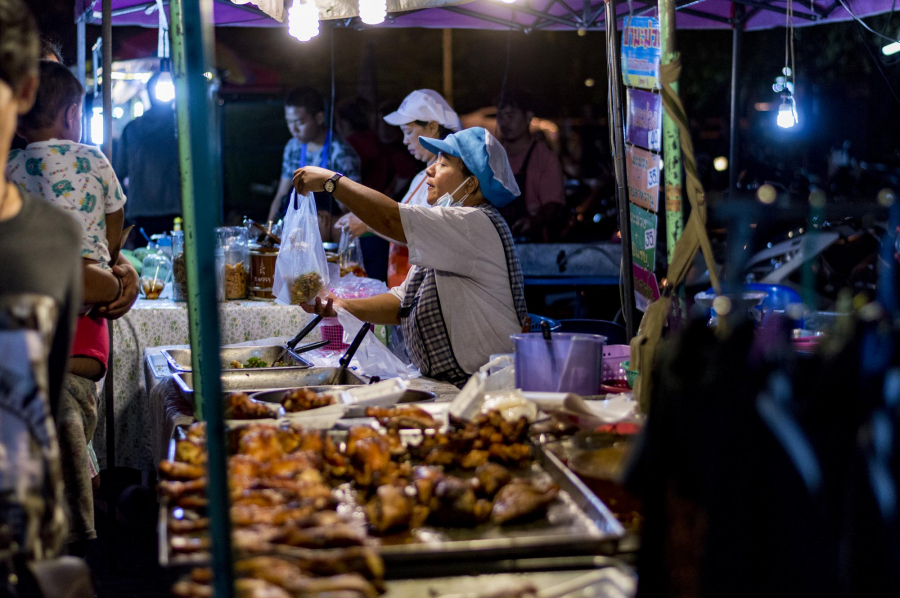
Some food stalls at Bang Lan night market in Ayutthaya.
9. Is it worth a trip to a floating market?
If you haven't been to a floating market in Bangkok, you can also float along the floating market in Ayutthaya. You can experience the local cuisine, browse souvenir stalls, and enjoy cultural performances inside the market.
However, like many floating markets opened for commercial purposes, don't expect a truly unique and authentic local experience. The Ayutthaya floating market operates from 9 am to 9 pm. And although the entrance fee is 200 baht, there are reports of tourists being overcharged with varying prices based on their appearance. Therefore, consider carefully before experiencing this type of market.
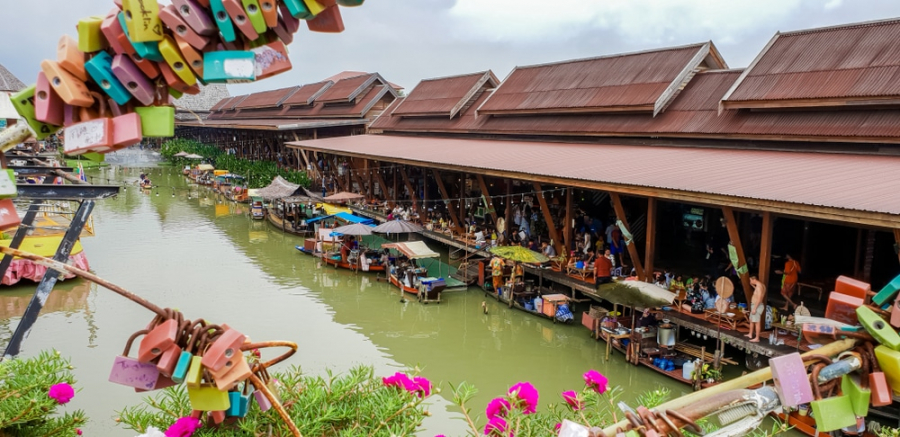
Ayutthaya Floating Market